Artwork
Autumn Evening with Full Moon on Musashino Plain
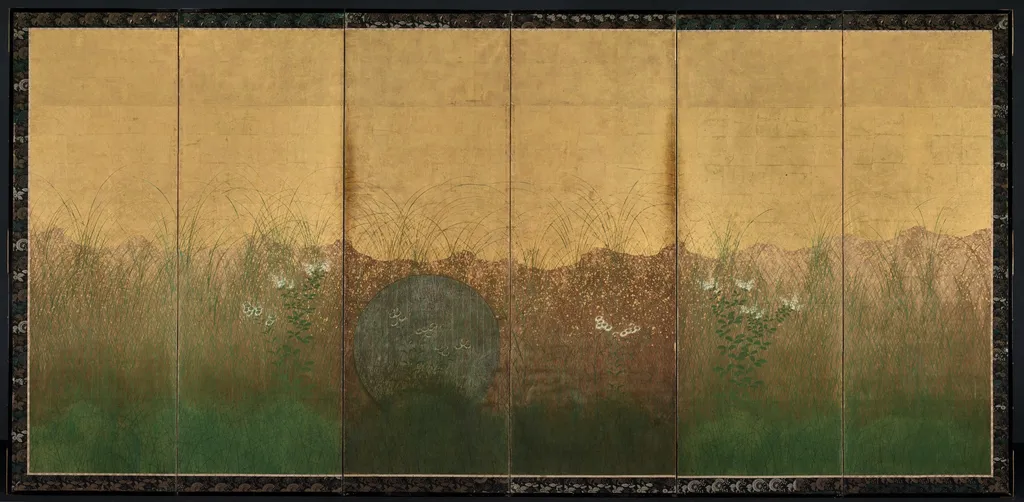
Autumn Evening with Full Moon on Musashino Plain is an unspecified painting. It dates from 1612 and is held in the collection of the Cleveland Museum of Art.
About this work
Technique & Style
The formal composition emphasizes subtle tonal transitions and a minimalist approach to detail, reflecting Edo-period ink painting conventions.
The work was created in Japan in 1612 using ink and color on paper.
The painting depicts a moonlit landscape on the Musashino plain, characterized by delicate gradations of ink wash and restrained use of color.
It is executed on a vertical format, with careful handling of line and space to convey atmospheric depth.
The formal composition emphasizes subtle tonal transitions and a minimalist approach to detail, reflecting Edo-period ink painting conventions.
The condition of the work is stable, with no significant deterioration noted in the museum's records.
History & Provenance
Autumn Evening with Full Moon on Musashino Plain is a painting created in 1612 in Japan, attributed to an unknown artist. It entered the collection of the Cleveland Museum of Art, where it remains on view.
The work was commissioned as part of a series depicting seasonal scenes on the Musashino Plain, reflecting Edo-period artistic patronage of landscape subjects.
Dating is based on stylistic analysis and archival records linking the piece to early 17th-century Japanese painting workshops.
Provenance is documented through the Cleveland Museum of Art's collection records, which trace ownership from its creation to its acquisition.
The painting's creation history is tied to the broader tradition of ukiyo-e and screen painting in Edo Japan, though the specific workshop or patron remains unidentified.
Overview
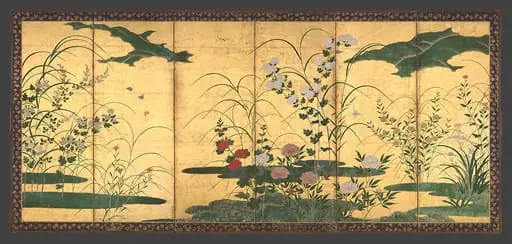
The work titled “Autumn Evening with Full Moon on Musashino Plain” is a painted composition that presents an expansive, level terrain under a luminous yellow sky. Tall grasses dominate the foreground, rendered in varied greens and browns, while a central dark circular form, interpreted as a pond or shadow, captures the reflected moonlight.
Subject & Meaning
The scene evokes a tranquil autumn night on the Musashino Plain, emphasizing the subtle illumination of moonlight on the landscape. The silvery highlights on the grass suggest a quiet, contemplative atmosphere, inviting viewers to consider the interplay of natural light and the seasonal environment.
Context
The painting reflects a traditional Japanese aesthetic that values serene, open spaces and the subtle effects of moonlight, characteristic of landscape works that depict the Musashino region. The emphasis on atmospheric light aligns with broader East Asian artistic concerns of the period.
Artist & collection

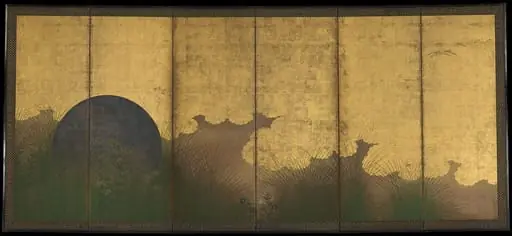 武蔵野図屏風|The Plains of Musashi
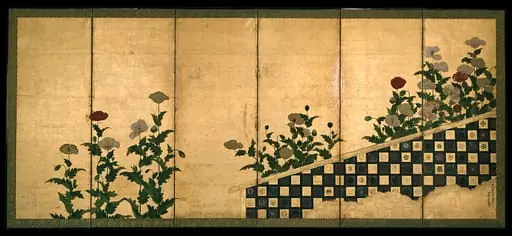 伝土佐光茂筆 芥子図屏風|Red and White Poppies
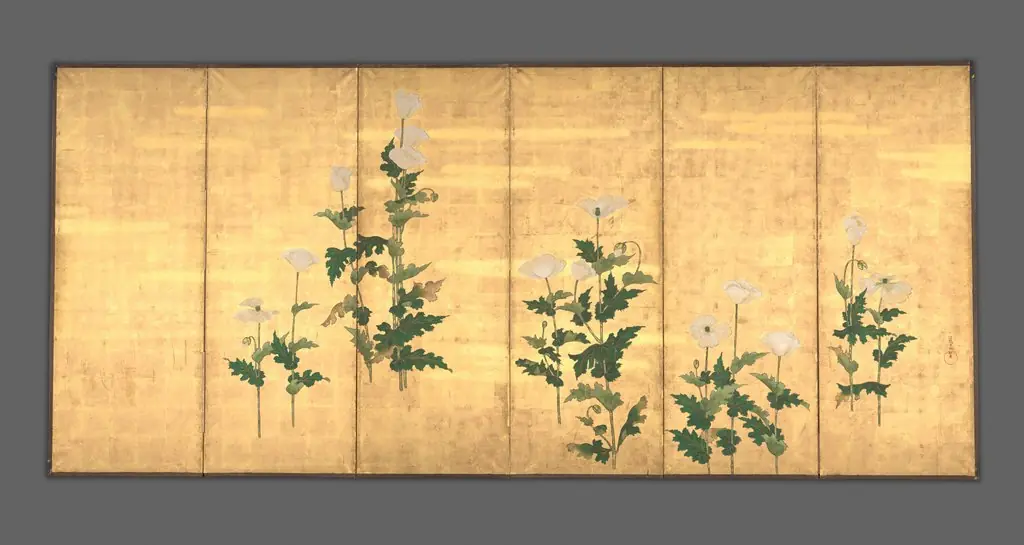 White Poppies on Gold Ground
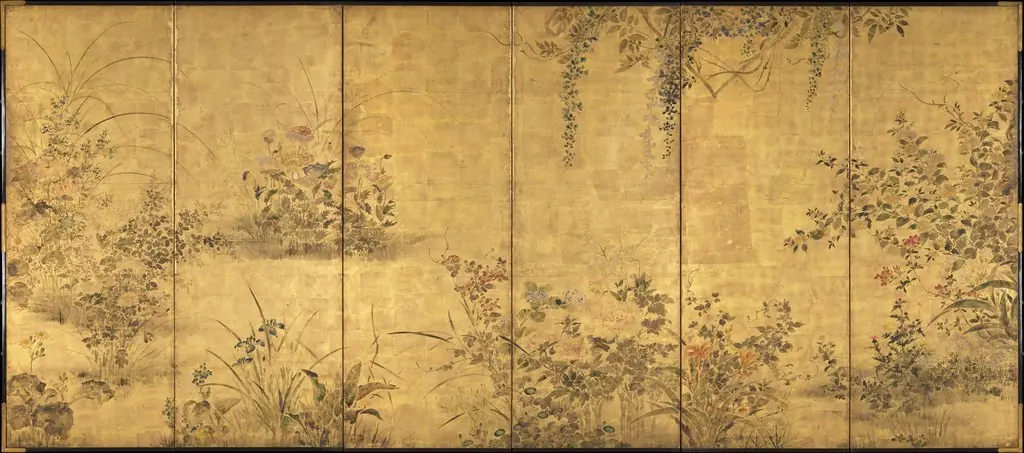 Flowering Plants and Vegetables of the Four Seasons
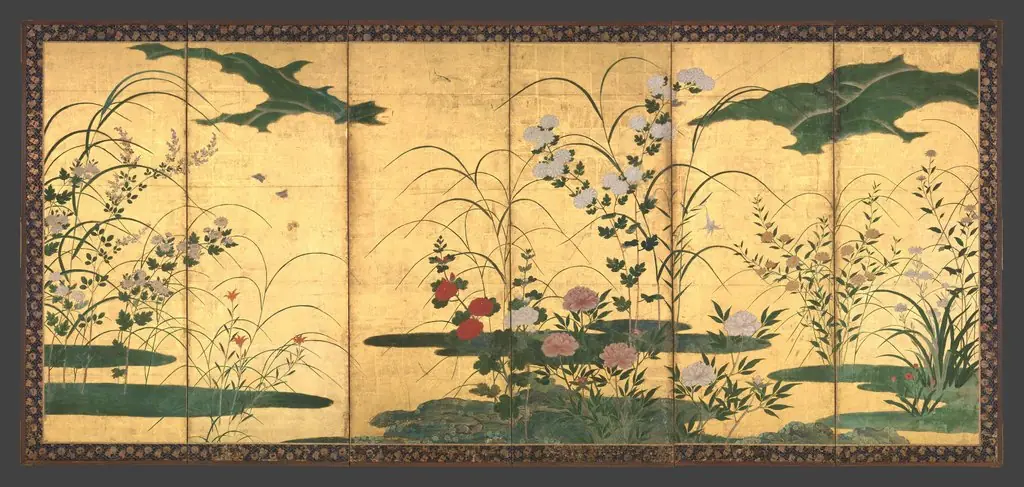 Flowers and Grasses of the Four Seasons
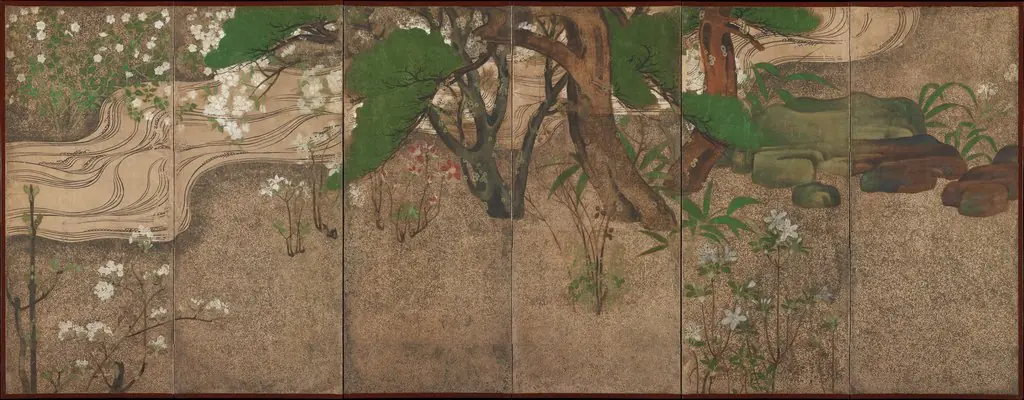 Spring Trees and Grasses by a Stream
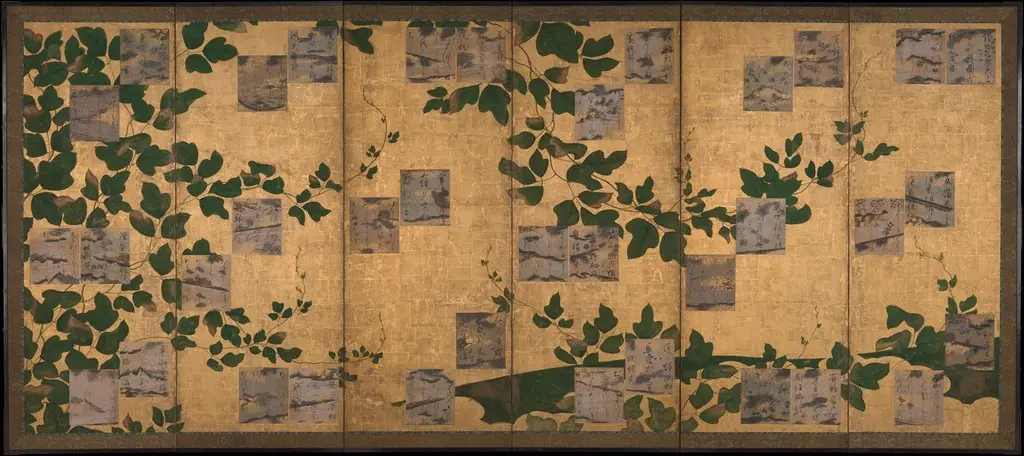 Anthology of Japanese and Chinese Poems (Wakan rōeishū) with Underpainting of Arrowroot Vines
 Flowers and Trees of the Four Seasons (right screen)
 四季花草図屏風|Flowers and Grasses of the Four Seasons