Artwork
Black Hawk
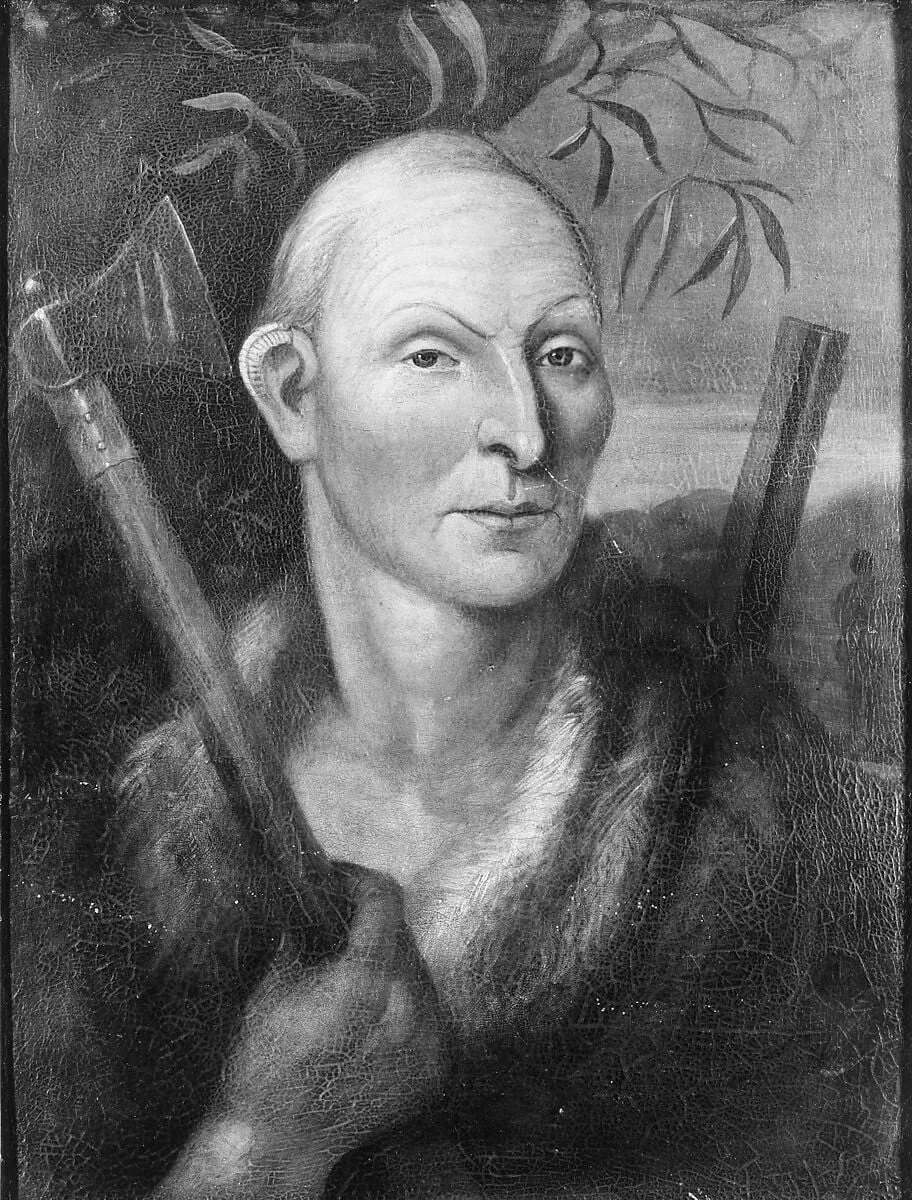
Black Hawk is an oil painting. It dates from 1850 and is held in the collection of the Metropolitan Museum of Art.
- Accession no.
- 63.138.4
- Credit line
- Gift of Chester Dale, 1963
About this work
Subject & Meaning
The depicted symbols collectively underscore themes of identity and status among Native peoples during that period.
The painting presents a Native American man rendered in a portrait format, clothed in fur and holding an axe, with a leaf motif incorporated into the composition. These elements, axe, fur clothing, and leaf, serve as iconographic details that identify the figure as a participant in the cultural milieu of 19th‑century Native American representation. By positioning the subject within a conventional portrait genre, the work functions to document and dignify the individual, reflecting the Metropolitan Museum of Art's classification of the piece as part of The American Wing collection. The depicted symbols collectively underscore themes of identity and status among Native peoples during that period.
Technique & Style
Created in 1850 by an unknown artist, this portrait of Black Hawk is executed in oil paint on a canvas support. The canvas is mounted on a masonite panel, a technique that provides structural rigidity to the work. The painting measures 62.9 cm in height and 47 cm in width.
Stylistically, the piece adheres to the conventions of the mid-19th-century portrait genre, depicting a Native American man adorned in fur clothing and holding an axe and a leaf. The formal composition focuses on the subject's likeness and regalia, characteristic of the American Wing's collection of indigenous portraiture from this period. The work remains part of the permanent collection at the Metropolitan Museum of Art.
History & Provenance
Black Hawk is an undocumented portrait painted circa 1850 by an unidentified artist. The work is executed in oil on canvas mounted on masonite and depicts a Native American man holding an axe amid foliage. Its creation history is otherwise unknown, with no record of a commission or preparatory studies.
The painting entered the collection of the Metropolitan Museum of Art, where it is currently housed in the American Wing; earlier ownership details have not been published. Consequently, the provenance consists chiefly of its modern museum accession, reflecting the typical anonymity of many mid‑nineteenth‑century American folk portraits.
The oil-on-canvas portrait titled Black Hawk, dated to 1850, is held in the collection of the Metropolitan Museum of Art. Classified within The American Wing, the work depicts a man in fur clothing holding an axe and a leaf. While the artist remains unknown, the painting is cataloged as an anonymous piece created in 1850.
The source material provides the physical dimensions of the artwork, noting a height of 62.9 centimeters and a width of 47 centimeters. No specific accession number or detailed exhibition history is provided in the available records, though the work is confirmed to be part of the museum's permanent holdings.
Overview
This painting presents a dignified portrait of Black Hawk, a prominent leader of the Sauk people. Rendered in oil on canvas, the subject is depicted with a calm and direct gaze, wearing a fur-trimmed coat. He holds a pipe in one hand, while the other rests gently on his knee, conveying a composed presence. The artwork is a significant representation of a figure known for his resistance to American territorial expansion.
Artist & collection

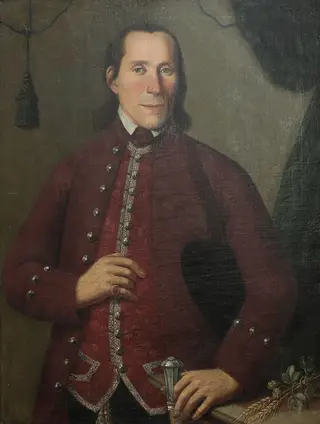
- Rődl András
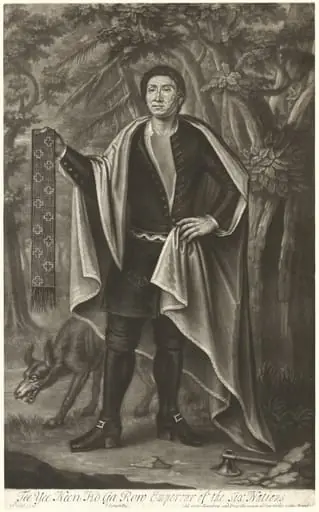 Tee Yee Neen Ho Ga Row, Emperor of the Six Nations
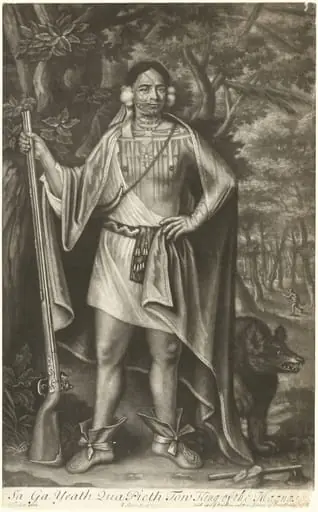 Sa Ga Yeath Qua Pieth Tow, King of the Maquas
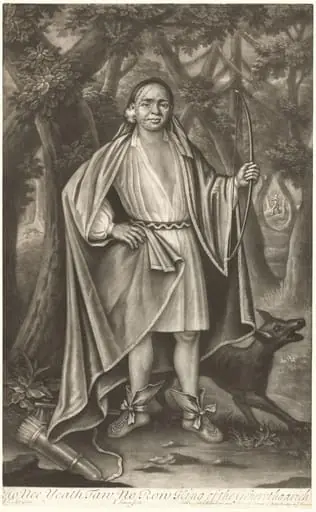 Ho Nee Yeath Taw No Row, King of the Generethgarick
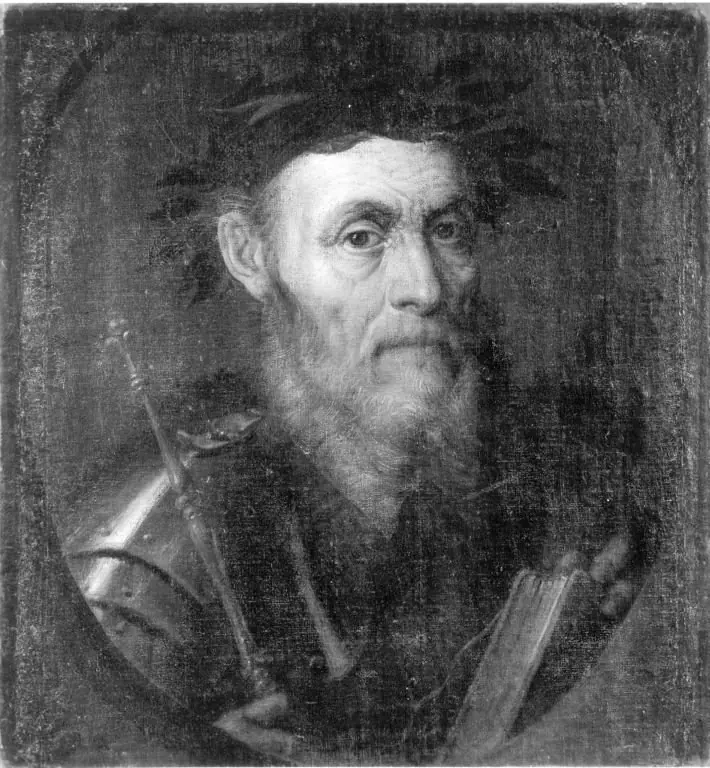 Bildnis eines Mannes (Schule)
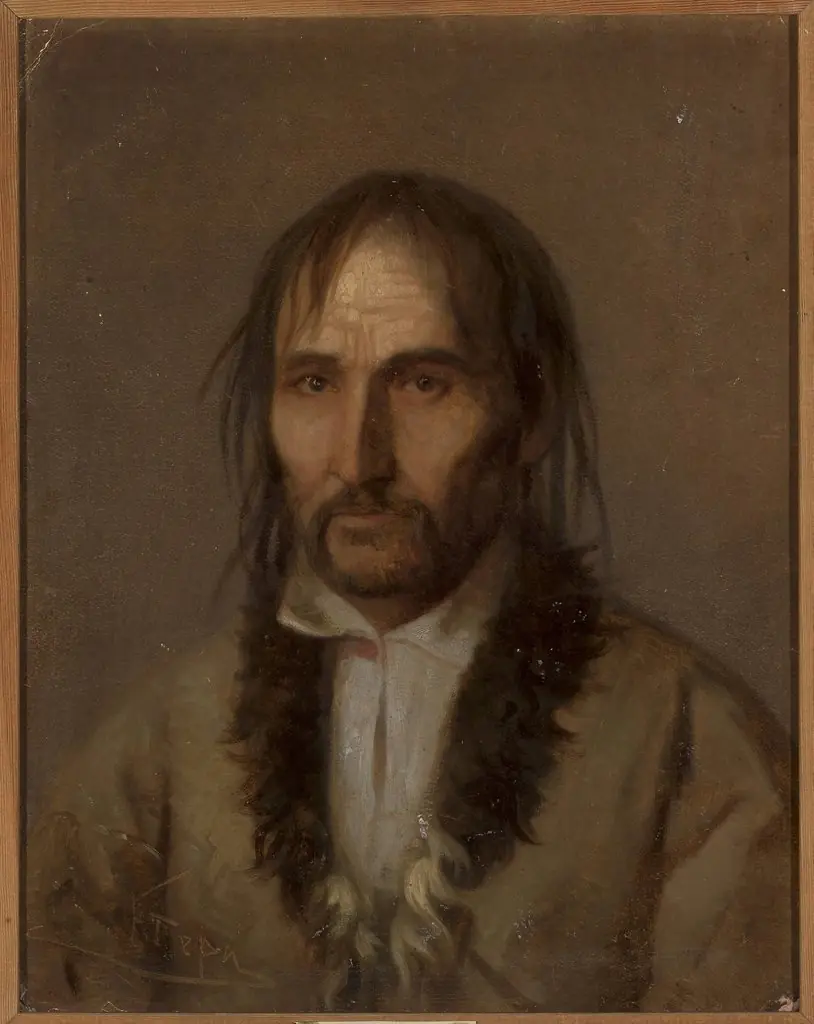 Head of a Highlander
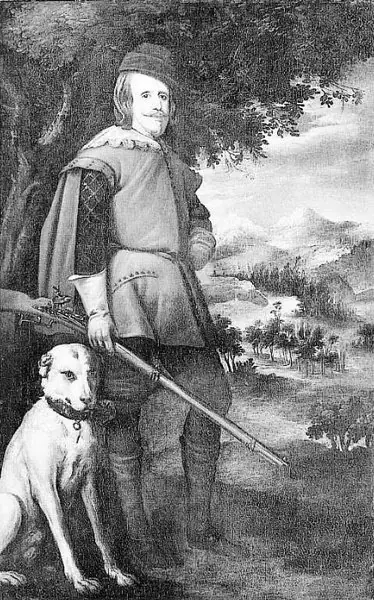 Philipp IV., König von Spanien (1605-1665), im Jagdanzug
 Et gammelt skaldet hoved med bar hals og pelskrave
 Portrait of gouverneur-generaal Jeremias van Riemsdijk
 Etow Oh Koam, King of the River Nation
 Et gammelt skaldet hoved med bar hals og pelskrave
 Portrait of Garcilaso de la Vega (?)