Artwork
Bookplate: Abbie B. Stone
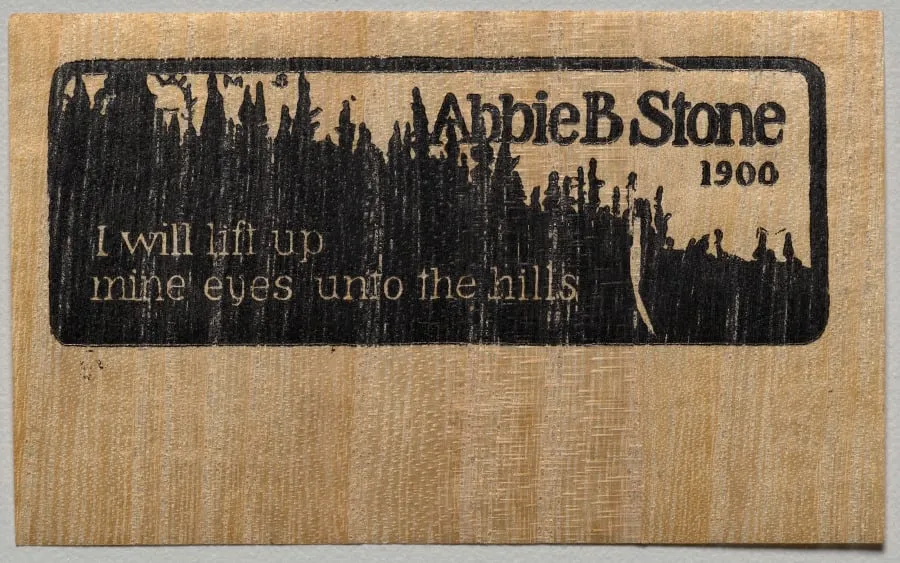
Bookplate: Abbie B. Stone is a print by Unknown. It dates from 1900 and is held in the collection of the Cleveland Museum of Art. A wooden plaque, framed by a black border, bears the name Abbie B.
- Accession no.
- 1920.1399
- Credit line
- Gift of Arthur D. Brooks
About this work
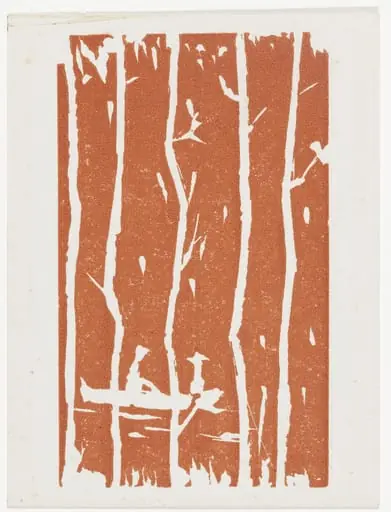
The image features a rectangular wooden plaque with a black border, showcasing a silhouette of trees and the name "Abbie B.
The image features a rectangular wooden plaque with a black border, showcasing a silhouette of trees and the name "Abbie B. Stone" in bold letters. The year "1900" is inscribed in smaller text to the right of the name. A quote, "I will lift up mine eyes unto the hills," is written in smaller text below the name.
The plaque's surface appears worn, with visible scratches and marks. The overall design suggests a bookplate or a commemorative plaque.
This piece is reminiscent of the works held at The Cleveland Museum of Art.
Overview
A wooden plaque, framed by a black border, bears the name Abbie B. Stone and the year 1900. The surface shows signs of age, scratches and wear suggest regular handling or display. Below the name, a biblical phrase is inscribed in smaller script.
The design, simple and restrained, aligns with early 20th-century bookplates used to mark personal libraries, blending utility with quiet commemoration.
Subject & Meaning
The inscription 'I will lift up mine eyes unto the hills' references Psalm 121, evoking spiritual reflection and steadfastness. Paired with the silhouette of trees, the imagery suggests a connection between nature and faith. The plaque functions as both a personal identifier and a moral marker, implying the owner’s values were as integral to their identity as their collection of books.
Technique & Style
The design employs a silhouette technique, with trees rendered in solid black against a lighter wooden ground. Lettering is bold and hand-cut, likely carved or stamped into the wood. The absence of color and the use of negative space emphasize clarity and permanence. The worn surface indicates the plate was affixed to books and used over time, not merely displayed.
History & Provenance
Created around 1900, the plaque likely belonged to Abbie B. Stone, possibly a private collector or librarian. Its style matches contemporaneous American bookplates produced for middle-class households. Though its exact origin is unrecorded, its aesthetic aligns with objects in collections such as The Cleveland Museum of Art, where similar utilitarian art from the period is preserved.
Context
In the late 19th and early 20th centuries, bookplates were common in educated households, serving as markers of ownership and personal ethos. This example reflects a trend toward modest, handcrafted designs over ornate engravings. The inclusion of scripture points to a cultural moment where personal piety and literary life were closely intertwined, especially among women who curated domestic intellectual spaces.
Legacy
As a functional object transformed by use, the plaque offers insight into everyday material culture of its time. It survives not as art for display, but as a testament to private habit and quiet devotion. Its preservation today allows observation of how personal identity was encoded in ordinary objects, bridging the domestic and the spiritual.
Artist & collection









- Untitled
 Untitled
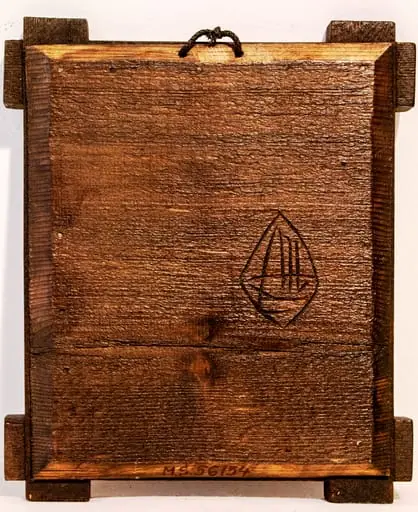 Icoana reproduce un tipar specific Țării Bârsei, sec XIX. Sfântul Haralambie în veșminte de episcop, binecuvintează cu dreapta, în stânga având o Evanghelie. Părul și barba lungi, cărunte. Veșminte arhierești, sacos roșu, omoforul mare verde cu decor alb, pe cap mitră. Ciuma legată în lanț, antropomorfizată, cu coarne și coasa morții în mână. este culcată la picioarele lui. Sfântul este încadrat de un portal semicircular decorat cu motivre geometrice. Cîmpul albastru ultramarin în jumătatea superioară, două flori mari roșii pe fond. În jumătatea inferioară relief ondulat, benzi de culoare orange. Culorile intense, paleta cromatica variată. Rama lată, laturile petrecute, imbinare cu cuie de lemn, canelată, este specifică meșterului.
 Icoa Zug
 Untitled
 Înălțarea Domnului
 Untitled
 Scene din viața lui Iisus (Coborârea la iad și cele douăsprezece praznice împărătești)
 Untitled
 Icoana îi redă 1/1 pe sfinții Nicolae și pe arhidiaconul Ștefan, în picioare, ușor semiprofil. Asocierea celor doi sfinți nu are o motivație iconografică, probabil a fost dorința comanditarului. Sfântul Nicoale este reprezentat în veșminte arhierești, fără mitră pe cap(ipostaza de vară), binecuvântând cu mâna dreaptă, în stânga ținând Evanghelia închisă. Are părul și barba cărunte, ondulate, fruntea înaltă, trăsăturile fine. Înveșmântat cu sacos auriu tivit cu galon cu șir de perle și pietre scumpe, mânecuțe și galon la gât . Epitrahil alb, cu cruci drepte și motiv scalariform în partea de jos.Omoforul mare, de culoare roșie și bedernița romboidală atârnată de mâna stângă. Aureole trasate cu o linie albă îngustă. În pandant, arhidiaconul Ștefan, primul dintre martiri, ușor întors către sfântul Nicoale, cădelnițând cu o mână, cu cealaltă ținând la piept o biserică având trei turle înalte. Redat tânăr, fără barbă, în veșminte diaconești:stihar lung, bogat ornamentat cu motive florale mari, pe fond alb-albăstrui. Fondul icoanei auriu pal, cu irizări. Median, pe latura de sus, soarele?(sau mandorla de raze a Duhului Sfânt) Paleta cromatică dominată de nuanțele de auriu, restul culorilor(verde, cafeniu, negru, alb, fiind în armonie cu acest fond. Desenul este fin, proporțiile bizantine respectate, compoziția echilibrată, armonioasă. Inscripția în partea de sus, cu chirilice cu caractere specifice Munteniei.
 Iisus binecuvântând
 Untitled