Artwork
Untitled
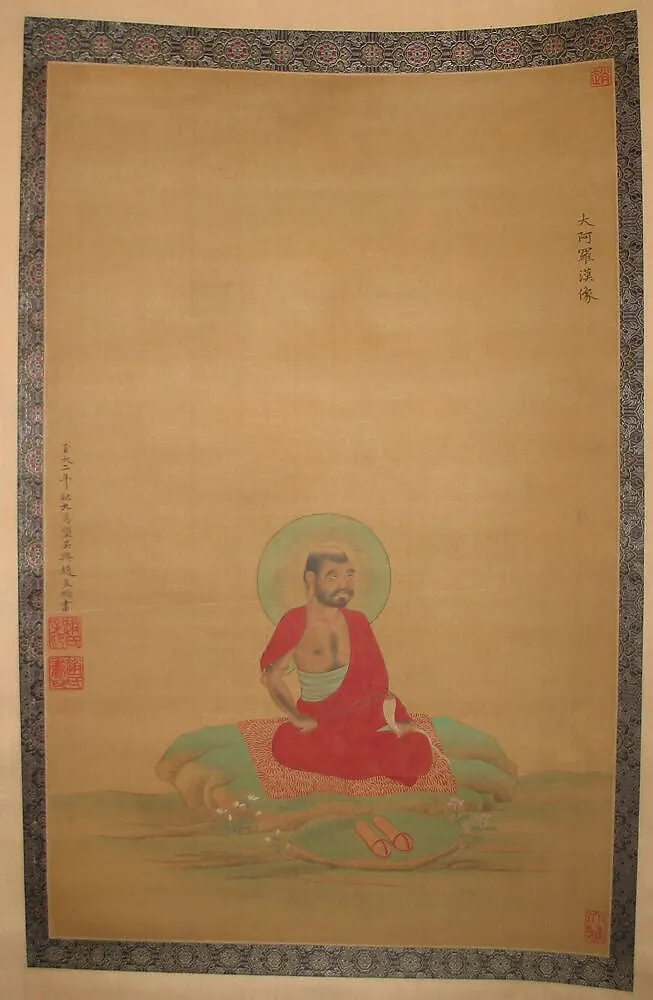
Untitled is an ink painting by the Baroque artist After Zhao Mengfu. It dates from 1777 and is held in the collection of the Metropolitan Museum of Art.
About this work
The calm face and the way the ink bleeds into the silk feel more like a quiet morning than a grand style.
A man in a dark robe sits on a rock, hands folded inside his sleeves. Behind him, a few pale strokes suggest mist and distant mountains. The silk is cracked with age.
The painting is labeled “Baroque,” but that’s the wrong label, it’s Yuan dynasty, around 1300. Someone at the museum just guessed. The calm face and the way the ink bleeds into the silk feel more like a quiet morning than a grand style.
If you like this quiet way of painting, look up china.
Subject & Meaning
Created in 1777 by an anonymous artist working in the style of Zhao Mengfu, this hanging scroll presents a landscape scene infused with Buddhist themes. The composition explicitly depicts a male figure, serving as the primary human subject within the natural setting. While specific narrative details of the figure's identity or actions are not elaborated upon in available records, the work's iconography is defined by its explicit association with Buddhism.
This religious context suggests the landscape and the depicted man function together to represent spiritual concepts or narratives central to Buddhist tradition. The integration of a human figure within a landscape genre often implies a contemplative relationship between the individual and the natural world, framed here through a specific religious lens.
Technique & Style
Created in 1777, this work is a hanging scroll executed in ink and color on a silk support. The piece functions as a landscape painting that depicts a man alongside Buddhist themes. Measuring 54.6 centimeters in height and 34.9 centimeters in width, the artwork originates from China.
The medium combines traditional ink wash techniques with applied color pigments, characteristic of the genre. While the specific handling of the brushwork is not detailed in the provided records, the classification as a landscape painting suggests a focus on natural scenery integrated with human and spiritual figures. The physical format as a hanging scroll indicates its original function for vertical display.
Legacy
The painting Untitled (After Zhao Mengfu, 1777) entered the Metropolitan Museum of Art’s collection, where its status as a landscape work depicting a Buddhist figure has made it a reference point for scholars studying Qing‑era Buddhist iconography. Its documented dimensions, medium, and provenance are recorded in both the museum’s catalogue and the Wikidata entry, providing a reliable foundation for ongoing academic discussion. Because the work is housed in a major public institution, it is frequently cited in exhibitions and publications on Chinese painting, reinforcing its reputation as an exemplar of the genre and influencing later interpretations of Buddhist themes in 18th‑century Chinese art.
Overview
This untitled hanging scroll, executed in ink and color on silk, presents a contemplative landscape scene. While previously attributed to the late 18th century and "After Zhao Mengfu," scholarly analysis suggests its origins lie much earlier, likely within China's Yuan dynasty (c. 1300). The painting's subject matter centers on Buddhist themes, depicted through a solitary figure immersed in a serene natural setting.
History & Provenance
The artwork's initial labeling as "Baroque" and its attribution to 1777 were inaccurate, likely stemming from a misidentification. Closer examination of its stylistic elements, such as the brushwork and compositional choices, firmly places it within the artistic traditions of the Yuan dynasty, around 1300. The silk medium itself bears the marks of its age, showing cracks that attest to its long history.
Artist & collection

- Shakyamuni under the Bodhi Tree
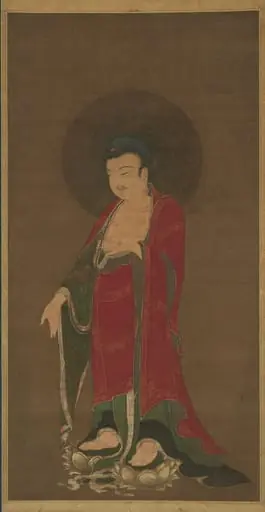 南宋 佚名 阿彌陀佛圖 軸|Buddha Amitabha Descending from His Pure Land
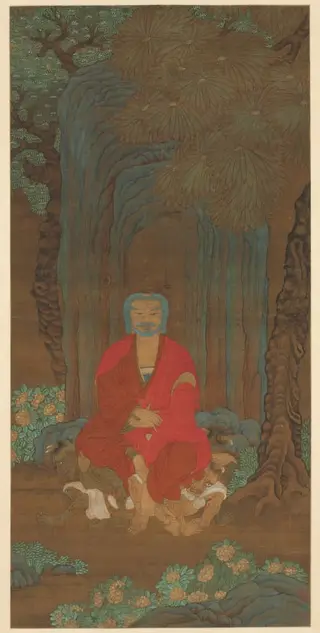
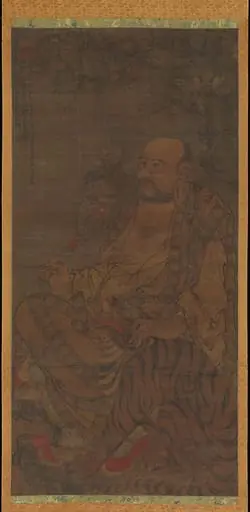 元 佚名 第六羅漢跋陀羅圖 軸|Bhadra, The Sixth Luohan
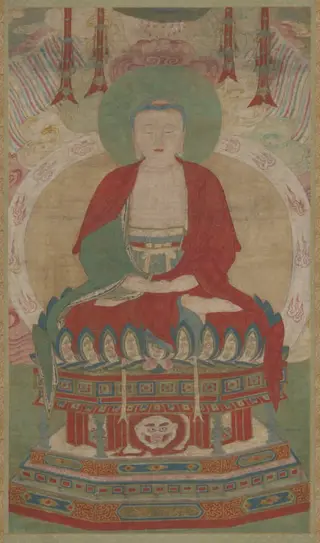 Seated Amitābha
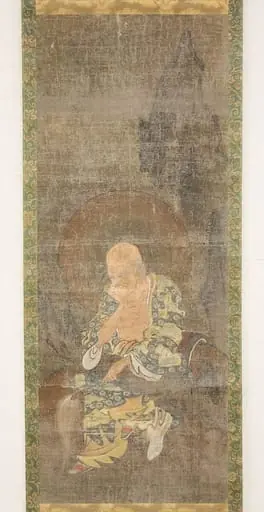 羅漢図|Rakan
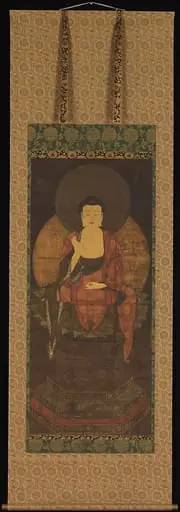 釈迦如来像|Shaka Nyorai
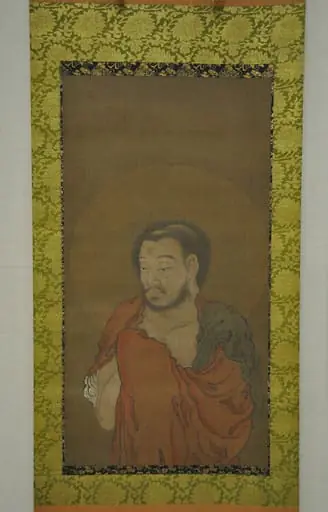 出山釈迦像 (Shussan Shaka zō)|Shaka (Shakyamuni), The Historical Buddha, Descending from the Mountains
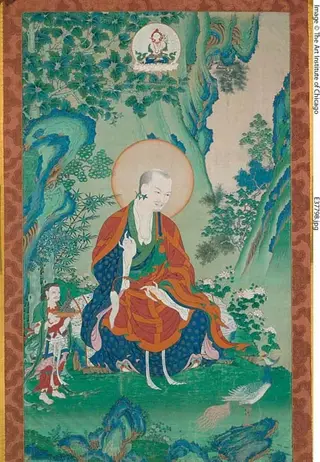 Painted Banner (Thangka) of Vajriputra, One of the Sixteen Great...
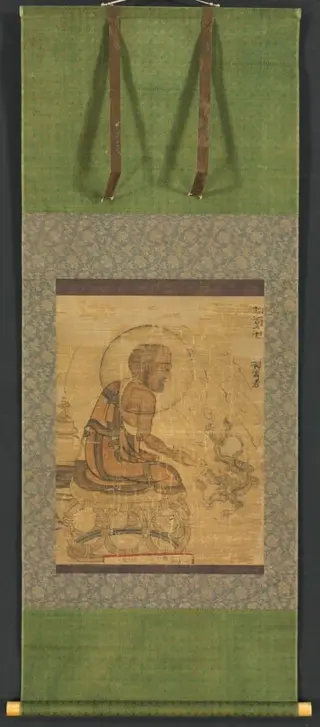 Arhat
Arhat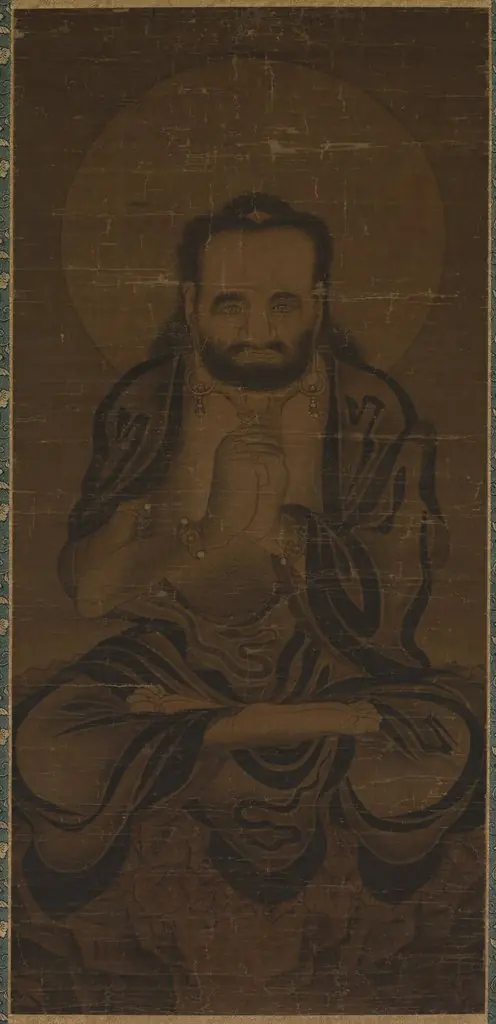 Sakyamuni Buddha
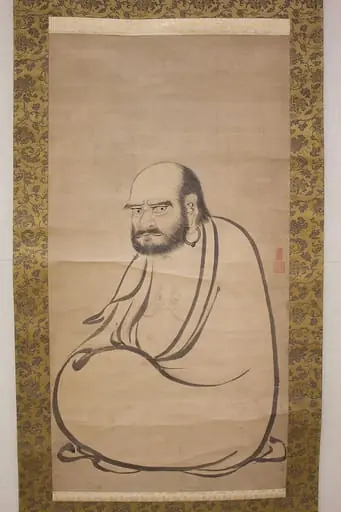 達磨図 (Daruma zu)|Bodhidharma (Daruma)
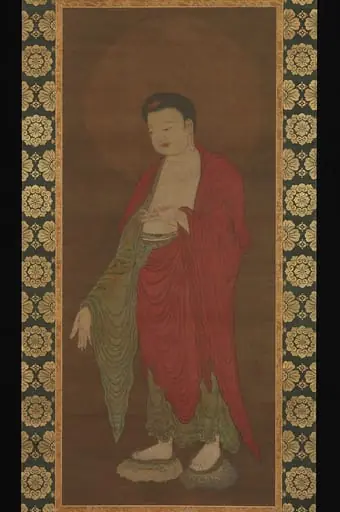 南宋 佚名 阿彌陀佛圖 軸|Buddha Amitabha Descending from his Pure Land