Artwork
阿弥陀如来像|Welcoming Descent of Amida Buddha
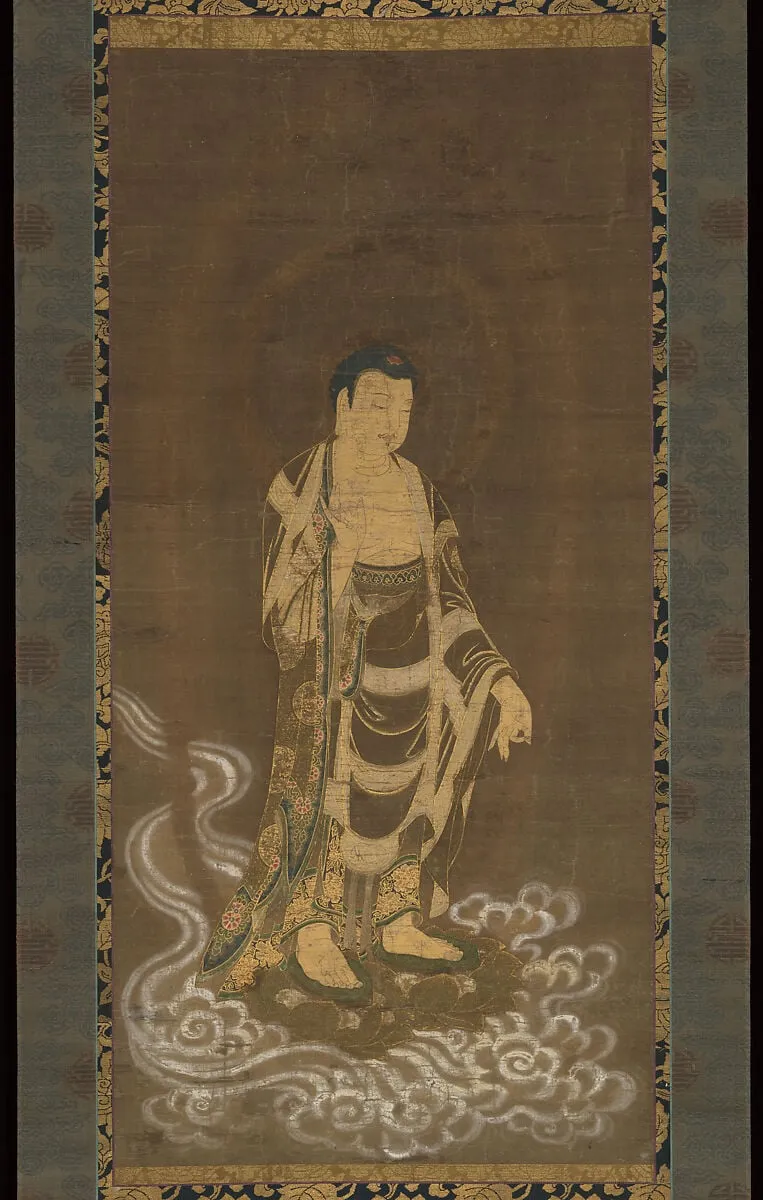
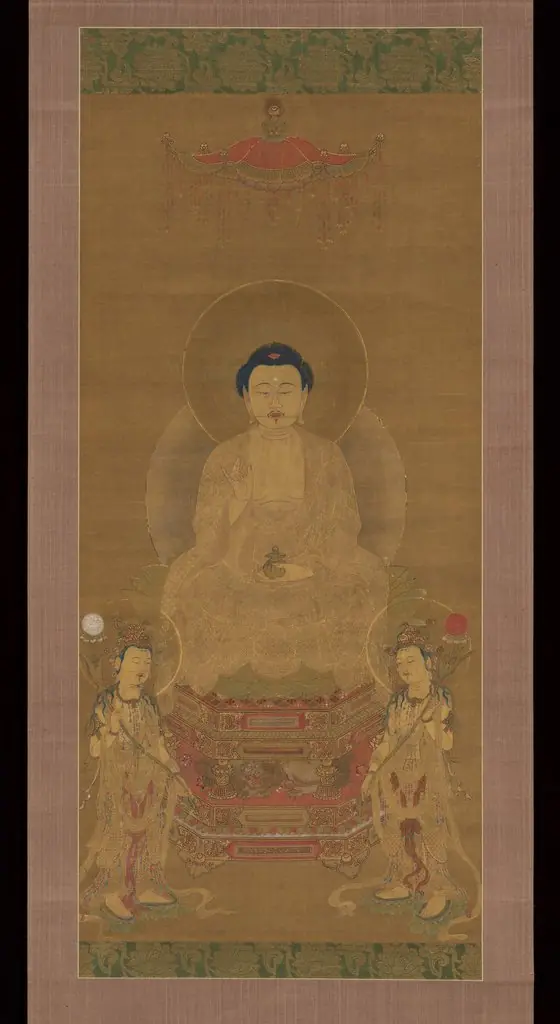
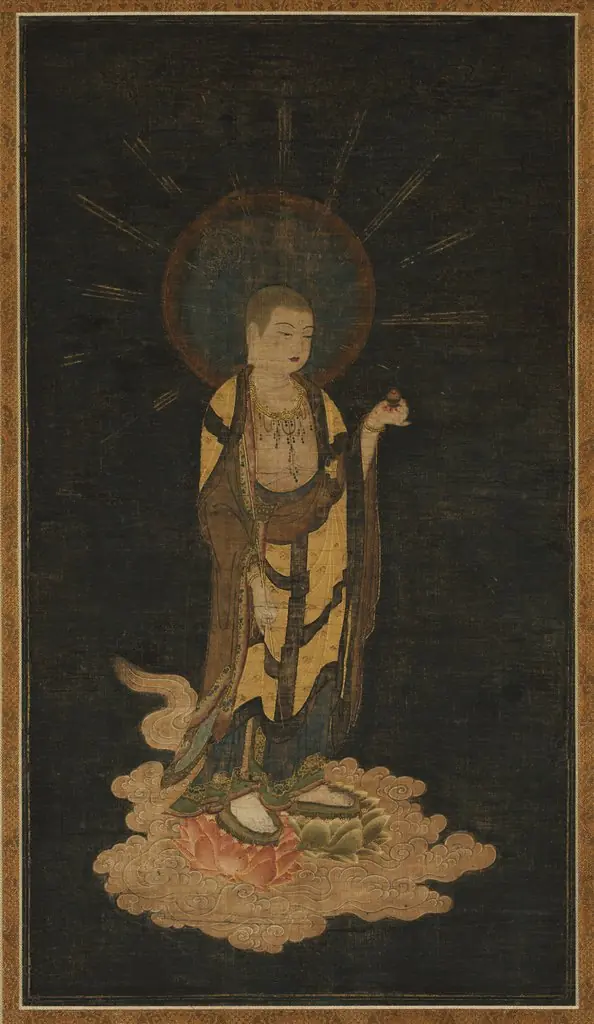
阿弥陀如来像|Welcoming Descent of Amida Buddha is an ink painting. It dates from 1486 and is held in the collection of the Metropolitan Museum of Art. The "Welcoming Descent of Amida Buddha" is a Japanese hanging scroll from the Muromachi period, rendered in ink, color, and gold on silk.
About this work
Technique & Style
The combination of ink, pigment, and gold leaf on a silk support reflects traditional East Asian painting techniques suited for devotional imagery.
Created in 1486, the Welcoming Descent of Amida Buddha is a hanging scroll executed in ink, color, and gold on silk. This Japanese religious painting measures 111.1 cm in height and 63.8 cm in width. The work is attributed to an anonymous artist and depicts the Buddha within a Buddhist context.
The combination of ink, pigment, and gold leaf on a silk support reflects traditional East Asian painting techniques suited for devotional imagery. The scroll format indicates its original function as a portable or displayable object for worship or meditation. Its current condition and stylistic execution align with late 15th-century Japanese Buddhist art, emphasizing spiritual presence through formal composition and material richness.
History & Provenance
The Welcoming Descent of Amida Buddha is a Japanese religious painting created in 1486 by an anonymous artist. Executed on silk using ink, color, and gold, the hanging scroll depicts the Buddha within the Buddhist tradition. The work has been housed in the collection of the Metropolitan Museum of Art, where it remains part of the institution's holdings.
While the specific commission details and original ownership chain prior to its museum acquisition are not detailed in the available records, the piece is firmly dated to the late 15th century. Its creation in Japan during this period reflects the artistic and devotional practices of the time, with the work serving as a significant example of anonymous religious art from that era.
The hanging scroll titled Welcoming Descent of Amida Buddha, dated to 1486, is held in the collection of the Metropolitan Museum of Art. While the specific accession number is not provided in the available records, the work is classified as a Japanese painting created with ink, color, and gold on silk. The museum lists the piece as depicting Buddhist iconography, specifically the Buddha.
No specific exhibition history or provenance details regarding previous ownership or display dates are recorded in the provided sources.
Legacy
The painting’s inclusion in the Metropolitan Museum of Art’s collection has contributed to its scholarly recognition and ongoing discussion of Muromachi‑period Buddhist art, reinforcing its reputation as a representative example of 15th‑century Japanese devotional imagery; its technical use of ink, color, and gold on silk, documented in contemporary records, continues to inform conservation practices and academic exhibitions, ensuring that the work remains a reference point for studies of Amida worship and visual culture in East Asian Buddhist art.
Overview
The "Welcoming Descent of Amida Buddha" is a Japanese hanging scroll from the Muromachi period, rendered in ink, color, and gold on silk. This painting illustrates Amida Buddha's compassionate journey from the Pure Land, accompanied by celestial attendants, to guide a deceased individual's soul to the Western Paradise. It exemplifies a significant theme in Pure Land Buddhism, emphasizing salvation through faith.
Subject & Meaning
The central theme of this scroll is the raigō, or welcoming descent, of Amida Buddha. This event represents Amida's promise to greet the faithful at the moment of death, leading them to the Pure Land. The surrounding figures, playing instruments and bearing lotus petals, signify the celestial retinue accompanying the Buddha.
The extensive use of gold is not merely decorative; it is intended to evoke the radiant, divine light emanating from Amida, illuminating the path to salvation.
Context
The application of gold in this artwork aligns with a long-standing tradition within Buddhist art across various cultures. This precious material was frequently utilized to symbolize divinity, spiritual purity, and the transcendent nature of enlightened beings. Its presence in depictions of Buddhas and bodhisattvas served to enhance their sacred aura and convey a sense of otherworldly splendor, inviting contemplation and reverence from devotees.
Artist & collection

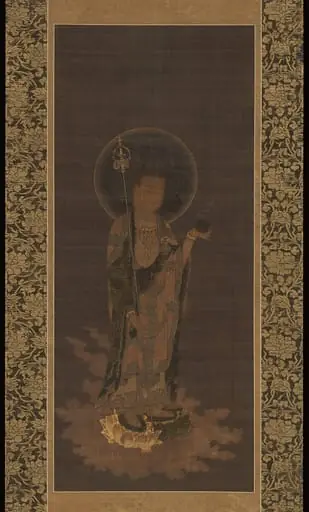
- 地蔵菩薩来迎図|Welcoming Descent of the Bodhisattva Jizō
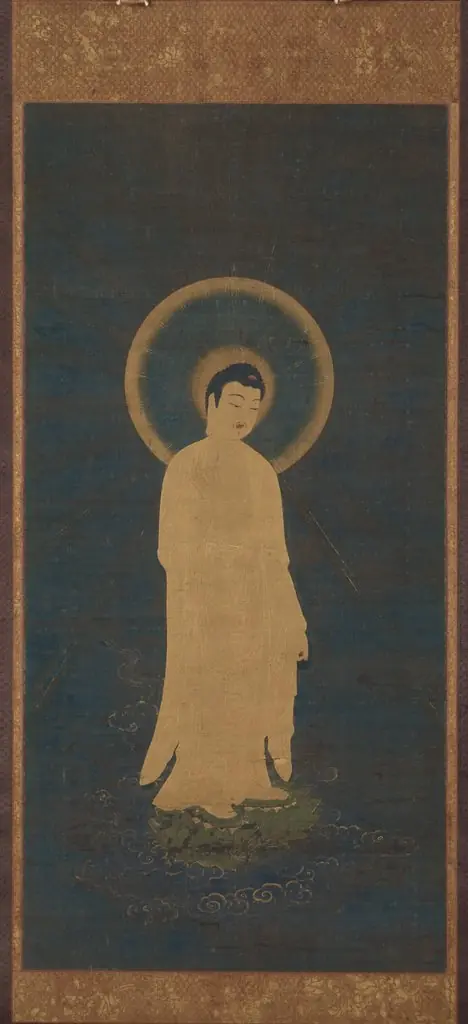 Welcoming Descent of Amida Buddha (Raigō)
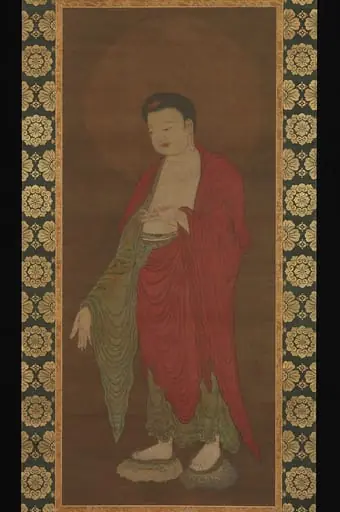 南宋 佚名 阿彌陀佛圖 軸|Buddha Amitabha Descending from his Pure Land
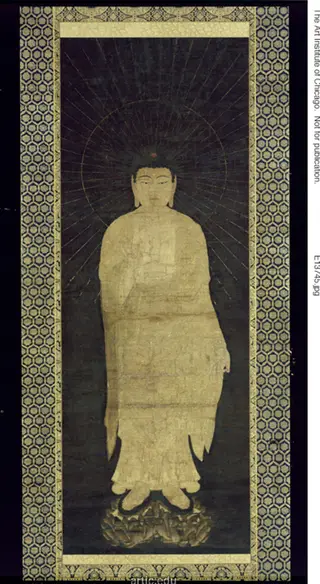 The Buddha Amida, from the triptych Approach of the Amida Trinity
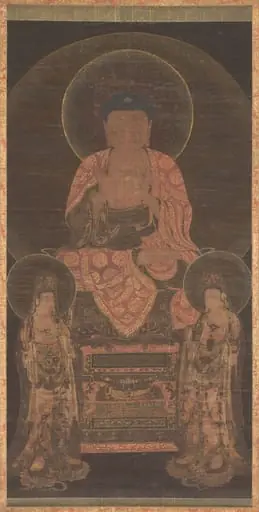 아미타삼존도 고려|阿彌陀三尊圖 高麗|Amitabha triad
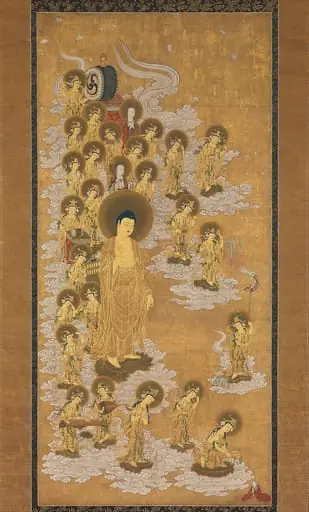 阿弥陀二十五菩薩来迎図|Welcoming Descent of Amida Buddha and Twenty-five Bodhisattvas
 Welcoming Descent of Amida Buddha (Raigō)
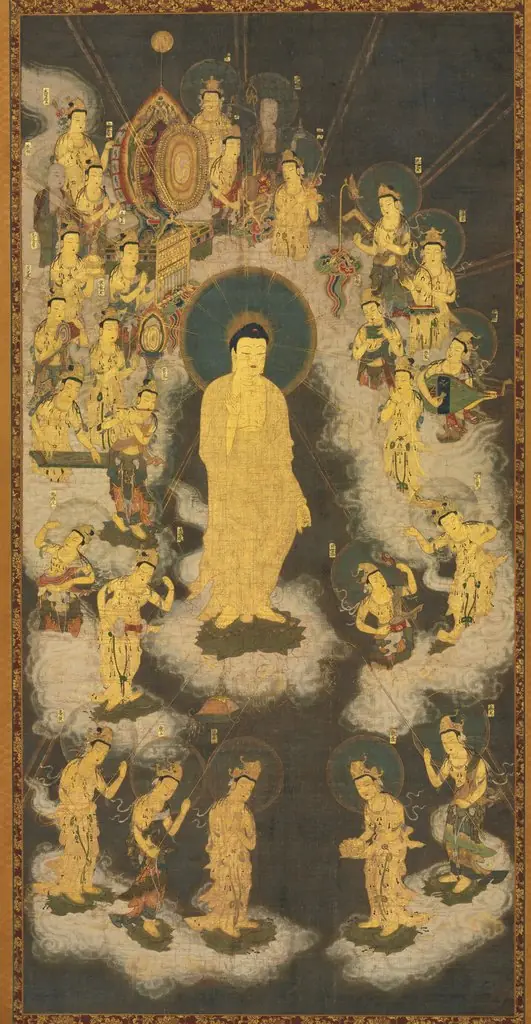 Welcoming Descent of Amida (Amida Raigō)
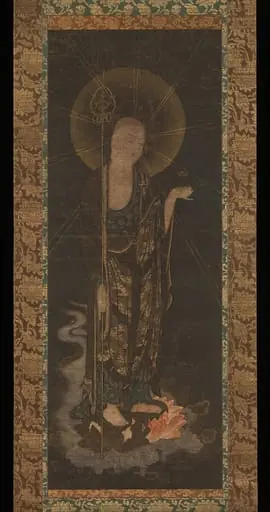 地蔵来迎図|Welcoming Descent of Jizō
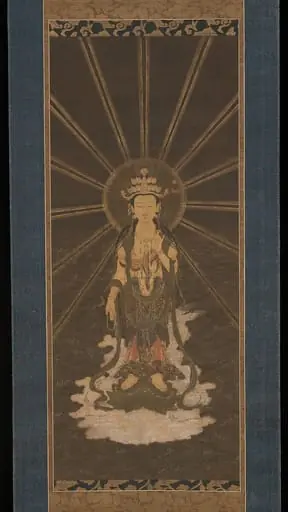 十一面観音来迎図|Descent of Eleven-Headed Kannon
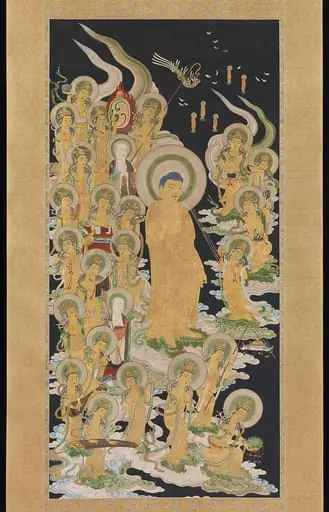 阿弥陀二十五菩薩来迎図|Buddha and Attendants
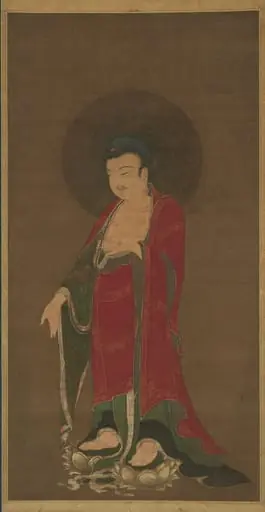 南宋 佚名 阿彌陀佛圖 軸|Buddha Amitabha Descending from His Pure Land