Artwork
De nauwe en de wijde poort
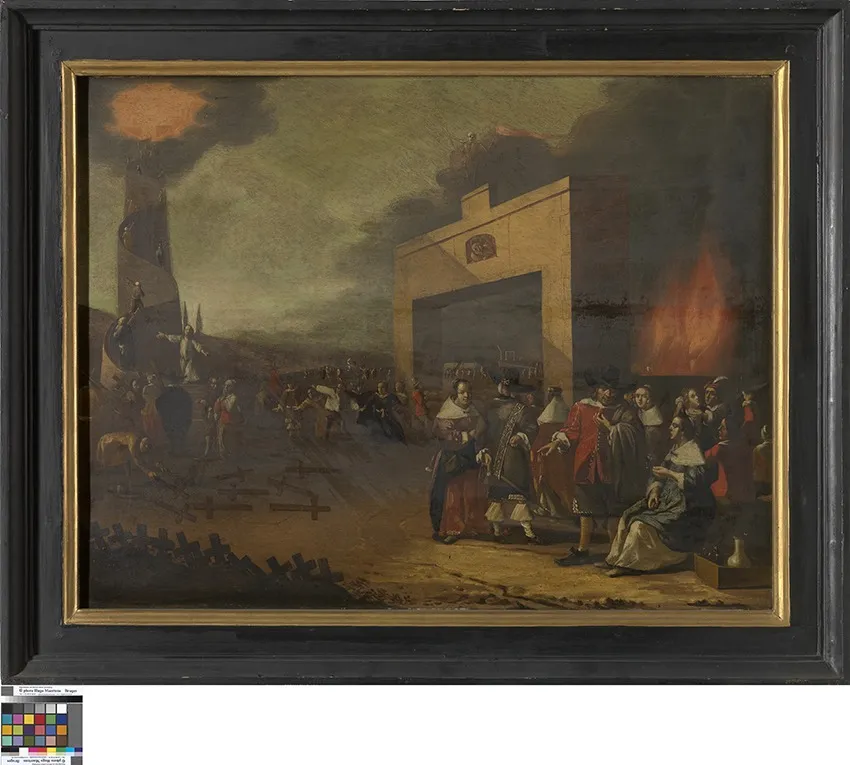
De nauwe en de wijde poort is an oil painting by the Dutch Golden Age artist Unknown. It dates from 1660 and is held in the collection of the Groeningemuseum.
About this work
Subject & Meaning
The composition centers on two gates set within a landscape, a contrast that gives the painting its title meaning "the narrow and the wide gate.
Painted around 1660 in oil, the work presents a religious subject rooted in Christian moral teaching. The composition centers on two gates set within a landscape, a contrast that gives the painting its title meaning "the narrow and the wide gate." One gate is shown as narrow and difficult of access, ascending a hill, while the other is broad and opens onto scenes of fire and damnation.
Figures of men and women populate the scene, illustrating the choice between the path of righteousness and the path of perdition. A Christian cross marks the route of salvation, reinforcing the scriptural basis of the imagery. Together these elements visualize the biblical injunction that the narrow gate leads to life and the wide gate leads to destruction, presenting the work as a didactic allegory of moral choice and eternal consequence.
Technique & Style
De nauwe en de wijde poort is an oil painting executed in 1660 by an anonymous master from the Northern Netherlands. The work is classified as a religious painting depicting a gate alongside imagery of a Christian cross, fire, hell, a hill, and human figures. The support measures 60.3 cm in height and 78.5 cm in width.
As a product of its time and region, the piece utilizes oil paint as its primary medium to render its allegorical religious scene.
History & Provenance
Created in 1660 as an anonymous work from Northern Netherlands, the painting is executed in oil on canvas, measuring 60.3 cm in height by 78.5 cm in width. It depicts a symbolic gate with Christian iconography including a cross, fire, and representations of heaven and hell. The work was produced in the Southern Netherlandish artistic tradition and is classified as religious painting. It entered the collection of the Groeningemuseum, where it remains on display.
De nauwe en de wijde poort is held in the collection of the Groeningemuseum, where it is located. The painting, executed in oil paint and dated 1660, measures 60.3 cm in height and 78.5 cm in width.
No exhibition history is documented in the available sources.
Overview
The oil painting titled De nauwe en de wijde poort depicts a bustling outdoor gathering. Figures in elaborate attire occupy the foreground, some seated, others standing, while a few animals linger nearby. In the distance a tall tower with a winding staircase and a broad arch dominate the skyline, beside which a vivid fire blazes.
The sky is rendered in stormy tones, and the overall palette leans toward dark hues punctuated by warm reds and yellows.
Artist & collection









 Landschap met ruïnes
 Cavalry Skirmish at a Fortress
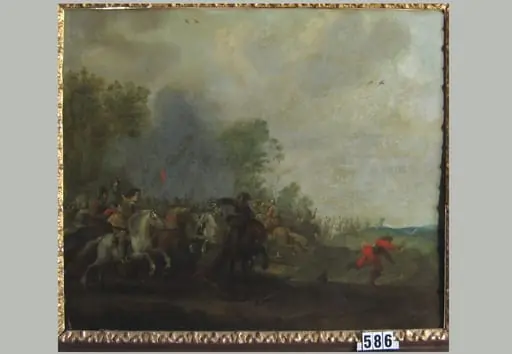 Luptă de cavalerie la marginea codrului
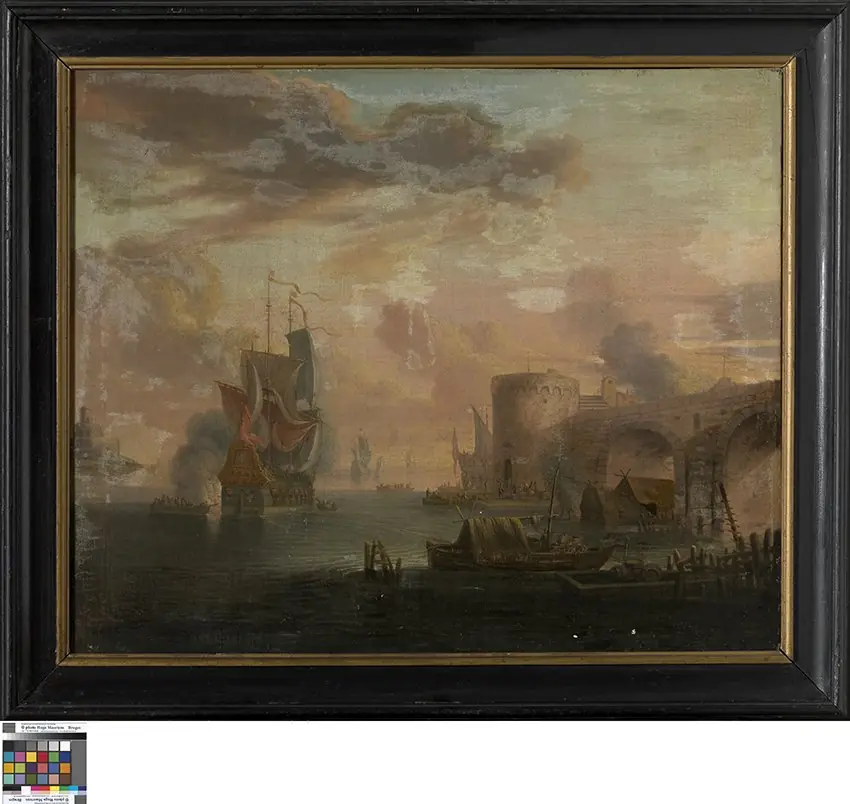 Havengezicht
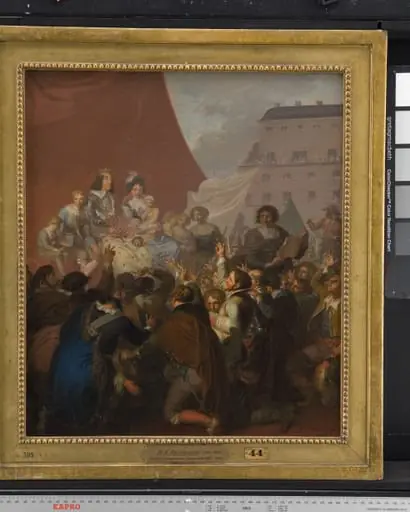 The Oath of Fealty in 1660
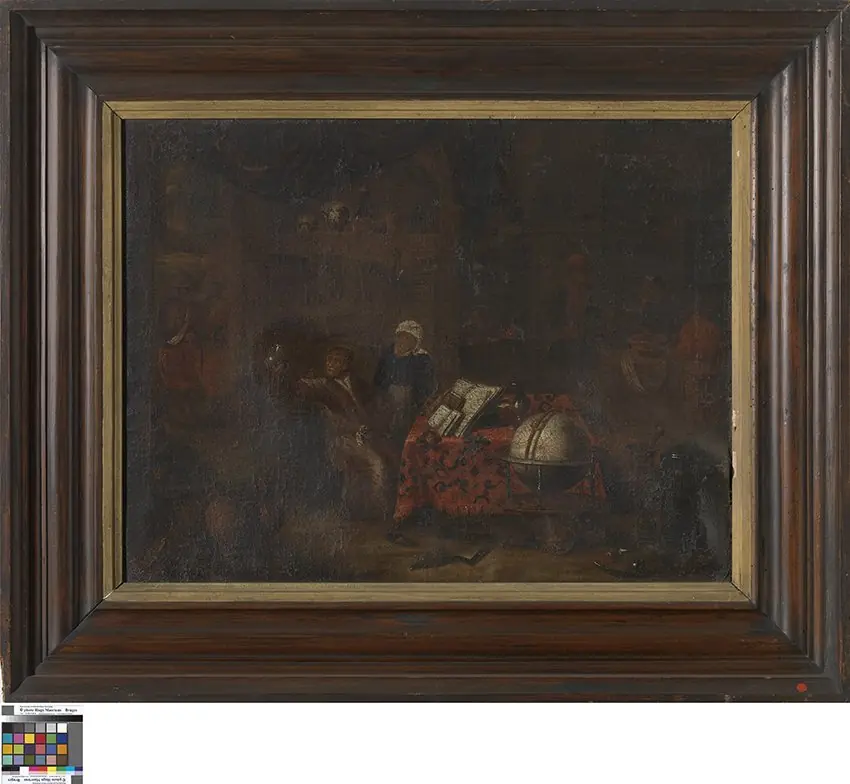 Singerie
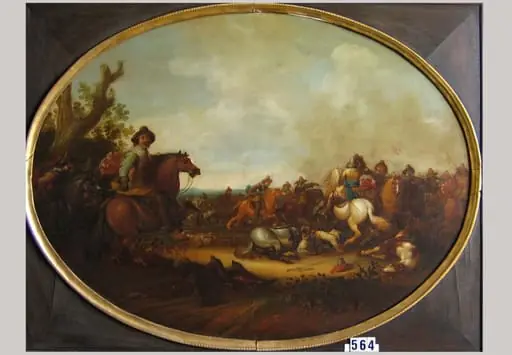 Matthias Gallas în luptă contra suedezilor (în Reg. Inv.: Luptă de cavalerie între austrieci și suedezi)
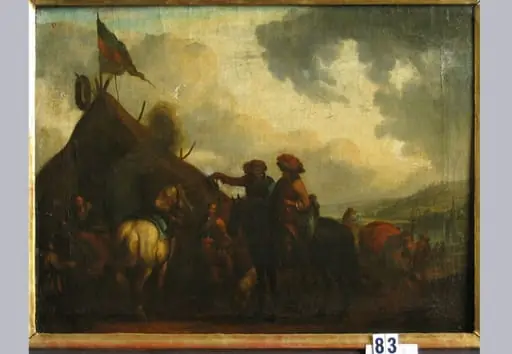 Cort de vivandieră cu cunună de frunze (în Reg. Inv.: Cort de cantinier cu cunună de frunze). Pandant: Cort de vivandieră cu drapel (în Reg. Inv.: Cort de cantinieri cu drapel).