Artwork
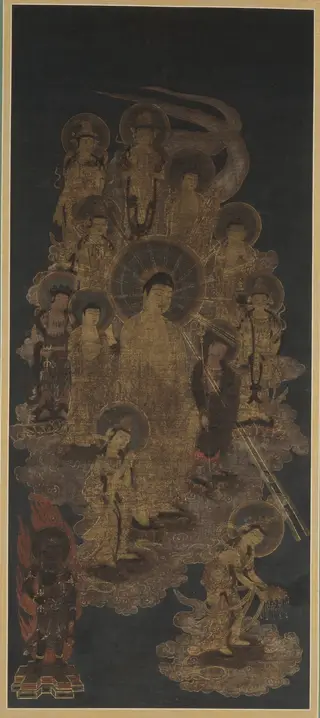
Welcoming Descent of Amida, the Buddha of Infinite Light, and His Holy Retinue
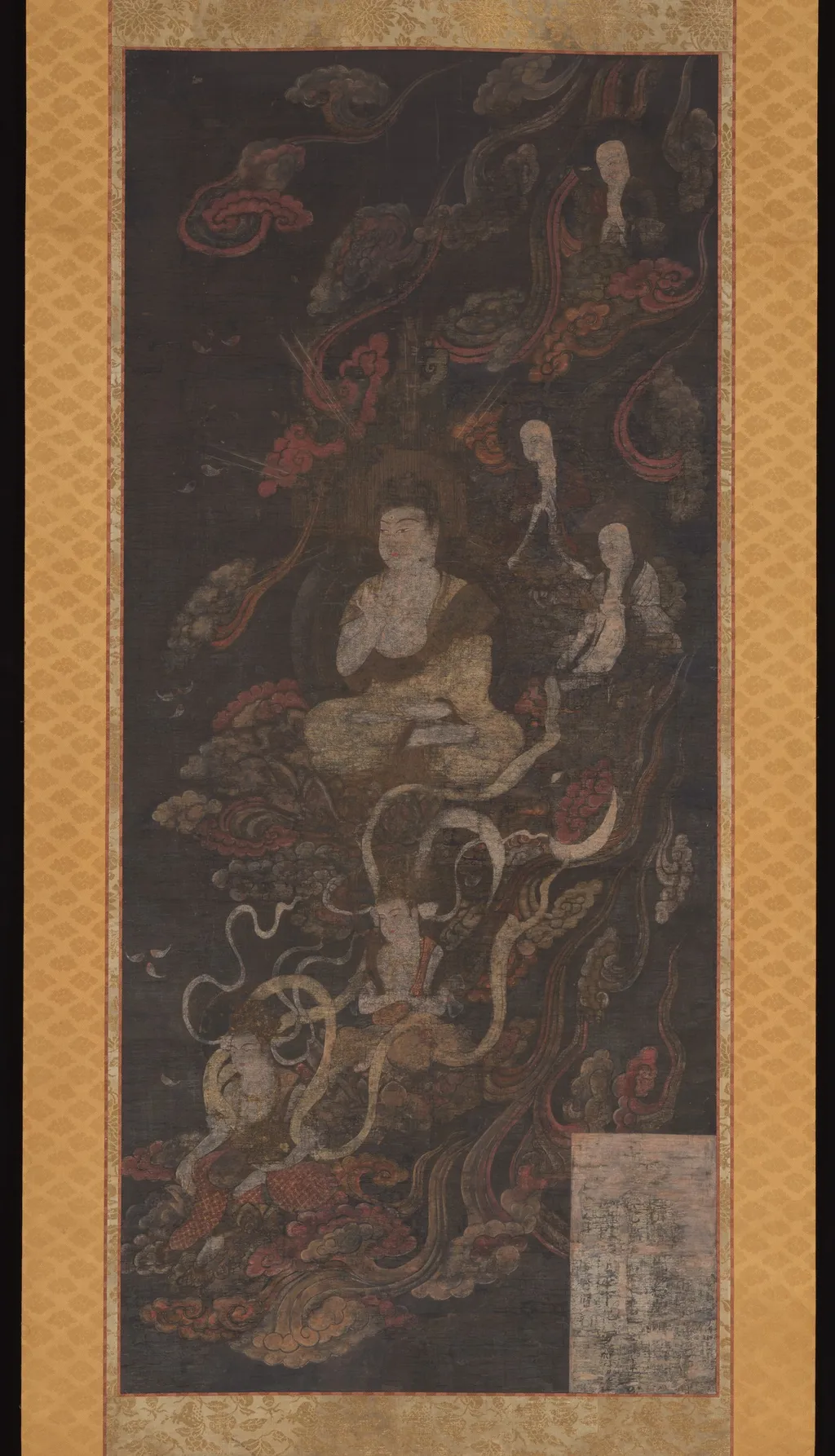
Welcoming Descent of Amida, the Buddha of Infinite Light, and His Holy Retinue is an unspecified painting. It dates from 1362 and is held in the collection of the Metropolitan Museum of Art.
About this work
History & Provenance
The painting titled Welcoming Descent of Amida, the Buddha of Infinite Light, and His Holy Retinue is held in the collection of the Metropolitan Museum of Art.
The painting was created in 1362, as recorded in both the Metropolitan Museum of Art’s records and the work’s internal documentation.
It entered the collection of the Metropolitan Museum of Art, where it remains held. The work is identified as Japanese in origin, aligning with the period’s artistic traditions associated with the Kamakura or early Muromachi era.
The painting titled Welcoming Descent of Amida, the Buddha of Infinite Light, and His Holy Retinue is held in the collection of the Metropolitan Museum of Art. Created in Japan in 1362, the work is attributed to an unidentified artist. The museum's records list the piece as a painting within its holdings, though specific accession or inventory numbers are not provided in the available documentation.
Legacy
The work has been part of the Metropolitan Museum of Art's collection since its acquisition, where it is displayed as a representative example of Muromachi-period religious painting. Its significance lies in illustrating the stylistic transmission of Buddhist iconography from China to Japan during the 14th century, influencing later interpretations of Amida's celestial descent in Japanese art.
The painting's presence in a major Western museum has contributed to broader scholarly discussion of cross-cultural exchange in East Asian religious art, particularly regarding the stylistic adaptation of Chinese narrative cycles in Japanese contexts.
Overview
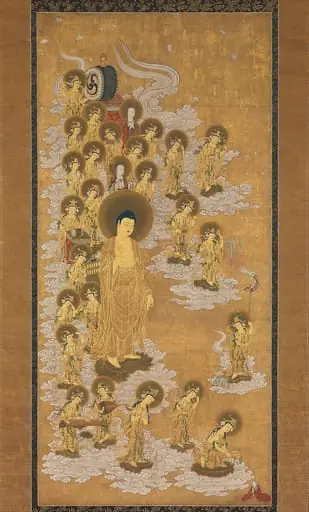
The work titled Welcoming Descent of Amida, the Buddha of Infinite Light, and His Holy Retinue is a painted composition that places a central seated figure amid a dynamic arrangement of clouds and attendant beings. Dark tonalities dominate the surface, punctuated by striking red and gold highlights that lend a luminous quality to the scene. The overall effect is one of solemnity combined with a sense of celestial movement.
Subject & Meaning
At the heart of the painting sits Amida Buddha, depicted in a posture of calm authority. Surrounding him are smaller figures, likely bodhisattvas or disciples, who appear to be rising or descending within a swirling atmospheric space. The composition reflects Pure Land Buddhist iconography, wherein Amida’s descent signifies the promise of salvation and the welcoming of souls into the Western Paradise.
Technique & Style
Executed in pigment on a traditional support, the artist employs a limited palette of deep hues contrasted with vivid red and gold, creating a dramatic chiaroscuro. Fluid, curvilinear lines render the clouds and convey motion, while the figures remain rendered with a static, contemplative stillness. The surface shows signs of age, with areas of fading and wear that reveal the work’s antiquity.
Context
The image belongs to a visual tradition that illustrates Amida’s descent, a motif common in Japanese and Chinese Buddhist art from the medieval period onward. Such depictions were intended for devotional settings, guiding viewers toward the spiritual promise of rebirth in Amida’s Pure Land.
Artist & collection

- 阿弥陀聖衆来迎図 |Welcoming Descent of Amida and Bodhisattvas
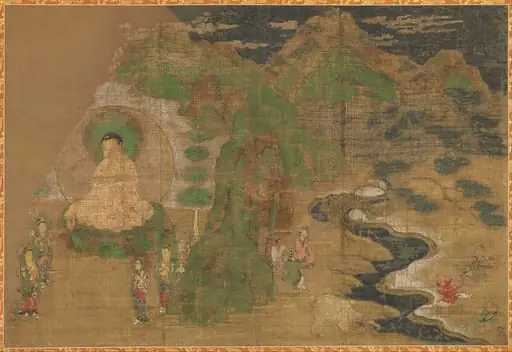
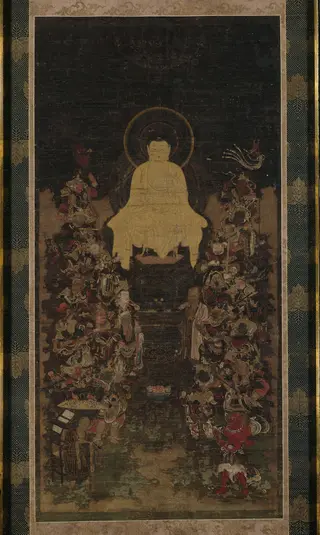 The Buddha Preaching the “Perfection of Wisdom” (Prajnaparamita) Sutra
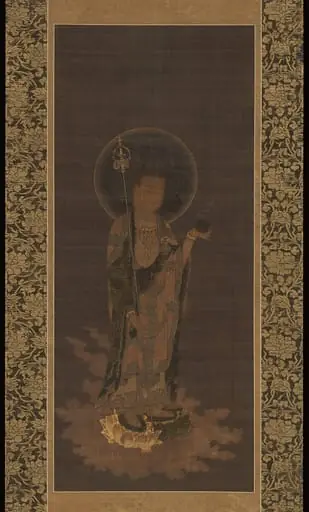 地蔵菩薩来迎図|Welcoming Descent of the Bodhisattva Jizō
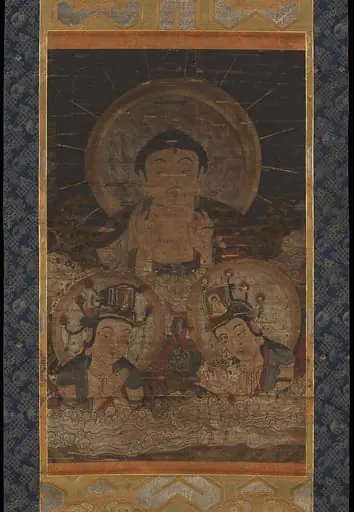
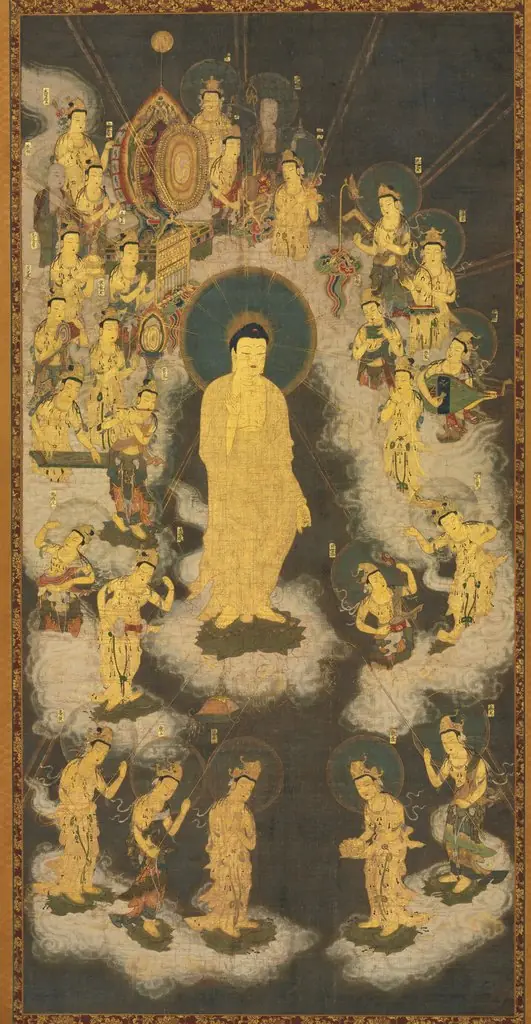 Welcoming Descent of Amida (Amida Raigō)
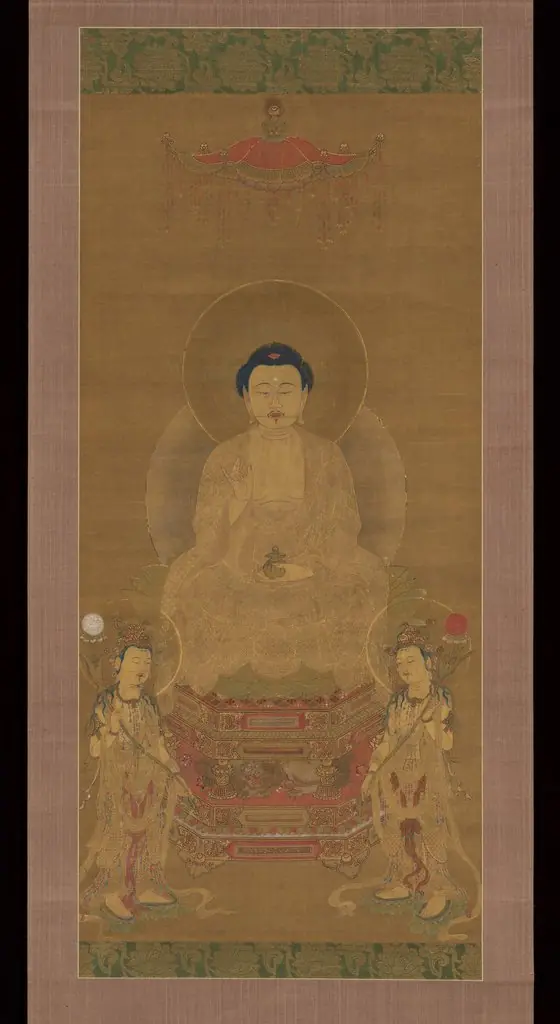
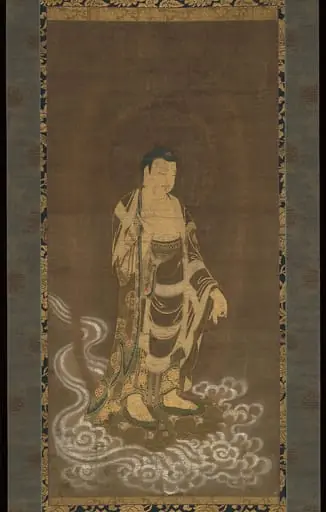 阿弥陀如来像|Welcoming Descent of Amida Buddha
 阿弥陀二十五菩薩来迎図|Welcoming Descent of Amida Buddha and Twenty-five Bodhisattvas