Artwork
Demon Intoning the Name of the Buddha
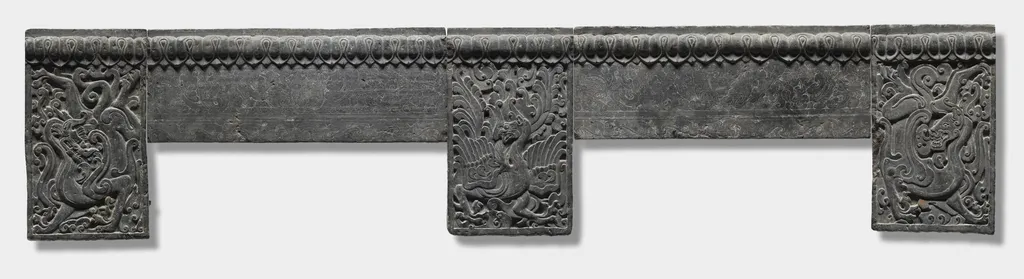
Demon Intoning the Name of the Buddha is an unspecified painting. It dates from 1749 and is held in the collection of the Cleveland Museum of Art. The work is a painted wooden panel of considerable length, its surface divided into three zones.
About this work
History & Provenance
The sources do not specify a commissioning party, an earlier ownership chain, or any intermediate provenance prior to the Cleveland Museum of Art's acquisition.
Demon Intoning the Name of the Buddha dates to 1749 and was produced in Japan, where it is classified as a painting. The work is held by the Cleveland Museum of Art, which holds it under the accession number 1982.26, indicating that it entered the museum's collection in 1982. The sources do not specify a commissioning party, an earlier ownership chain, or any intermediate provenance prior to the Cleveland Museum of Art's acquisition.
The painting Demon Intoning the Name of the Buddha, created in 1749, is held in the collection of the Cleveland Museum of Art in Cleveland. The work was accessioned by the museum in 1982 under the inventory number 1982.26. It was produced in Japan.
Context
Demon Intoning the Name of the Buddha (1749) occupies a pivotal position within Edo-period Buddhist painting traditions, reflecting the syncretic religious climate of 18th-century Japan. The work's depiction of demonic figures engaged in devotional chanting exemplifies the era's complex interplay between esoteric Buddhist cosmology and artistic representation. As part of the Cleveland Museum of Art's collection since acquiring the piece in 1982 (catalogued as 1982.26), it provides critical insight into trans-Pacific artistic exchanges during Japan's closed-door policy.
Contemporary scholarship highlights its significance as a rare surviving example of narrative Buddhist scroll painting from the mid-Edo period, demonstrating how devotional practices permeated visual culture beyond elite religious contexts.
The painting's compositional strategies reveal connections to broader artistic movements in ukiyo-e and Rinpa school traditions, particularly in its use of dynamic line work and symbolic color palettes. Its attribution to an anonymous workshop underscores the collective nature of artistic production in Edo-period Japan, while its preservation in a Western museum collection illustrates evolving patterns of cultural acquisition in the 20th century.
Overview
The work is a painted wooden panel of considerable length, its surface divided into three zones. Carved figures occupy the left and right extremities, while the central portion remains a plain, bordered plane. The composition presents two similarly rendered, dynamic figures, each clutching a scroll‑like object and rendered with exaggerated, fierce expressions.
Subject & Meaning
Both figures appear as demonic or wrathful beings, distinguished by wild hair, sharp teeth and swirling garments. Their aggressive postures and the presence of scrolls suggest a narrative function, perhaps invoking a warning or a ritual chant associated with the name of the Buddha, as implied by the title.
Technique & Style
The panel combines low relief carving with painted surfaces, allowing the sculptural depth to emphasize the figures’ contorted forms. The carving is executed in a high‑contrast, dark wood, while the painted details accentuate the dramatic facial features and the fluidity of the robes, creating a stark visual impact.
Artist & collection

- Untitled
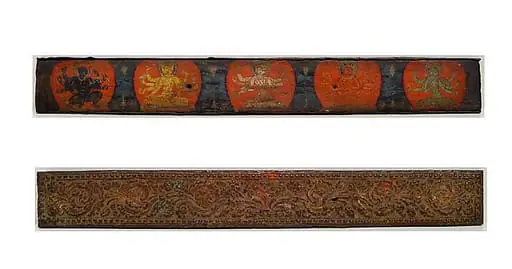
 Bottom cover, from a Manuscript of the Perfection of Wisdom in Eight Thousand Lines (Ashtasahasrika Prajnaparamita-sutra)
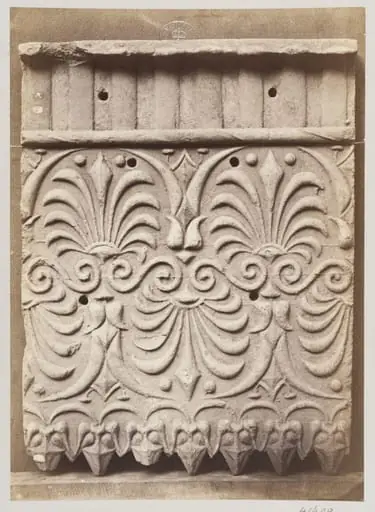 Bas-relief portion of a frieze of honeysuckle in terra cotta
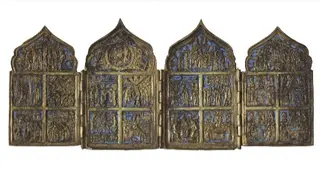 Four Leafed Folding Metal Icon
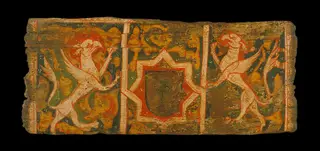 Coffered ceiling panel with coat of arms and griffins rampant
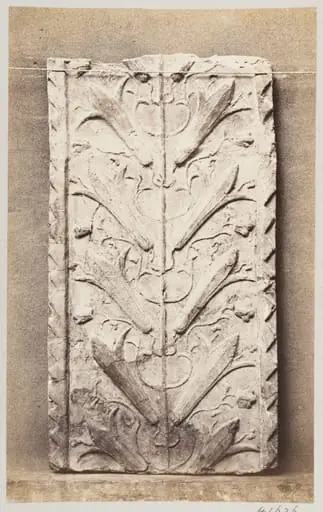 Bas-relief portion of friez of fleur de lys in terra cotta
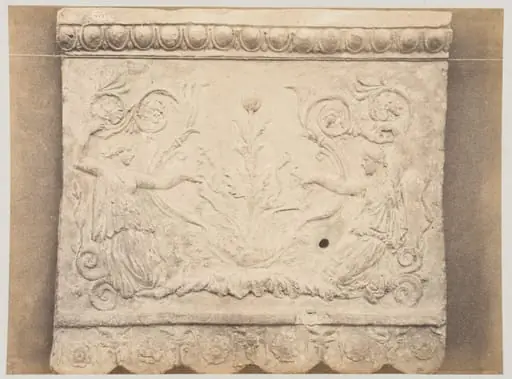 Bas-relief portion of frieze of nymphs with scrollwork in terra cotta
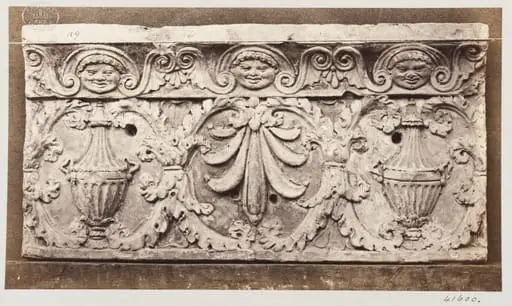 Bas-relief of portion of frieze with acanthus ornament enclosing vases and honesuckle in terra cotta
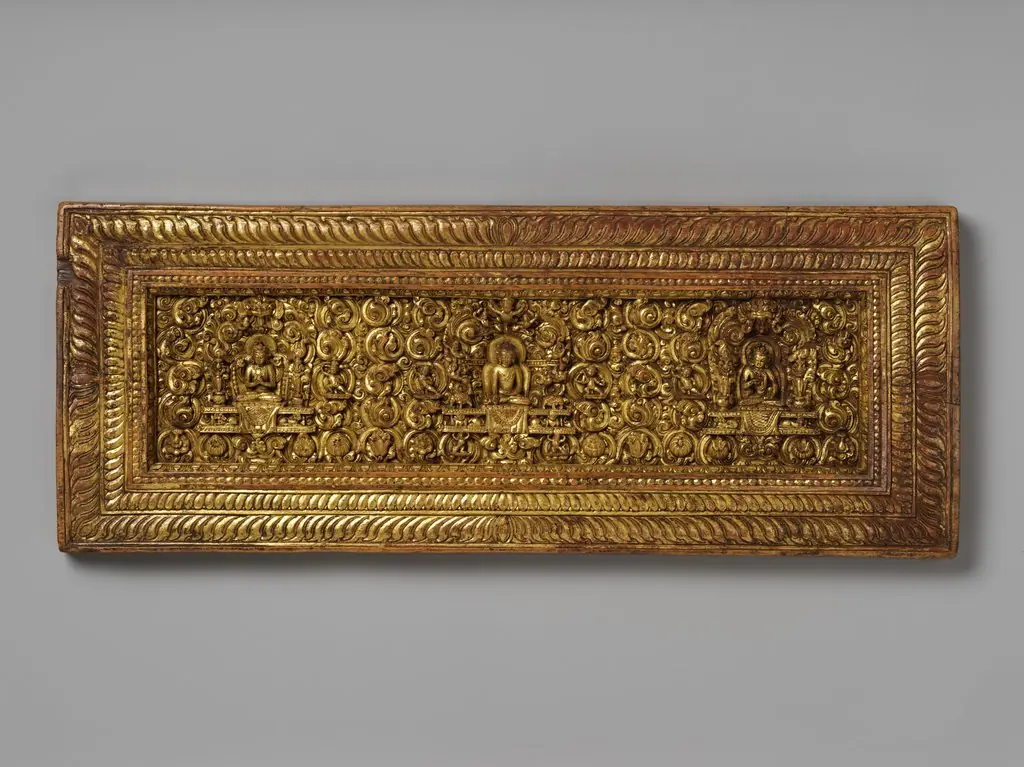 Manuscript Cover Interior with Mahasiddhas, Bodhisattvas, and Protectors
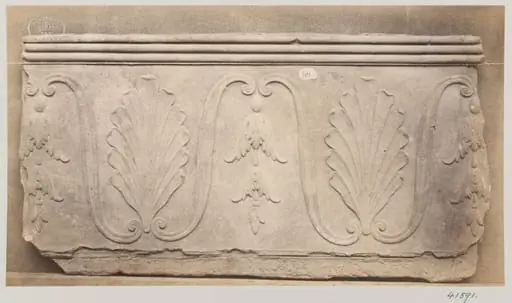 Bas-relief of a portion of a frieze depicting a palmetto and foliage in terra cotta
 Rafter with geometrical, plant, animal and heraldic motifs
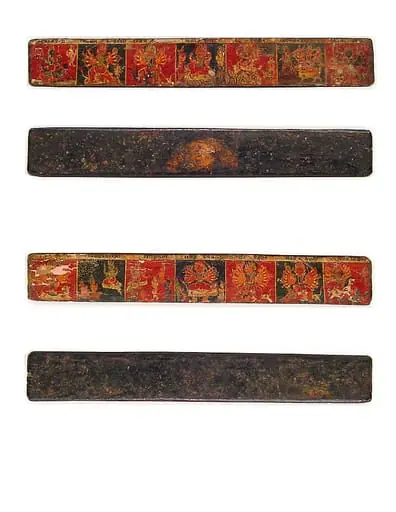 Untitled