Artwork
迎接曼荼羅図|Descent and Return of Amida to Western Paradise with a Believer's Soul (Gōshō mandara)
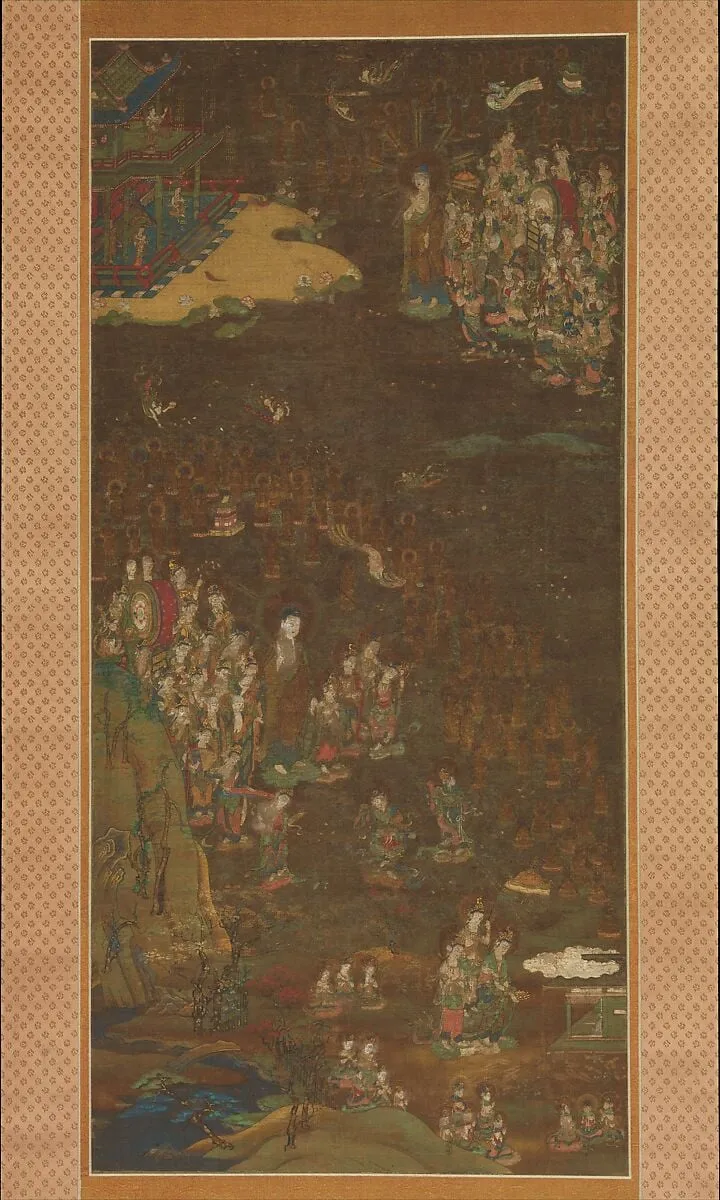
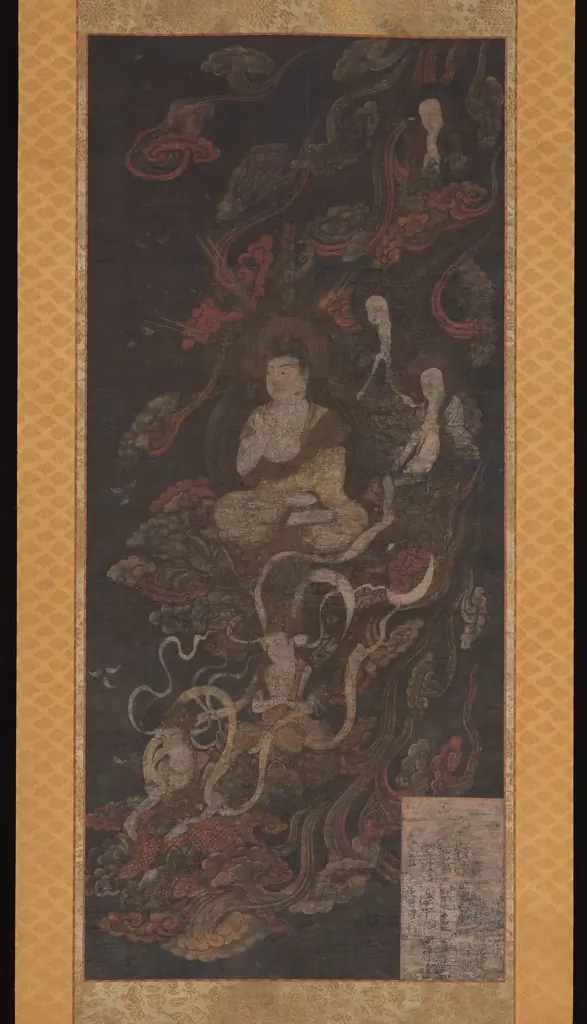
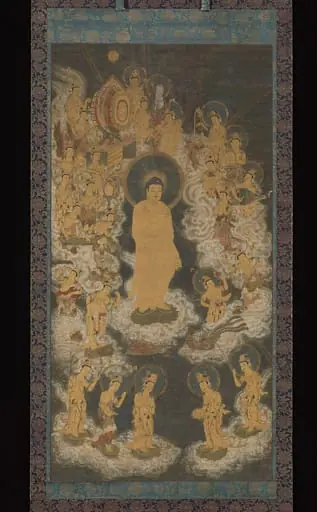
迎接曼荼羅図|Descent and Return of Amida to Western Paradise with a Believer's Soul (Gōshō mandara) is an ink painting. It dates from 1300 and is held in the collection of the Metropolitan Museum of Art. This hanging scroll, titled Descent and Return of Amida to Western Paradise with a Believer's Soul, is rendered with ink and color on silk.
About this work
Subject & Meaning
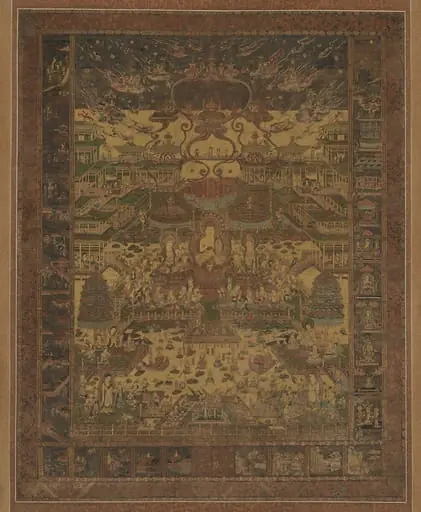
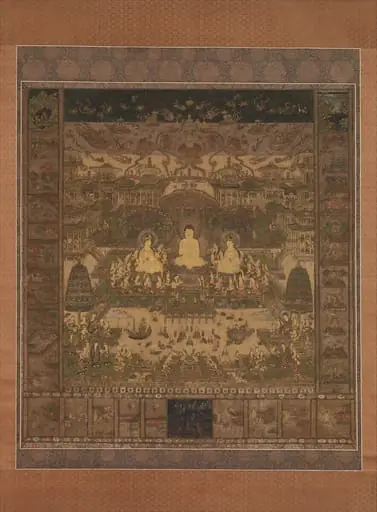
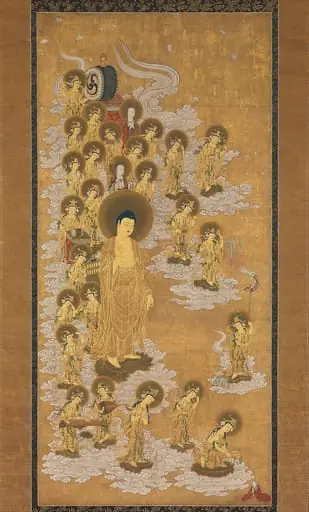
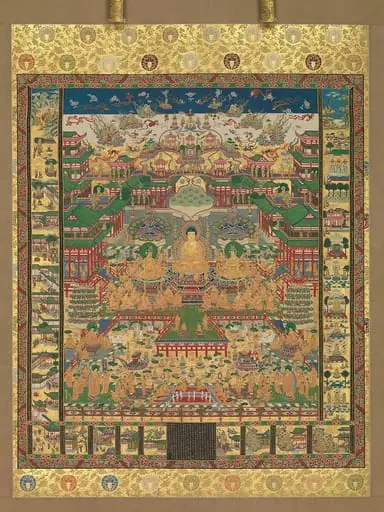
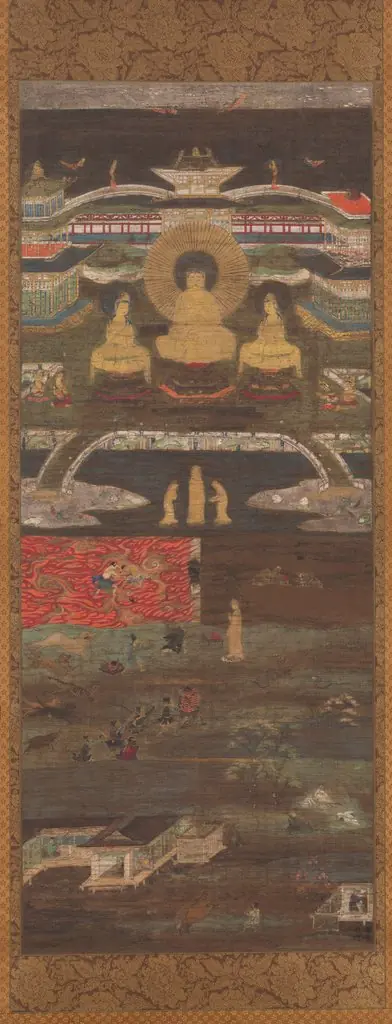
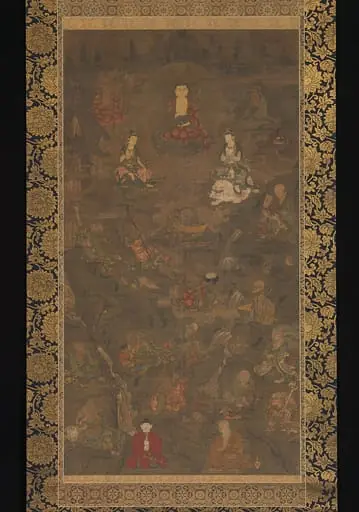
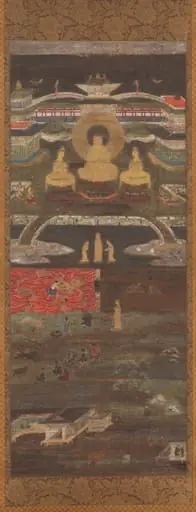
The painting portrays the Amida Buddha descending to the Western Pure Land and returning with a devotee's soul, a scene central to Gōshō mandala iconography.
The painting portrays the Amida Buddha descending to the Western Pure Land and returning with a devotee's soul, a scene central to Gōshō mandala iconography. It combines Buddhist narrative with a landscape format, using traditional symbols such as the lotus throne, celestial light, and the Pure Land garden to convey the promise of salvation and rebirth. The composition reflects medieval Japanese Pure Land devotion, emphasizing the intercession of Amida and the soul's journey toward enlightenment.
By situating the divine event within a naturalistic setting, the work merges spiritual doctrine with aesthetic representation, illustrating the path to the Western Paradise.
Technique & Style
The work is executed as a hanging scroll using ink and polychrome pigments applied to silk, a format typical of Japanese Buddhist painting of the Kamakura period. The composition follows a landscape genre, arranging the descent of Amida and the return scene within a stylized western paradise, emphasizing hierarchical spatial depth and delicate brushwork. The silk support provides a smooth, flexible surface that was customarily rolled for transport and veneration, suggesting careful handling in liturgical contexts.
The painting's formal qualities include a restrained palette, rhythmic line, and balanced placement of figural elements that convey both narrative clarity and spiritual solemnity.
History & Provenance
The Descent and Return of Amida to Western Paradise with a Believer's Soul, also known as the Gōshō mandara, is a Japanese hanging scroll created circa 1300. Attributed to an anonymous painter, the work was executed in Japan using ink and color on silk. The painting is now held in the collection of the Metropolitan Museum of Art.
The artwork's creation date is consistently cited as 1300, situating it within the early fourteenth-century period of Japanese Buddhist art. As a hanging scroll, it was likely designed for devotional display, though the original context of its installation and the identity of its first owner are not specified in the provided records. No specific accession number or dedicated exhibition records are disclosed in the available documentation.
Overview
This hanging scroll, titled Descent and Return of Amida to Western Paradise with a Believer's Soul, is rendered with ink and color on silk. It depicts a pivotal moment in Buddhist eschatology: the Amida Buddha's descent to retrieve a devotee's spirit and transport it to the Pure Land. The composition presents a towering, radiant Buddha hovering above a diminutive monk situated on a rocky precipice, amidst celestial clouds and architectural elements.
Context
This artwork is deeply rooted in Pure Land Buddhism, a school emphasizing faith in Amida Buddha for salvation. Such mandala paintings served as devotional objects, guiding believers in their understanding of the path to paradise and offering a visual meditation on the promise of spiritual liberation. They provided a tangible representation of the divine intervention awaiting the faithful, reinforcing core tenets of the Buddhist afterlife.
Artist & collection