Artwork
当麻曼荼羅図|Taima Mandala
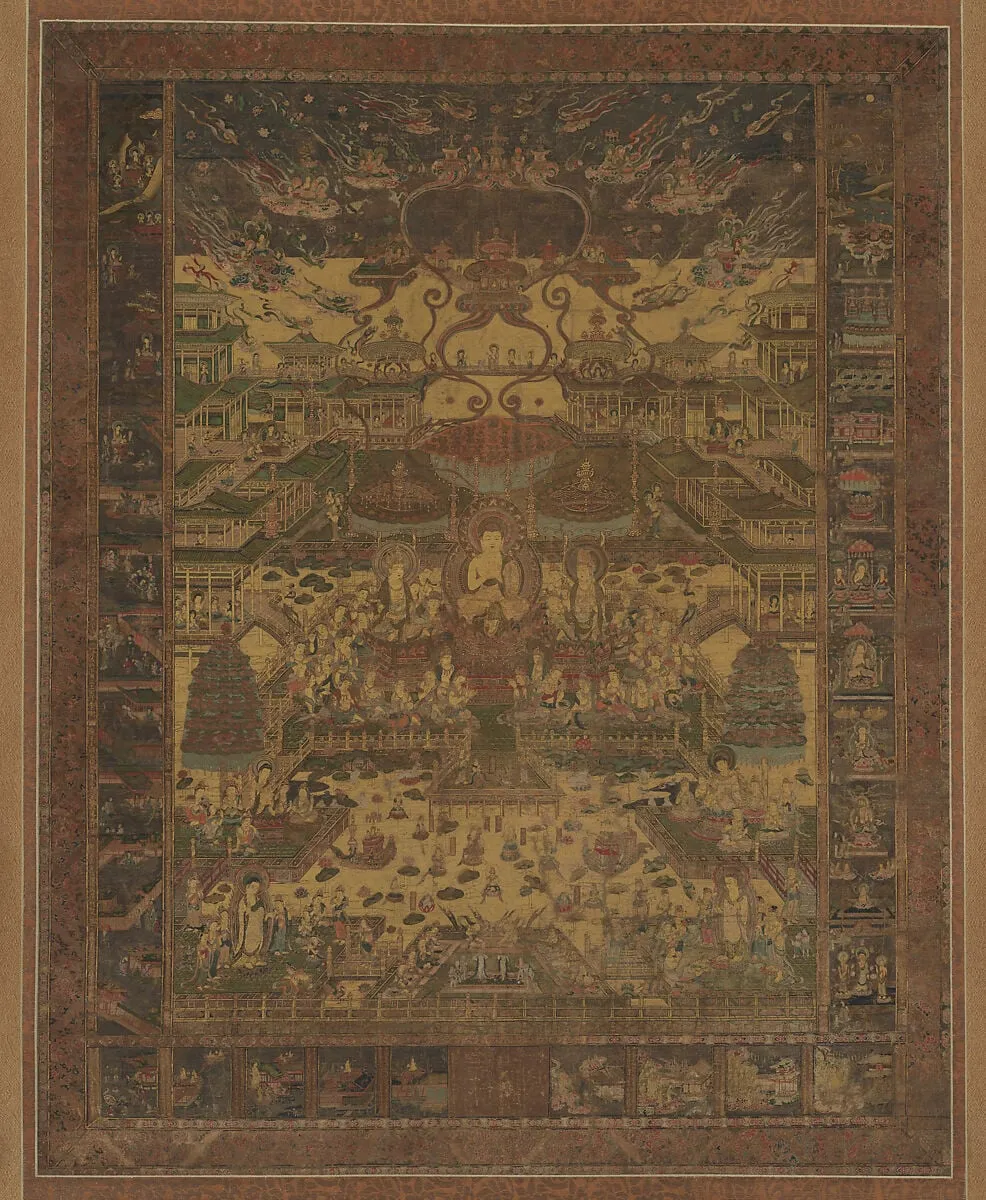
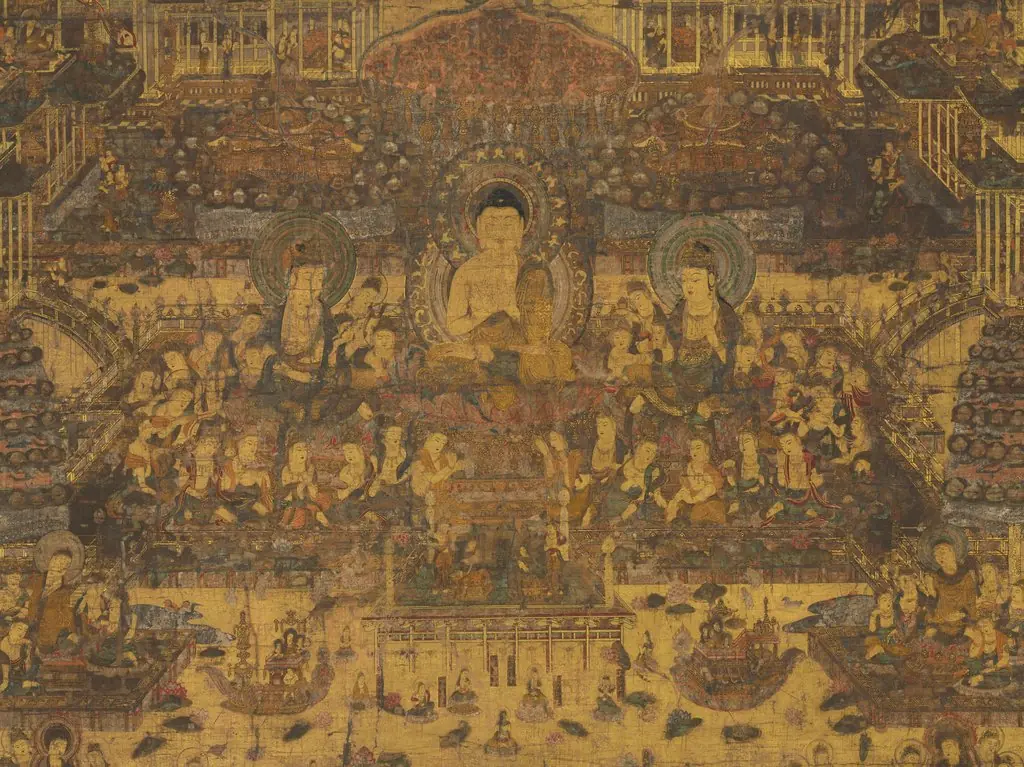
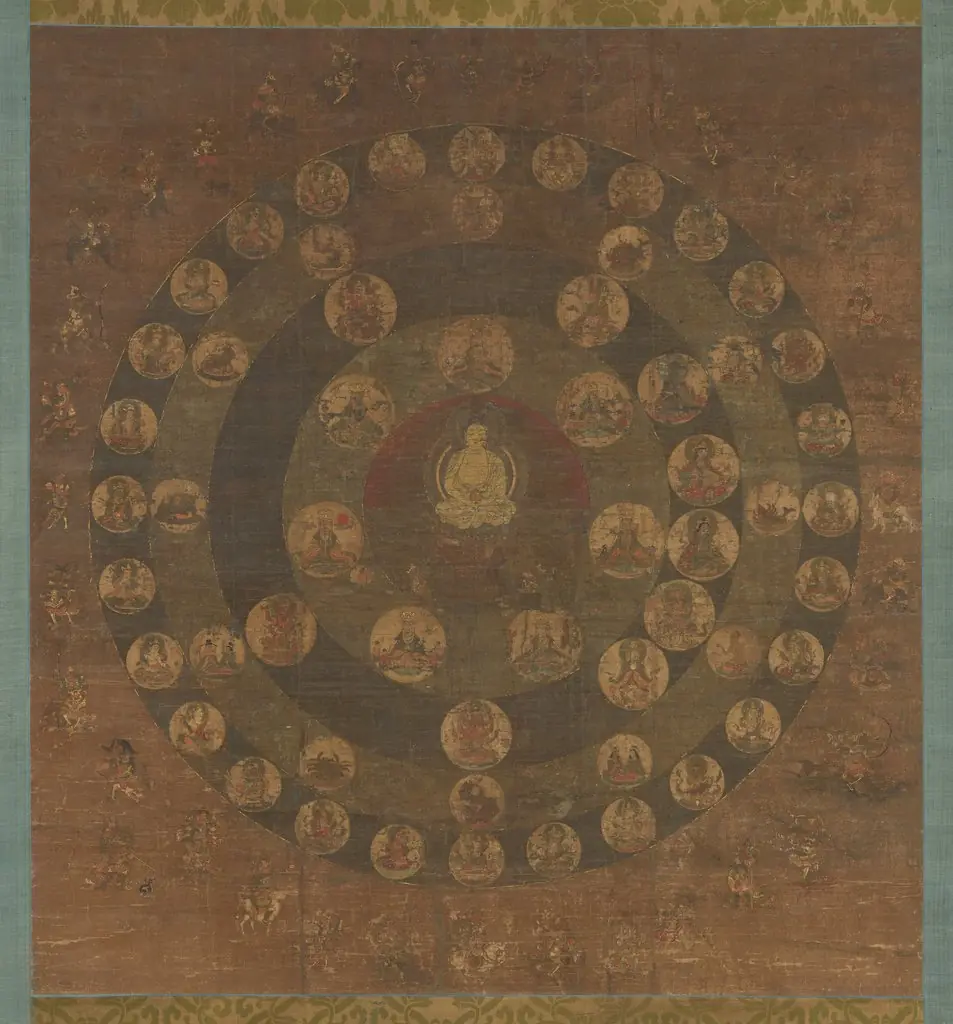
当麻曼荼羅図|Taima Mandala is an ink painting. It dates from 1316 and is held in the collection of the Metropolitan Museum of Art. The Taima Mandala is a hanging scroll rendered in ink, color, and gold on silk.
About this work
Subject & Meaning
The architectural setting symbolizes the Pure Land, while the attendant dancers and musicians embody the heavenly rites that accompany the Buddha’s teaching.
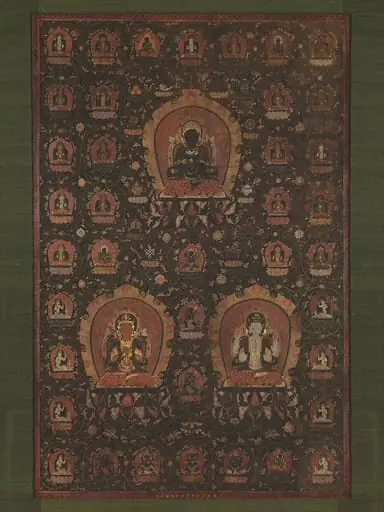
The Taima Mandala, painted circa 1316 on silk, presents a celestial palace inhabited by Buddha and a bodhisattva, surrounded by dancing and musical figures. The architectural setting symbolizes the Pure Land, while the attendant dancers and musicians embody the heavenly rites that accompany the Buddha’s teaching. Together these elements convey the Buddhist vision of enlightenment as a harmonious, perfected realm where devotional music and graceful movement reflect spiritual harmony. The work thus functions both as a devotional image and a schematic map of Buddhist cosmology.
Technique & Style
The Taima Mandala is a hanging scroll painted in ink, color, and gold leaf on silk, dated to 1316 and produced in Japan. It depicts a rich assembly of Buddhist figures, Bodhisattvas, Buddhas, dancers, musicians, and a palace setting, arranged in a balanced, hierarchical composition. The painting employs fine line work and vivid pigments, with gold used to highlight sacred elements, reflecting the opulent yet devotional style of early‑14th‑century Japanese religious scrolls.
History & Provenance
The Taima Mandala held in the Metropolitan Museum of Art is a hanging scroll executed in ink, color, and gold on silk, dated to the year 1316. Created in Japan by an anonymous painter, the work depicts Buddhist iconography including the Buddha, Bodhisattvas, and celestial musicians within a palace setting. While the specific commissioning patron and the detailed chain of ownership preceding its arrival at the museum are not detailed in the available records, the piece is firmly attributed to the early fourteenth century.
It is currently cataloged as part of the museum's collection under the accession number 57.156.6. The artwork serves as a religious painting illustrating Pure Land Buddhism themes, reflecting the artistic traditions of the Kamakura period.
The 1316 hanging scroll known as the Taima Mandala is held in the collection of the Metropolitan Museum of Art in New York. Within the museum's records, the work is identified by the accession number 57.156.6. Attributed to an anonymous Japanese painter, this silk painting featuring ink, color, and gold depicts Buddhist figures including Buddhas and Bodhisattvas within a palace setting.
The provided sources confirm its current institutional location and specific inventory designation but do not contain details regarding past exhibition history or previous ownership transfers.
Overview
The Taima Mandala is a hanging scroll rendered in ink, color, and gold on silk. This tall painting presents an intricate vision of a Buddhist paradise, populated by numerous tiny figures amidst golden clouds and a vibrant red palace. It served as a visual guide, illustrating the Pure Land, a realm of post-mortem joy, to convey core Buddhist teachings.
Artist & collection

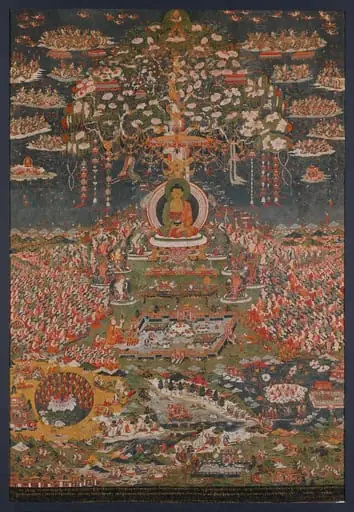 Untitled
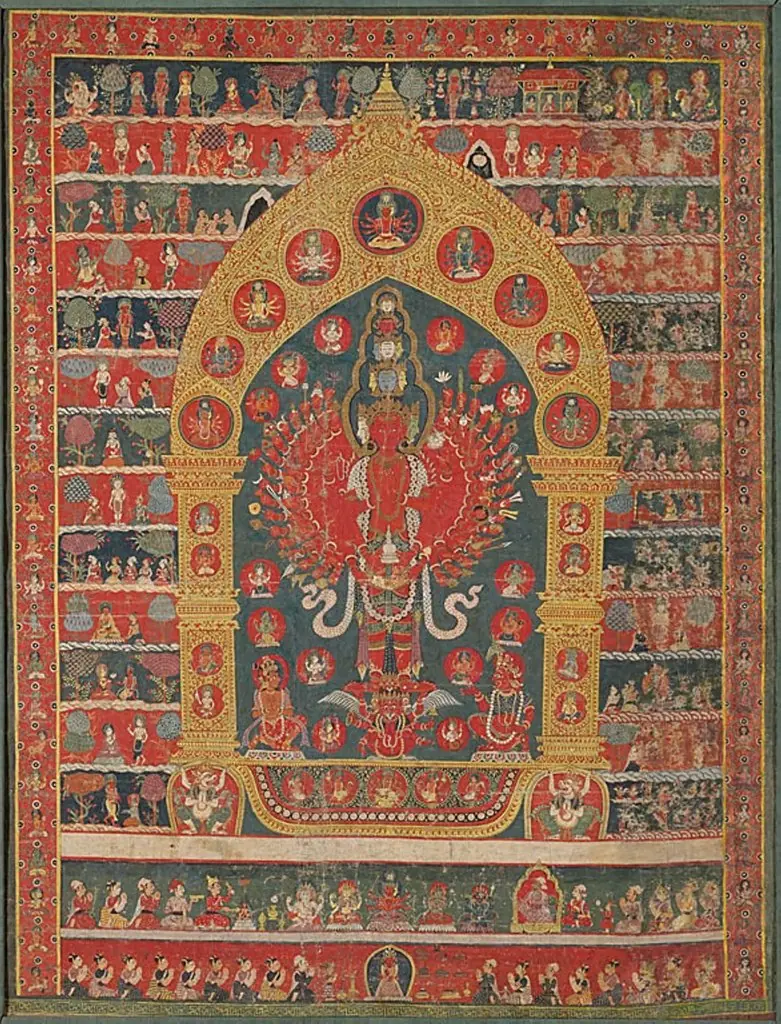 Painted Banner (Thangka) of the Avalokiteshvara Incarnation of the Rain God Rato Matsyendranatha
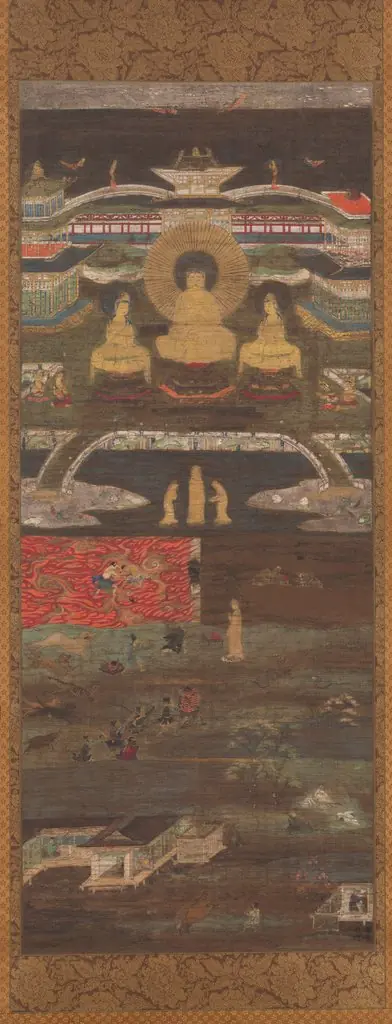 The White Path Between Two Rivers
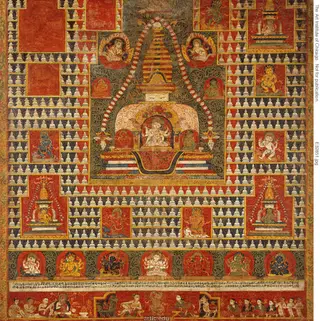 Painted Banner (paubha) of Goddess Ushnishavijaya Within a Funerary Mound (chaitya) and Surrounded by Chaityas
![The Guardian Generals of the Directions (Lokapalas) Dhritarashtra (East) [top] and Virudhaka (South) [bottom]](https://artifactworldgallery.com/img/the-guardian-generals-of-the-directions-lokapalas-dhritarash--26a8da85b3fb4c5a-w320.webp) The Guardian Generals of the Directions (Lokapalas) Dhritarashtra (East) [top] and Virudhaka (South) [bottom]
The Guardian Generals of the Directions (Lokapalas) Dhritarashtra (East) [top] and Virudhaka (South) [bottom]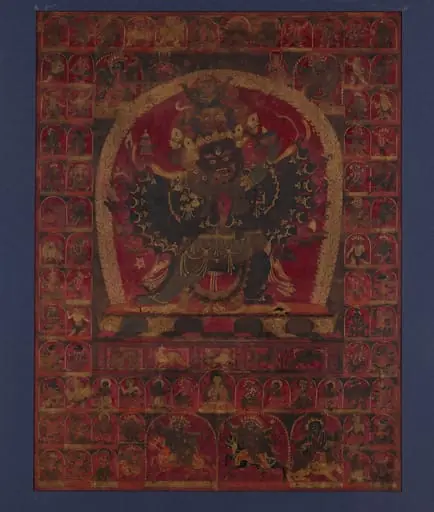 Untitled
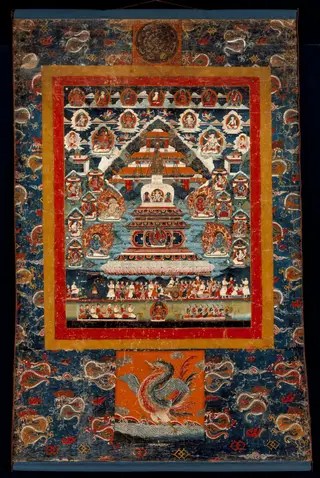 Commemoration Thangka for Bhimaratha Rite