Artwork
當麻曼荼羅図 |Taima Mandala
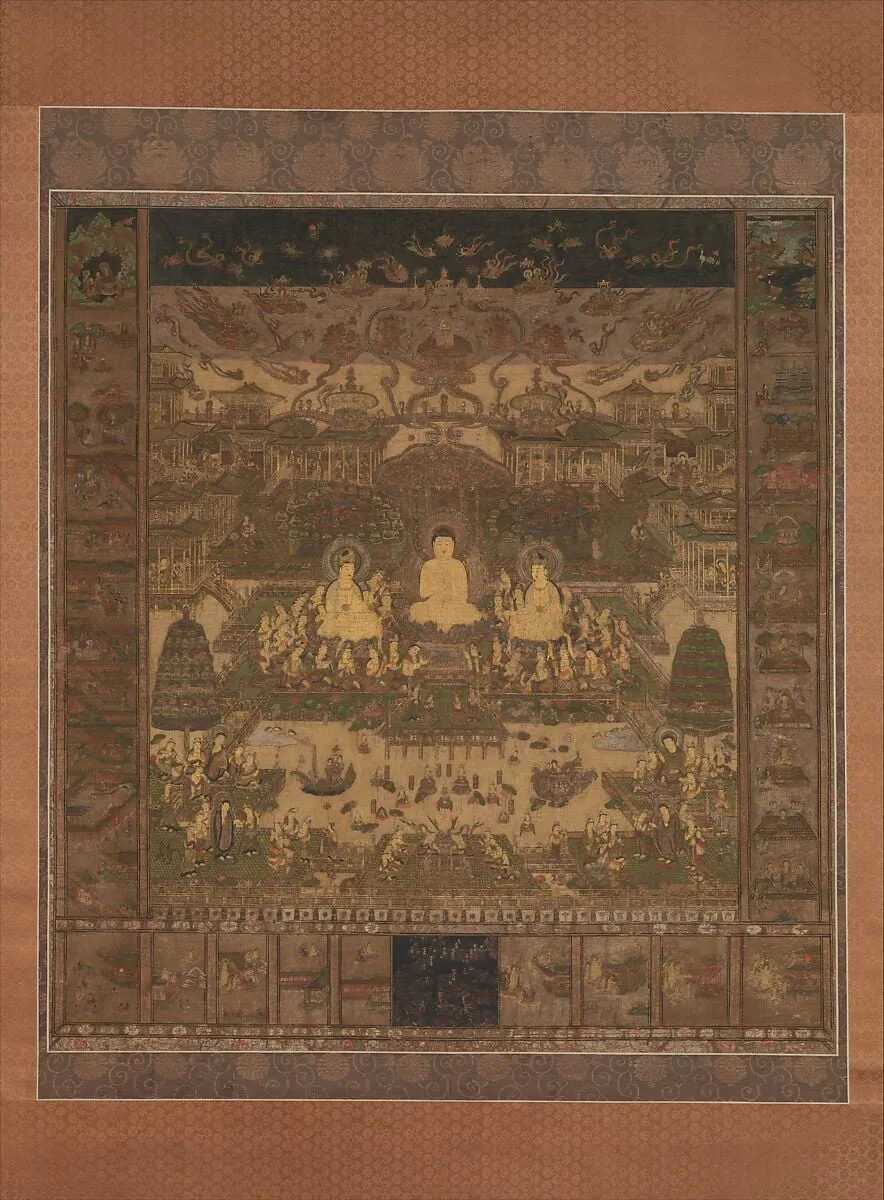
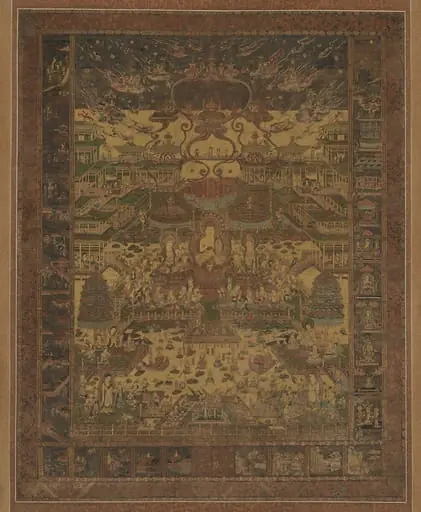
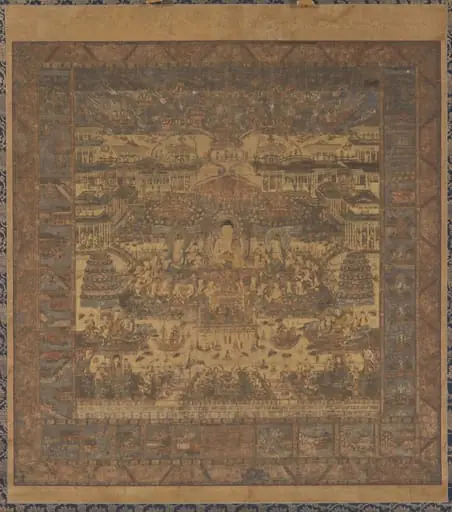
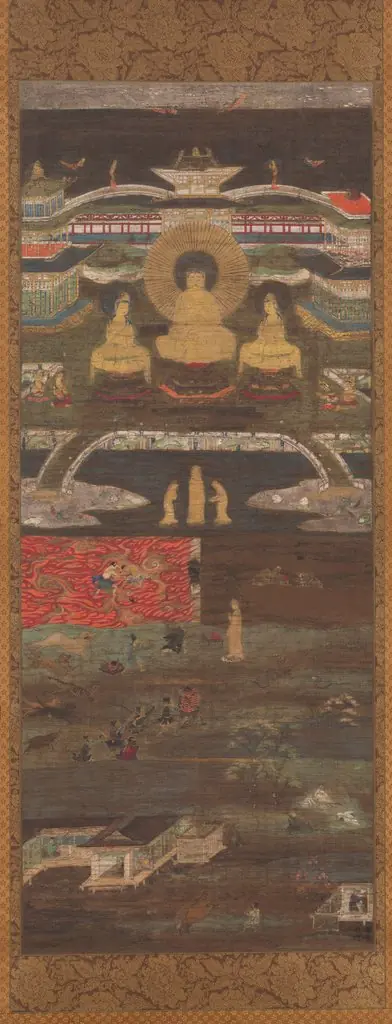
當麻曼荼羅図 |Taima Mandala is a gold painting. It dates from 1379 and is held in the collection of the Metropolitan Museum of Art. The Taima Mandala is a Japanese hanging scroll, rendered in vibrant colors and gold on silk.
About this work
Subject & Meaning
The arrangement of deities within a sanctified space symbolizes the cosmic order and the path to enlightenment, reflecting Pure Land aspirations.
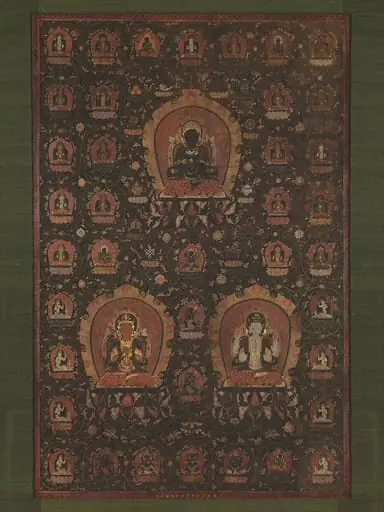
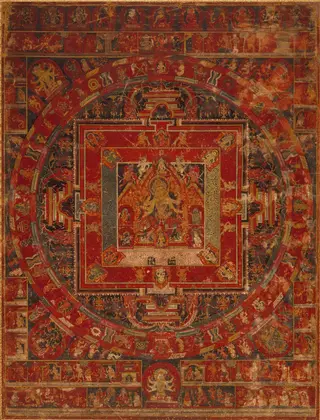
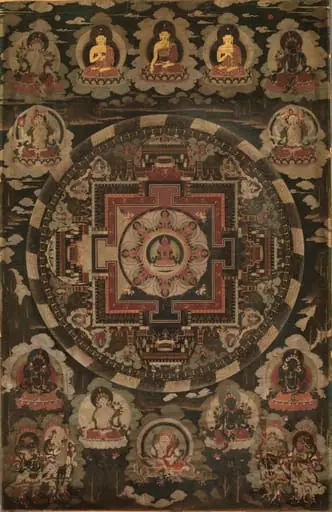
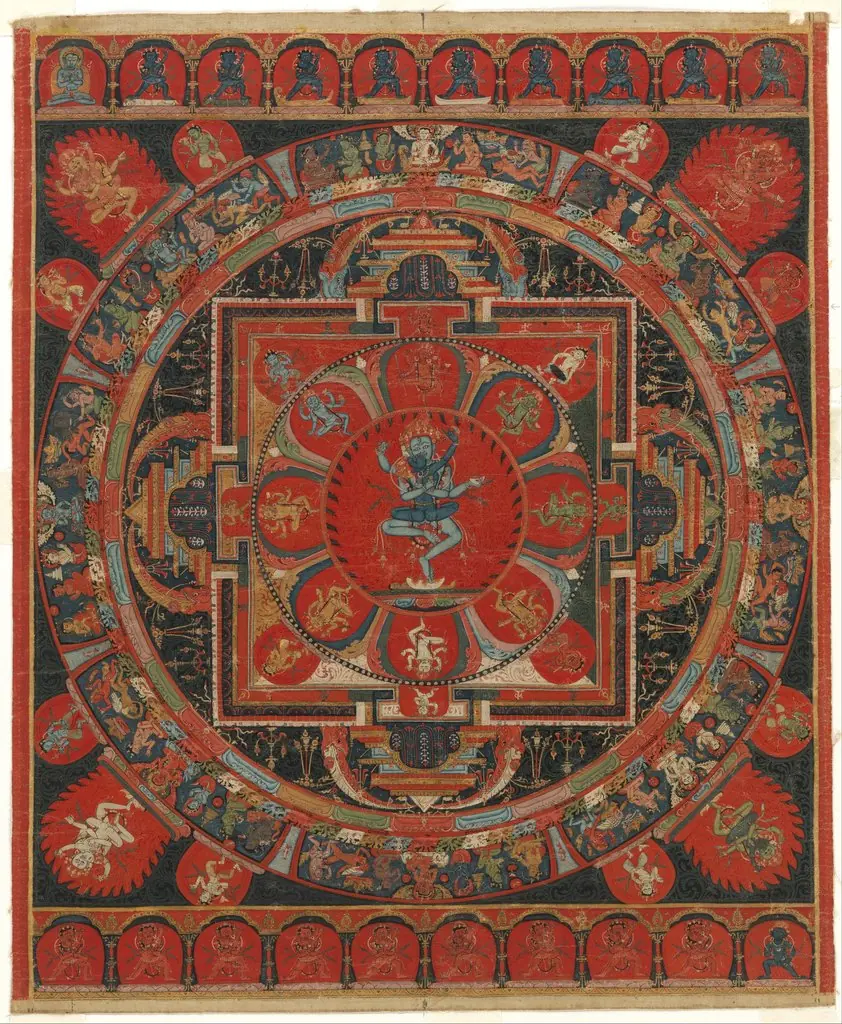
The painting presents a central mandala populated by a Buddha figure surrounded by bodhisattvas within an ornate pavilion, a visual scheme typical of Japanese Buddhist iconography. The arrangement of deities within a sanctified space symbolizes the cosmic order and the path to enlightenment, reflecting Pure Land aspirations. Gold leaf accents emphasize the sacred atmosphere, while the silk support underscores the work's ritual function as a hanging scroll used in devotional contexts. Together these elements convey the theological emphasis on a transcendent, visualized realm of Buddhist practice.
Technique & Style
The Taima Mandala is a hanging scroll executed in 1379 on a silk support. The work employs traditional Japanese painting techniques, utilizing color pigments and gold leaf applied to the textile ground. Measuring 133.4 cm in height and 121.9 cm in width, the piece functions as a religious visual aid depicting Buddhist cosmology, including figures of the Buddha and Bodhisattvas within architectural pavilions.
As a product of anonymous Japanese craftsmanship from the fourteenth century, the scroll exemplifies the formal qualities of religious art from this period, characterized by its vertical orientation and the integration of metallic elements with painted forms to convey spiritual significance.
History & Provenance
The Taima Mandala is a 14th-century Japanese hanging scroll painted circa 1379, executed in color and gold on silk. The work, classified as a religious painting, depicts Buddhist figures including a bodhisattva, Buddha and a pavilion. It was created by an anonymous Japanese painter, likely commissioned for devotional use within a Buddhist context.
The piece entered the collection of the Metropolitan Museum of Art in New York, where it is catalogued as accession number 27.176.2 and displayed in the museum's Asian art galleries. Its dimensions measure 133.4 cm in height by 121.9 cm in width.
Overview
The Taima Mandala is a Japanese hanging scroll, rendered in vibrant colors and gold on silk. This painting serves as a visual representation of the Pure Land, a celestial paradise in Buddhist cosmology. Its intricate design, featuring a central temple and numerous figures, was created to aid devotees in visualizing and connecting with this spiritual realm, offering a glimpse into the divine.
Artist & collection