Artwork
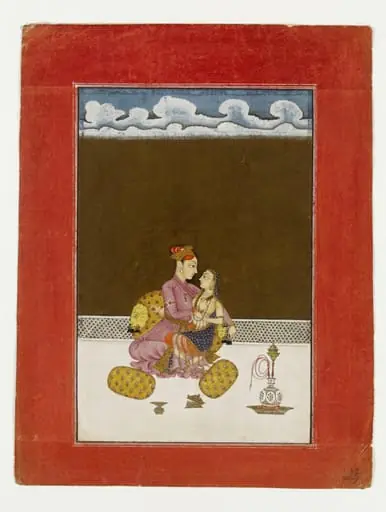
Divine couple seated in a lotus blossom
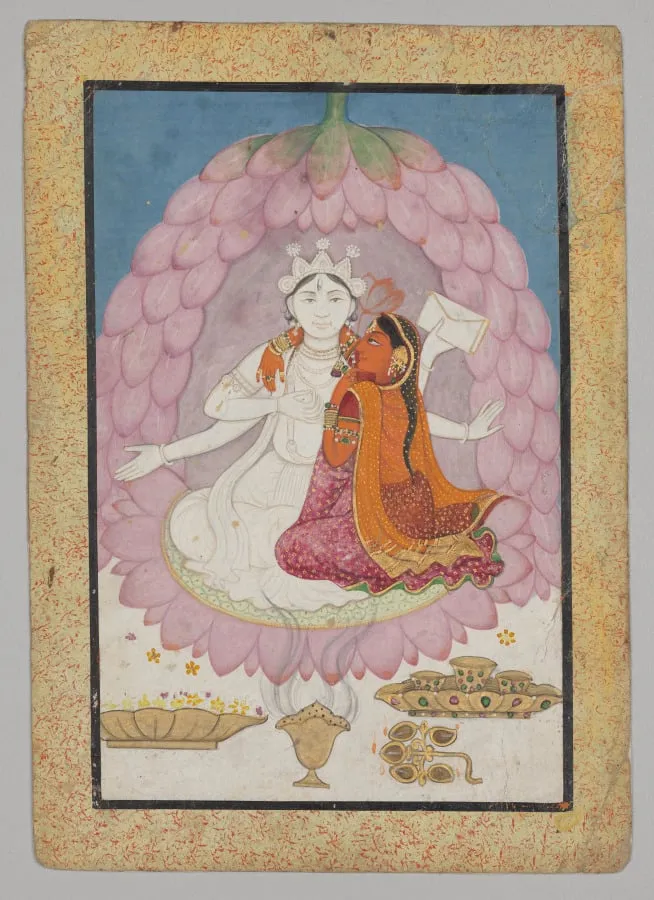
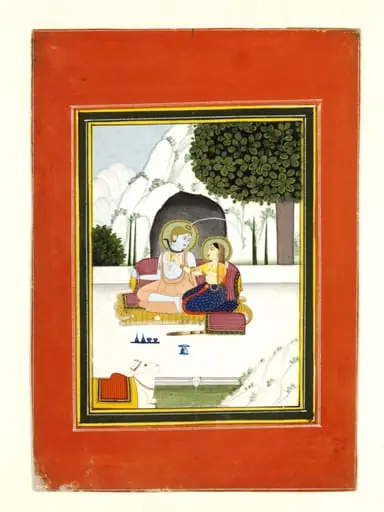
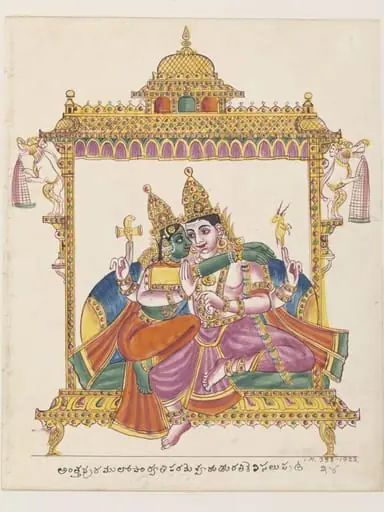
Divine couple seated in a lotus blossom is an unspecified painting by the Pahari Painting artist Unknown. It dates from 1804 and is held in the collection of the Cleveland Museum of Art. The painting depicts a divine pair seated within the blossom of an enormous lotus, its thousand petals forming a secluded sanctuary.
- Accession no.
- 1997.118
- Credit line
- Bequest of Mrs. A. Dean Perry
About this work
Overview
The painting depicts a divine pair seated within the blossom of an enormous lotus, its thousand petals forming a secluded sanctuary. The male figure, rendered with four arms and a third eye, holds a manuscript, while the female deity rests on his lap, clutching a smaller lotus. Beneath them lie assorted ritual items, flowers, incense, lamps, and jeweled vessels of water or wine.
Subject & Meaning
The lotus, a symbol of purity rising from murky waters, elevates the deities above earthly concerns, emphasizing their transcendent nature. The man's all‑seeing eye and the woman's gentle grasp of a lotus convey wisdom and benevolence, respectively, presenting the pair as harmonious lovers embodying divine compassion and knowledge.
Technique & Style
Executed in the vibrant palette characteristic of the Himalayan foothill schools, the work employs soft, flowing lines that render the figures with a humanized intimacy. Bright colors delineate the lotus and ritual objects, while delicate brushwork creates a sense of ethereal light surrounding the couple.
History & Provenance
Originating from a minor kingdom situated in the lower Himalayas, the painting reflects regional devotional art practices. Though the specific patron remains unidentified, the piece likely served a temple or private shrine, illustrating local interpretations of pan‑Indian deities.
Context
The composition aligns with artistic trends of the Rajput‑influenced Kangra school, where divine narratives were often portrayed as romantic encounters. This approach blended courtly aesthetics with spiritual themes, situating the work within a broader tradition of Himalayan devotional painting.
Artist & collection