Artwork
雨宝童子図大津絵|Ōtsu-e of Uhō Dōji
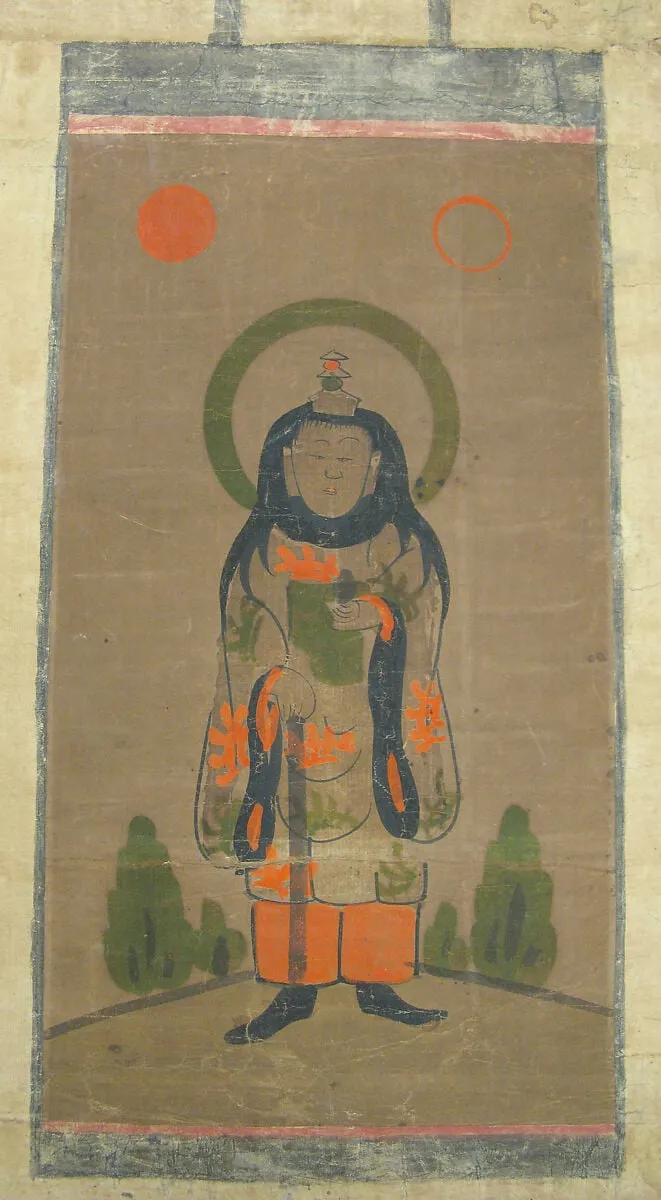
雨宝童子図大津絵|Ōtsu-e of Uhō Dōji is an ink painting. It dates from 1657 and is held in the collection of the Metropolitan Museum of Art.
About this work
Subject & Meaning
The painting known as Ōtsu-e of Uhō Dōji portrays a male figure within the traditional Ōtsu-e genre of Japanese hanging scrolls.
The painting known as Ōtsu-e of Uhō Dōji portrays a male figure within the traditional Ōtsu-e genre of Japanese hanging scrolls. Originating in 1657, the work combines ink, color and woodblock printing on paper and is classified as a religious painting. As an Ōtsu-e piece, it belongs to a class of artworks that commonly illustrate moral or devotional narratives, and the depicted man serves as the central subject of such a narrative.
The composition reflects the symbolic function of these images, using a recognizable human form to convey religious themes prevalent in Edo‑period visual culture.
Technique & Style
The work is executed as a hanging scroll using ink and color on paper, printed via woodblock rather than brushed in freehand, a hallmark of Ōtsu-e production. The palette is restrained, relying on mineral-based pigments to render the child’s body and robes in flat, unmodulated tones rather than nuanced shading. Compositional clarity is prioritized: the figure is centered, outlined with a simple contour, and set against an undifferentiated ground that directs attention to the gesture of offering the jewel.
Handling favors repetition and standardization, with pattern-like folds in the garment and a reserved, frontal posture that typifies the genre’s stylistic conventions.
History & Provenance
Created in 1657 in Japan, this hanging scroll depicts the religious figure Uhō Dōji. The work was produced by an anonymous artist using ink, color, and woodblock printing techniques on paper. While the specific circumstances of its commission and early ownership history remain undocumented in available records, the piece eventually entered the collection of the Metropolitan Museum of Art, where it is currently held.
The artwork serves as a representative example of Ōtsu-e, a genre of folk painting often characterized by religious themes and mass-production methods.
The Ōtsu-e of Uhō Dōji is held in the collection of the Metropolitan Museum of Art in New York. Created in 1657 by an anonymous Japanese artist, this hanging scroll combines ink, color, and woodblock printing on paper. While the museum possesses the work, specific inventory or accession numbers are not provided in the available records. Furthermore, there is no documented exhibition history for this particular piece within the current sources.
Context
Rain宝童子図大津絵, dated 1657, exemplifies the Ōtsu-e tradition of inexpensive devotional prints produced in Edo Japan. As an anonymous work, it reflects the collective production model typical of the genre, wherein individual artists were seldom credited. The hanging scroll, rendered in ink, color, and woodblock print on paper, combines religious narrative with popular visual culture, depicting a youthful deity associated with rain.
Its inclusion in the Metropolitan Museum of Art underscores its recognized importance within the canon of early modern Japanese painting and informs scholarly discussions of the genre’s role in communal worship and the diffusion of Buddhist iconography.
Overview
The work is a hanging scroll executed in ink, color and woodblock printing on paper, depicting a smiling, bald‑headed boy clutching a red umbrella and a scroll. He stands on a lotus blossom, his garment patterned with stylised clouds. The image functions as a portable charm, intended to be displayed or carried for its auspicious associations.
Artist & collection

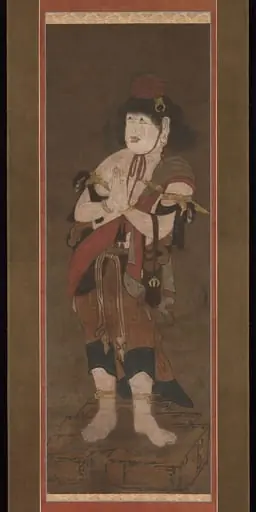 龍湫周沢写 不動明王二童子像|Fudō Myōō and Two Attendants
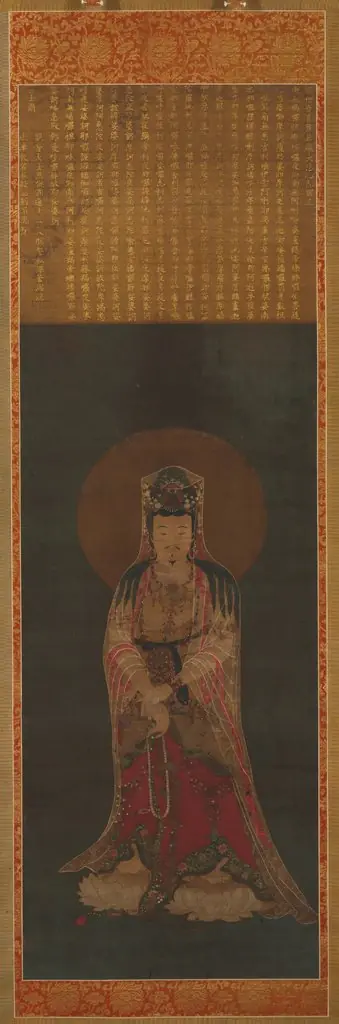 Kannon
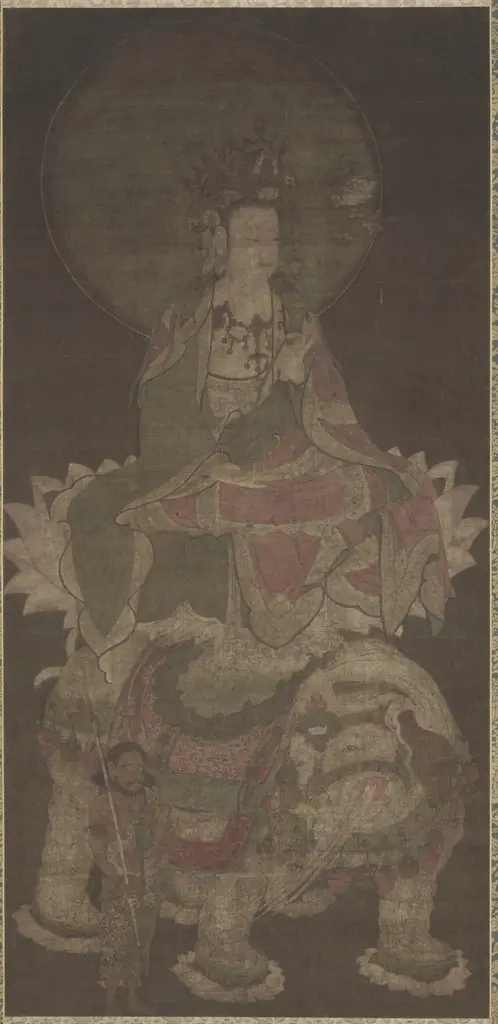 Samantabhadra
 十一面観音影向図|Eleven-Headed Kannon on Mount Fudaraku
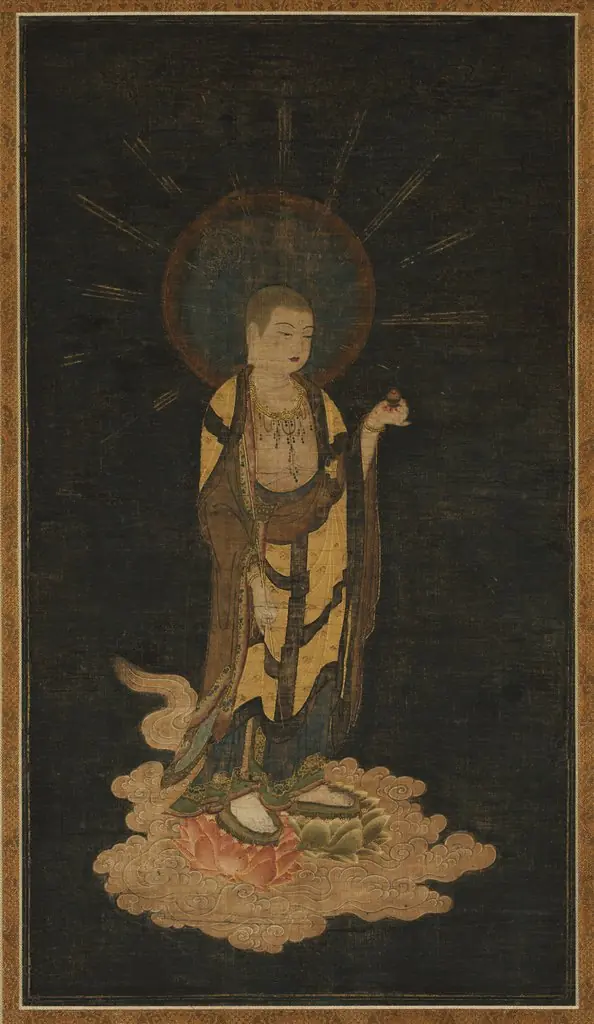 Welcoming Descent of Jizō
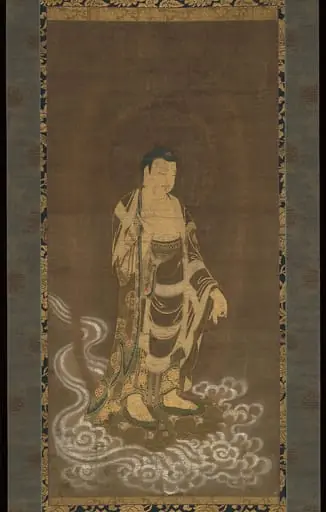 阿弥陀如来像|Welcoming Descent of Amida Buddha
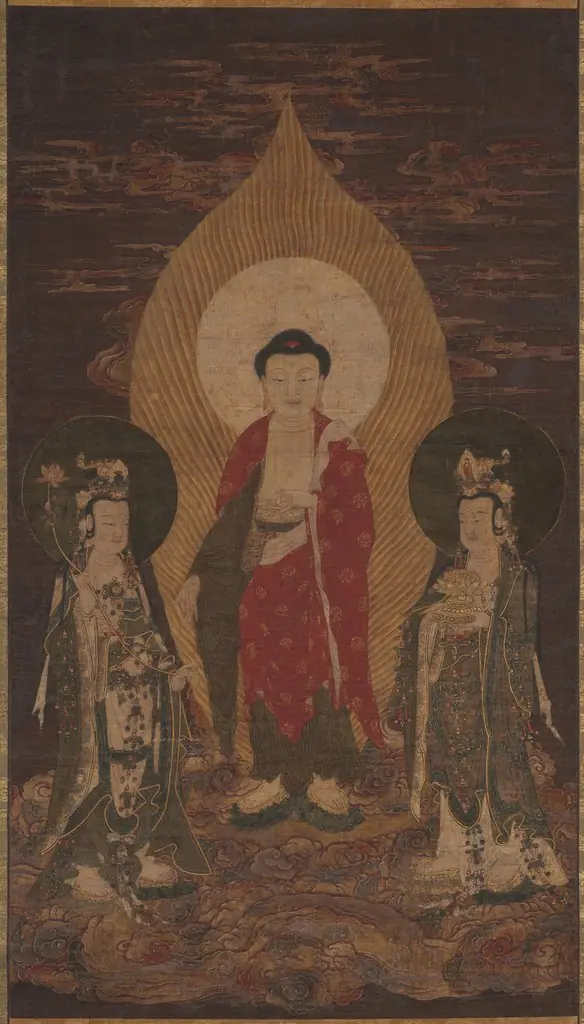 Amitābha Triad
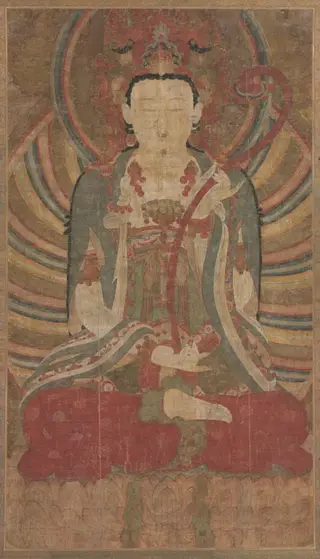 Seated Manjusri
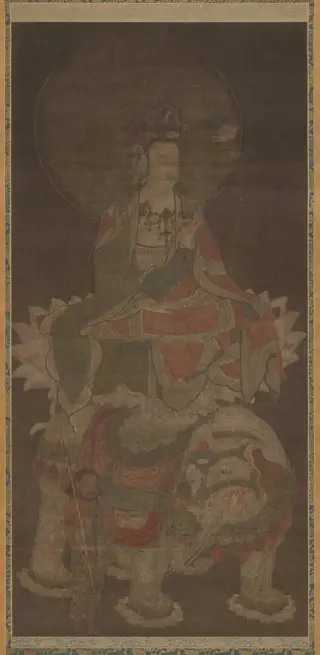 Samantabhadra
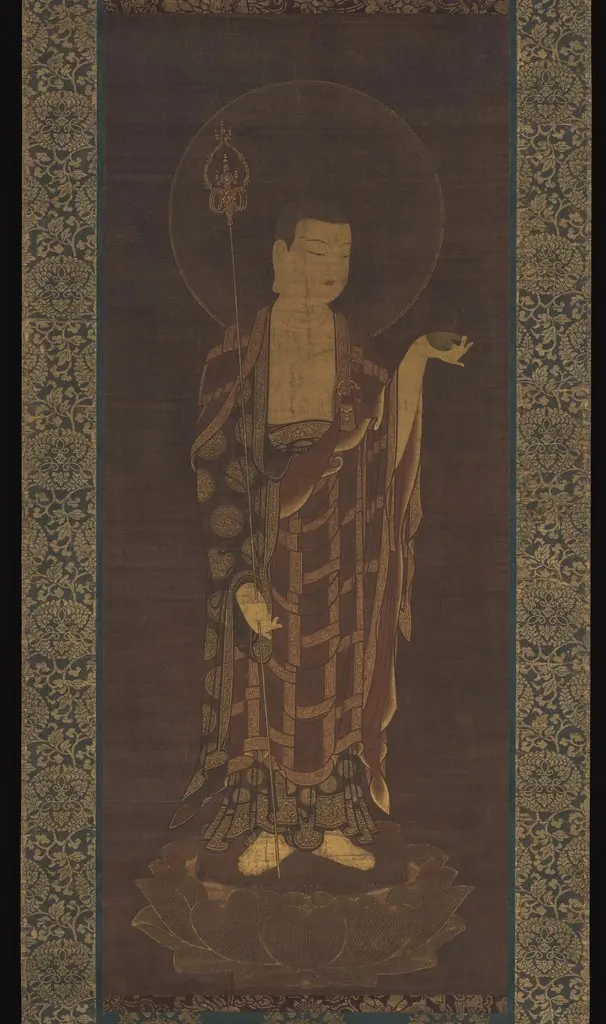 Jizō Bosatsu (Sanskrit: Ksitigharba)
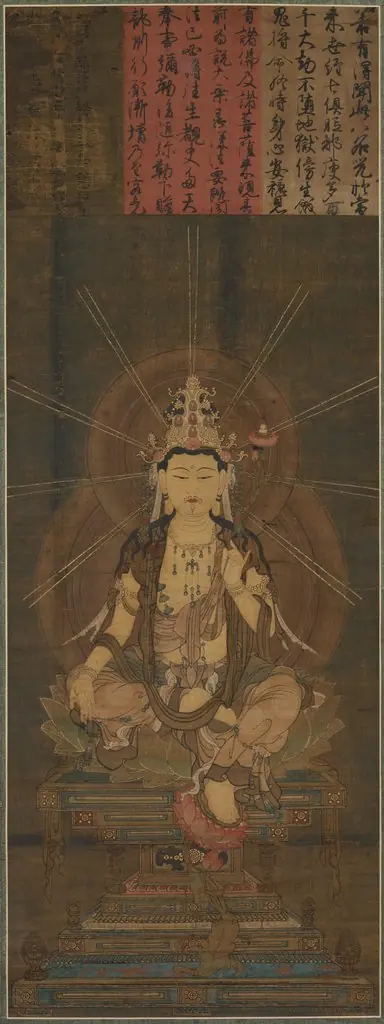 Miroku (Maitreya)
- 金剛夜叉図大津絵|Ōtsu-e of Shōmen Kongōyasha (Vajrayaksha)