Artwork
十一面観音来迎図|Descent of Eleven-Headed Kannon
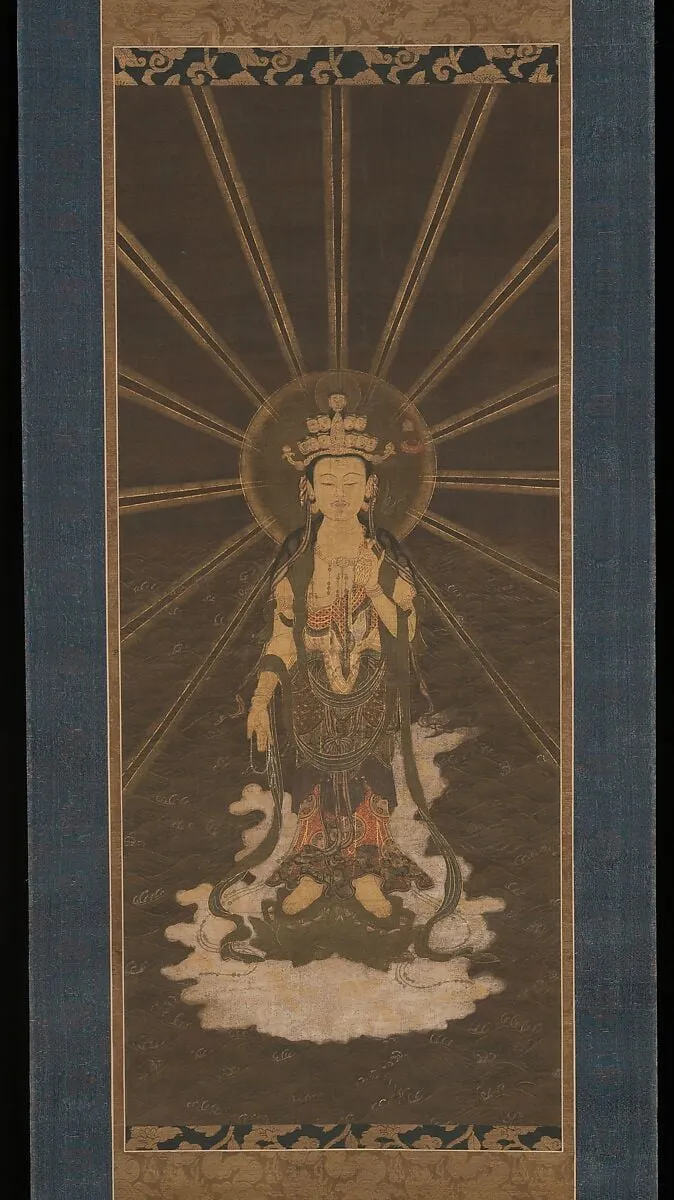
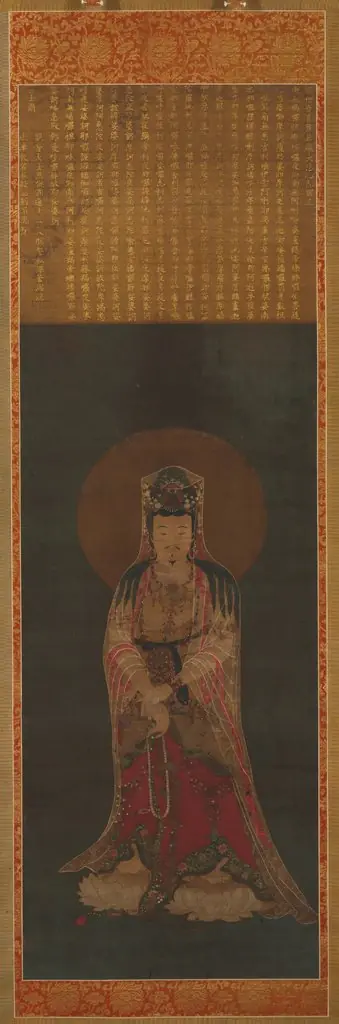
十一面観音来迎図|Descent of Eleven-Headed Kannon is an ink painting. It dates from 1553 and is held in the collection of the Metropolitan Museum of Art. The "Descent of Eleven-Headed Kannon" is a hanging scroll crafted with ink, color, and gold on silk.
About this work
Subject & Meaning
This 1553 Japanese hanging scroll depicts the Descent of the Eleven-Headed Kannon, a central figure in East Asian Buddhism.
This 1553 Japanese hanging scroll depicts the Descent of the Eleven-Headed Kannon, a central figure in East Asian Buddhism. The artwork portrays the Bodhisattva, known for compassion, in a religious context consistent with Pure Land traditions where divine beings descend to welcome souls. The iconography focuses on the multi-headed form of the deity, emphasising supernatural perception and the capacity to hear the cries of the world from all directions.
Executed in ink, color, and gold on silk, the piece serves as a visual representation of Buddhist soteriology, illustrating the moment of divine intervention and salvation. The eleven-headed attribute symbolises the Bodhisattva's ability to look in all directions to save sentient beings, reinforcing the work's function as an object of devotion.
Technique & Style
The painting is executed as a hanging scroll using ink, mineral pigments, and gold on fine silk, reflecting standard Japanese Buddhist icon practice of the mid-sixteenth century. Gold is applied both as a flat ground behind the figure and in delicate linear patterns to articulate nimbus, jewelry, and drapery edges, a technique associated with Muromachi-period suiboku and yamato-e synthesis.
Formal qualities centre on a frontal Eleven-Headed Kannon with serene, downcast gaze and jewel-like ushnisha, flanked by two attendant figures and a nimbus of scrolling clouds. The composition balances linear precision with subtle colour modulation, soft reds and greens on the robe, while maintaining the hieratic frontality typical of Esoteric Buddhist iconography.
History & Provenance
The Descent of Eleven-Headed Kannon was created in 1553 in Japan by an anonymous artist. This hanging scroll, executed in ink, colour, and gold on silk, depicts a Buddhist bodhisattva within a religious context. The work is currently held in the collection of the Metropolitan Museum of Art.
No details regarding the specific commission, original patron, or chain of ownership prior to museum acquisition are provided in the available records.
Legacy
The Descent of Eleven-Headed Kannon, dated 1553, is a hanging scroll executed in ink, colour, and gold on silk and classified as a religious painting. Its inclusion in the Metropolitan Museum of Art has contributed to its recognition as an exemplar of Muromachi Buddhist art and its function as a reference work for the study of early modern Japanese Buddhist visual culture.
Overview
The "Descent of Eleven-Headed Kannon" is a hanging scroll crafted with ink, color, and gold on silk. This painting depicts a radiant, multi-headed figure descending towards a kneeling devotee, enveloped entirely in gold leaf. Its creation by a Mexican artist, engaging with a traditionally Japanese Buddhist subject, makes it a notable and unusual work, bridging distinct cultural and religious artistic practices.
Context
This artwork represents a rare cross-cultural interpretation, as it was produced by a Mexican artist who adopted a subject traditionally central to Japanese Buddhism. Kannon, the compassionate bodhisattva, is almost exclusively depicted in East Asian art. This unusual provenance highlights a unique intersection of artistic practice and religious iconography across continents, suggesting a broader exchange of ideas.
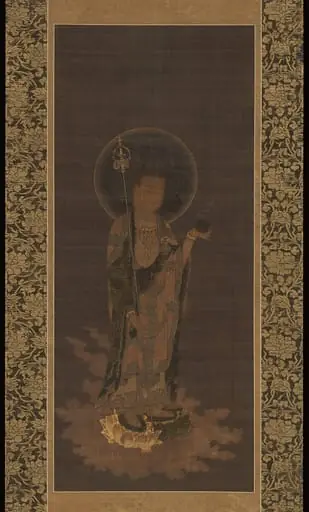
Artist & collection

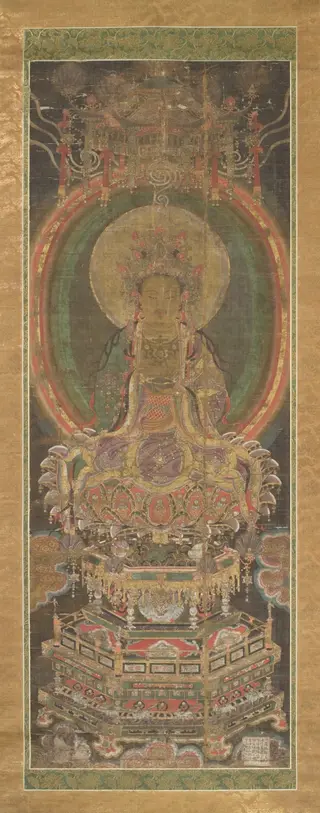
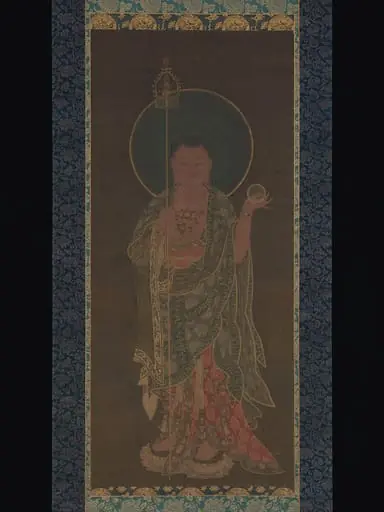
- 地蔵菩薩来迎図|Welcoming Descent of the Bodhisattva Jizō
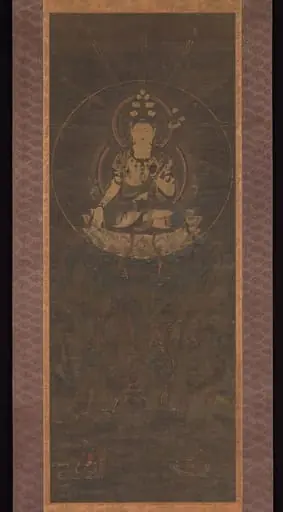 十一面観音影向図|Eleven-Headed Kannon on Mount Fudaraku
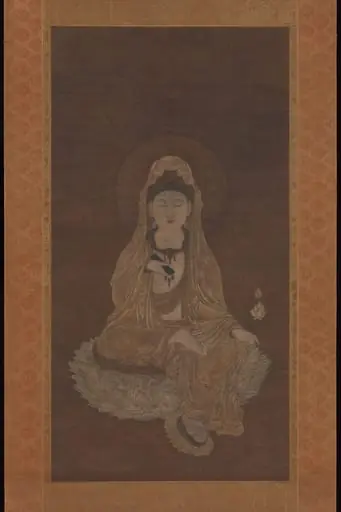 白衣観音図|White-Robed Kannon
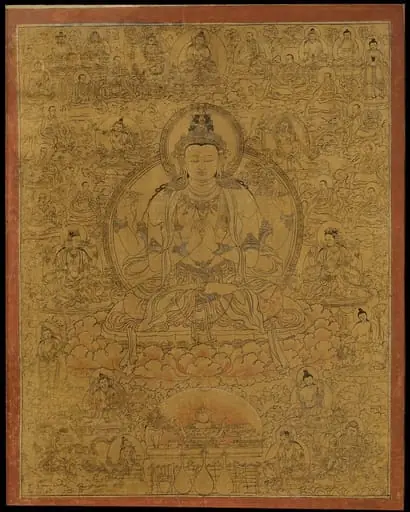
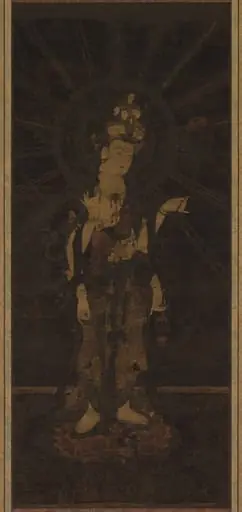 Eleven-Headed Kannon (Jūichimen Kannon)
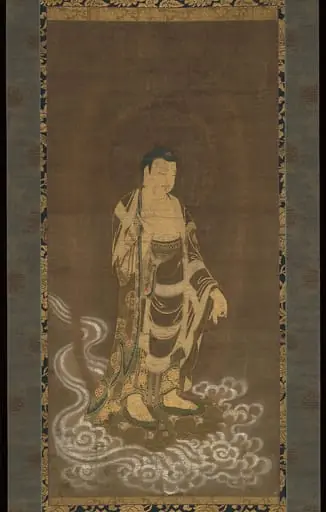 阿弥陀如来像|Welcoming Descent of Amida Buddha
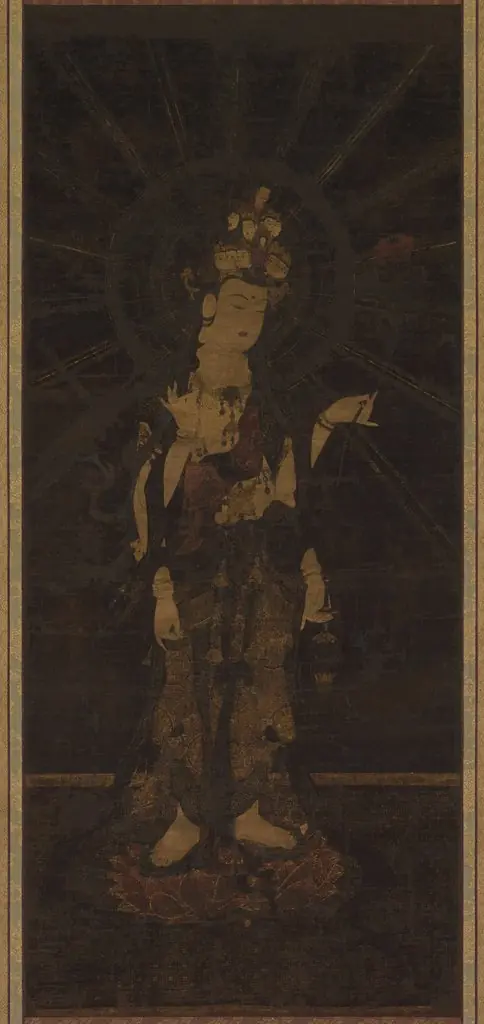 Eleven-Headed Kannon (Jūichimen Kannon)
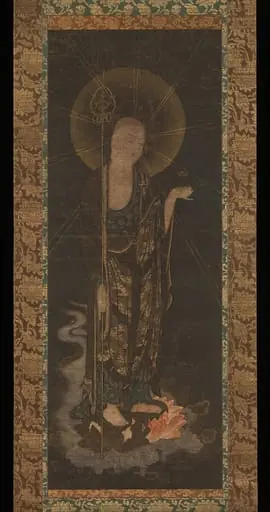 地蔵来迎図|Welcoming Descent of Jizō
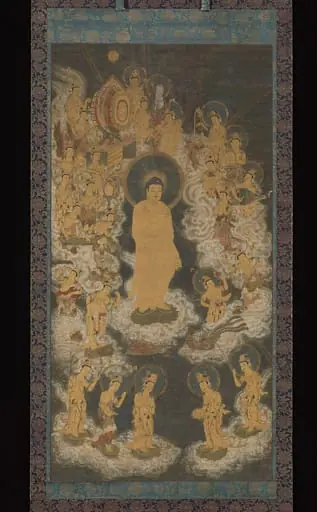 阿弥陀聖衆来迎図 |Welcoming Descent of Amida and Bodhisattvas
 Kannon