Artwork
白衣観音図|White-Robed Kannon
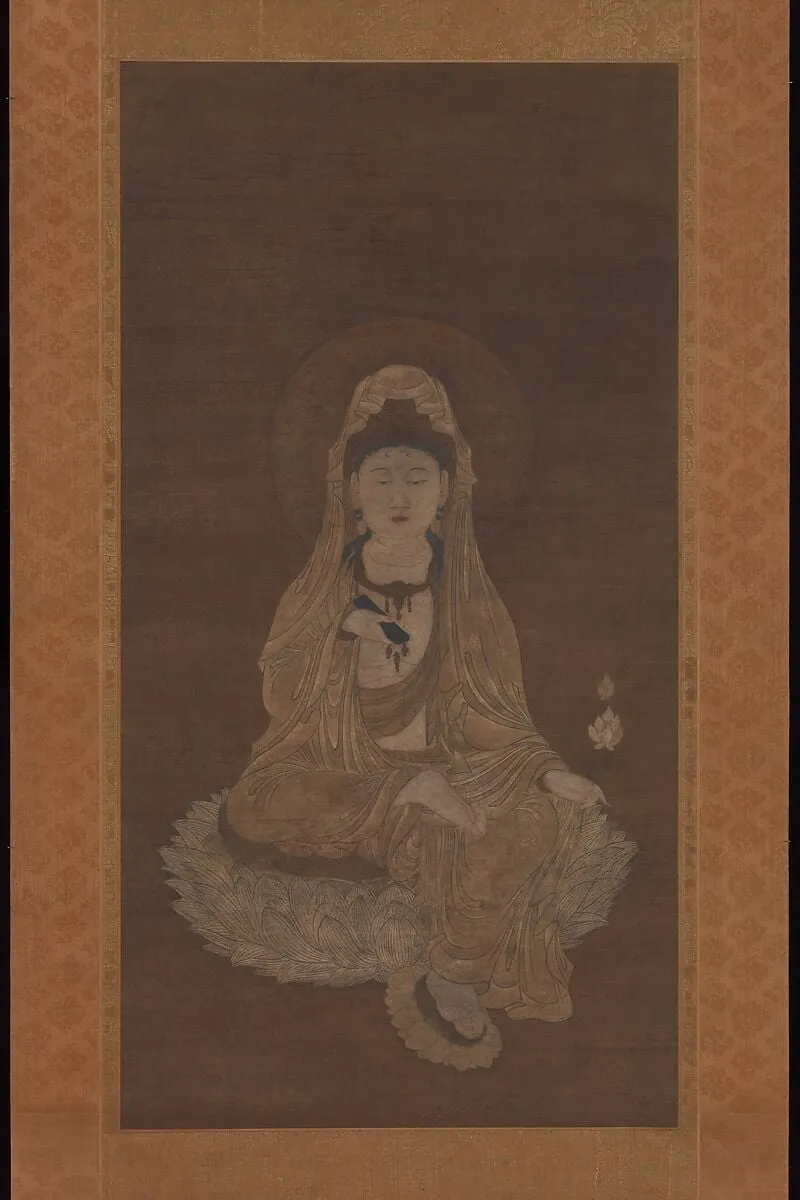
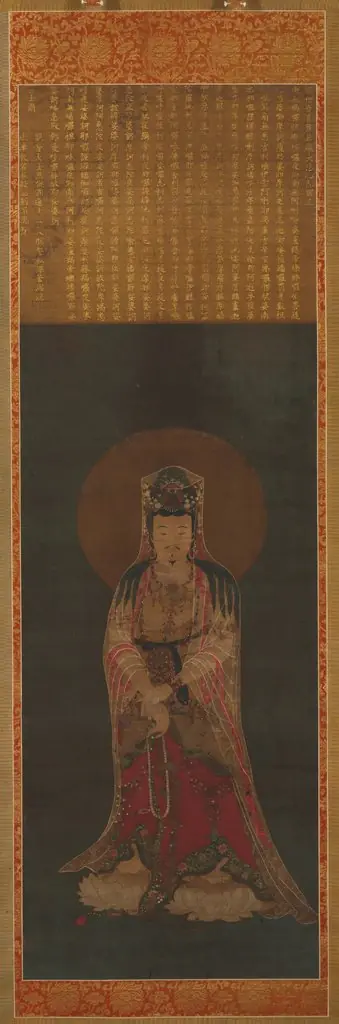
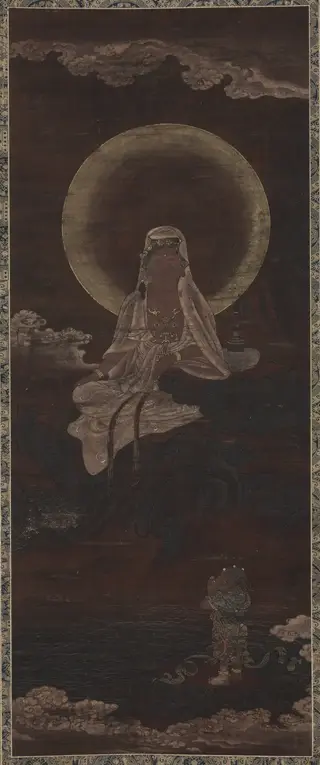
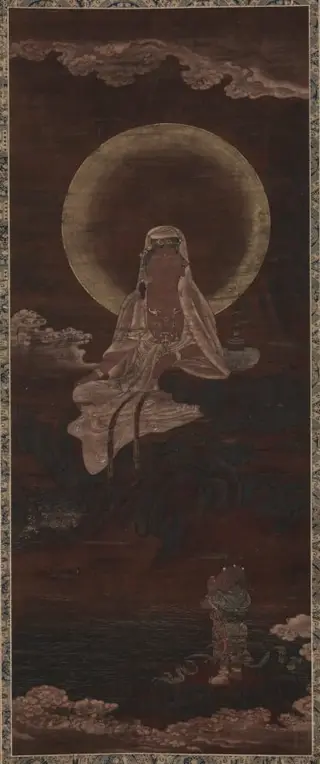
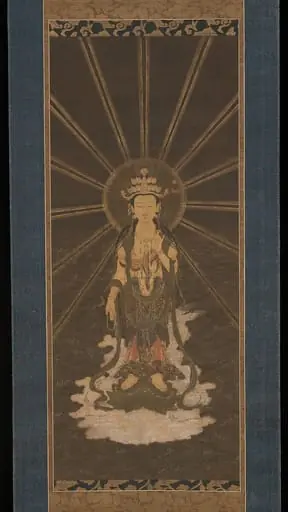
白衣観音図|White-Robed Kannon is an ink painting. It dates from 1249 and is held in the collection of the Metropolitan Museum of Art. This hanging scroll, titled White-Robed Kannon, depicts the Buddhist deity of mercy in a serene, contemplative pose.
About this work
Subject & Meaning
As an object of devotion, the image embodies Kannon’s role as a merciful savior within Buddhist practice.
The painting portrays the bodhisattva Kannon (Avalokiteśvara) clad in white robes, holding a lotus blossom, rendered as a hanging scroll in ink and color on silk. Dated to 1249 and classified as a religious work, it presents Kannon as a figure of compassion and purity, with the white robe (emphasized in the title) and the lotus underscoring spiritual purity and the Buddhist ideal of enlightenment. As an object of devotion, the image embodies Kannon’s role as a merciful savior within Buddhist practice.
Technique & Style
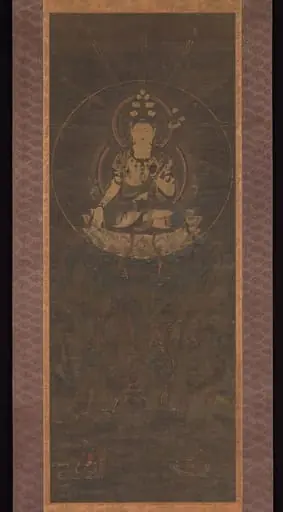
Created in 1249 in Japan, this religious hanging scroll depicts a Bodhisattva seated upon a lotus. The work is executed using ink and mineral pigments applied to a silk support. As a product of an anonymous painter, the piece exemplifies medieval Japanese Buddhist painting traditions through its specific material combination.
The application of color alongside ink on the delicate silk surface characterizes the technical approach of the period. While specific details regarding the current physical condition or the precise handling history of the scroll are not enumerated in the available records, the formal composition centers on the spiritual figure within a devotional context. The medium of silk allowed for the fluid integration of line and wash typical of the era's sacred imagery.
History & Provenance
The White-Robed Kannon is a hanging scroll painted in 1249 in Japan, attributed to an anonymous artist. Executed in ink and color on silk, the work depicts a Buddhist Bodhisattva associated with the lotus. Historically, the painting has been part of the collection of the Metropolitan Museum of Art, where it is currently located.
The creation date is specifically recorded as January 1, 1249. As the artist remains unknown, the work is classified as the product of an anonymous painter within the religious genre. No specific commission details or earlier ownership chains beyond its current institutional home are provided in the available records.
The painting 白衣観音図|White-Robed Kannon is housed in the collection of the Metropolitan Museum of Art in New York. It is catalogued as part of the museum's holdings of Japanese religious paintings, though the specific accession or inventory number is not disclosed in the available documentation. The work dates to 1249 and is executed as a hanging scroll in ink and color on silk.
No exhibition record is cited in the sources consulted, indicating that the piece has not been listed in publicly announced exhibitions up to the present.
Context
The White‑Robed Kannon, dated 1249, exemplifies early Kamakura‑period Buddhist painting in Japan. As an anonymous work classified as a religious painting on silk, it is held in the Metropolitan Museum of Art, where it is studied as a representative example of 13th‑century Japanese devotional art. Scholars cite its iconography, depicting the Bodhisattva accompanied by a lotus and Buddhist symbols, as indicative of the period’s synthesis of Chinese stylistic influences with indigenous Japanese practice.
Its presence in a major Western collection has facilitated comparative studies of trans‑cultural exchange, positioning the piece within broader narratives of East Asian Buddhist visual culture.
Overview
This hanging scroll, titled White-Robed Kannon, depicts the Buddhist deity of mercy in a serene, contemplative pose. Rendered with ink and color on silk, it represents one of the earliest extant portrayals of Kannon, offering a quiet and ethereal vision. The unknown artist conveyed a sense of inner radiance through subtle brushwork, creating an almost dreamlike atmosphere that invites personal reflection.
Artist & collection