Artwork
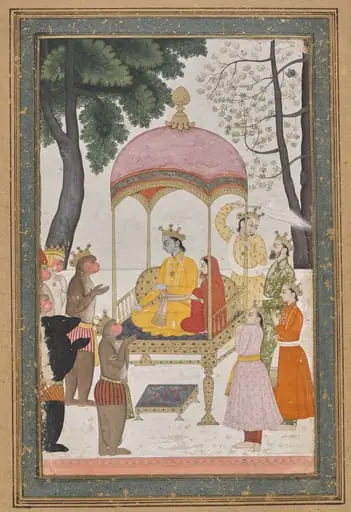
Enthroned Rama and Sita receive homage from their monkey and bear Allies, from the Yuddha Kanda (Book of the War) of a Ramayana (Rama’s Journey)
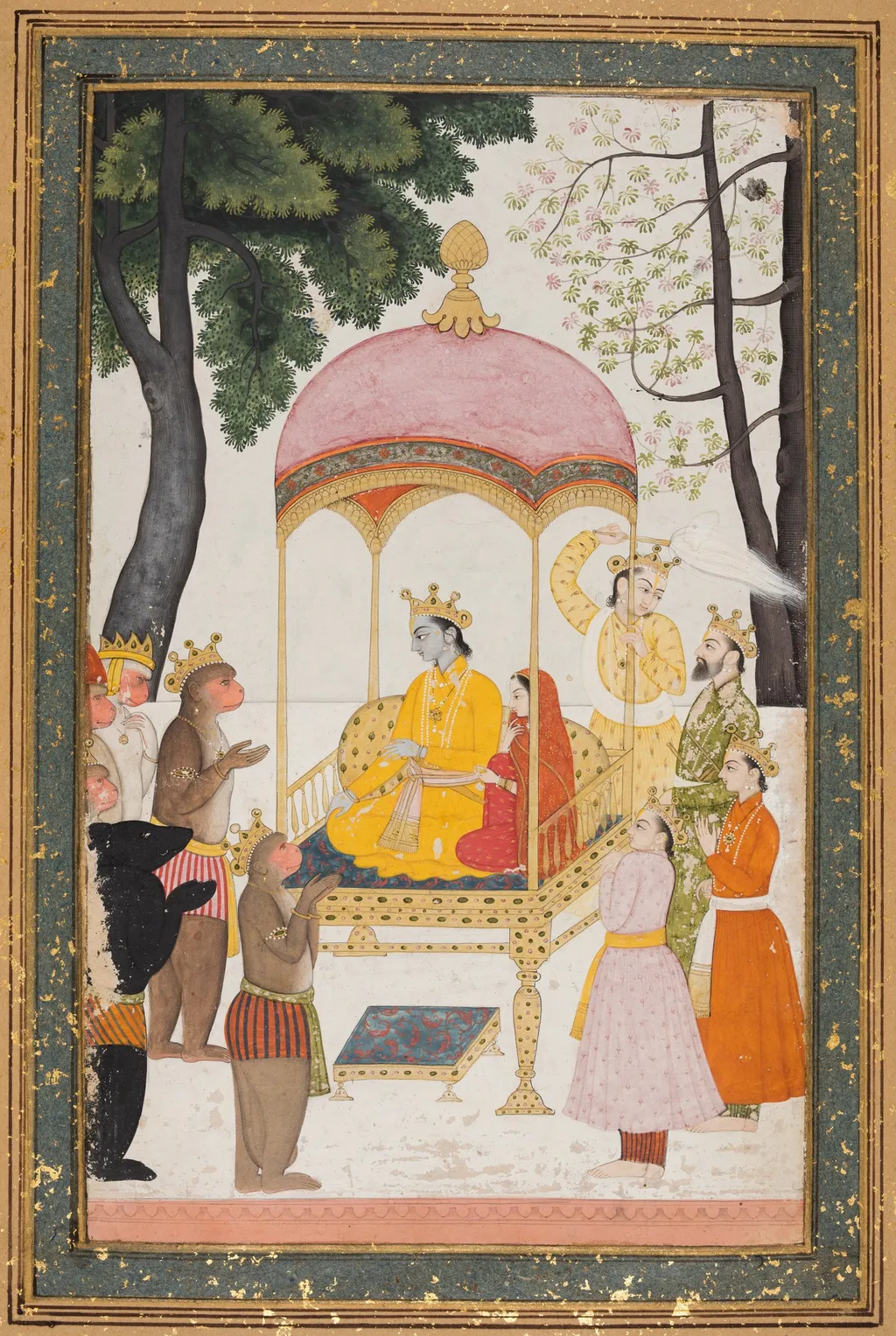
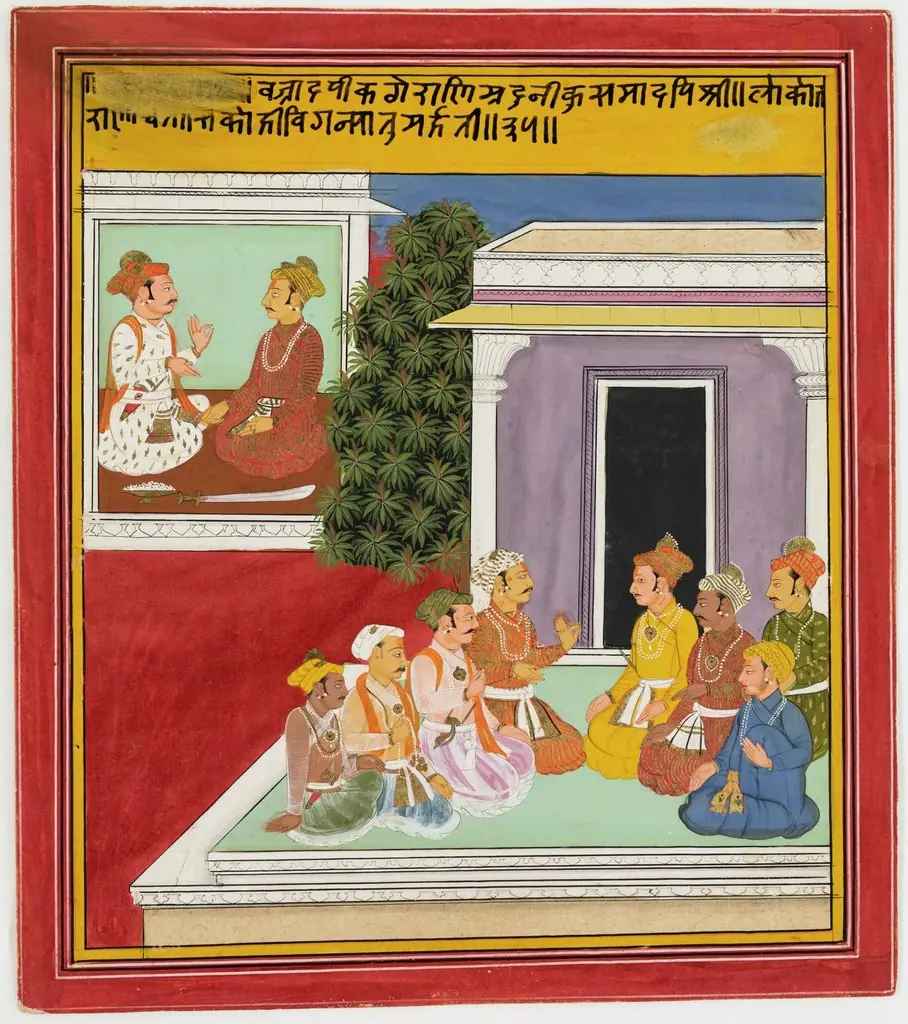
Enthroned Rama and Sita receive homage from their monkey and bear Allies, from the Yuddha Kanda (Book of the War) of a Ramayana (Rama’s Journey) is an unspecified painting. It dates from 1765 and is held in the collection of the Cleveland Museum of Art. The work depicts a ceremonial gathering beneath a pink, gold‑trimmed pavilion.
About this work
Subject & Meaning
The work is attributed to an unknown artist and is held in the Cleveland Museum of Art.
The artwork shows Rama and Sita seated on a throne while monkey and bear allies pay them homage, a specific episode taken from the Yuddha Kanda (Book of the War) of the Ramayana. As a history painting dated to 1765, it visualizes a narrative moment from the epic, emphasizing the royal couple’s authority and the allegiance of their animal companions following the war. The work is attributed to an unknown artist and is held in the Cleveland Museum of Art.
History & Provenance
The painting depicting Enthroned Rama and Sita receiving homage from their allies was created in 1765. It is attributed to an unknown artist and originates from the Yuddha Kanda, or Book of the War, of a Ramayana manuscript. The work is currently held in the collection of the Cleveland Museum of Art, where it is cataloged under the accession number 2018.117. The museum's records establish the inception date of the artwork as January 1, 1765.
The painting depicting Enthroned Rama and Sita receiving homage from their allies is held in the collection of the Cleveland Museum of Art in Cleveland. The work, dated to 1765, carries the accession number 2018.117 within the museum's records. While the specific location within the museum's galleries is not detailed in the provided records, the artwork is confirmed as part of the institution's permanent holdings.
Overview
The work depicts a ceremonial gathering beneath a pink, gold‑trimmed pavilion. Central to the composition are a man and woman seated on an elevated throne, clothed in vivid yellow and red garments. Flanking them are a monkey and a bear, both bowing in reverence, while additional figures in colorful attire stand or kneel around the scene, framed by trees and a backdrop of figures in gold robes.
Technique & Style
Executed with a rich palette of saturated hues, the piece emphasizes intricate patterning on clothing and architectural elements. The use of gold trim and detailed ornamental motifs suggests a decorative purpose, while the careful rendering of figures and animals reflects a narrative style typical of South Asian courtly painting.
Context
Set within the broader tradition of Ramayana illustration, the work aligns with other visual interpretations that highlight key episodes from the epic. The inclusion of both human and animal protagonists reflects the narrative’s emphasis on unity among diverse allies in the struggle against evil.
Artist & collection

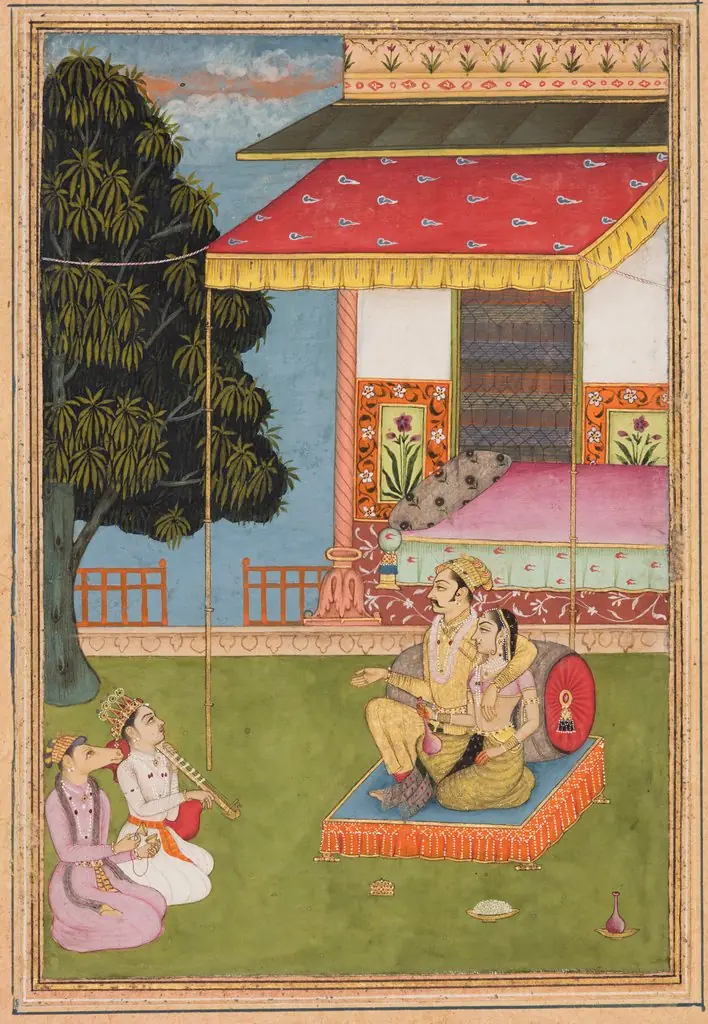 Shri Raga, from a Ragamala (Garland of Melodies)
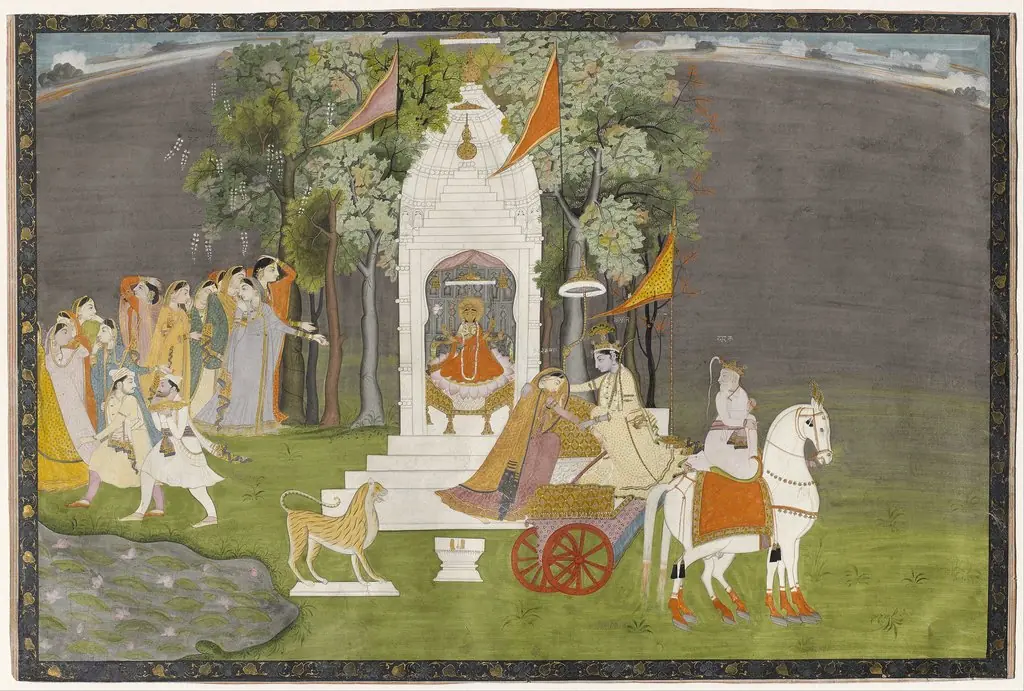 Krishna Abducting Rukmani from the Temple
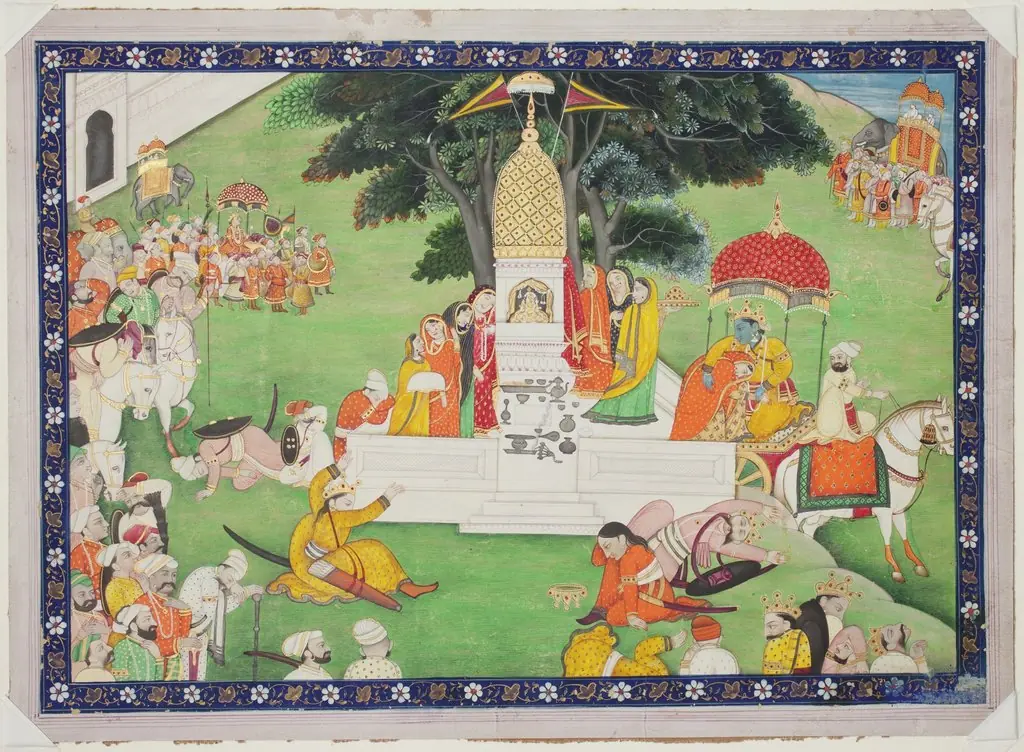 Abduction of Rukmini
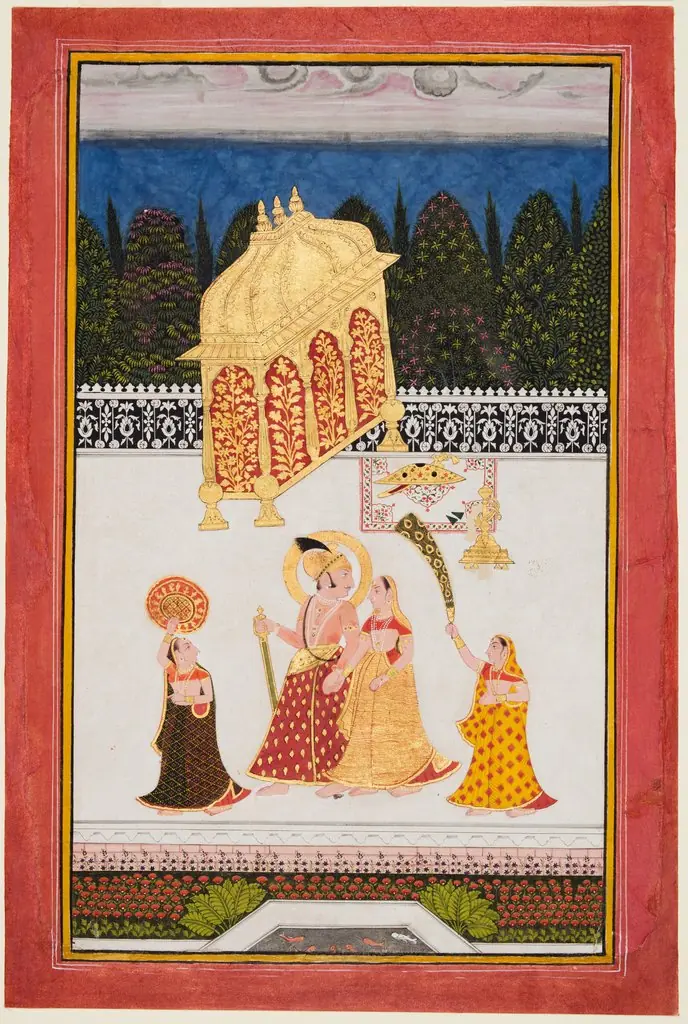 Maharana Ari Singh II of Mewar (r. 1761–73) with His Consort on a Terrace
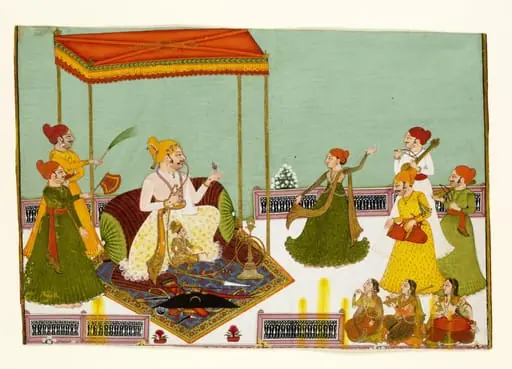 Raja Ajit Singh of Bundi
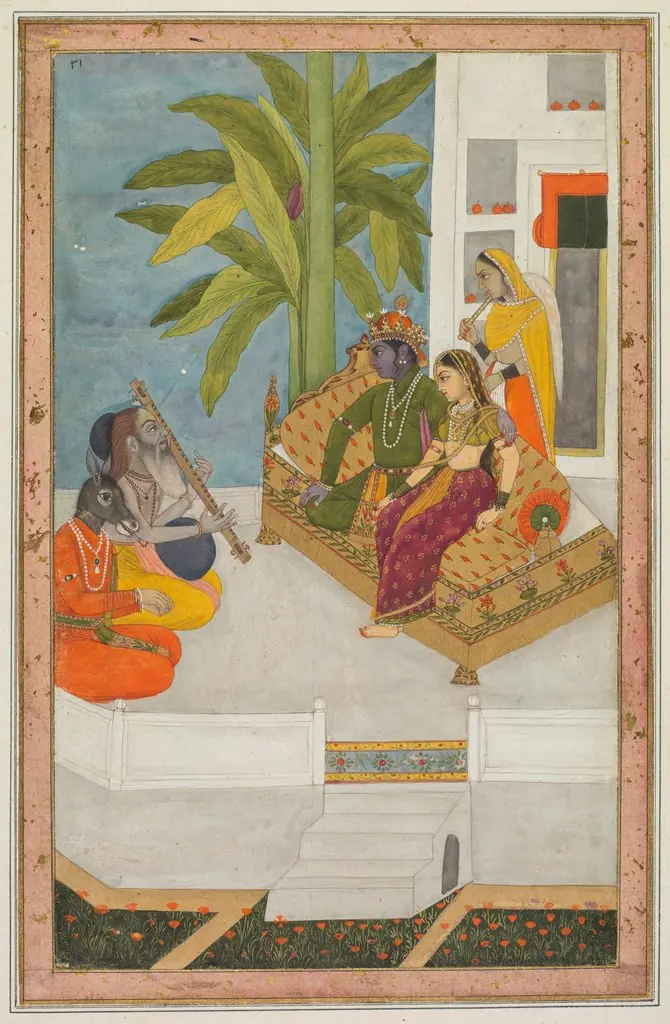 Shri Raga: An Illustration from a Ragamala Series
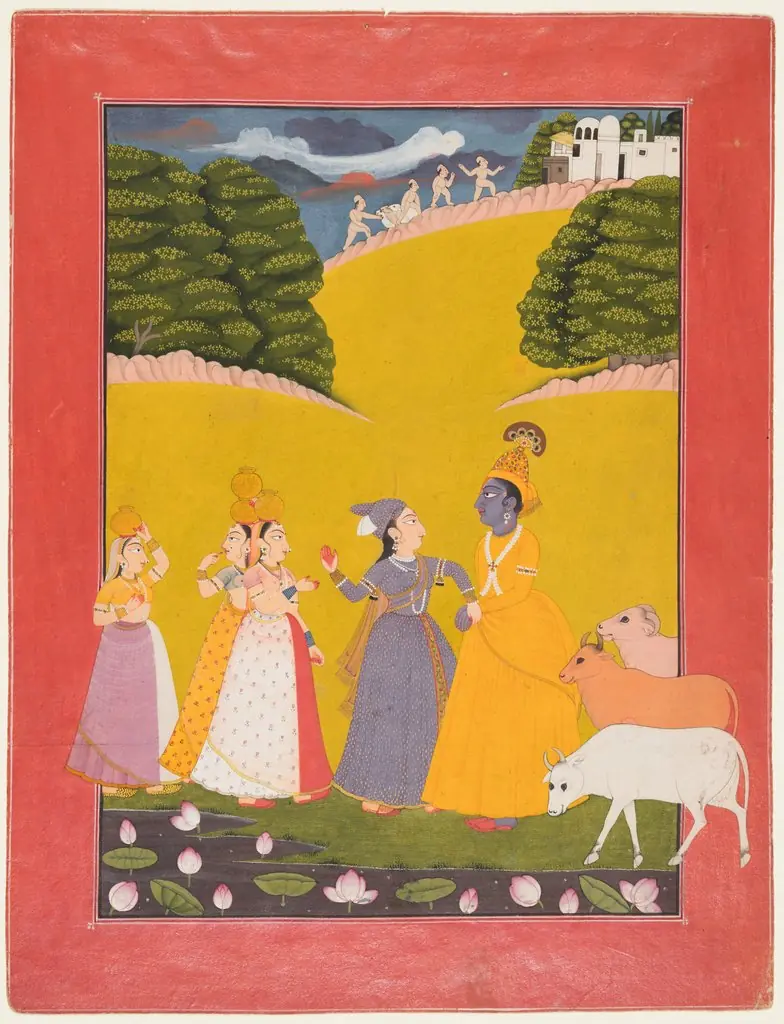 Taking of the Toll, Dana-Lila
 Prince and Attendants in Palace Scene