Artwork
Shri Raga: An Illustration from a Ragamala Series
Shri Raga: An Illustration from a Ragamala Series is an unspecified painting. It dates from 1740 and is held in the collection of the Cleveland Museum of Art.
About this work
History & Provenance
Shri Raga: An Illustration from a Ragamala Series is held in the collection of the Cleveland Museum of Art, accessioned under the identifier 2013.
The Shri Raga illustration is a Mughal‑Empire painting dated to 1740, created by an unknown artist. Its creation history places it within a Ragamala series produced in the Mughal court context. The work entered the Cleveland Museum of Art in 2013, receiving the accession number 2013.339, and has remained in the museum’s collection since.
It is currently housed in the museum’s Asian art galleries. No earlier owners or commission details are recorded in the available sources.
Shri Raga: An Illustration from a Ragamala Series is held in the collection of the Cleveland Museum of Art, accessioned under the identifier 2013.339. It was created in 1740 within the Mughal Empire and has been part of the museum's holdings since its acquisition.
Overview
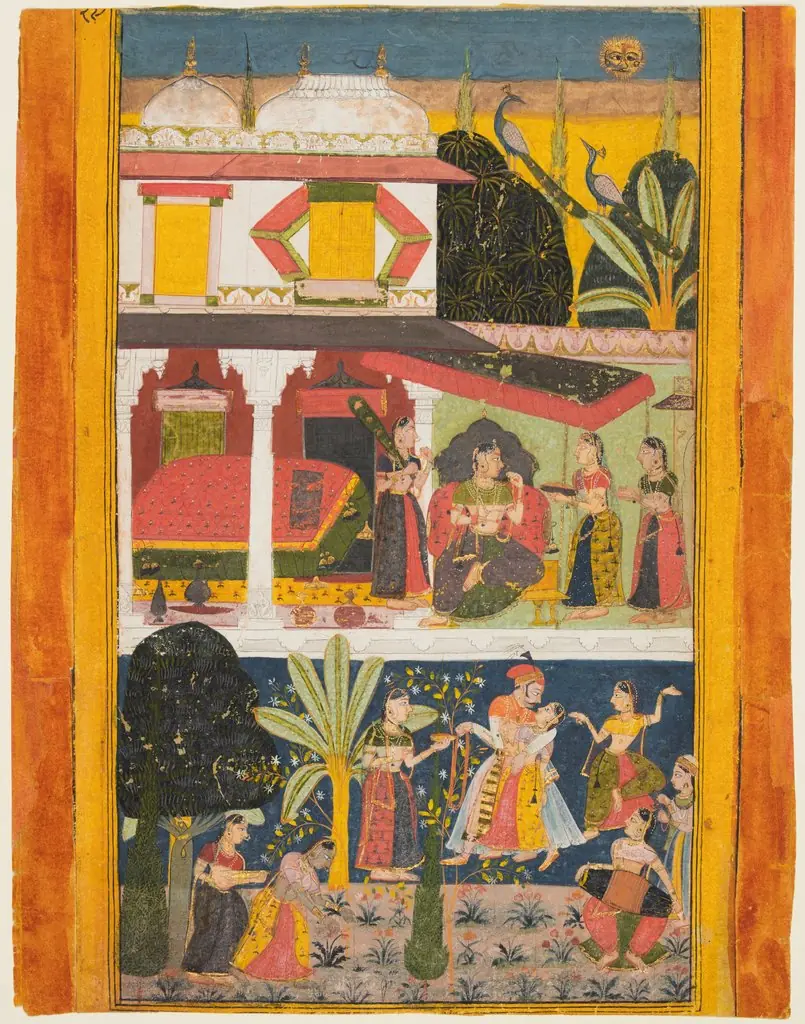
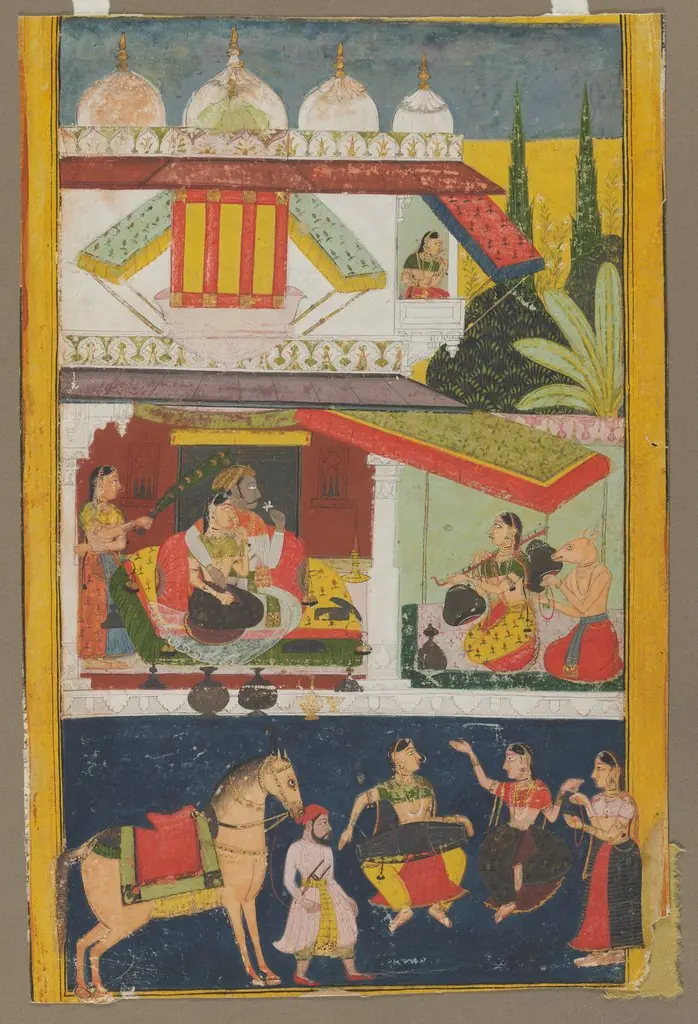
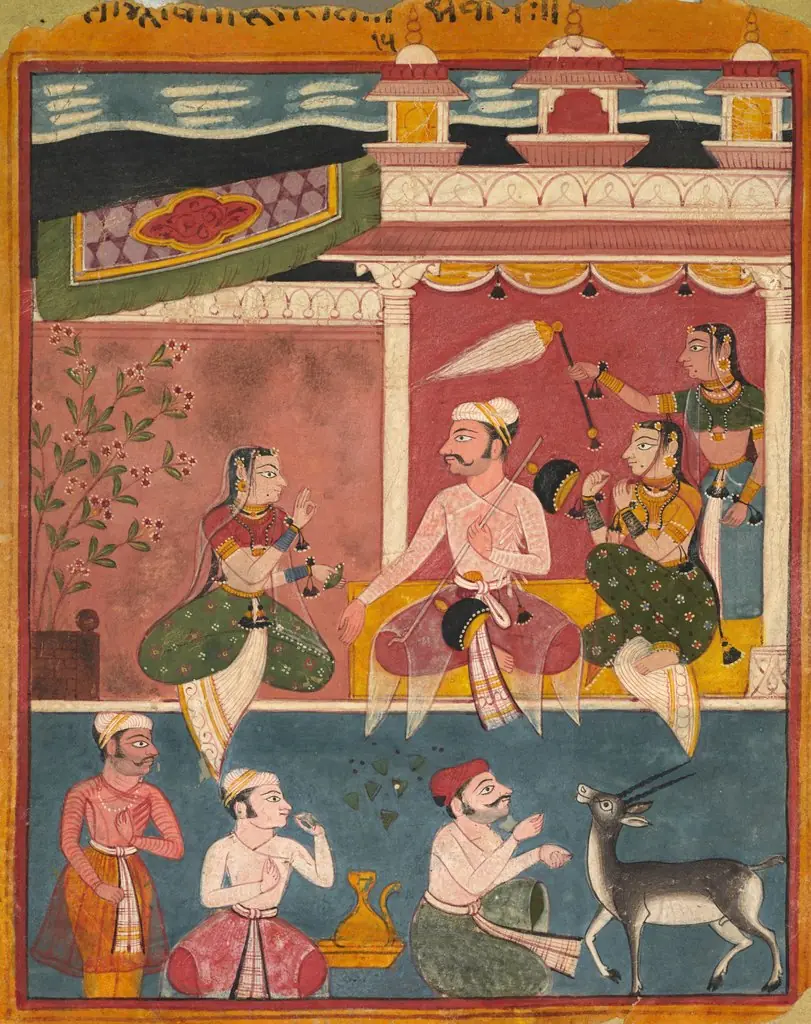
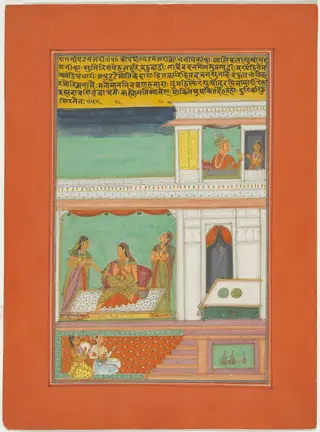
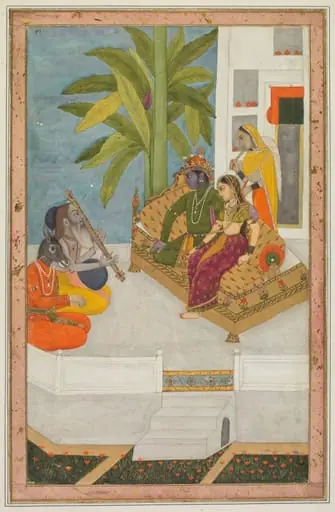
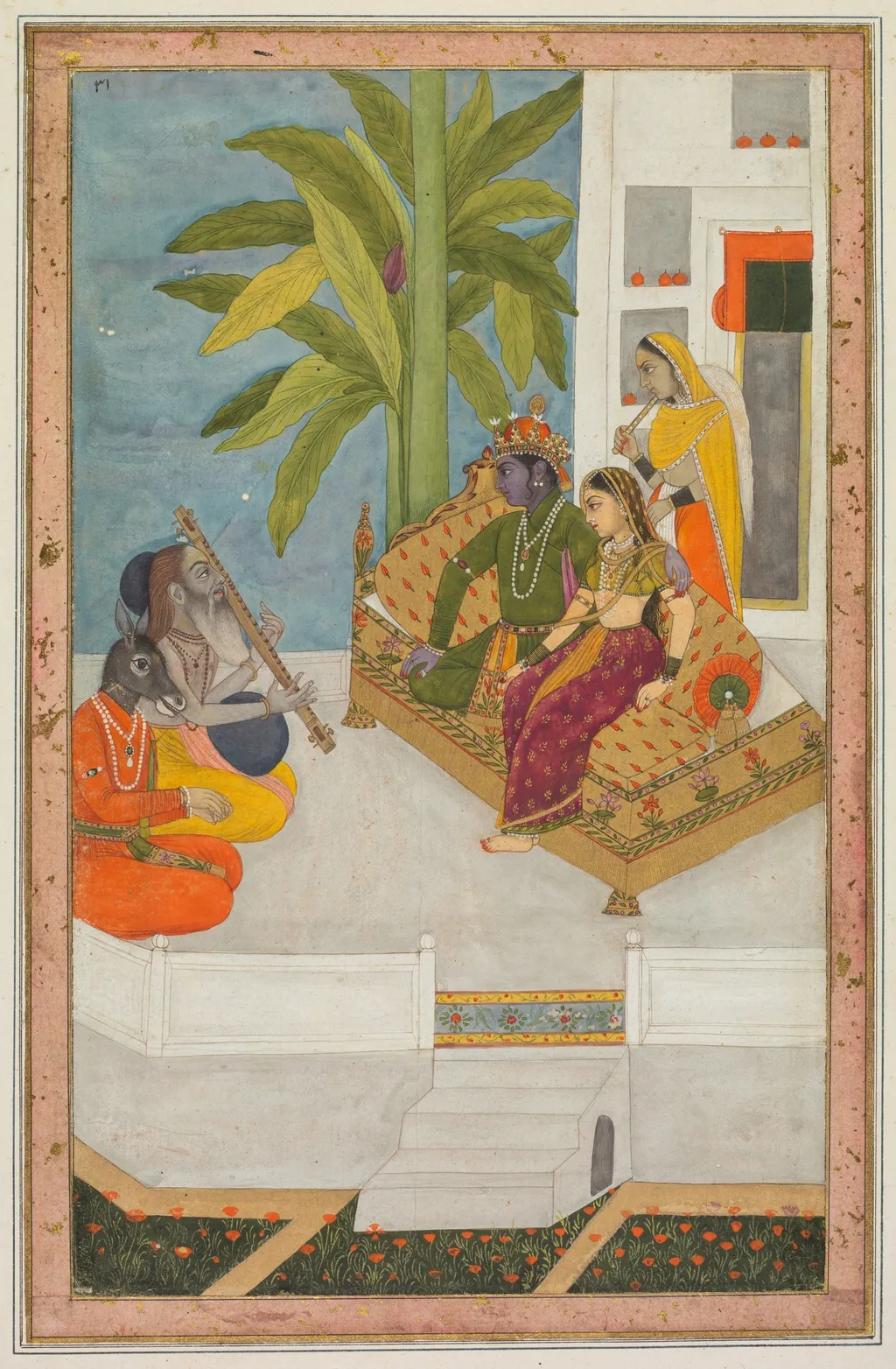
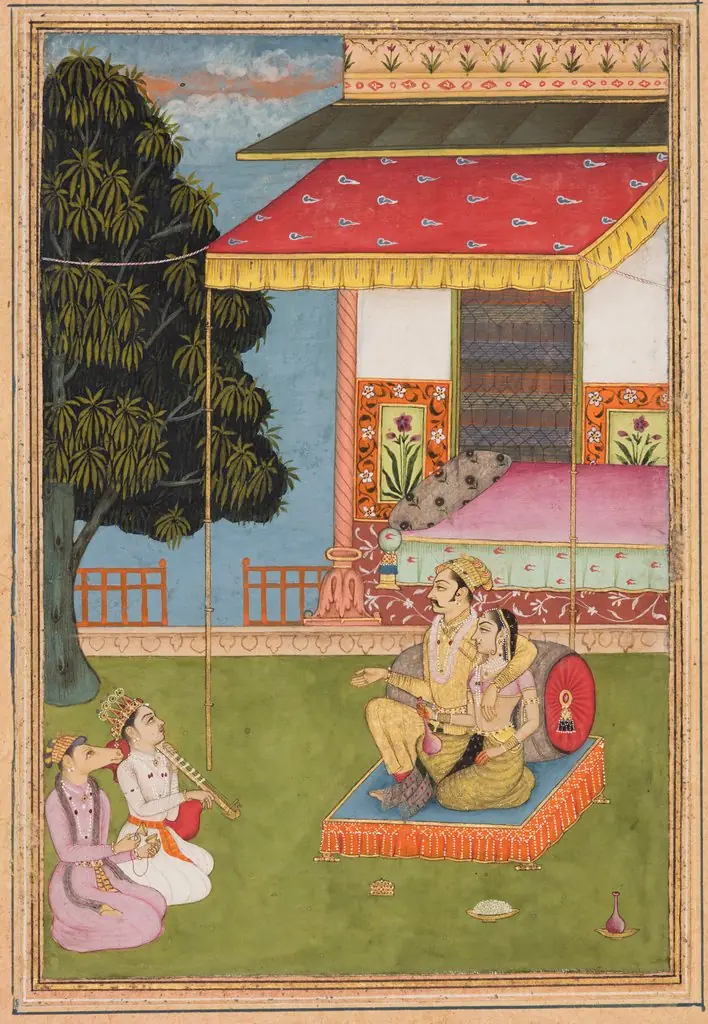
The work titled Shri Raga: An Illustration from a Ragamala Series is a painted composition that depicts an interior scene populated by several figures and a prominent plant. The setting includes a blue‑hued wall, a white floor, and a richly patterned couch. The palette is vivid, featuring purples, greens, yellows, reds and whites, and the scene is rendered with considerable detail.
Subject & Meaning
The central figures are a crowned man with a purple face seated beside a woman on the couch, accompanied by a standing woman in a yellow dress. A bearded flutist and a goat‑headed figure add a mythic dimension, suggesting allegorical or musical themes common to ragamala iconography, where each painting visualises a particular raga or mood.
Technique & Style
Executed in a flat, decorative manner, the painting employs strong outlines and bold color blocks typical of Indian miniature traditions. The patterned upholstery and the stylised plant are rendered with fine brushwork, while the figures are outlined in black, emphasizing their gestures and costumes.
Artist & collection