Artwork
family portrait
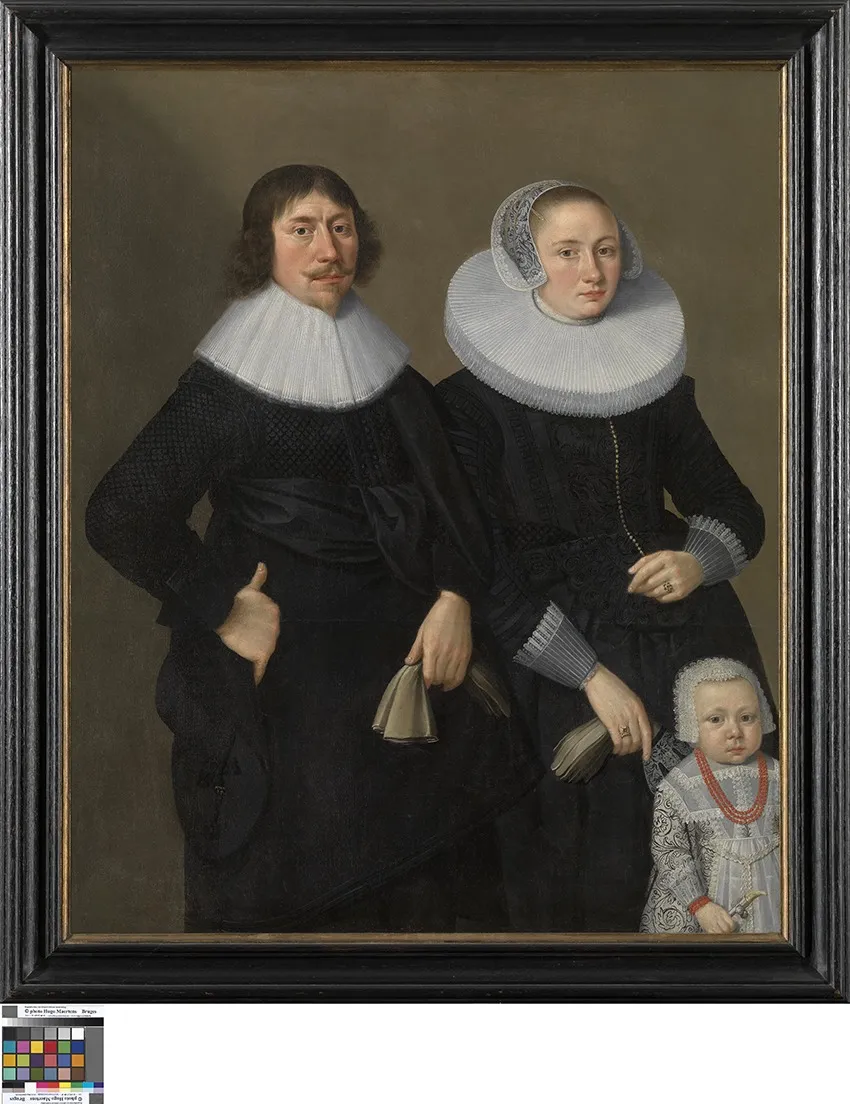
family portrait is an oil painting by the Dutch Golden Age artist Unknown. It dates from 1620 and is held in the collection of the Groeningemuseum.
About this work
Subject & Meaning
The ruffs and lace further indicate the family's wealth and adherence to the formal dress codes of the early seventeenth-century Northern Netherlands.
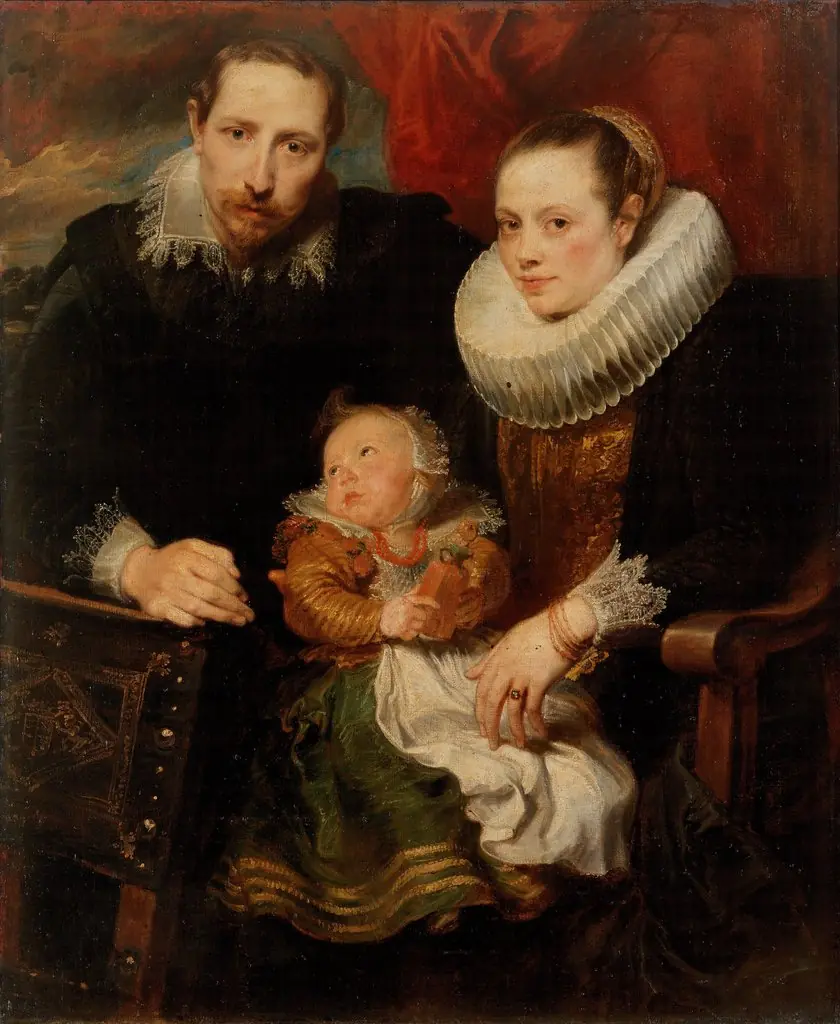
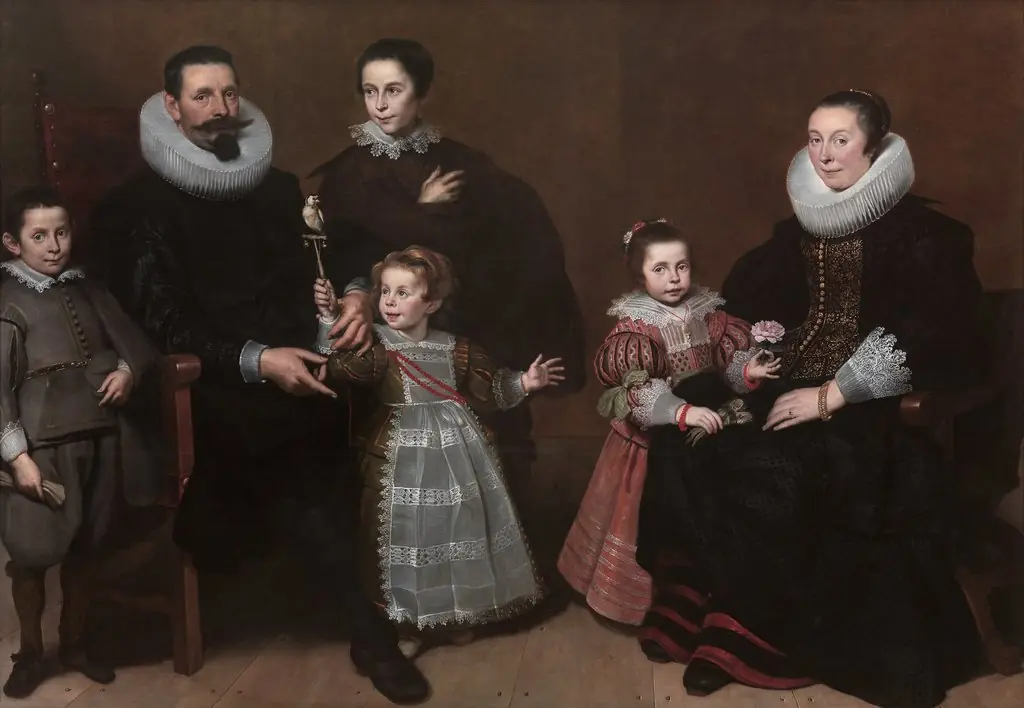
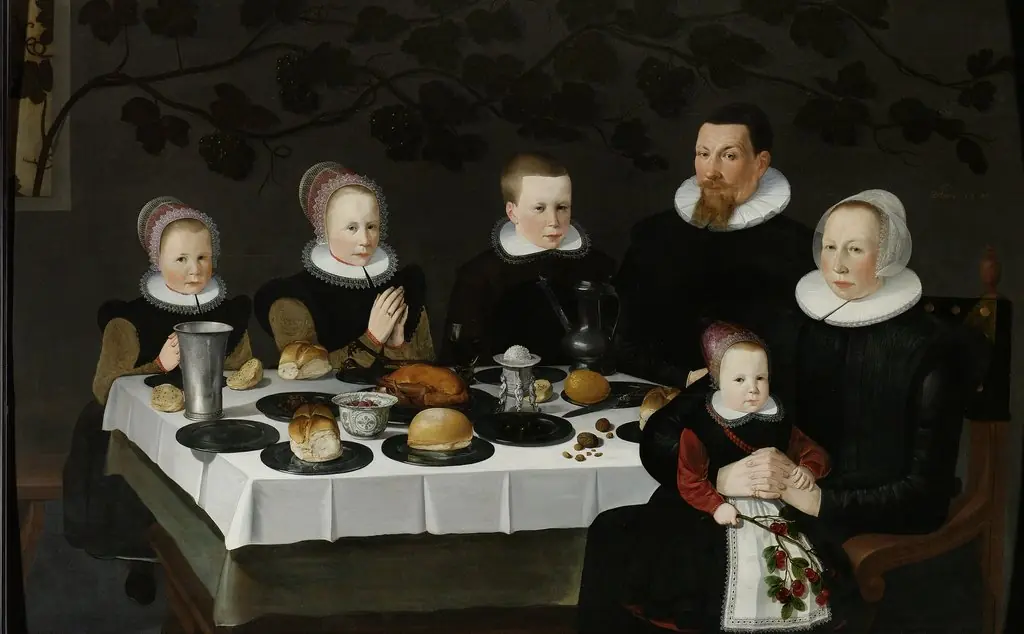
The painting is a family group portrait executed in oil, dated to 1620. According to the cataloguing, the work depicts a family together, with the figures shown wearing ruffs and lace, and accompanied by attributes including a ring, a glove, and a toy rattle. The inclusion of the rattle signals the presence of an infant within the family group, while the ring and glove function as conventional markers of marital union and social status.
The ruffs and lace further indicate the family's wealth and adherence to the formal dress codes of the early seventeenth-century Northern Netherlands. Together, these elements present the work as a statement of dynastic identity, prosperity, and lineage, characteristic of bourgeois family portraiture of the period.
Technique & Style
Created around 1620, the work is an oil painting executed on a panel support, measuring 134.5 cm in height and 109.8 cm in width. The artist, identified as an anonymous master from the Northern Netherlands, employs the medium to render a formal family group with precise attention to textile details. The composition features distinct elements such as ruffs, lace, rings, gloves, and a toy rattle, characteristic of portraiture from this period.
The handling of the oil paint allows for the depiction of these varied textures and the specific attributes of the sitters within the genre of the family portrait.
History & Provenance
The work, titled Family Portrait, is an oil painting on panel created circa 1620 by an anonymous master of the Northern Netherlands. While some records date the inception to January 1, 1620, the broader scholarly consensus places its creation around 1630. The painting depicts a family group characterized by period-specific attire, including ruffs, lace, and accessories such as rings, gloves, and a toy rattle.
Currently, the artwork is held in the collection of the Groeningemuseum in Bruges, where it remains a significant example of early 17th-century Dutch portraiture.
The painting titled Family Portrait is held in the collection of the Groeningemuseum. The work is attributed to an anonymous master from the Northern Netherlands and dates to approximately 1630, though its inception is recorded as January 1, 1620. The provided sources do not list a specific inventory or accession number for this piece. Additionally, the available documentation contains no information regarding the artwork's exhibition history.
Overview
This oil painting depicts a tightly grouped family of three: a man, a woman, and a young child, set against a plain background that emphasizes their interaction.
Context
The use of chiaroscuro and the attention to detail in the lacework reflect artistic techniques prevalent during the period, highlighting the value placed on craftsmanship, particularly in portraitures.
Legacy
While the specific impact of this painting on the broader art historical canon is not detailed here, its preservation and display suggest its value as a representation of family portraiture from its time.
Artist & collection