Artwork
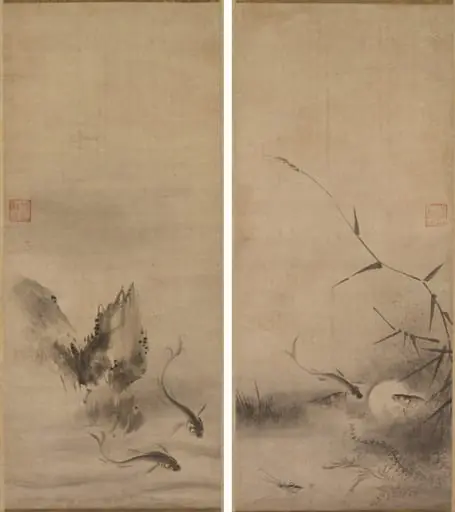
Fish and Rock; Fish and Seaweed
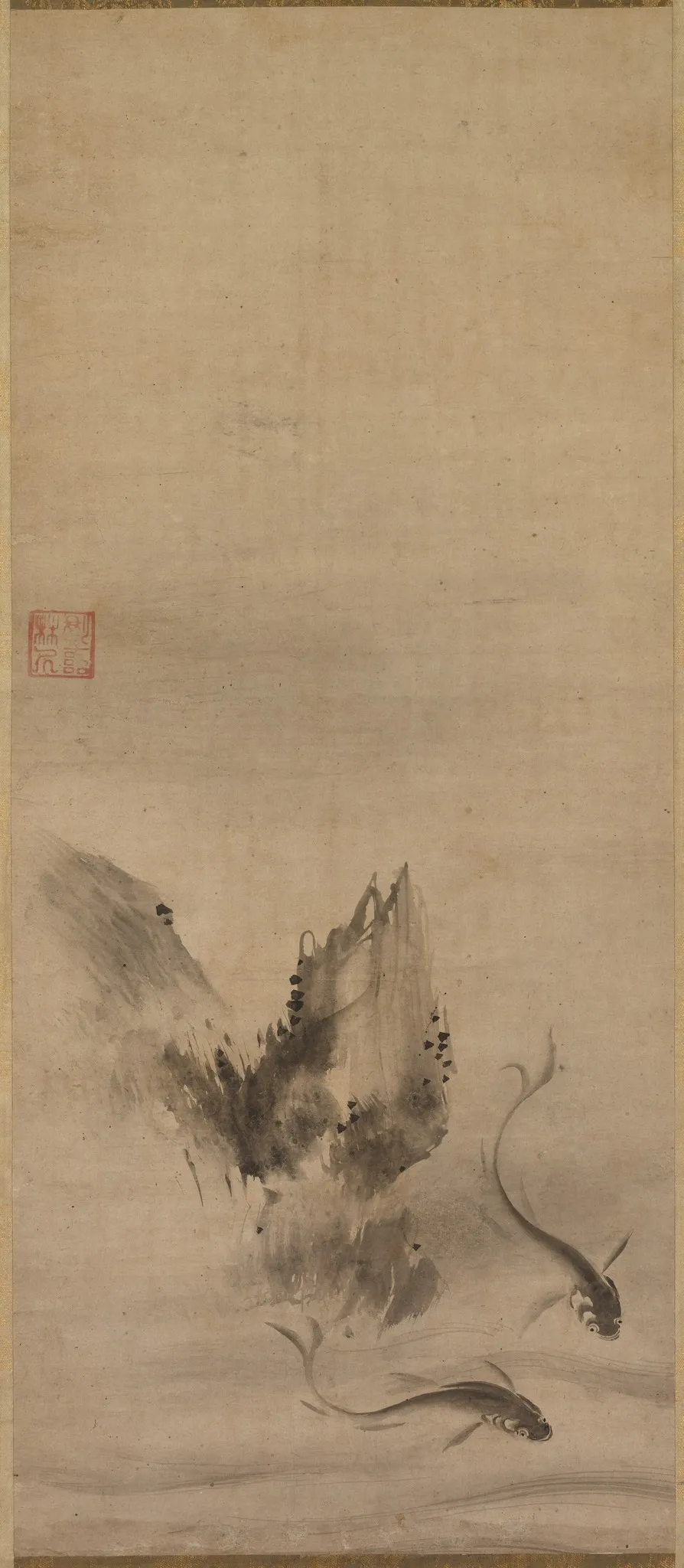
Fish and Rock; Fish and Seaweed is an unspecified painting. It dates from 1536 and is held in the collection of the Cleveland Museum of Art. The work presents a simple aquatic scene in which two fish glide beneath a rippling surface.
About this work
History & Provenance
The painting, dated to 1536 and made in Japan, has been part of the Cleveland Museum of Art's holdings since its accession in that year.
The painting known as Fish and Rock; Fish and Seaweed was created in 1536 in Japan. While the specific artist is identified in some records as Rinkyo, other documentation classifies the creator as unknown. The work is currently held in the collection of the Cleveland Museum of Art, where it was accessioned under the catalog number 1983.186. The piece dates to the early sixteenth century, with the specific inception recorded as January 1, 1536.
Fish and Rock; Fish and Seaweed is held in the collection of the Cleveland Museum of Art. The work is catalogued under the inventory number 1983.186, attributed to the Japanese artist Rinkyo, and was acquired by the museum in 1983.
The painting, dated to 1536 and made in Japan, has been part of the Cleveland Museum of Art's holdings since its accession in that year. No exhibition history beyond its inclusion in the museum's collection is documented in the available sources.
Overview
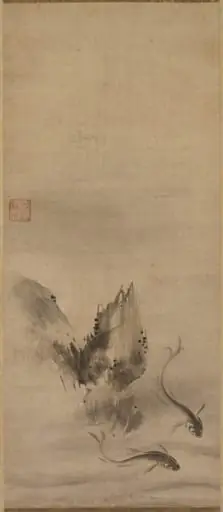
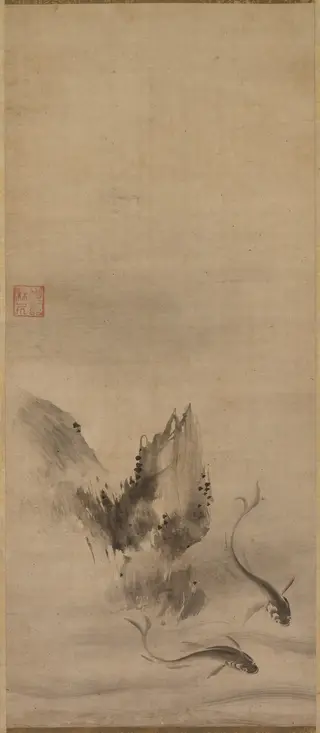
The work presents a simple aquatic scene in which two fish glide beneath a rippling surface. One fish appears darker, marked with a few specks on its back, while its companion is lighter and more elongated. Above them, an ambiguous ink form suggests either seaweed or a rock, adding a hint of depth to the composition.
Subject & Meaning
The painting focuses on the interaction of marine life and its environment, emphasizing the quiet motion of fish beneath water. The juxtaposition of the two differently colored fish may allude to contrast within nature, while the ambiguous upper shape invites viewers to contemplate the boundary between flora and mineral elements in the sea.
Technique & Style
The artist employs rapid, loose brushwork to convey the fluidity of water, allowing forms to emerge rather than be strictly delineated. Dark ink is applied with soft edges that merge into a lighter background, creating a subtle gradation reminiscent of the sfumato approach, where transitions are rendered without hard lines.
Artist & collection

![Summer Mountains (after Dong Yuan [active about ad 937-975]), by Huang Gongwang](https://artifactworldgallery.com/img/huang-gongwang--summer-mountains-after-dong-yuan-active-about-ad-937-975--a5e22b9ec870e011-w320.webp)