Artwork
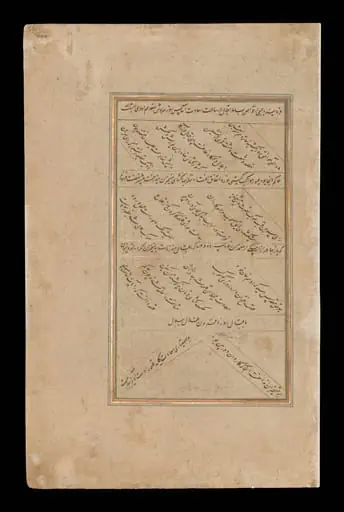
From Dohras (Songs) 40 and 36 from the Kitab-i Nauras of Sultan Ibrahim Adil Shah II (verso)
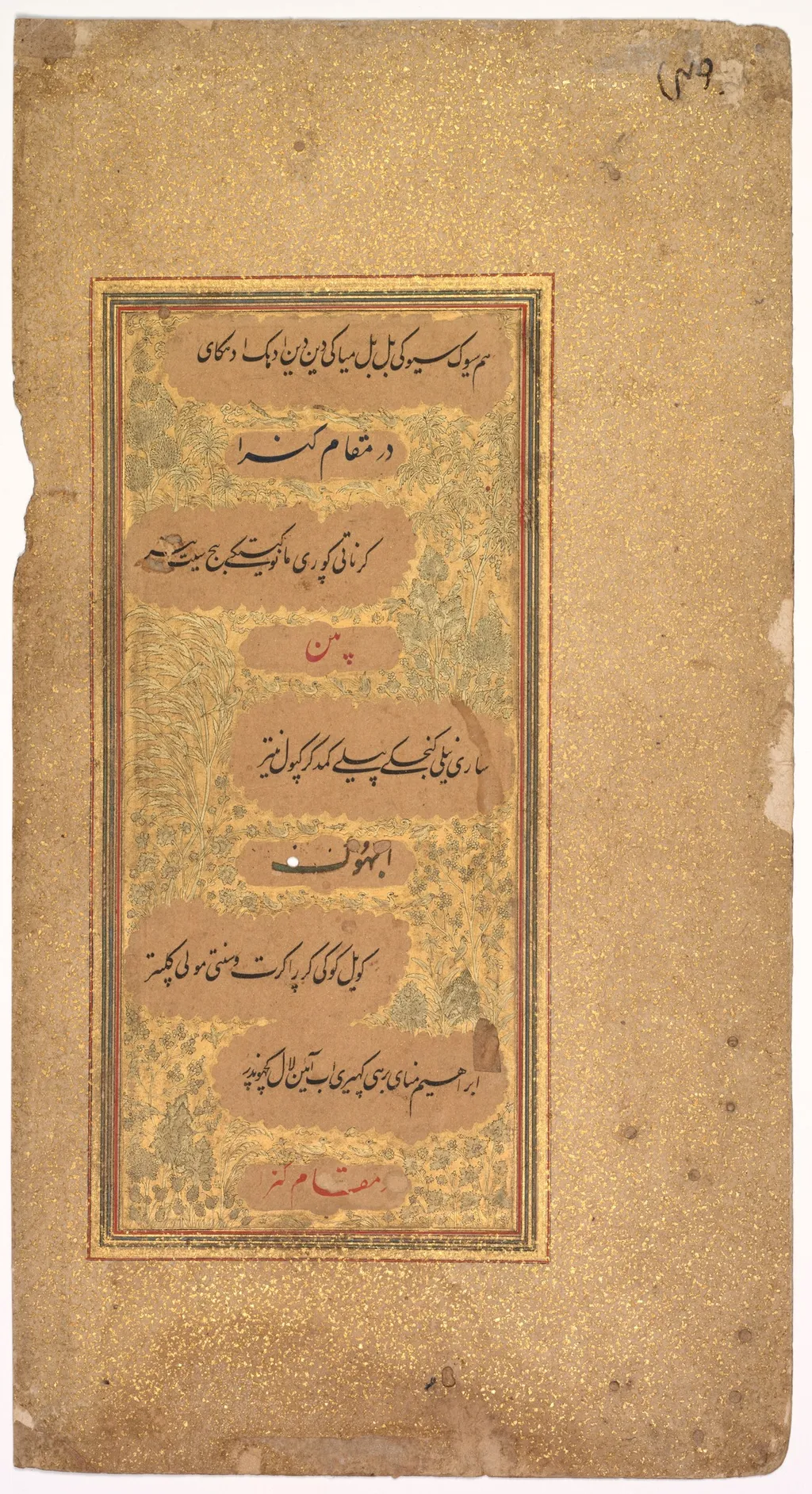
From Dohras (Songs) 40 and 36 from the Kitab-i Nauras of Sultan Ibrahim Adil Shah II (verso) is an unspecified painting. It dates from 1618 and is held in the collection of the Cleveland Museum of Art. The object is a painted folio from the Kitab-i Nauras, a 17th‑century manuscript associated with Sultan Ibrahim Adil Shah II of the Deccan.
About this work
History & Provenance
The work was originally commissioned for the court of Sultan Ibrahim Adil Shah II as part of the manuscript collection known as the Kitab-i Nauras.
The painting, identified as the verso page containing Dohras 40 and 36 from the Kitab-i Nauras, was created in 1618. It is attributed to the Persian artist Khalilullah Butshikan, who was active in India between 1596 and approximately 1620. The work was originally commissioned for the court of Sultan Ibrahim Adil Shah II as part of the manuscript collection known as the Kitab-i Nauras. The Cleveland Museum of Art currently holds the piece, cataloged under accession number 2013.284.b.
The painting is held in the collection of the Cleveland Museum of Art. It is cataloged under the accession number 2013.284.b. While the work dates to 1618, the provided records do not list specific past exhibitions or loan history for this folio.
Overview
The object is a painted folio from the Kitab-i Nauras, a 17th‑century manuscript associated with Sultan Ibrahim Adil Shah II of the Deccan. It presents verses numbered 40 and 36 on the verso side, rendered as a decorative page rather than a conventional illustration. The work is held in the collection of the Cleveland Museum of Art.
Subject & Meaning
The page contains lyrical or devotional verses, likely drawn from the Sultan’s own poetic anthology. The use of colored ink to highlight particular words suggests an emphasis on specific theological or aesthetic concepts, guiding the reader’s attention within the poetic narrative.
Technique & Style
Executed with black ink on a warm, golden ground, the calligraphy features elaborate flourishes and curved strokes typical of courtly Deccan scripts. Select words appear in red or blue pigment, a practice that adds visual hierarchy and underscores the manuscript’s luxurious character. The surface shows a subtle texture indicative of paper or parchment prepared for fine illumination.
Context
The Kitab-i Nauras belongs to a broader tradition of royal poetry collections in the Deccan, where rulers composed and curated verses celebrating music, love, and spirituality. Such works were often produced for elite audiences, serving both as literary treasures and as symbols of the sovereign’s cultured authority.
Artist & collection

 From Dohras (Songs) 40 and 36 from the Kitab-i Nauras of Sultan Ibrahim Adil Shah II (verso)
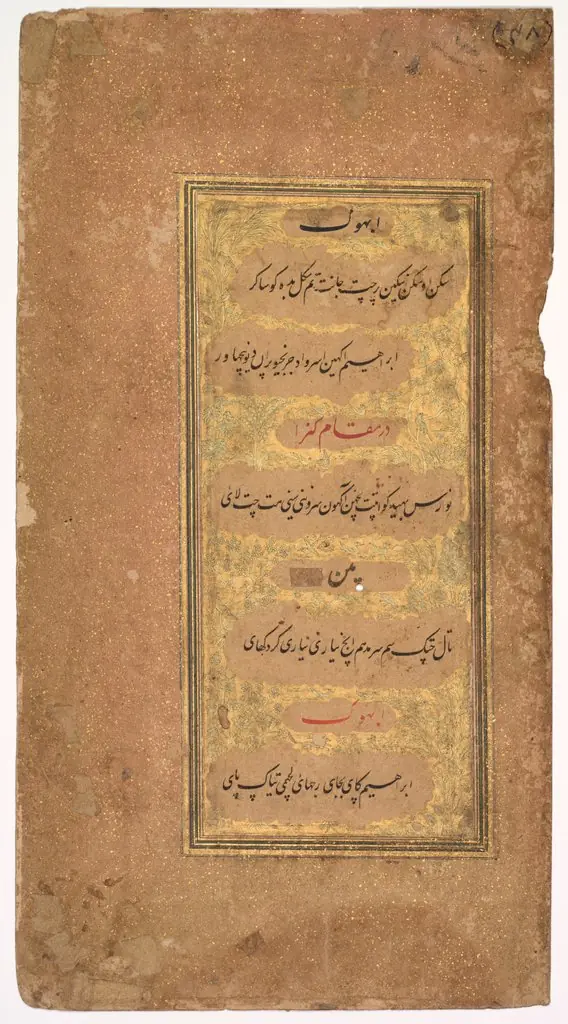
 From Dohras (Songs) 40 and 42 from the Kitab-i Nauras (Book of Nine Essences) of Sultan Ibrahim Adil Shah II of Bijapur (r. 1580–1627); verso: From Dohras (Songs) 40 and 36 from the Kitab-i Nauras of Sultan Ibrahim Adil Shah II
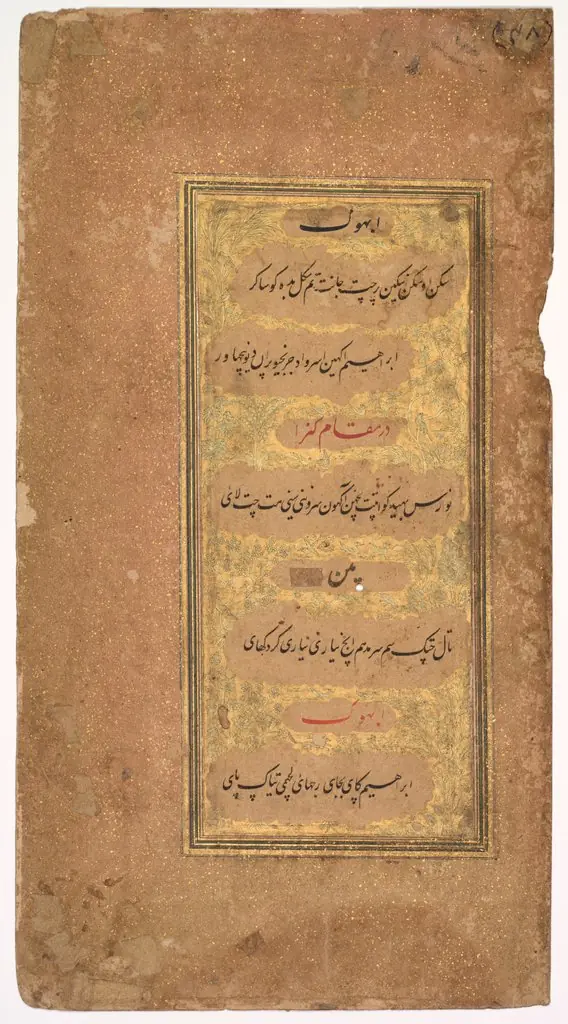 From Dohras (Songs) 40 and 42 from the Kitab-i Nauras (Book of Nine Essences) of Sultan Ibrahim Adil Shah II of Bijapur (r. 1580–1627) (recto)
 From Dohras (Songs) 40 and 42 from the Kitab-i Nauras (Book of Nine Essences) of Sultan Ibrahim Adil Shah II of Bijapur (r. 1580–1627) (recto)
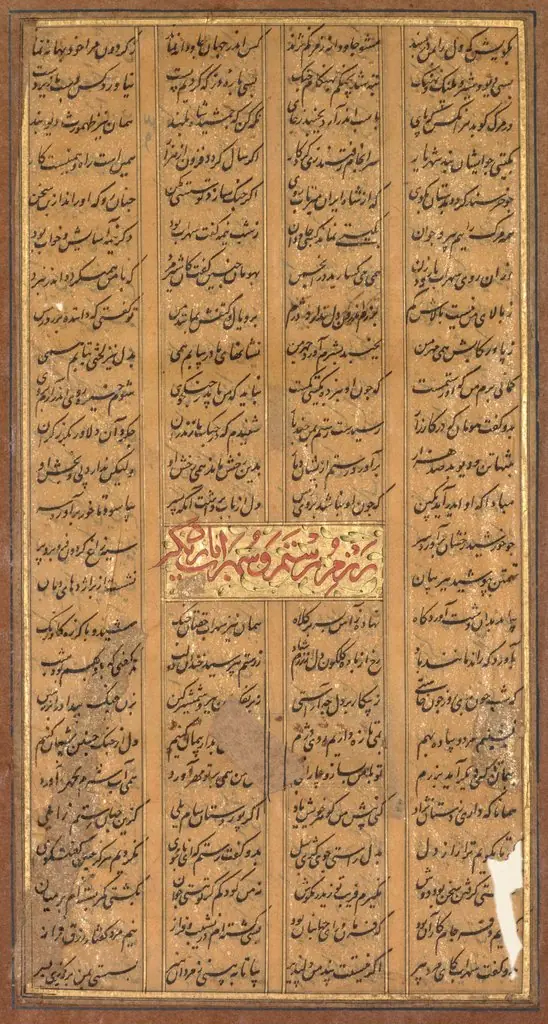 Text of Rustam and Suhrab, from the Shah-nama of Firdausi (Persian, c. 934–1020) (verso)
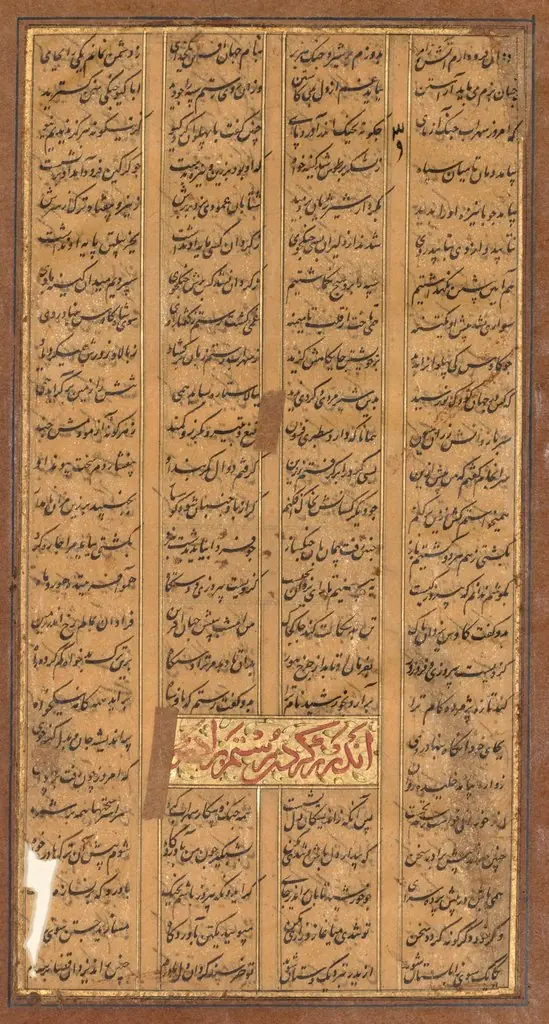 Text of Rustam and Suhrab, from the Shah-nama of Firdausi (Persian, c. 934–1020) (recto)
 Akbar
Akbar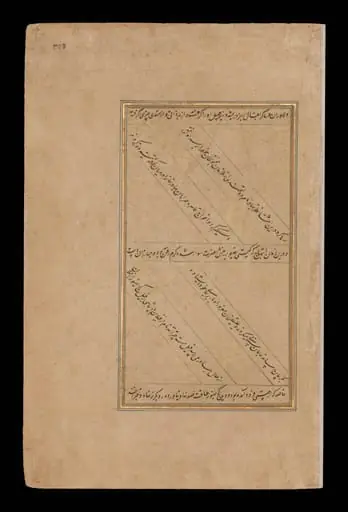 Untitled
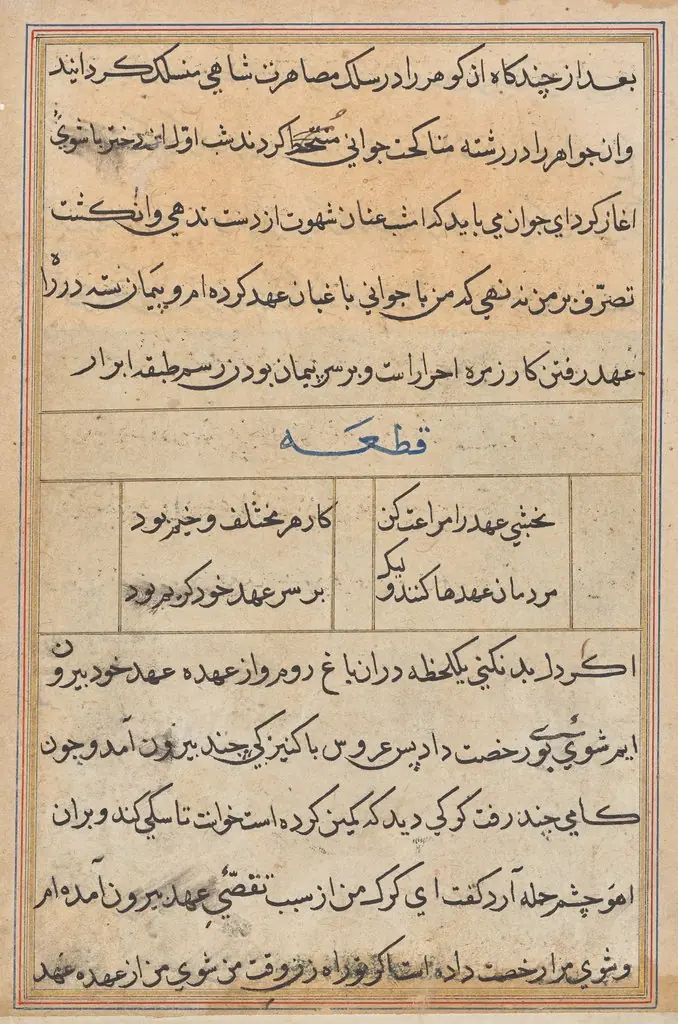 Page from Tales of a Parrot (Tuti-nama): text page
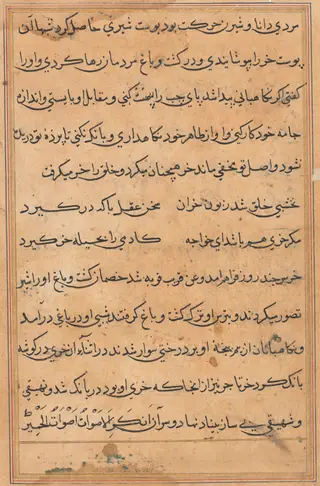 Page from Tales of a Parrot (Tuti-nama): text page
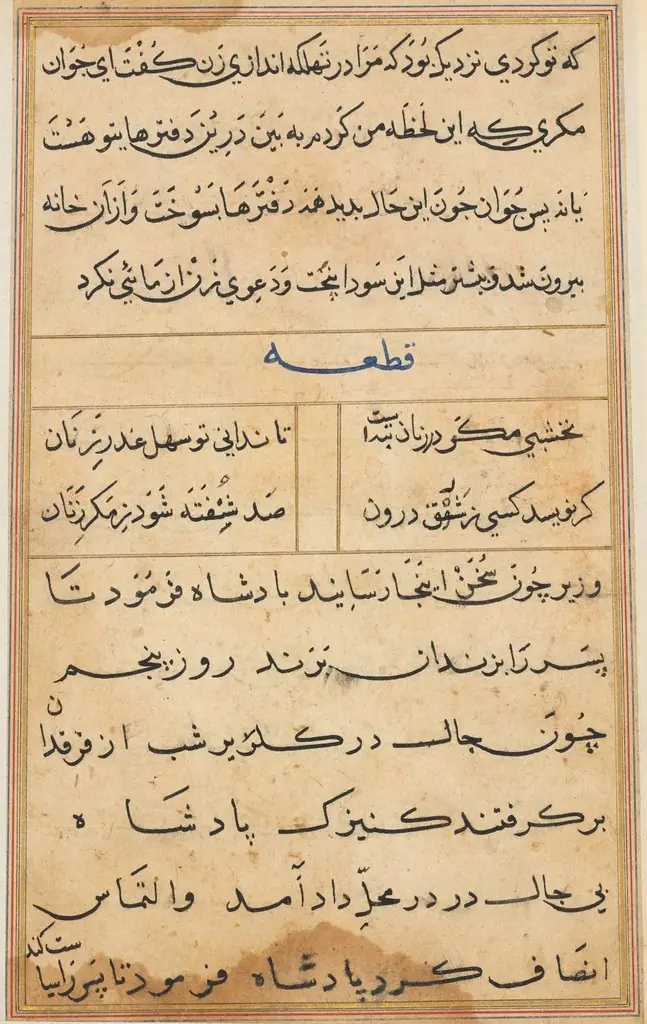 Page from Tales of a Parrot (Tuti-nama): text page
- From Dohras (Songs) 40 and 42 from the Kitab-i Nauras (Book of Nine Essences) of Sultan Ibrahim Adil Shah II of Bijapur (r. 1580–1627); verso: From Dohras (Songs) 40 and 36 from the Kitab-i Nauras of Sultan Ibrahim Adil Shah II