Movement
Deccan Painting

Deccan Painting is an art movement of the 1347–1687 period. The gallery holds 13 works in this movement, including works by Fattu. Browse Deccan Painting paintings, portraits, pictures and artworks from the world's public-domain museum collections.
Deccan painting refers to the schools of miniature painting that flourished at the Muslim courts of the Deccan plateau in south-central India, in the sultanates that emerged from the break-up of the Bahmani kingdom around 1520. Its principal centres were Ahmadnagar, Bijapur, and Golconda, with lesser activity at Bidar and Berar. Geographically and politically distinct from the Mughal empire to the north, these courts cultivated a sensibility shaped by cosmopolitan contact: the cities drew artists, poets, and thinkers from Iran, Turkey, and the wider Islamic world, and their painting fused that Persianate idiom with the indigenous artistic traditions and rich colour-sense of the Deccan. The school reached maturity between the late sixteenth century and the 1680s.
Deccani painting is prized above all for its brilliance of colour, the sophistication of its compositions, and what scholars have called its air of decadent luxury. Less wedded to documentary realism than Mughal art, it pursued a more inward, lyrical mood, with mystic and fantastic overtones — rulers shown strolling through flowering gardens or lost in reverie, set against dreamlike, often gold-flecked backgrounds. The art historian Mark Zebrowski distinguished the three courts memorably, contrasting the "poignant romanticism" of Bijapur, the "tense opulence" of Golconda, and the "refined dignity" of Ahmadnagar portraiture.
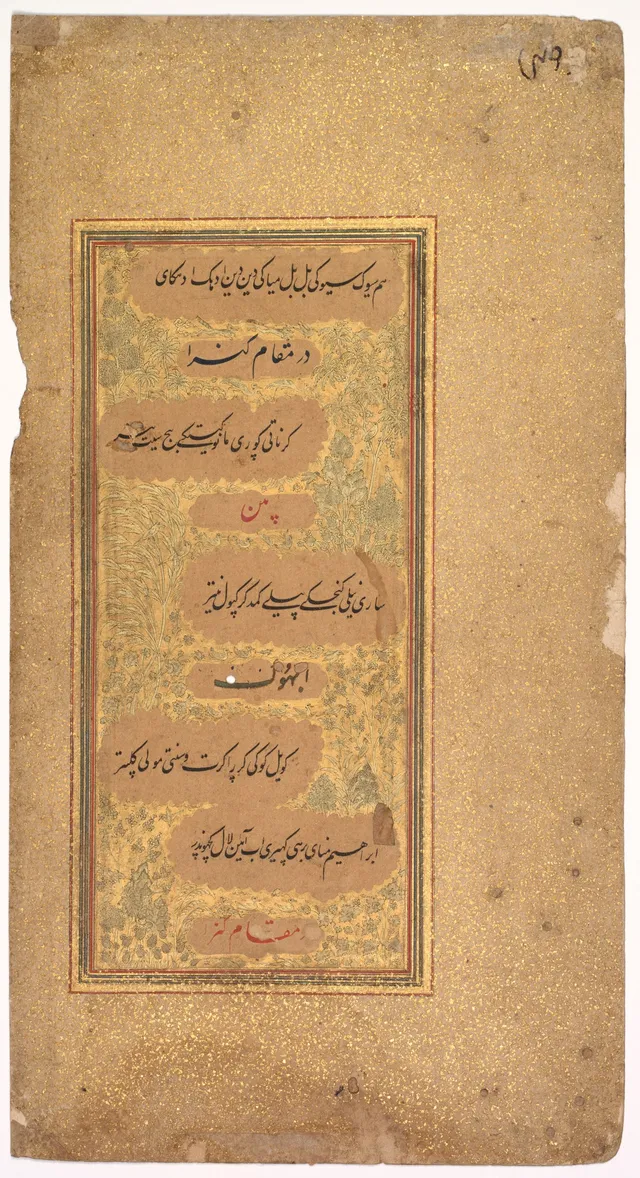
The golden age belongs to Bijapur under Sultan Ibrahim Adil Shah II (r. 1579/80–1626/27), a poet, calligrapher, and musician whose treatise the Kitab-i Nauras (Book of Nine Rasas) gave the court its aesthetic creed. His leading painter, the Persian-trained Farrukh Beg (also known at Bijapur as Farrukh Husain), produced the school's defining masterpieces, among them the celebrated portrait of the sultan playing the tambur (c. 1595–1600). Our own collection preserves a leaf of dohras from the Kitab-i Nauras itself, a direct witness to this Bijapuri court culture.
The Deccani schools declined sharply after the Mughal emperor Aurangzeb annexed Bijapur in 1686 and Golconda in 1687, dispersing their workshops. Yet their legacy endured: Deccani conventions of colour and atmosphere fed into later Mughal and provincial painting, and the style is now recognised as one of the great independent traditions of Indian art, an opulent counterpoint to the more sober naturalism of the Mughal atelier.
Key artists
Works
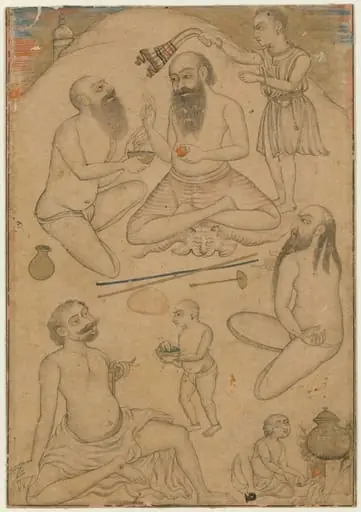 Untitled
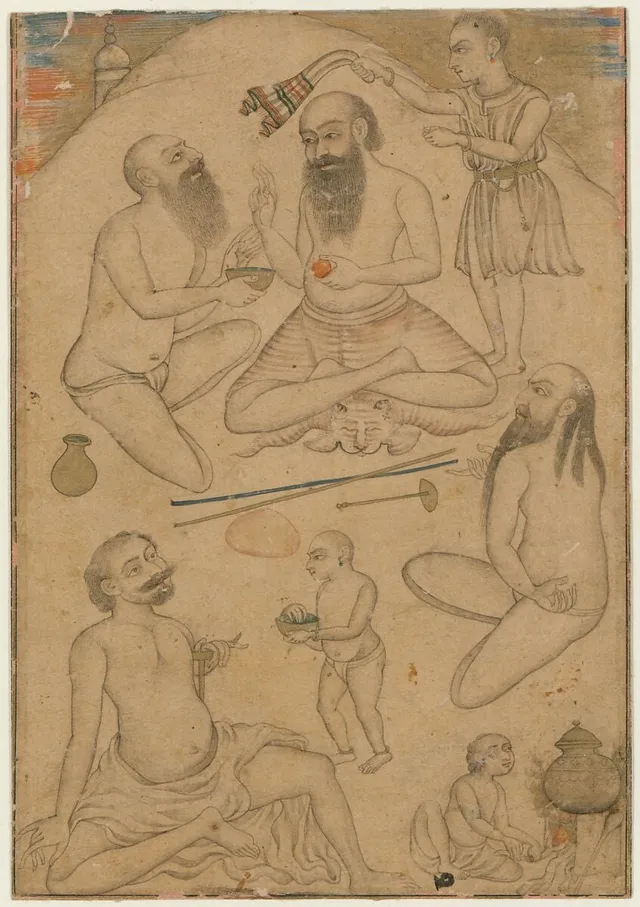
 A Prince Performs Austerities (recto); Shiva and His Followers Return to Mount Kailash (verso), from a Romance of Chandrabhanu and Lavanyavati of Upendra Bhanja (1670–1740)
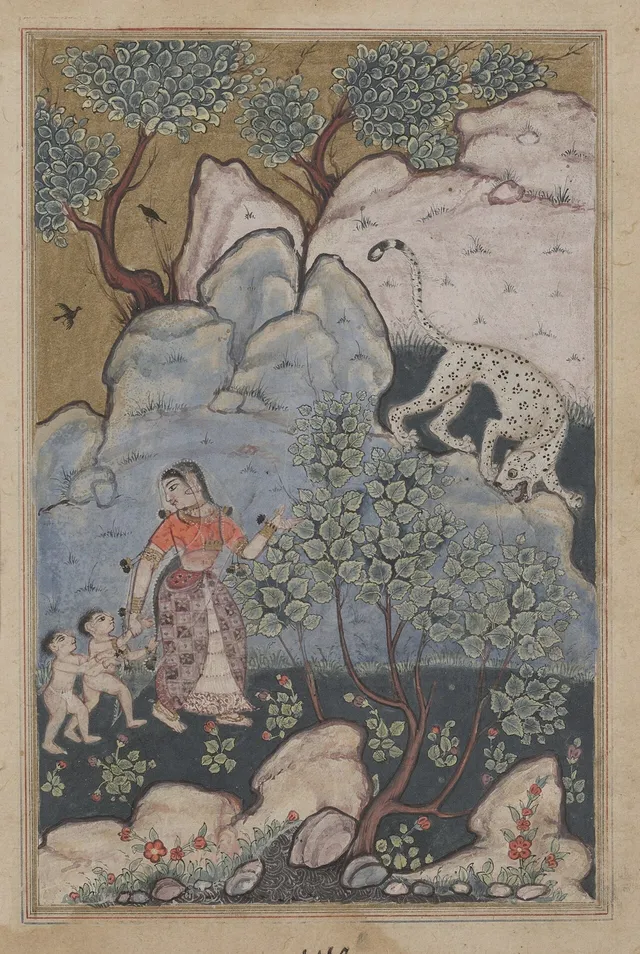
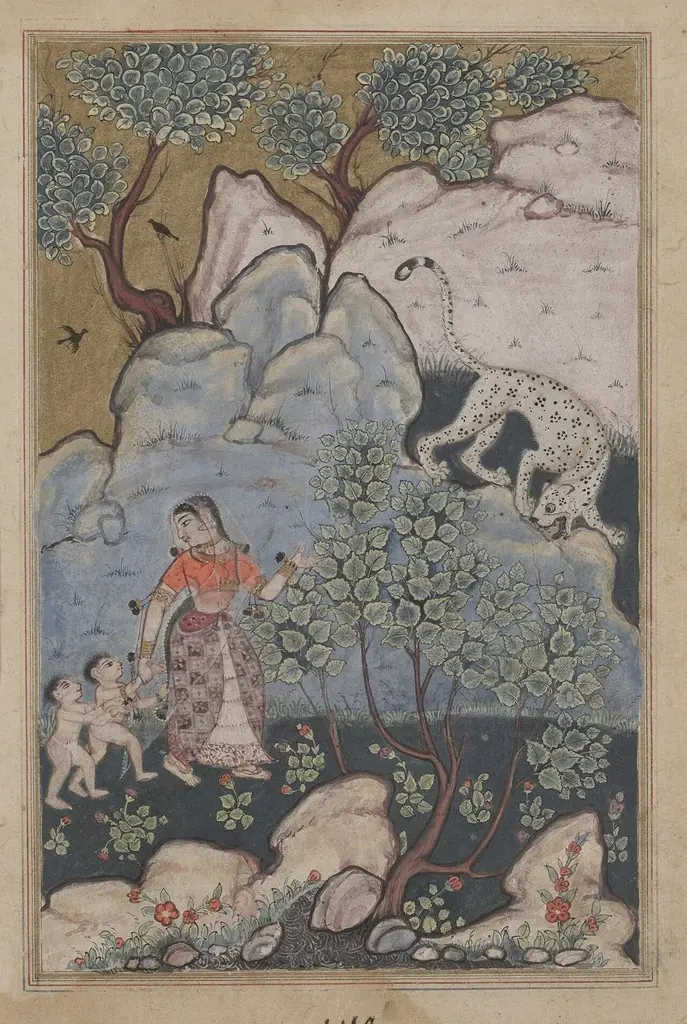 A woman with two children, having abandoned her home, goes into the forest where she encounters a leopard, from a Tuti-nama (Tales of a Parrot): Thirtieth Night
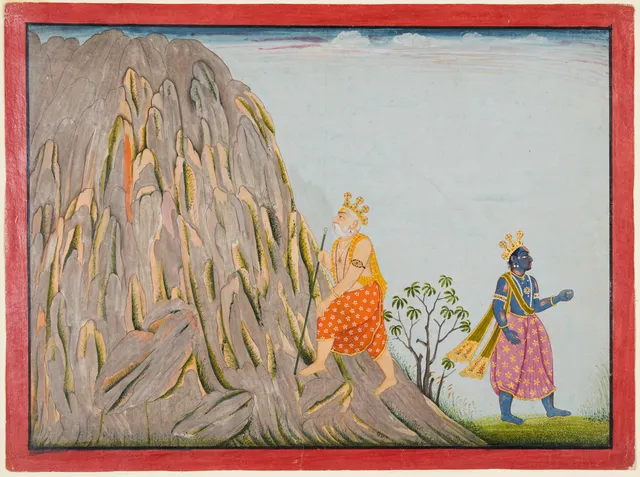
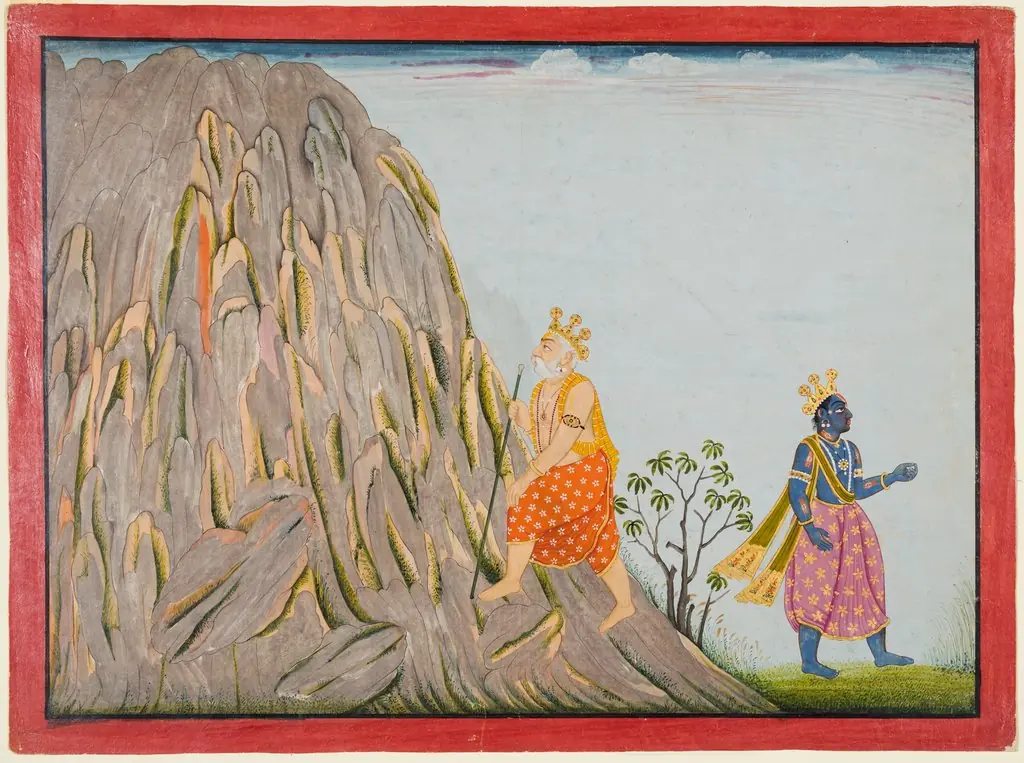 King Muchukunda Enters the Realm of Mount Gandhamadana to Attain Salvation, from the “Fifth Basohli Bhagavata Purana”
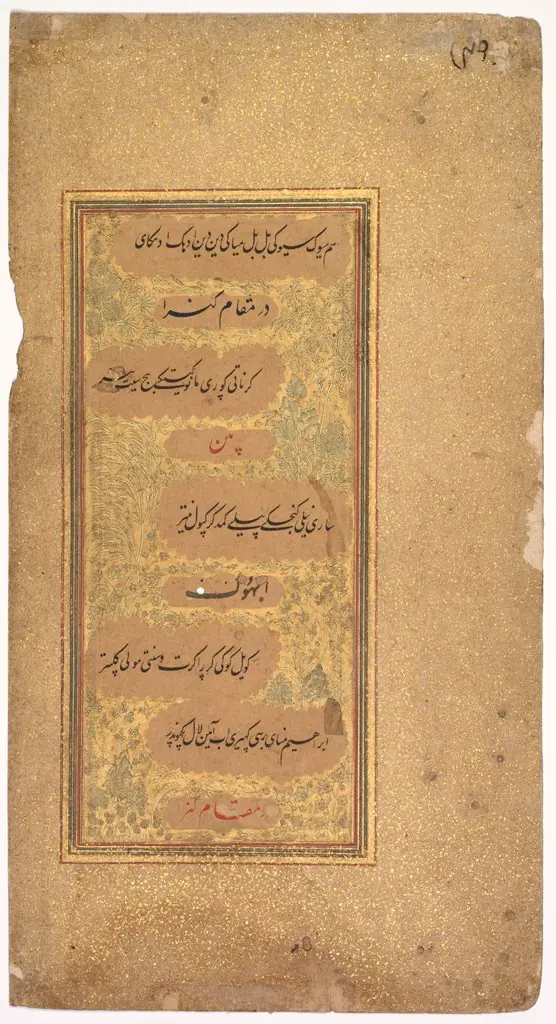 From Dohras (Songs) 40 and 36 from the Kitab-i Nauras of Sultan Ibrahim Adil Shah II (verso)
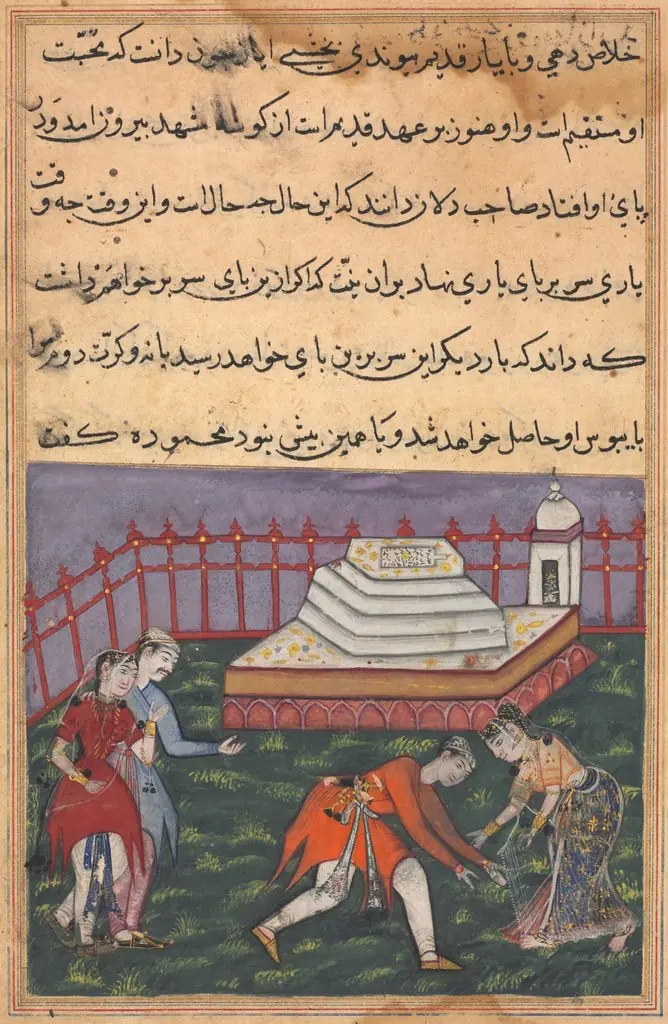 Hearing her declaration of love, Ayaz falls at the feet of Mahmuda at the holy shrine. The scene is witnessed by Salim, Ayaz’s friend, and a maid, from a Tuti-nama (Tales of a Parrot): Thirty-third Night
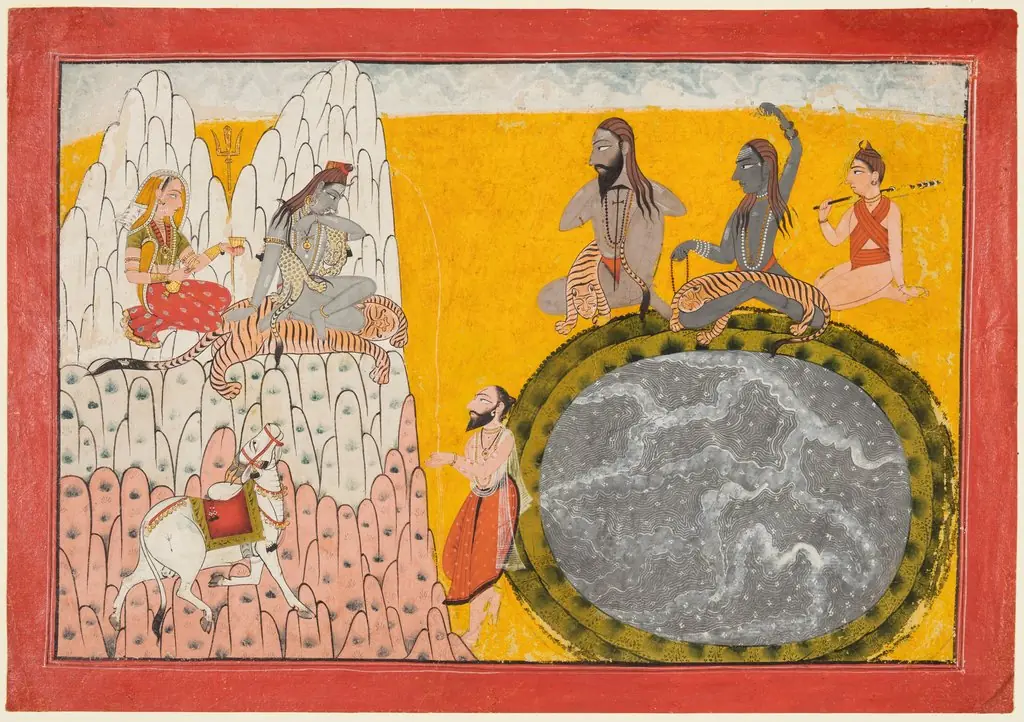 Descent of the Ganges
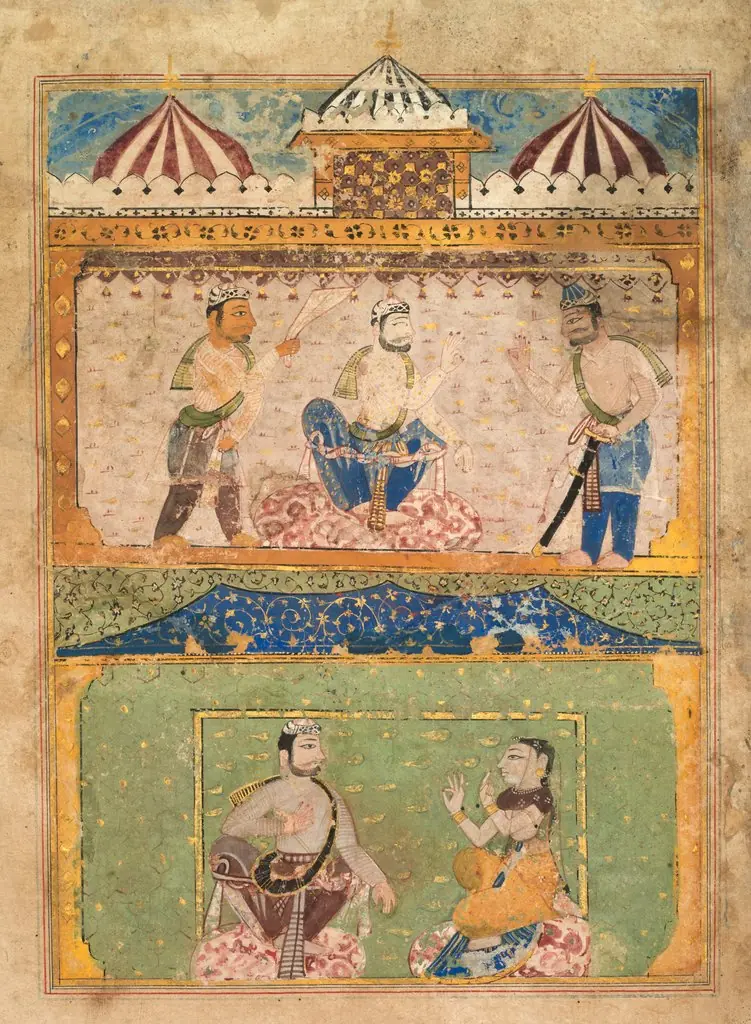 A Traveler Persuades Lorik to Return Home (top); Chanda Objects (bottom), from a Chandayana (Story of Chanda)
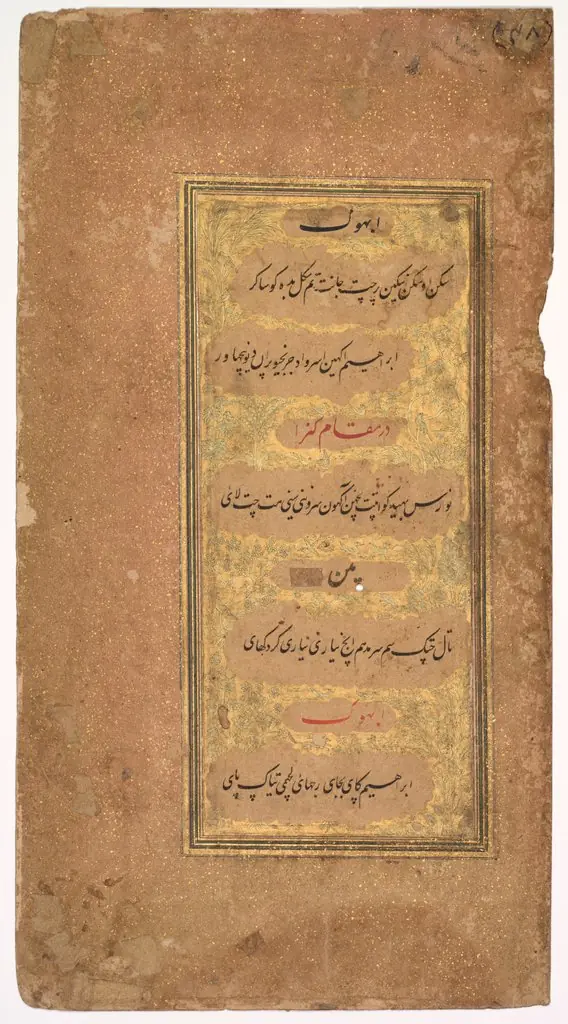 From Dohras (Songs) 40 and 42 from the Kitab-i Nauras (Book of Nine Essences) of Sultan Ibrahim Adil Shah II of Bijapur (r. 1580–1627); verso: From Dohras (Songs) 40 and 36 from the Kitab-i Nauras of Sultan Ibrahim Adil Shah II
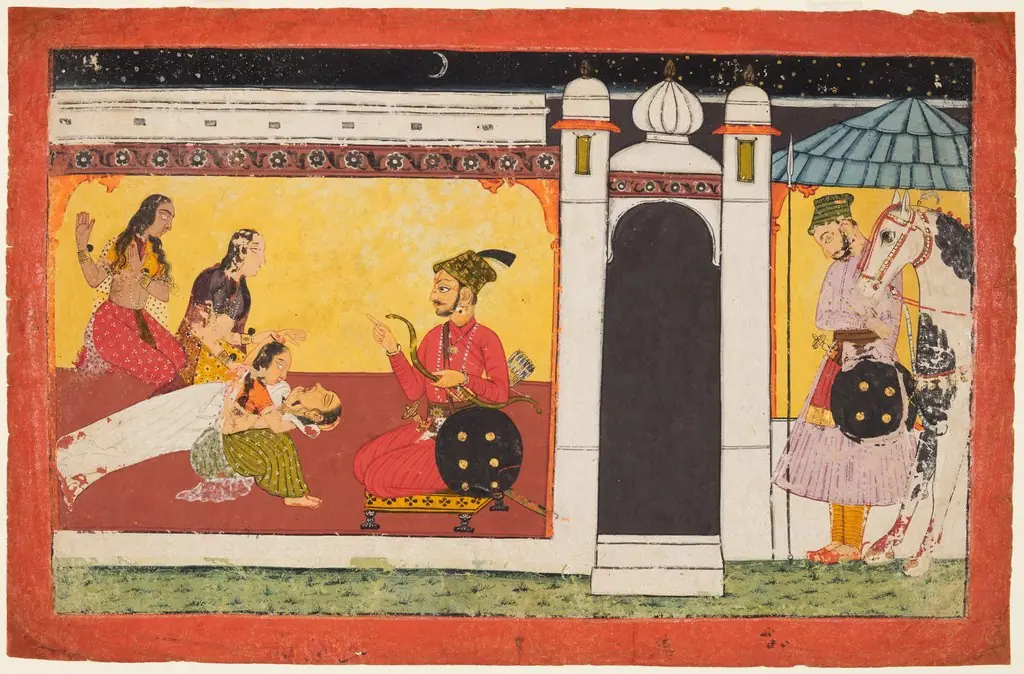 Kandala Dies on Hearing the News of Madhava’s Death, from a Madhavanala Kamakandala
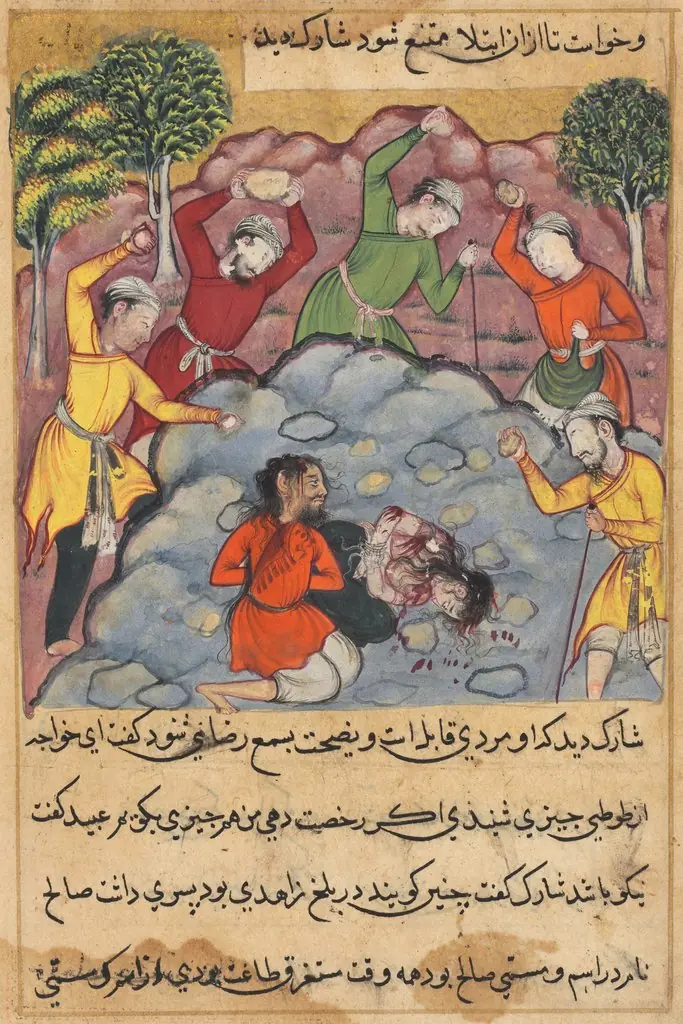 The Raja’s daughter and her lover stoned to death for adultery, from a Tuti-nama (Tales of a Parrot): Forty-Second Night
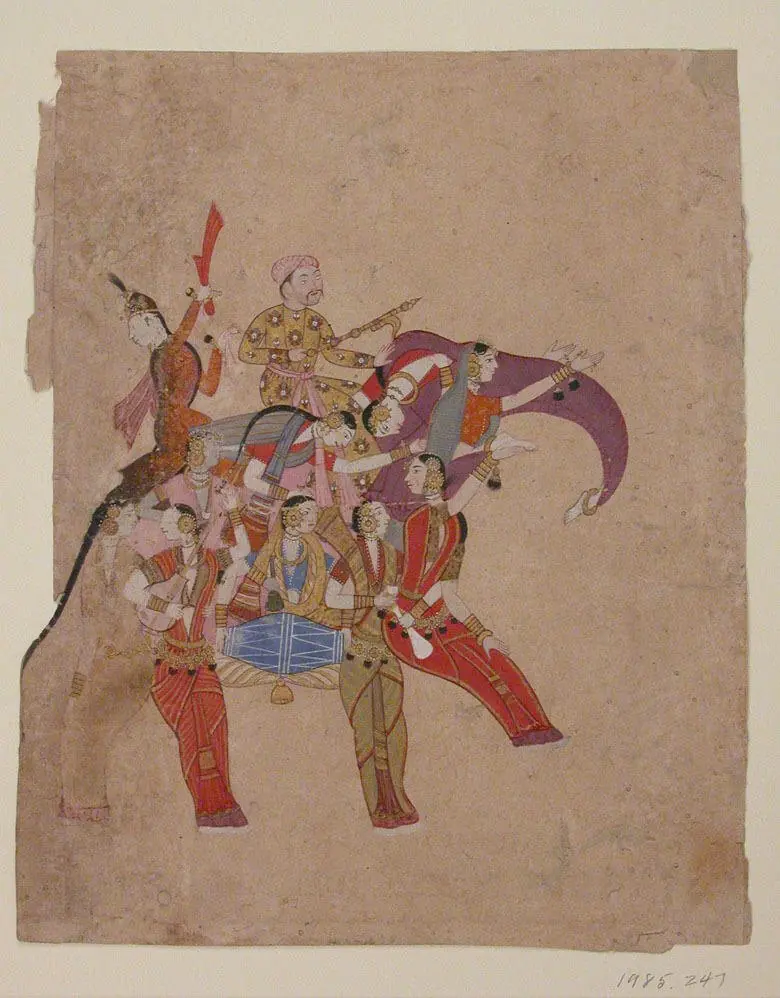 Composite Elephant - Deccan Painting Early 17th Century
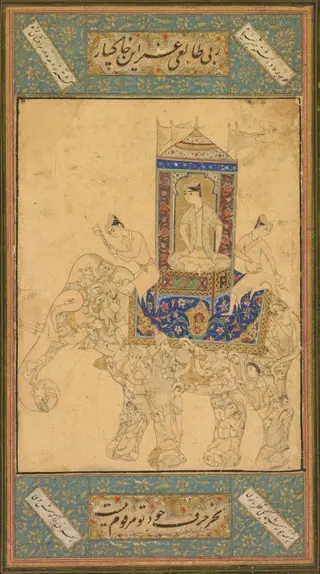 A prince riding a composite elephant
Frequently asked questions
What is Deccan Painting?
Deccan Painting is an art movement. A tradition of courtly miniature painting from the Deccan sultanates of southern India (Bijapur, Golconda, Ahmadnagar) from the late 16th through 18th centuries.
How many Deccan Painting works does Artifact World Gallery have?
Artifact World Gallery holds 13 public-domain Deccan Painting works, all free to view and download.
Who are the key Deccan Painting artists?
Key Deccan Painting artists in the collection include Fattu.
When did Deccan Painting take place?
Deccan Painting dates from 1347–1687.
Where can I see Deccan Painting works?
Deccan Painting works in the collection are held by Cleveland Museum of Art and Metropolitan Museum of Art.