Artwork
Gevecht tussen Nederlandse militairen en inlanders
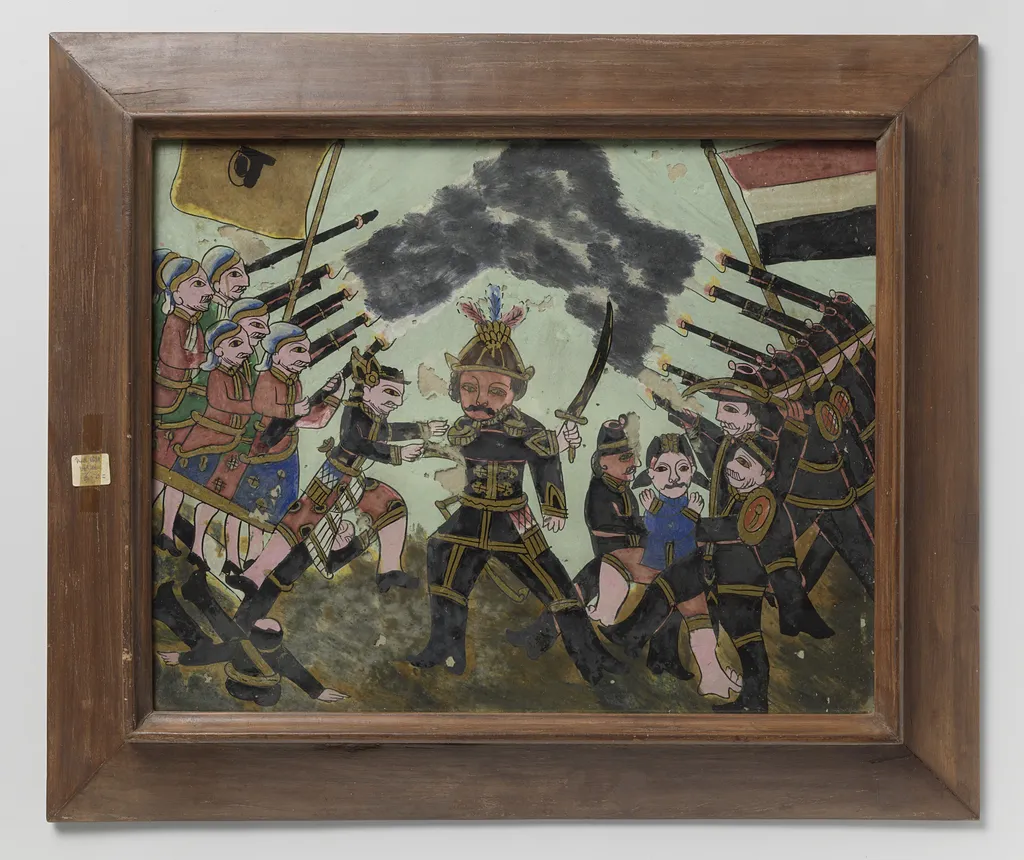
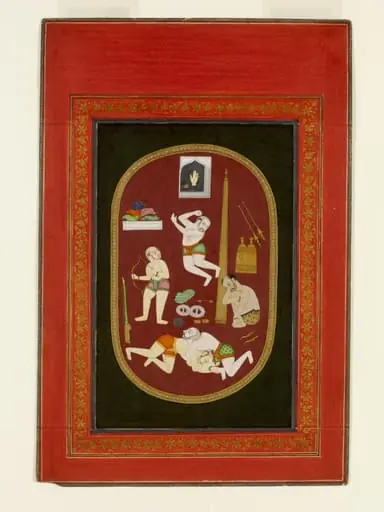
Gevecht tussen Nederlandse militairen en inlanders is an unspecified painting by the Realist artist Unknown. It dates from 1850 and is held in the collection of the Rijksmuseum. This painting depicts a confrontation between Dutch military personnel and local inhabitants, rendered in a stylized, theatrical manner.
About this work
Overview
This painting depicts a confrontation between Dutch military personnel and local inhabitants, rendered in a stylized, theatrical manner.
This painting depicts a confrontation between Dutch military personnel and local inhabitants, rendered in a stylized, theatrical manner. The composition is crowded and dynamic, with figures arranged in a dense, uneven formation. Bright, unmodulated colors and simplified forms dominate, creating a sense of heightened drama rather than realistic detail. The background is minimal, emphasizing the action in the foreground.
Subject & Meaning
The scene illustrates a colonial conflict, likely from the Dutch East Indies, where Dutch soldiers engaged with indigenous groups. The central figure, distinguished by a tall feathered hat and ornate uniform, appears to be issuing orders, symbolizing command and authority. The exaggerated expressions and stiff postures suggest a narrative intent, portraying order amid chaos rather than documenting actual events with accuracy.
Technique & Style
The artist employs flat, unshaded color areas and rigid, linear forms, avoiding naturalistic perspective or texture. Figures are rendered with theatrical gestures and stylized features, resembling stage props more than lifelike individuals. Smoke is rendered as swirling, abstract shapes, and the sky is a muted green, contributing to an artificial, almost illustrative quality that prioritizes symbolic clarity over realism.
History & Provenance
The work originates from the 19th century, likely commissioned to commemorate Dutch military campaigns in the East Indies. It was produced during a period when colonial victories were frequently visualized in art to reinforce national pride. The painting entered the Rijksmuseum’s collection as part of its broader effort to document Dutch imperial history through visual culture.
Context
Created during the height of Dutch colonial expansion, the painting reflects contemporary attitudes toward empire and military duty. Such images were common in public and institutional spaces, serving to legitimize colonial rule by portraying it as orderly and heroic. The stylized approach aligns with popular visual conventions of the time, which favored clarity and moral clarity over nuanced representation.
Legacy
The painting remains a documented artifact of how colonial conflicts were visually framed in the Netherlands. It is now studied less as a historical record and more as a cultural artifact revealing the aesthetics and ideologies of its era. Its presence in the Rijksmuseum invites critical reflection on the role of art in shaping collective memory of empire.
Artist & collection









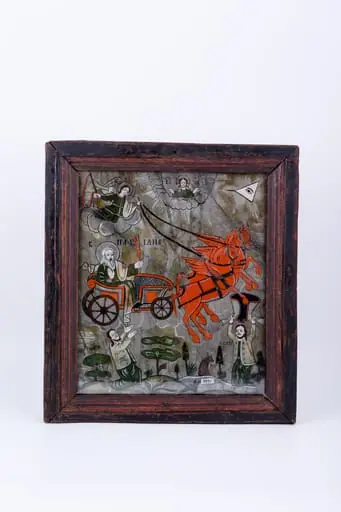
- Icoana îl reprezintă pe Sfântul Mare Prooroc Ilie Tesviteanul, traversând Cerurile, în carul de foc, tras de doi cai roșii. Sfântul este îmbrăcat în straie brun-kaki și mantie brună-ocru și Îngerul din spate mână caii cu aripile roșii. Chipul Sfântului Ilie este unul ascetic, asemenea Sfântului Ioan Botezătorul. În registrul inferior sunt Sfântul Prooroc Elisei, ucenicul Sfântului Ilie, care prinde cojocul aruncat și un țăran plugar, care se ține de carul de foc al sfântului prooroc. Asemenea țăranului plugar, care ară pământul, așa și Sfântul Ilie Tesviteanul ară Cerurile cu carul de foc. În registrul superior este Dumnezeu-Tatăl, care binecuvântează și Îngerul care ține hățurile cailor. În colțul din dreapta este Ochiul Divin înscris în triunghiul Sfintei Treimi. Între registre există comunicare și interferență, atât semantică, cât și cromatică. Compoziția este amplă, dezvoltată pe registre și relații între personaje. Cromatica este armonioasă: roșu vermillon și sângeriu, verde kaki, verde mușchi-de-pădure, gri, nisipiu, ocru, bronziu, alb și negru. Inscripția din româno-chirilică se traduce IC XC Iisus Hristos Sf Proroc Ilie Elisei. Icoana aparține lui Savu Moga, din Arpașu de Sus, Țara Făgărașului. Icoana este datată 1859.
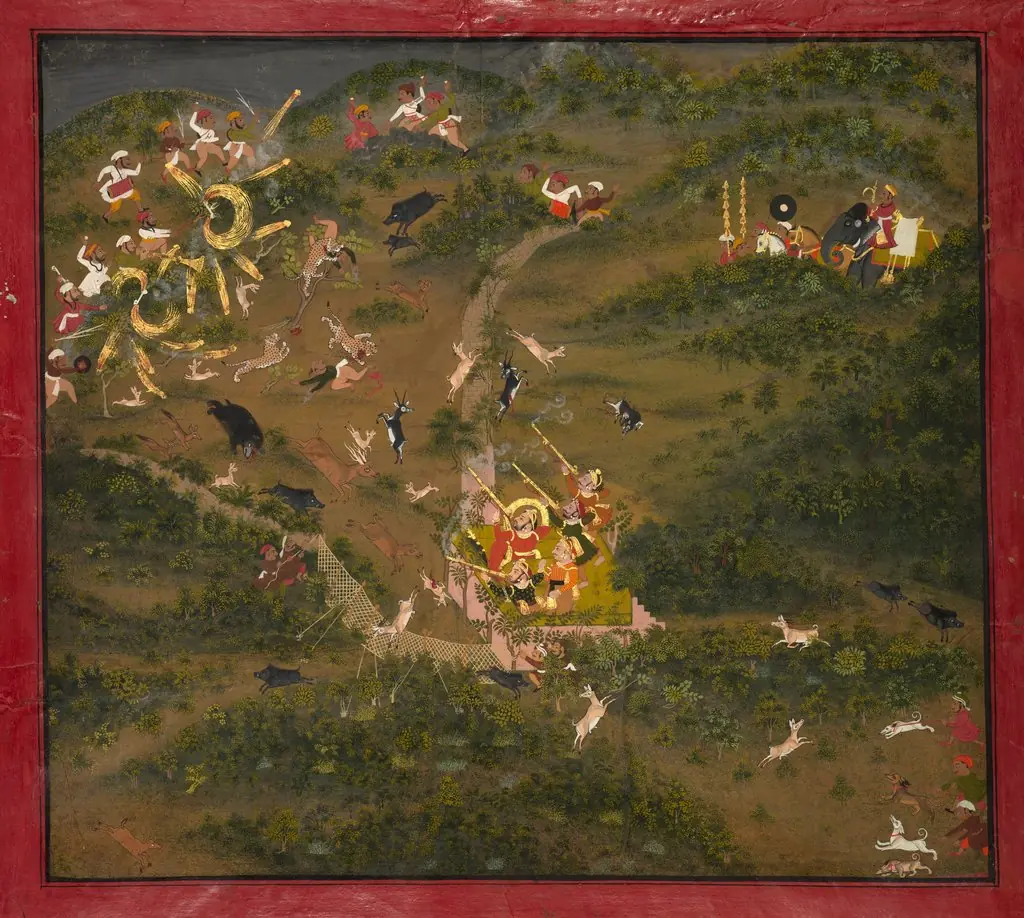 Maharana Jagat Singh II Hunting
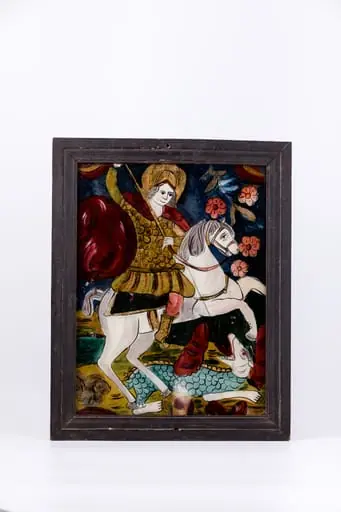 Sfântul Mare Mucenic Gheorghe este așezat călare pe un cal alb cu șa neagră, omorând balaurul alb-albastru-gri cu creastă roșie-acajou, solzi și coadă lungă, cu lancea, pe care o ține cu amândouă mâinile, înfingându-i-o animalului în gâtlej. Fondul este cerul albastru ultramarin bleumarin în registrul superior. În registrul inferior, fondul este brun-ocru și albastru cobalt, cu linii ondulatorii verzi, cele două registre în centrul icoanei ușor întrepătrundu-se. Mantia Sfântulu Mucenic Purtător de Biruință este roșie-vișinie stacojie, având cămașa de cavaler cu zale. Culoarea roșie este caracteristică mucenicilor și martirilor. Cerul albastru este acoperit cu elemente fitomorfe - flori de măr roz-roșii. Icoana, fiind din Mărginimea Sibiului, are desenul mai neglijent, cromatica puternică, fauvistă. Cromatica este armonioasă: roșu vișiniu-stacojiu, albastru, bleu-ultramarin bleumarin, roz, brun, galben-ocru, gri, alb, negru. Icoana este din Mărginimea Sibiului.
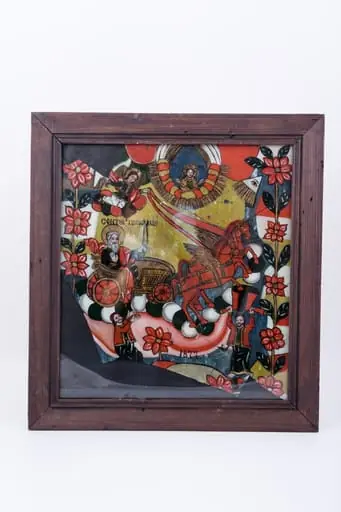 Icoana îl reprezintă pe Sfântul Mare Prooroc Ilie Tesviteanul, traversând Cerurile, în carul de foc, tras de doi cai roșii. Sfântul este îmbrăcat în straie brun-negre și mantie roșie și mână caii roșii cu aripi bronzii. Chipul Sfântului Ilie este unul ascetic, asemenea Sfântului Ioan Botezătorul. În registrul inferior sunt Sfântul Prooroc Elisei, ucenicul Sfântului Ilie, care prinde cojocul aruncat și un țăran plugar, care se ține de carul de foc al sfântului prooroc. Cele două registre paralele, cerul și pământul, sunt despărțite de un lanț din nouri albi-negrii, o mandorlă, care lasă Cerurile să se deschidă. Asemenea țăranului plugar, care ară pământul, așa și Sfântul Ilie Tesviteanul ară Cerurile cu carul de foc și biciul în mână. Cerurile albastru-întunecate, de apus de soare, au firicele roșiatice, iar câmpurile albastre au denivelări și movile roșiatice, astfel în registrul inferior, pământul este reprezentat pe straturi și benzi cromatice alternative de brun, kaki, roșu, albastru și alb. Întreaga narațiune este segmentată de lanțuri de nouri, mandorle mari sau mici, albe sau aurii. Inscripția din româno-chirilică se traduce Sfântul Prooroc Ilie. Compoziția este amplă, dezvoltată pe registre și relații între personaje. Compoziția este încadrată de un chenar fitomorf, format dintr-o ghirlandă de flori roșii, frunze negre. Cromatica este armonioasă: roșu vermillon, roz, albastru violaceu, gri, brun, cafeniu, verde kaki, negru, alb. Icoana aparține lui Matei Țimforea, Cârțișoara, Țara Făgărașului. Icoana este datată 1877.
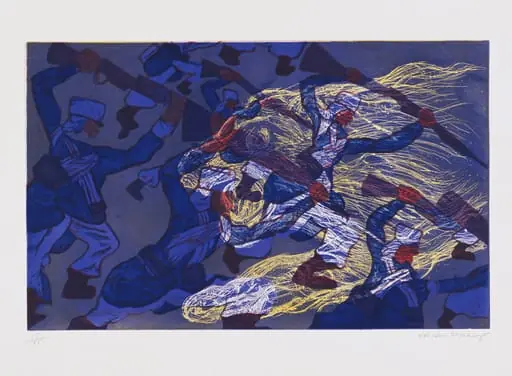 Untitled
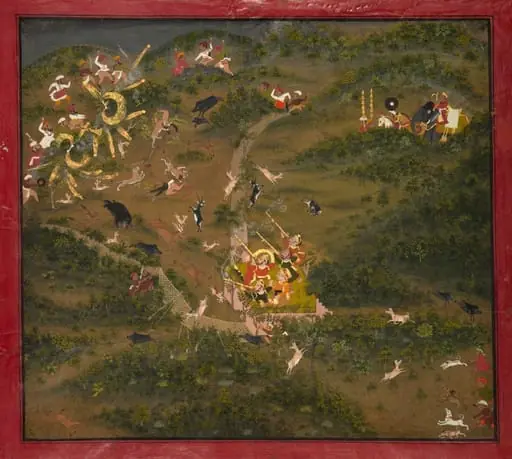 Maharana Jagat Singh II Hunting
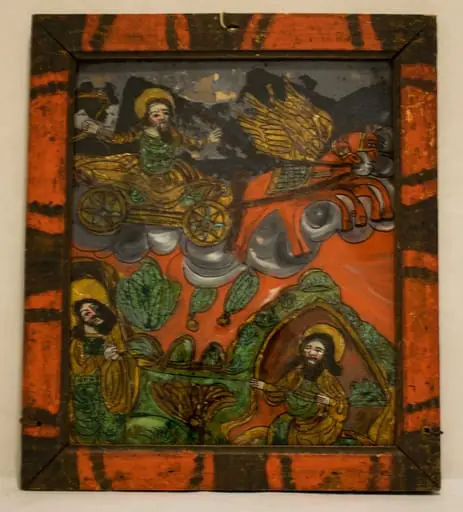 Icoa
Icoa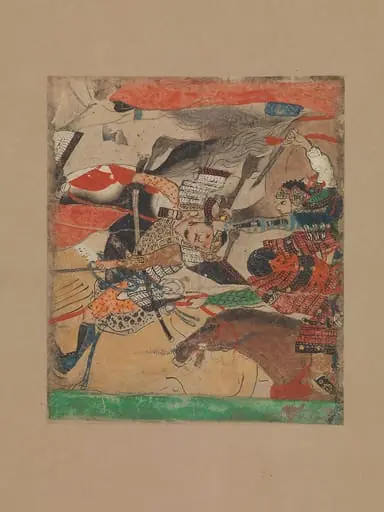 六波羅合戦 平治物語絵巻 断簡|Battle at Rokuhara, from The Tale of the Heiji Rebellion
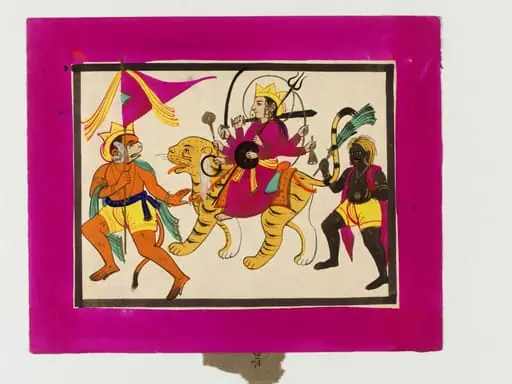 Durga, Hanuman and Shiva
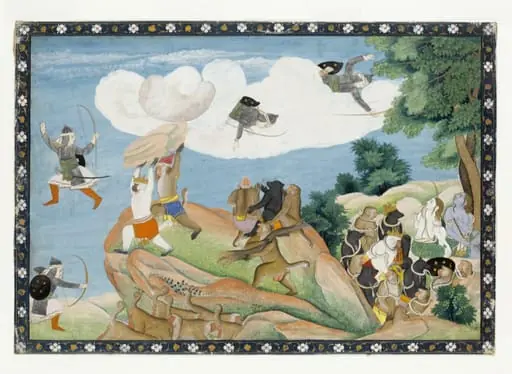 Indrajit, Rama and Lakshmana
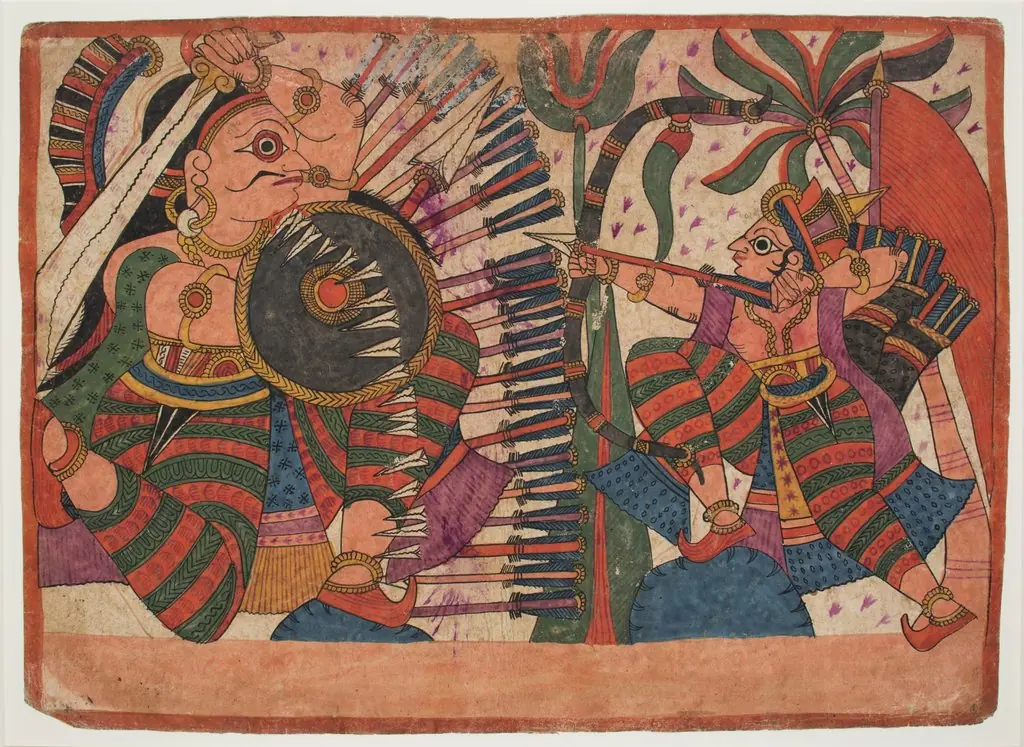 Scene from the Ramayana
 Desakhya Ragini