Artwork
Johannis Van Kouwenhoven
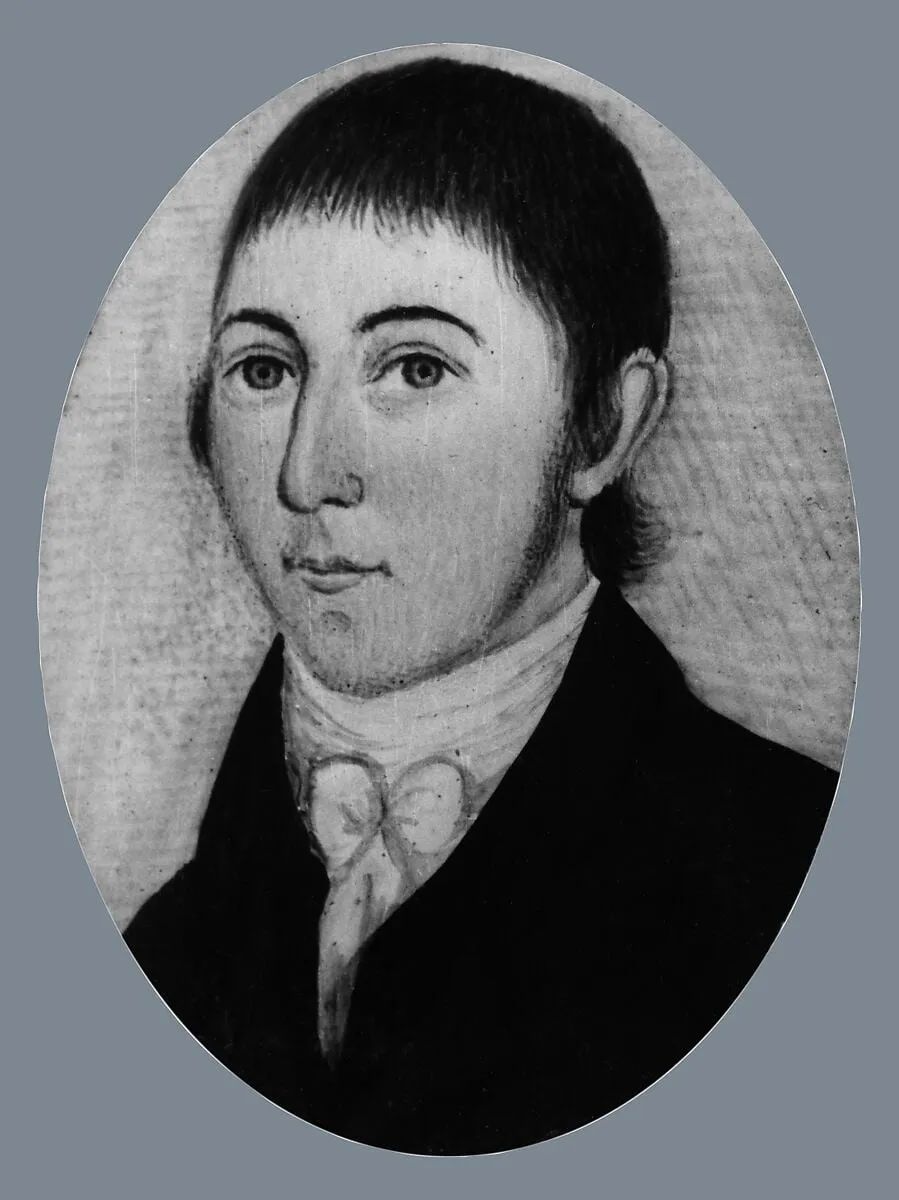
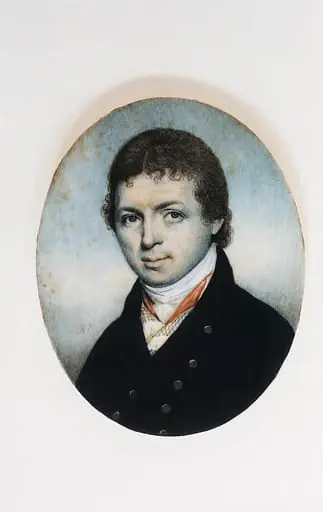
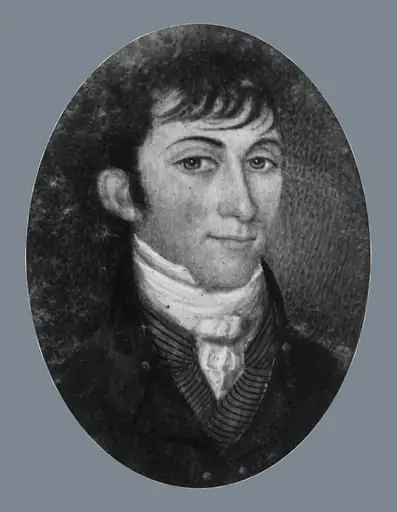
Johannis Van Kouwenhoven is a watercolor painting. It dates from 1805 and is held in the collection of the Metropolitan Museum of Art.
About this work
Subject & Meaning
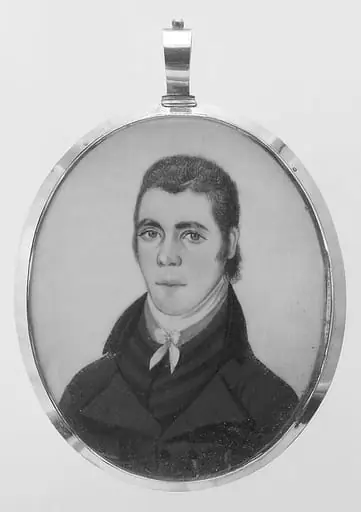
Created in 1805, this watercolor on ivory functions as a portrait depicting an unidentified man.
Created in 1805, this watercolor on ivory functions as a portrait depicting an unidentified man. The work's iconography is limited to the representation of the male sitter, with no additional symbolic elements or specific attributes described in the available records. As a piece classified within the genre of portraiture, the artwork primarily serves to document the likeness of its subject rather than convey a complex narrative or allegorical meaning.
The depiction focuses strictly on the individual's appearance, consistent with the function of miniature portraits from this period, though the specific identity of the man and any deeper personal significance he held remain unrecorded in the provided documentation.
Technique & Style
Johannis Van Kouwenhoven is executed in watercolor on ivory, a miniature portrait technique that paired delicate, translucent washes with the smooth, luminous surface of an ivory support. The work is classified as a portrait within the holdings of the American Wing at the Metropolitan Museum of Art. Its diminutive scale, recorded at roughly 5 by 3.7 centimeters, is characteristic of the format, which demanded precise, controlled handling to render facial features and likeness at such small dimensions.
The ivory ground lent a warm, reflective quality beneath the watercolor, while the medium allowed for fine, layered brushwork suited to detailed likenesses of sitters. As a portrait of a man dated to 1805, the piece reflects the stylistic conventions of early nineteenth-century American miniature painting, an intimate and refined mode of representation prized for its portability and meticulous finish.
History & Provenance
Johannis Van Kouwenhoven is a watercolor on ivory portrait dated to 1805, created by an anonymous artist. The work depicts a male sitter and is classified as a portrait within The American Wing of the Metropolitan Museum of Art, where it is currently held, measuring approximately 5 by 3.7 centimeters. While the sources confirm its date, medium, genre, and present location, they do not record any earlier ownership, commission, or provenance details prior to its entry into the museum's collection, nor any explicit accession number or exhibition records.
Overview
This miniature portrait depicts Johannis Van Kouwenhoven, rendered in watercolor on a thin piece of ivory. The subject, a man in a dark coat with a prominent white cravat, gazes directly forward. The artwork's diminutive size, designed to be held in the hand, reflects its purpose as a personal keepsake. It is part of the American Wing collection, representing a common form of portraiture from its era.
Context
During the early nineteenth century, miniature portraits on ivory gained widespread popularity as a means of preserving personal likenesses. Before the advent of photography, these intimate works served as cherished mementos, allowing individuals to carry or display images of family and friends. Their compact size and refined aesthetic made them suitable for both private contemplation and as fashionable accessories.
Artist & collection