Artwork
Kali, Durga, Chanda and Munda
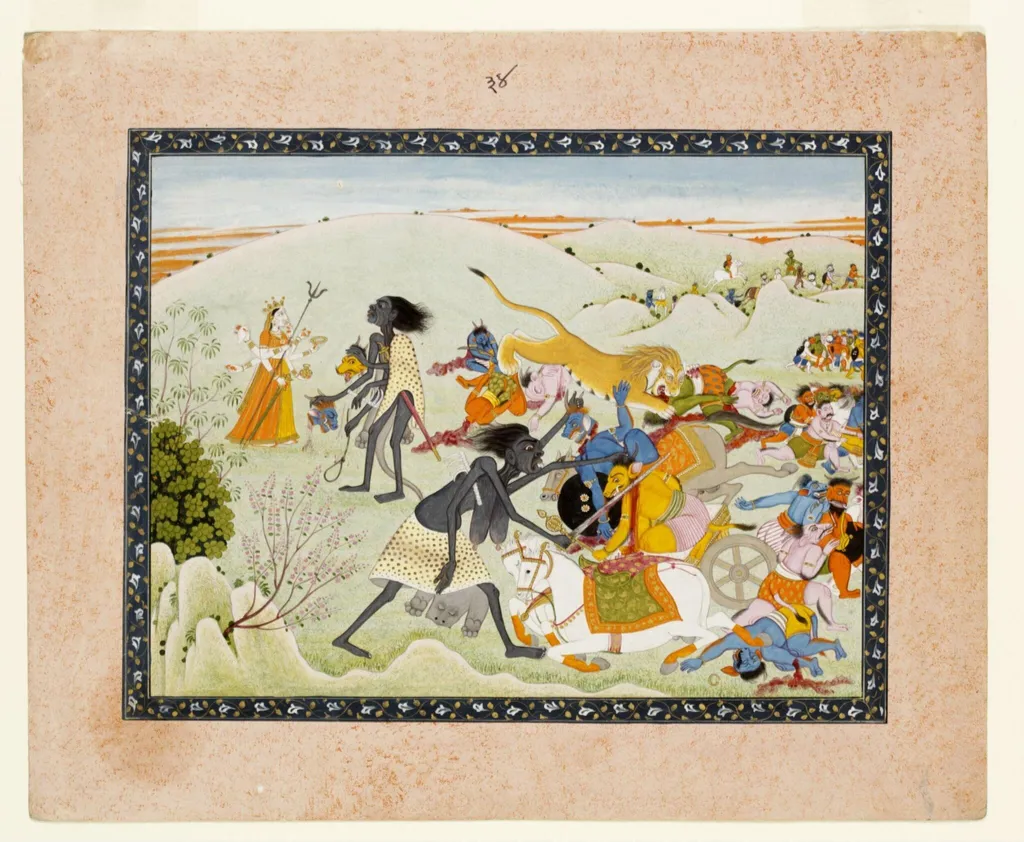
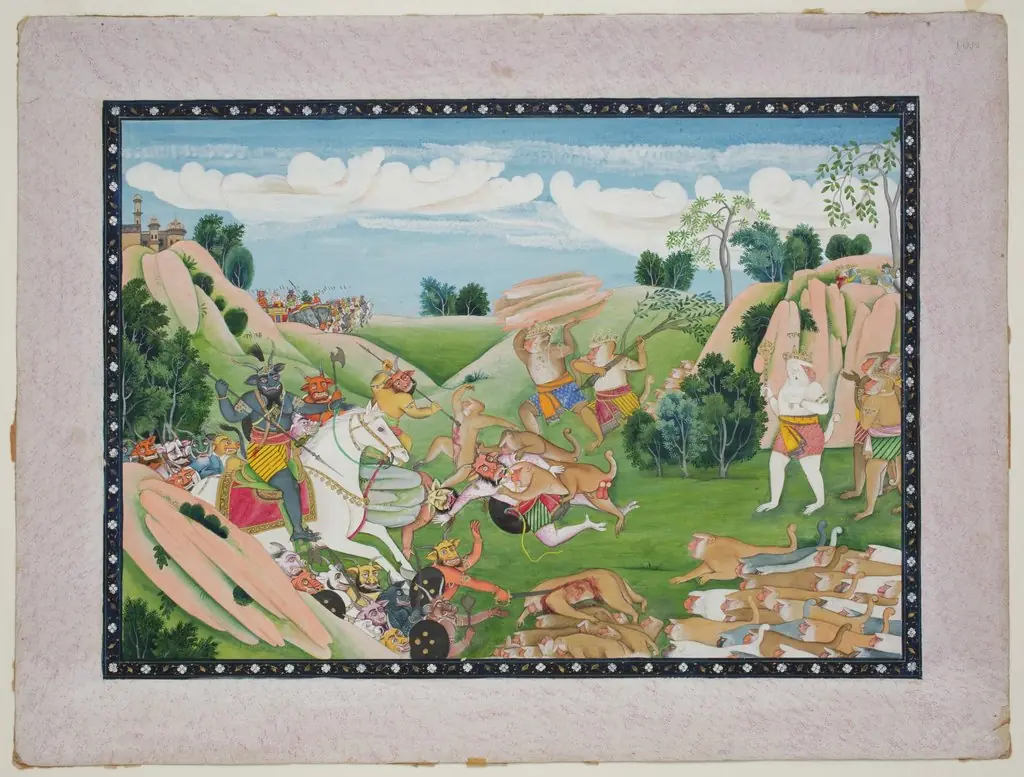
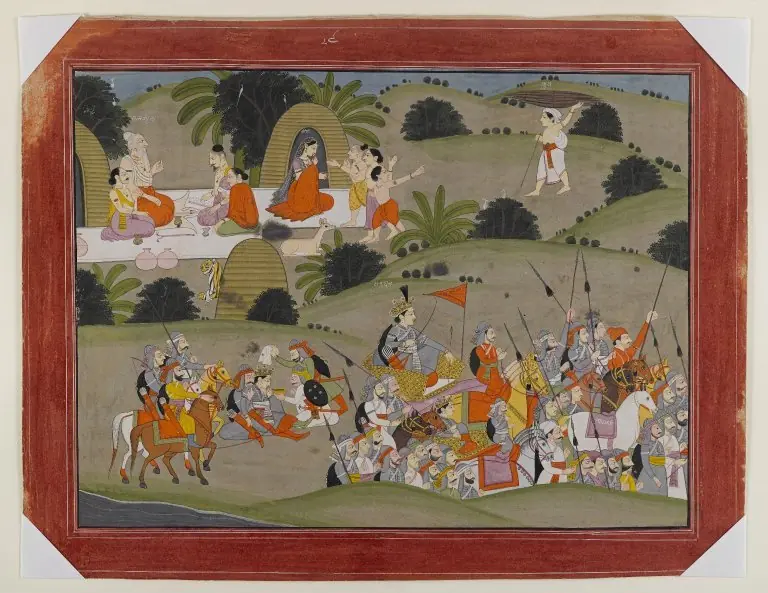
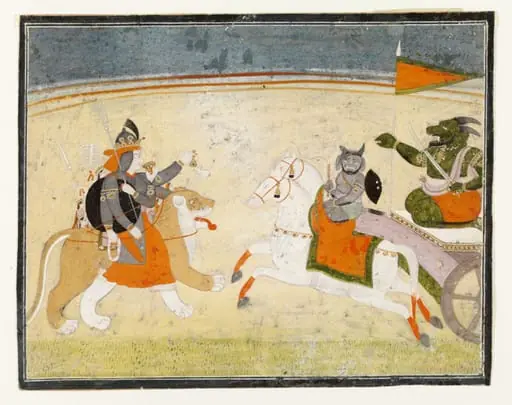
Kali, Durga, Chanda and Munda is a paint painting by the Indian Miniature artist Unknown. It dates from 1800 and is held in the collection of the Victoria and Albert Museum. The work is an 18th‑century Indian painting executed in opaque watercolour and gold on paper.
About this work
Overview
The work is an 18th‑century Indian painting executed in opaque watercolour and gold on paper. It belongs to the Kangra school, a regional style associated with the Pahari tradition, and presents a mythological battle scene rendered with vivid pigments and a decorative gold wash.
Subject & Meaning
The composition illustrates the goddess Kali confronting the demons Chanda and Munda, whose severed heads she offers to the warrior goddess Durga (also called Chandi). The narrative derives from the Markandeya Purana, specifically the Devimahatmya episode in which Durga defeats the buffalo‑demon Mahisa, symbolising the triumph of divine power over chaos.
Technique & Style
Applied with opaque watercolour, the painting employs a rich palette that emphasizes the dark skin tones of the figures against bright, contrasting colours.
Applied with opaque watercolour, the painting employs a rich palette that emphasizes the dark skin tones of the figures against bright, contrasting colours. Gold leaf highlights divine attributes and adds a luminous quality. The layout follows the Kangra convention of intricate detail, fluid lines, and a balanced arrangement of foreground action and a tranquil, rolling landscape in the background.
History & Provenance
Created in the 1700s, the piece is part of a larger album of narrative scenes that were traditionally compiled for devotional or courtly use. While its precise ownership record is unclear, the work reflects the patronage patterns of North Indian princely courts that commissioned illustrated Puranic cycles during that period.
Context
The painting belongs to a broader visual tradition that visualised stories from the Puranas, serving both religious instruction and aesthetic enjoyment. Its depiction of Kali and Durga aligns with the devotional emphasis on the feminine divine prevalent in 18th‑century Hindu art, especially within the Pahari regions where the Kangra style flourished.
Artist & collection