Artwork
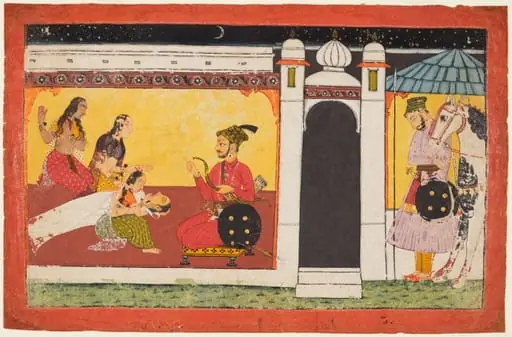
King Dasharatha sends his chief minister Sumantra to summon Rama, from the "Shangri" Ramayana
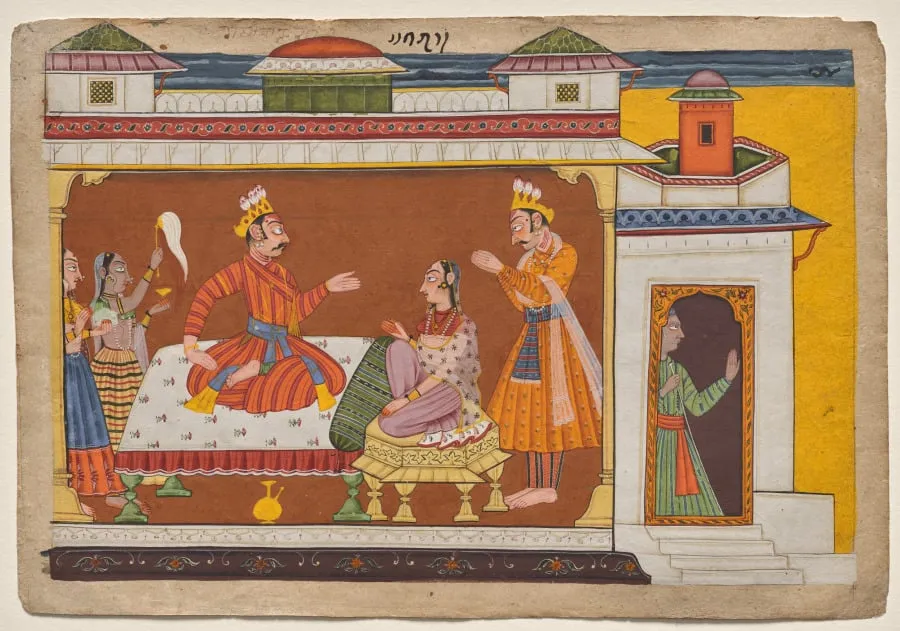
King Dasharatha sends his chief minister Sumantra to summon Rama, from the "Shangri" Ramayana is an unspecified painting by the Baroque artist Unknown. It dates from 1712 and is held in the collection of the Cleveland Museum of Art.
- Accession no.
- 1996.361
- Credit line
- Gift of Norman Zaworski in honor of Sherman and Ruth Lee
About this work
Overview
The painting illustrates a moment from the "Shangri" Ramayana in which King Dasharatha, seated on a throne, gestures toward his chief minister Sumantra, who bows deeply. Flanking them are two of Rama’s younger brothers, positioned in a palace courtyard, suggesting a formal royal setting.
Subject & Meaning
The scene captures Dasharatha’s plan to announce Rama as his heir after his own retirement. By dispatching two of Rama’s brothers to visit their maternal grandfather, the king seeks to ensure a quiet environment for the succession proclamation, reflecting themes of duty and strategic familial arrangements.
Technique & Style
These toxic colors appear only on the main image, leaving the top border unpainted, indicating the piece was left unfinished.
Executed on a long narrative scroll, the work employs opaque mercury‑red and arsenic‑yellow pigments, substances traditionally used in the region to deter insects. These toxic colors appear only on the main image, leaving the top border unpainted, indicating the piece was left unfinished. The number 18, rendered in the Takri script of the northwest Himalayas, marks the scene’s sequence within the epic.
History & Provenance
Originating in the Pahari kingdoms of present‑day Himachal Pradesh, the scroll belongs to a broader tradition of miniature paintings that visualized episodes of the Ramayana for courtly audiences. The use of Takri script and regional pigments situates the work firmly within the artistic practices of these Himalayan hill states.
Context
Created during a period when miniature narrative scrolls were a primary means of storytelling, the painting reflects the Pahari courts’ interest in Hindu epics and their patronage of detailed, color‑rich compositions. The inclusion of specific script and numbering demonstrates a systematic approach to organizing the epic’s visual narrative.
Artist & collection









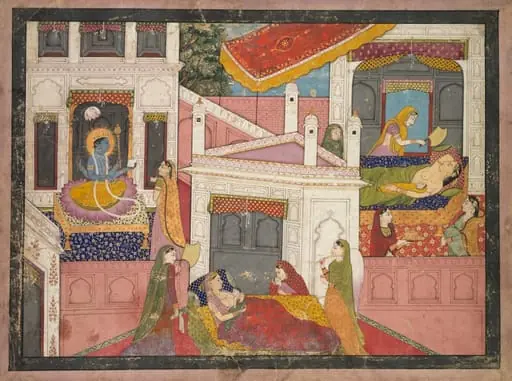 The birth of Rama and his brothers, from Chapter 17 of the Bala Kanda (Book of Childhood) of the Adhyatma Ramayana (Rama's Journey of the Supreme Spirit) from the Brahmanda Purana (Ancient Scripture of the Cosmic Egg)
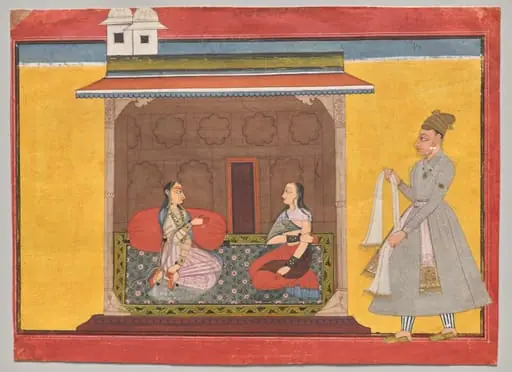 The Heroine Who is Faithfully Loved: Madhya Svadhinapatika Nayika, from a Rasamanjari of Bhanudatta
 Kamakandala dies on hearing the news of Madhava’s death, folio 19 from a Madhavanala-Kamakandala of Alam
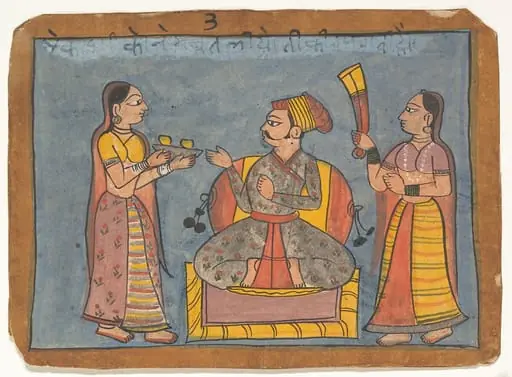 Untitled
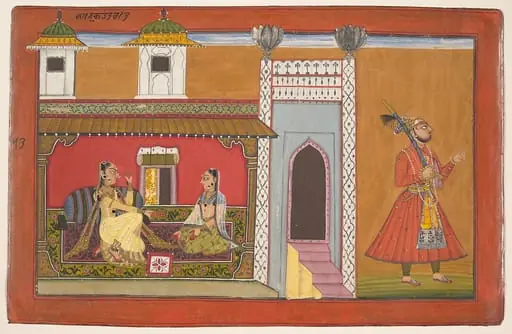 Untitled
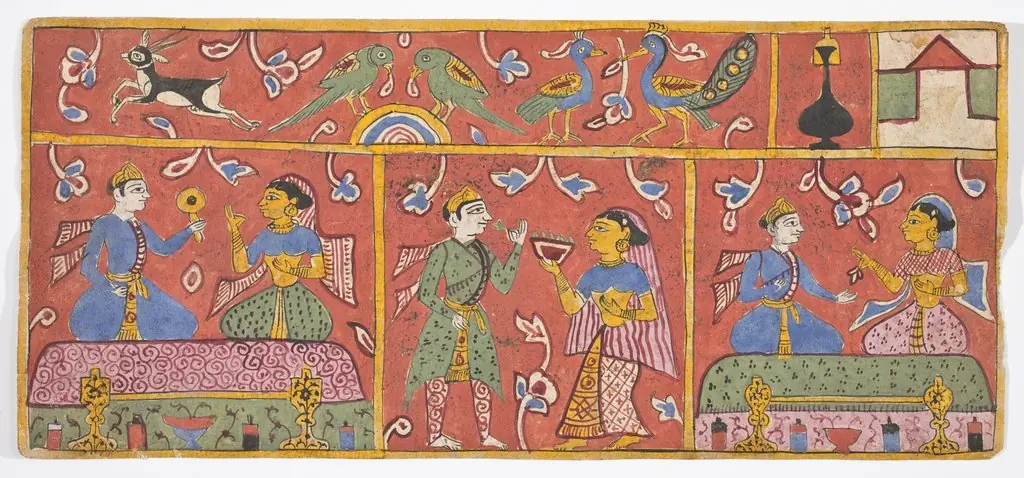 Tantric Manuscript "Sangrahani Sutra"
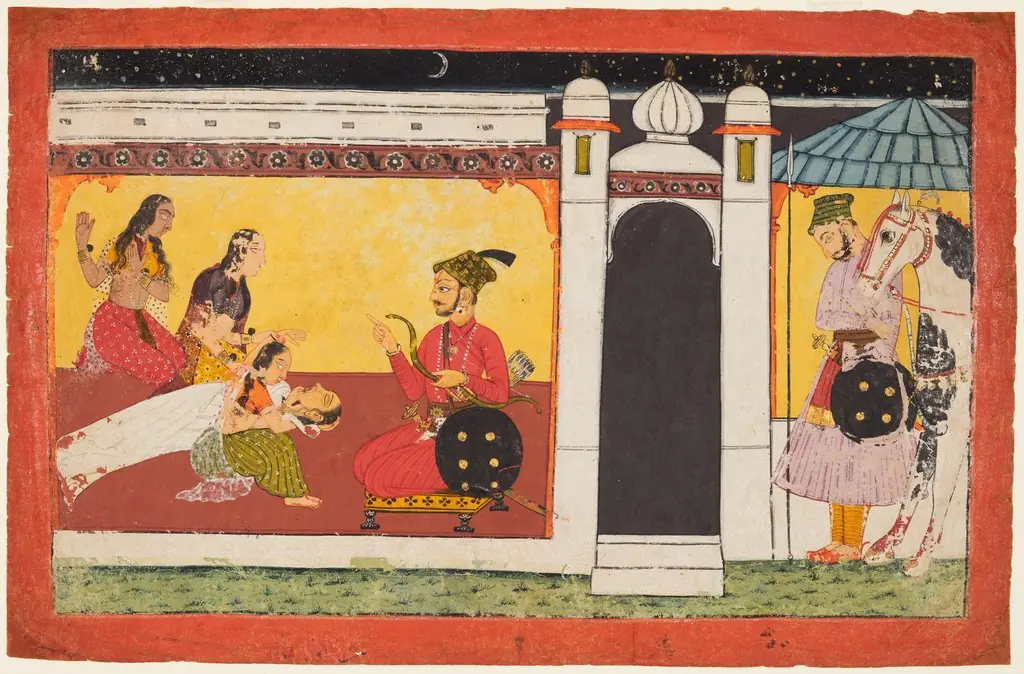 Kandala Dies on Hearing the News of Madhava’s Death, from a Madhavanala Kamakandala
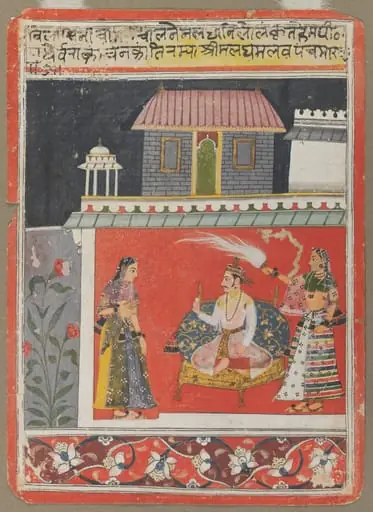 Pancham Raga
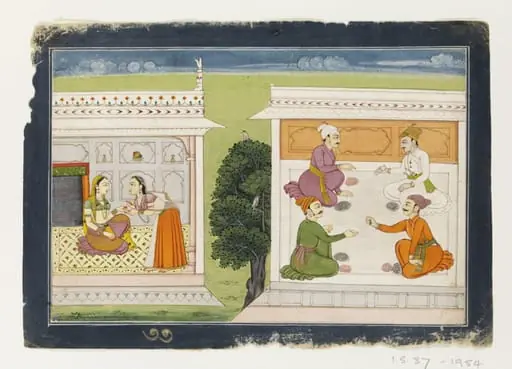 Nala
Nala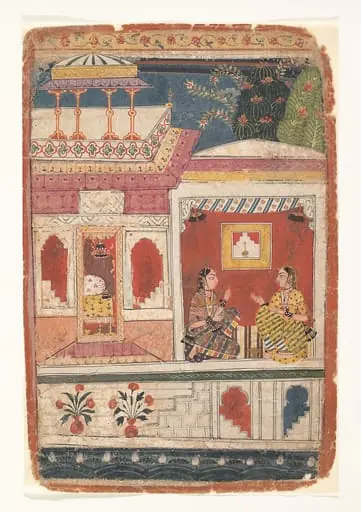 Untitled
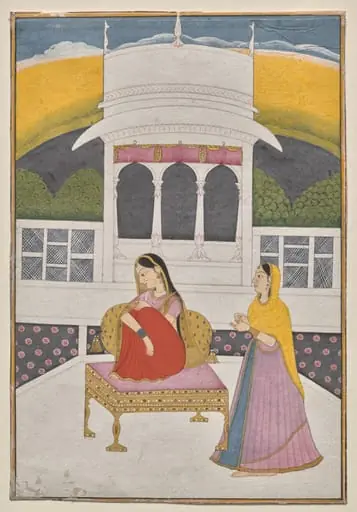 A Nayika, probably Proshitaperyasi Nayika
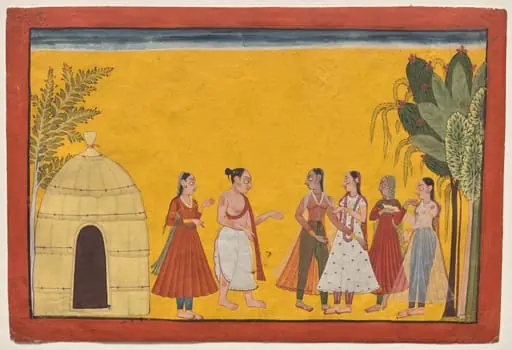
- Rishyashringa addresses the courtesans, from the "Shangri" Ramayana