Artwork
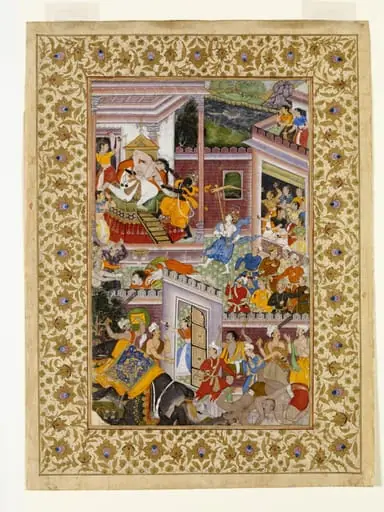
The birth of Rama and his brothers, from Chapter 17 of the Bala Kanda (Book of Childhood) of the Adhyatma Ramayana (Rama's Journey of the Supreme Spirit) from the Brahmanda Purana (Ancient Scripture of the Cosmic Egg)
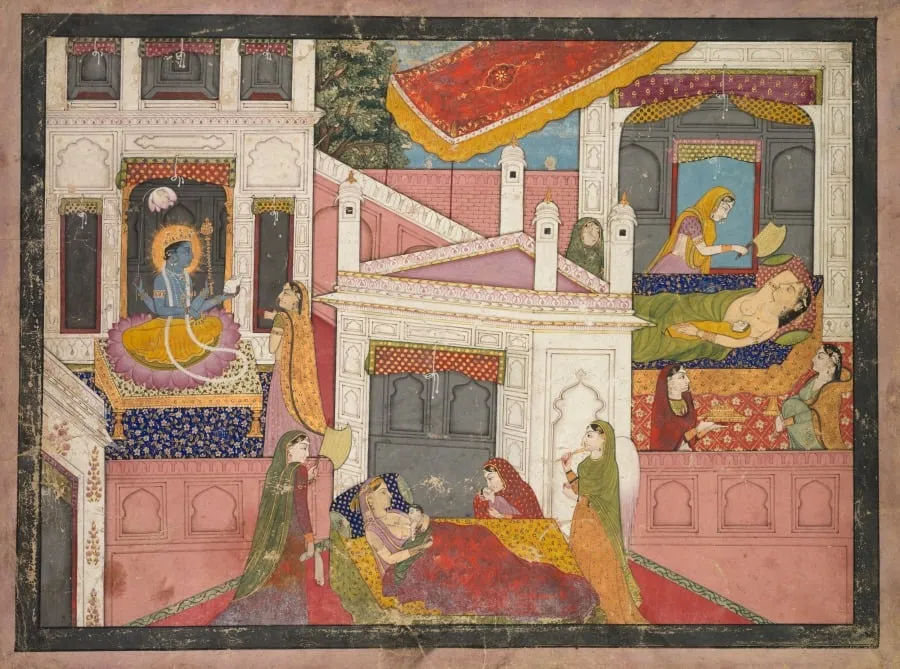
The birth of Rama and his brothers, from Chapter 17 of the Bala Kanda (Book of Childhood) of the Adhyatma Ramayana (Rama's Journey of the Supreme Spirit) from the Brahmanda Purana (Ancient Scripture of the Cosmic Egg) is an unspecified painting by the Pahari Painting artist Unknown. It dates from 1825 and is held in the collection of the Cleveland Museum of Art. The painting depicts a bustling interior of a royal palace where three queens recline on low beds, each cradling a newborn son.
- Accession no.
- 1953.13
- Credit line
- Edward L. Whittemore Fund
About this work
Overview
The painting depicts a bustling interior of a royal palace where three queens recline on low beds, each cradling a newborn son. In the foreground, Queen Sumitra nurses twin infants, while Queen Kaushalya is shown at the moment of Rama’s birth, visited by a vision of the deity Vishnu. Adjacent, Queen Kaikeyi holds her son Bharata, all set within an opulently decorated space.
Subject & Meaning
The scene illustrates a pivotal episode from a 13th‑century retelling of the Ramayana, emphasizing the divine origin of Rama and his brothers. Vishnu’s appearance to Kaushalya signals the incarnation of the god as Rama, while the presence of the other princes underscores the familial ties that will later shape their destinies, including the exile that awaits Rama and Lakshmana.
Technique & Style
Executed in the Kangra school of painting, the work employs bright, flat pigments and fine, flowing lines characteristic of the region’s courtly art. Intricate details such as embroidered pillows, carved wall panels, and patterned textiles are rendered with delicate brushwork, conveying the sumptuousness of the setting while maintaining a stylized, narrative focus.
History & Provenance
Created in a royal workshop of the Kangra Valley, the piece belongs to a tradition of devotional and courtly paintings that flourished under Rajput patronage. Though the exact commission is unknown, the work reflects the artistic conventions of the period and likely remained within the collections of regional aristocracy before entering museum holdings.
Context
The composition draws from the Adhyatma Ramayana, a spiritual reinterpretation of the epic, and situates the birth of Rama within the lavish environment of the palace. The juxtaposition of divine vision and earthly luxury highlights the tension between the princes’ privileged birth and the future hardships they will endure, a theme recurrent in the narrative.
Artist & collection









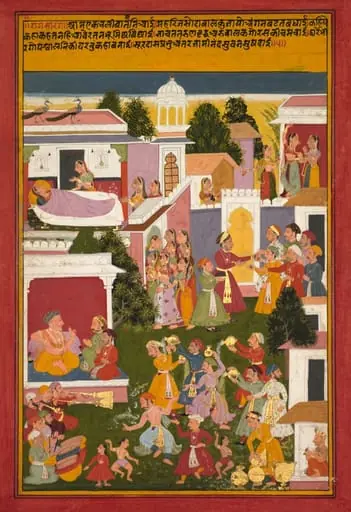 The Birth of Krishna, from a Sursagar of Surdas (Indian, c. 1480–1580)
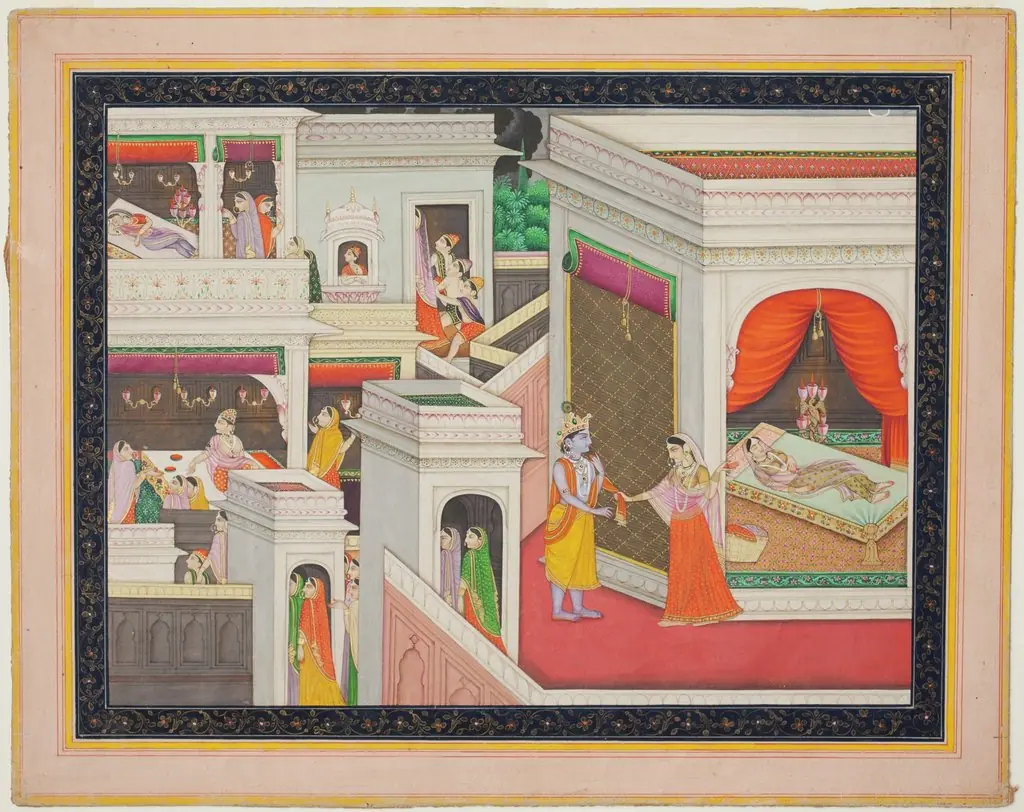 Palace Scene at Night
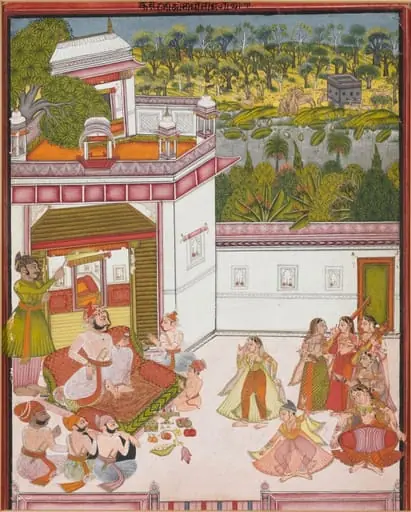 Maharaja of Kotah Listening to Music and Watching Dancers
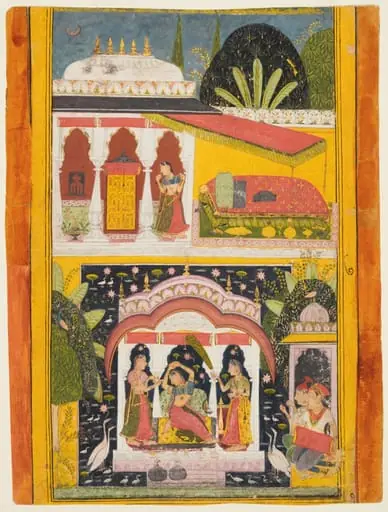 A Royal Woman in a Pavilion: Desavarari Ragini of Dipak, from a Ragamala
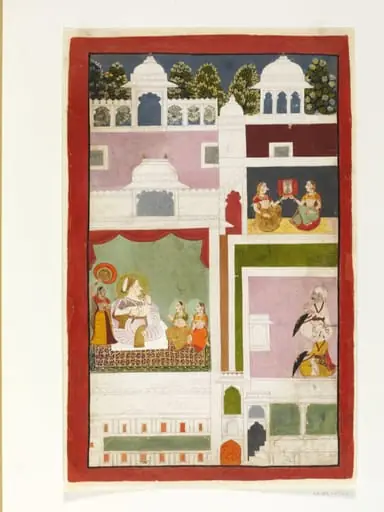 Maharaja Ajit Singh of Jodhpur
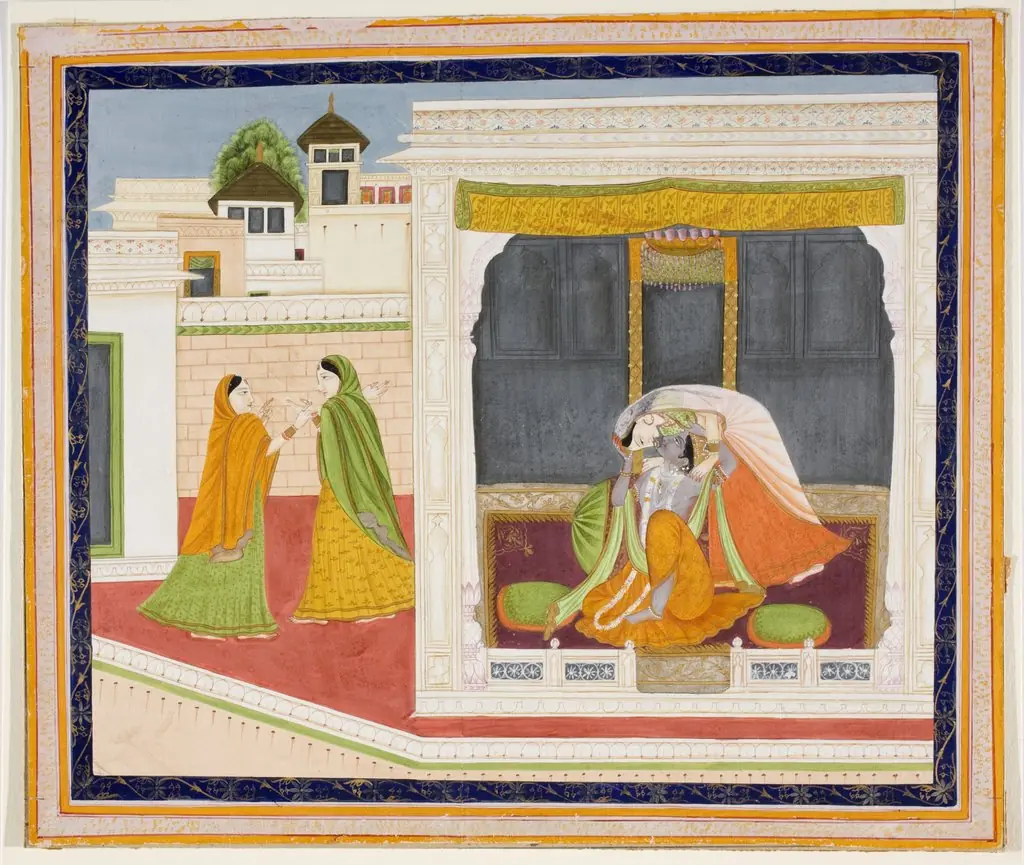 Radha and Krishna in Dalliance
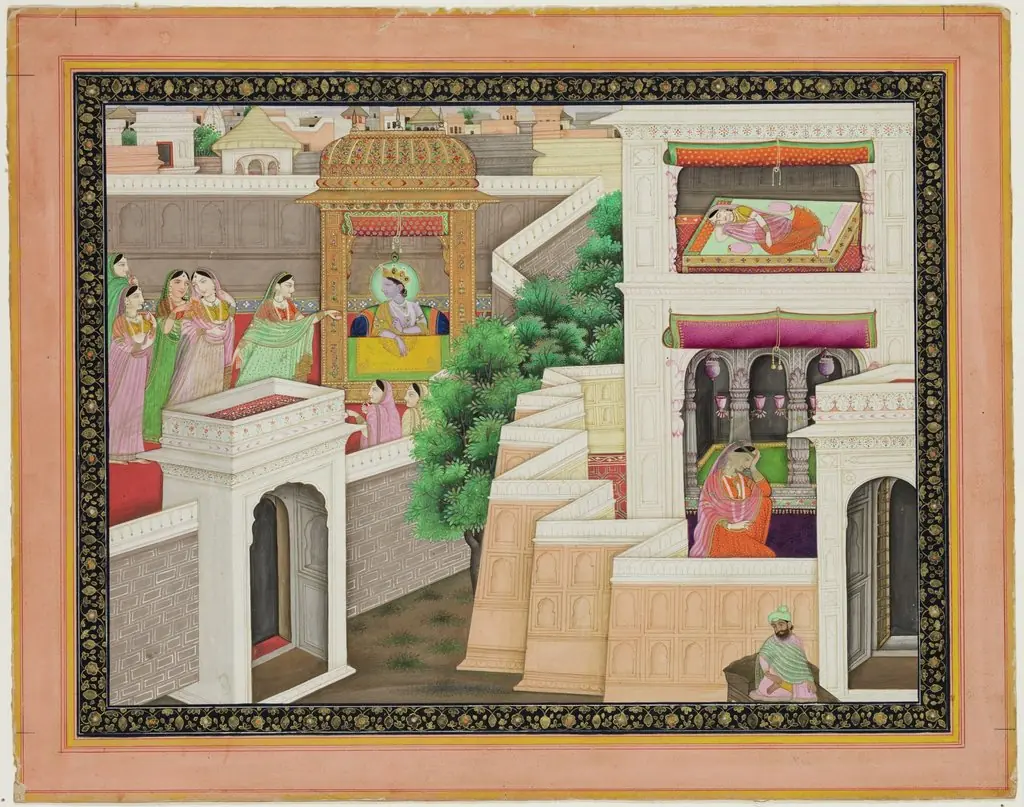 Story of Krishna and Radha
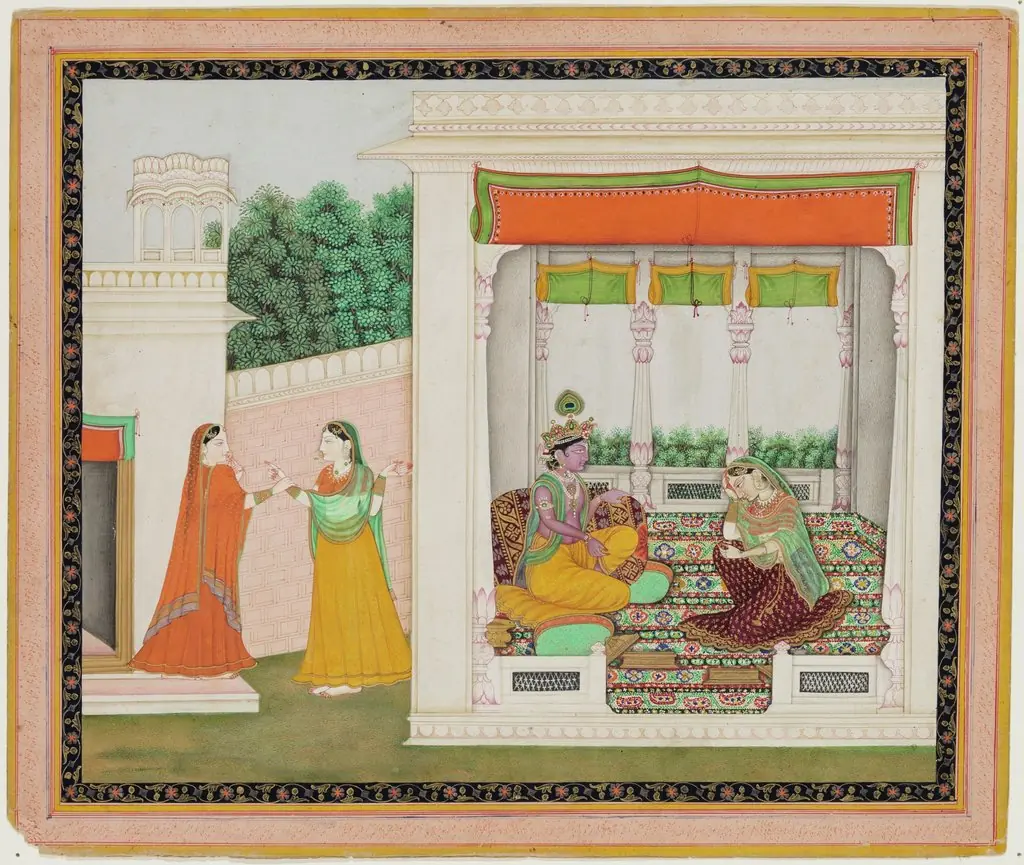 Story of Krishna and Radha
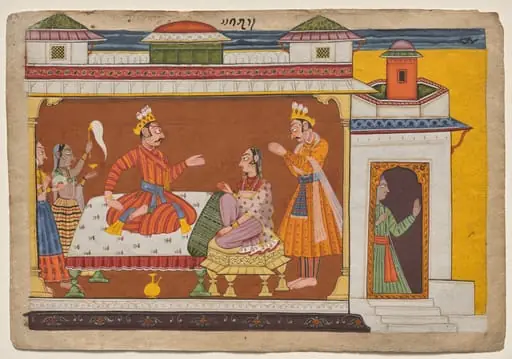 King Dasharatha sends his chief minister Sumantra to summon Rama, from the "Shangri" Ramayana
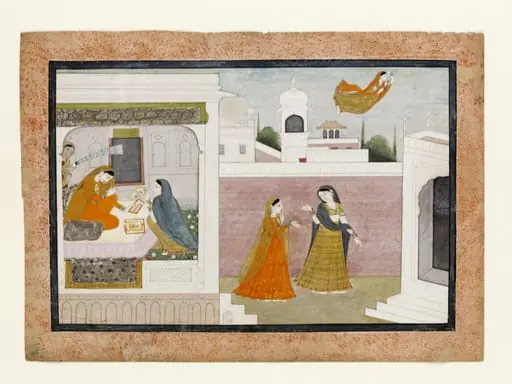 Usha viewing the portrait of Aniruddha
 Krishna kills his uncle, the tyrant ruler Kamsa
- The birth of Rama and his brothers, from Chapter 17 of the Bala Kanda (Book of Childhood) of the Adhyatma Ramayana (Rama's Journey of the Supreme Spirit) from the Brahmanda Purana (Ancient Scripture of the Cosmic Egg)