Artwork
King Vikrama summons Madhava, folio 15 from a Madhavanala-Kamakandala
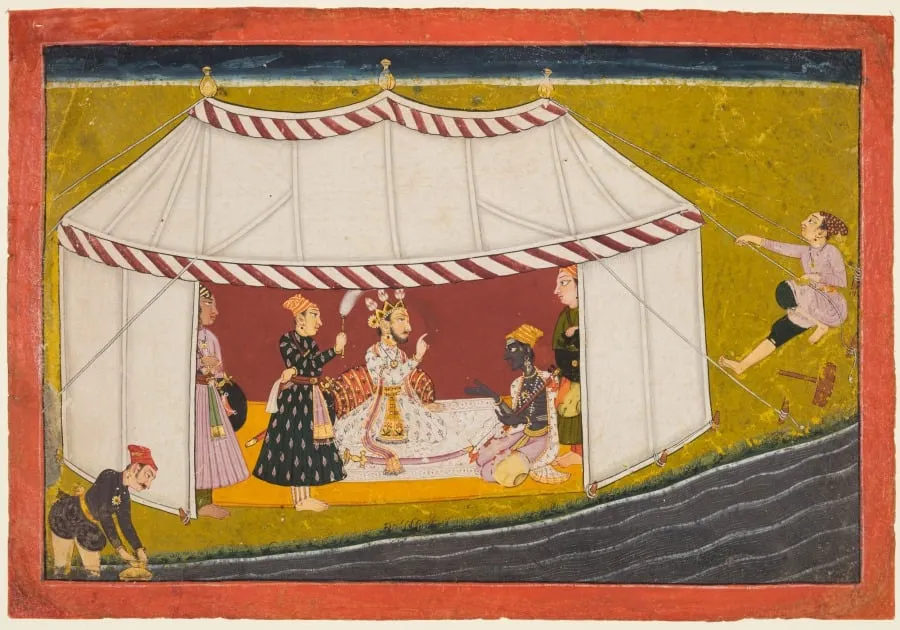
King Vikrama summons Madhava, folio 15 from a Madhavanala-Kamakandala is an unspecified painting by the Baroque artist Unknown. It dates from 1720 and is held in the collection of the Cleveland Museum of Art. The miniature depicts King Vikrama seated beneath a tree on a riverbank, engaged in conversation with the musician Madhava.
- Accession no.
- 2018.92
- Credit line
- Purchase and partial gift from the Catherine and Ralph Benkaim Collection; Severance and Greta Millikin Purchase Fund
About this work
Overview
The miniature depicts King Vikrama seated beneath a tree on a riverbank, engaged in conversation with the musician Madhava. The ruler is distinguished by a crown and a faint halo, while Madhava clutches a vina and appears despondent. The scene captures a moment of counsel as the king promises to reunite Madhava with his beloved Kamakandela.
Subject & Meaning
King Vikrama, portrayed with a subtle halo, represents moral authority and benevolence, offering assistance to restore the lovers' union.
Madhava, having been separated from Kamakandela, is shown in a state of profound melancholy, unable to eat and holding his instrument as a symbol of his longing. King Vikrama, portrayed with a subtle halo, represents moral authority and benevolence, offering assistance to restore the lovers' union. The interaction underscores themes of devotion, loyalty, and the role of a just ruler in personal affairs.
Technique & Style
Executed in the refined Pahari miniature tradition, the painting employs vivid pigments and meticulous detailing characteristic of northern Indian court art. The composition balances delicate line work with rich coloration, while the use of a halo and crown follows iconographic conventions to convey virtue. The riverine setting and foliage are rendered with a stylized naturalism that enhances narrative clarity.
Context
The work belongs to a larger illustrated manuscript narrating the love story of Madhava and Kamakandela, popular in the Pahari kingdoms during the 18th century. Such manuscripts were commissioned by regional patrons to celebrate courtly romance and moral exempla. The depiction of King Vikrama reflects contemporary ideals of righteous rulership within the cultural milieu of Himalayan hill states.
Artist & collection









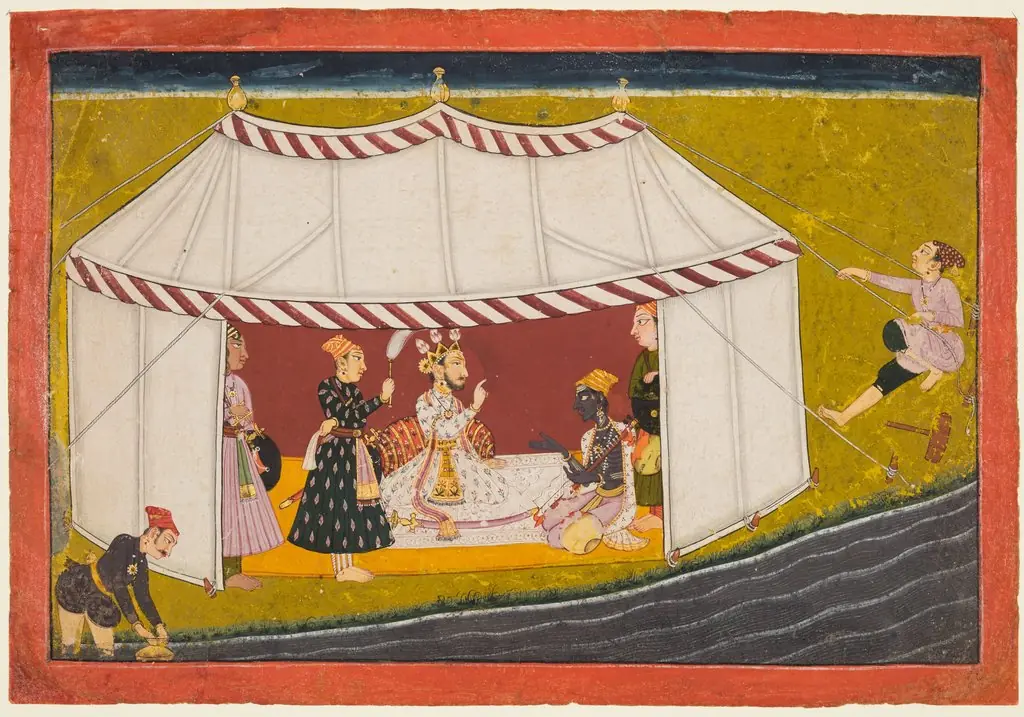
- King Bikramaditya Summons Madhava, from a Madhavanala Kamakandala
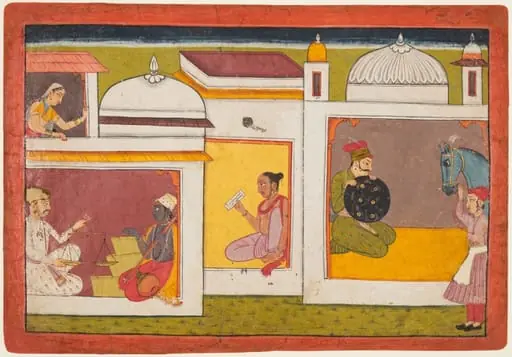 Madhava faces a man holding a scale, folio 1 from a Madhavanala-Kamakandala
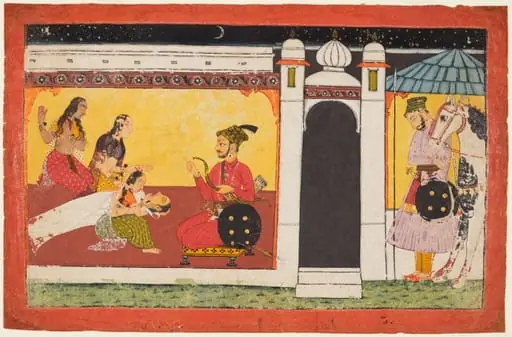 Kamakandala dies on hearing the news of Madhava’s death, folio 19 from a Madhavanala-Kamakandala of Alam
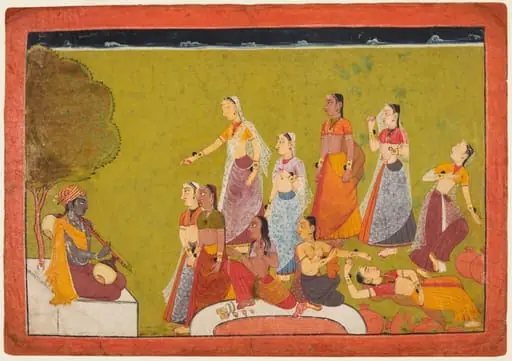 A group of women in ecstasy before Madhava, folio 4 from a Madhavanala-Kamakandala
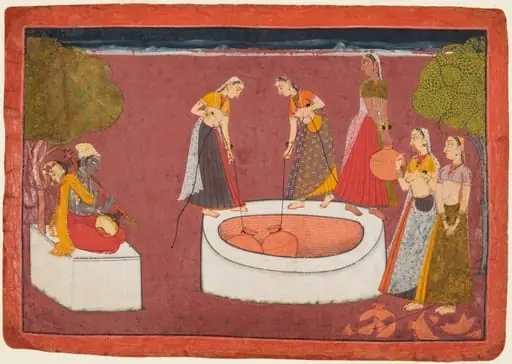 Madhava plays his vina before five women drawing water from a well, folio 3 from a Madhavanala-Kamakandala
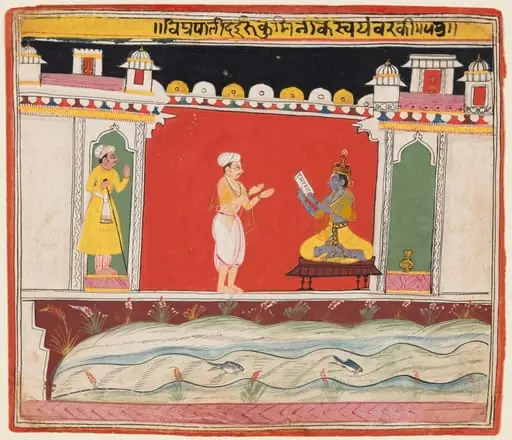 A Brahmin gives Krishna the Message or Invitation for the Competition to Rukmini’s Svayamvara, from a Bhagavata Purana
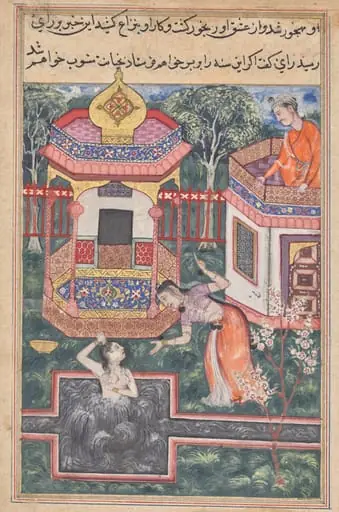 The son of the king of Babylon sees the Brahman transformed into a woman bathing and falls in love with her, from a Tuti-nama (Tales of a Parrot): Thirty-fifth Night