Artwork
Krishna and Radha in Palace Scene
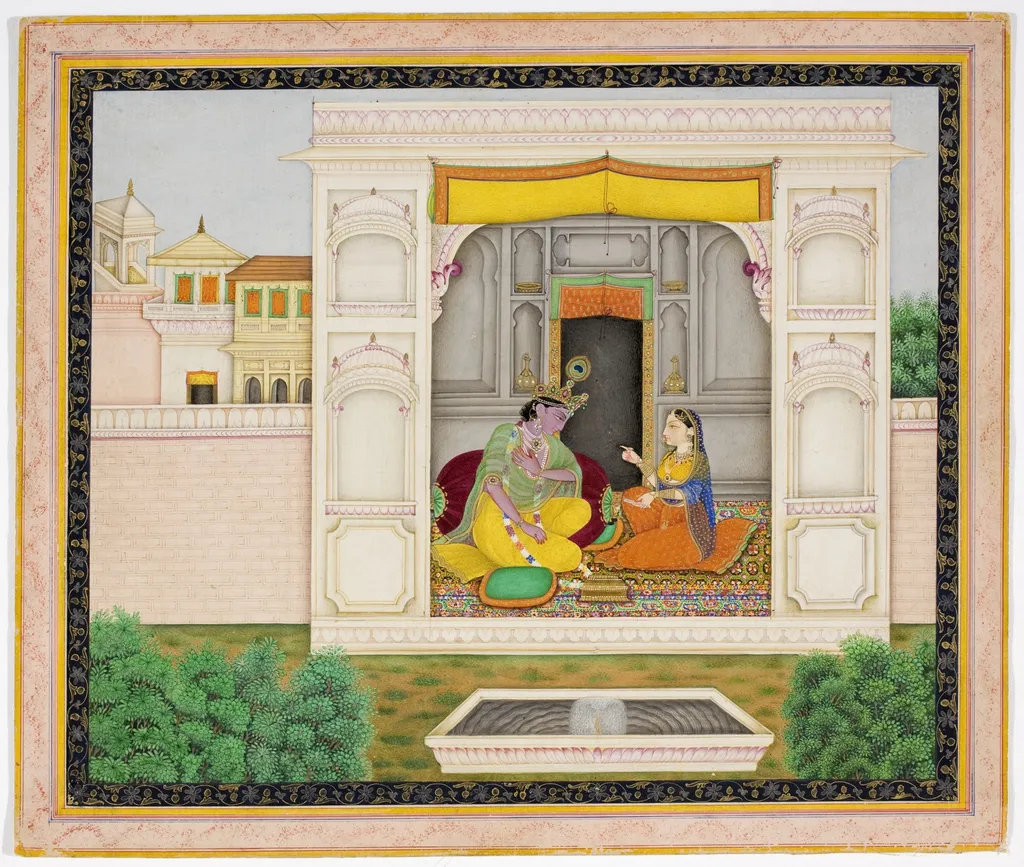
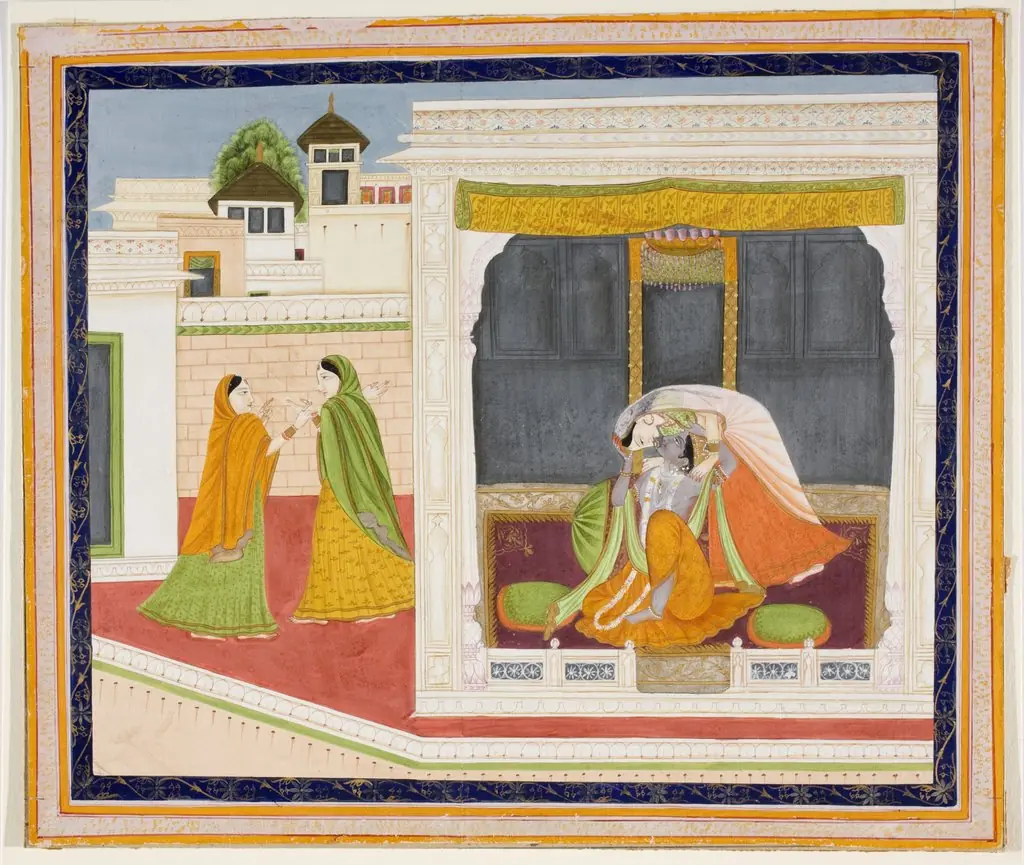
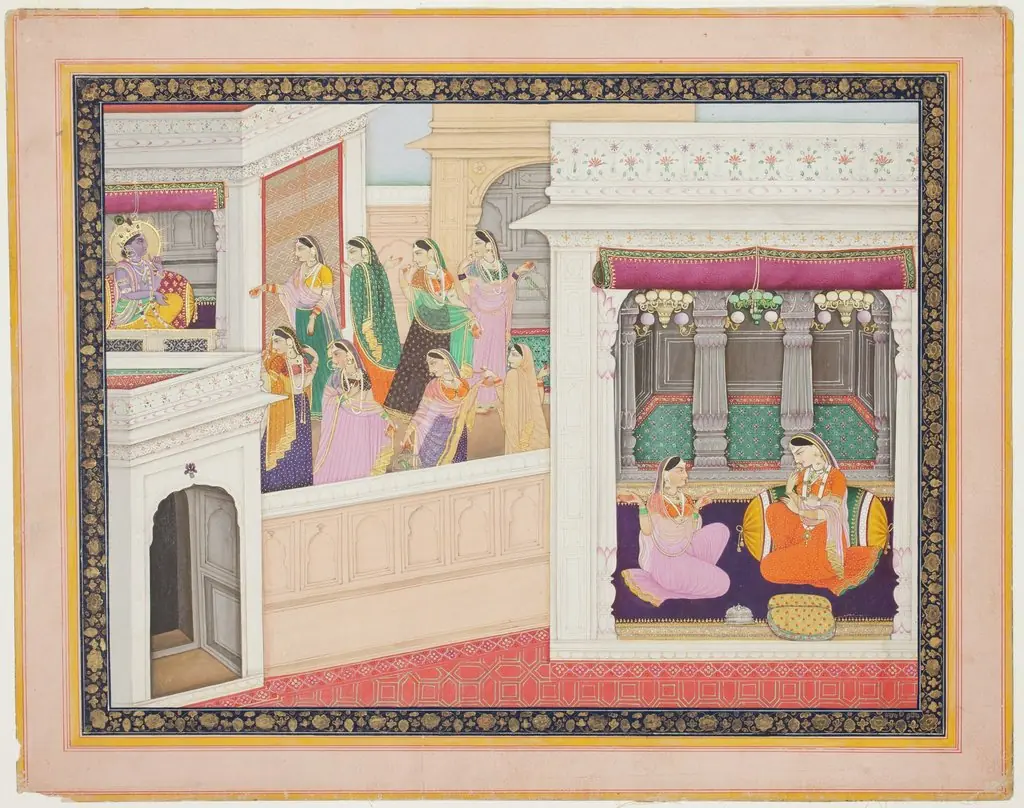
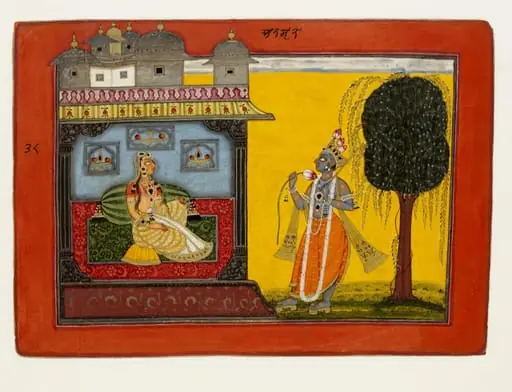
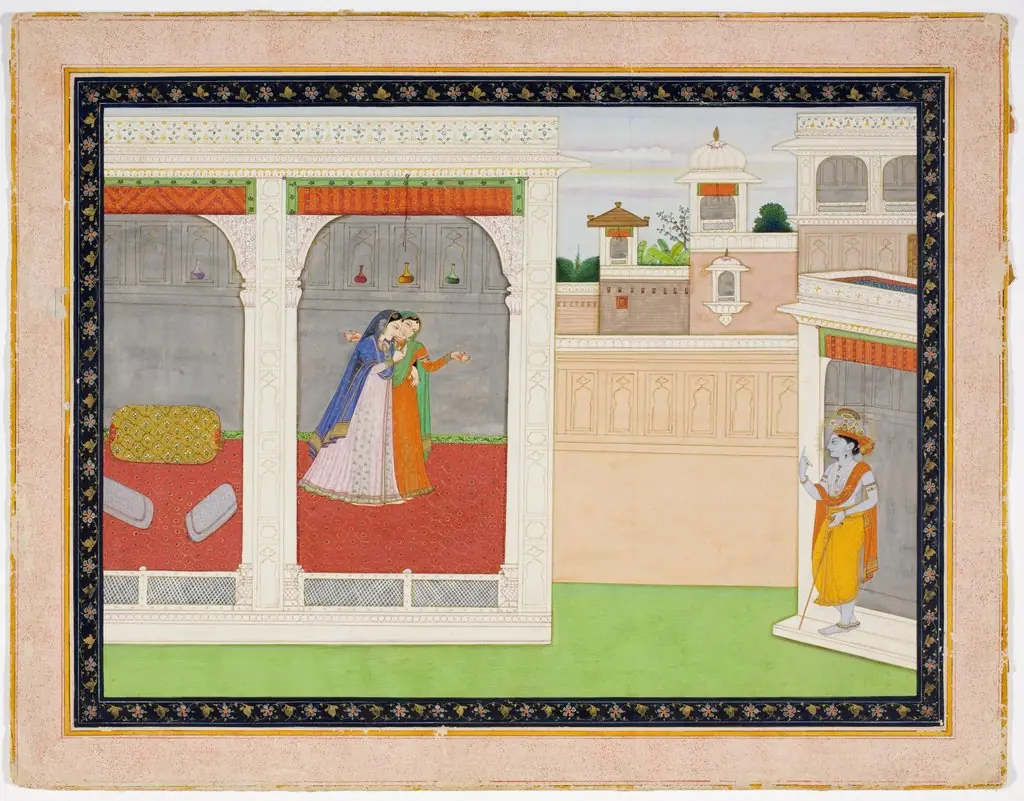
Krishna and Radha in Palace Scene is an unspecified painting by the Patna School of Painting artist Unknown. It dates from 1800 and is held in the collection of the Detroit Institute of Arts. This painting depicts a quiet moment between Krishna and Radha within a palace setting.
About this work
Overview
The figures are seated on the ground before an elaborately detailed architectural structure, surrounded by natural elements like trees and a fountain.
This painting depicts a quiet moment between Krishna and Radha within a palace setting. The figures are seated on the ground before an elaborately detailed architectural structure, surrounded by natural elements like trees and a fountain. The subdued color palette of greens, yellows, oranges, and blues enhances the calm, introspective mood.
The composition focuses on their proximity and stillness, suggesting a private, contemplative exchange rather than a grand narrative.
Subject & Meaning
Krishna, identifiable by his crown and attire, is shown with Radha, his divine consort, in a moment of intimate stillness. Their gestures, his hands resting calmly, hers extended, suggest dialogue or shared contemplation. The scene reflects the devotional tradition of their relationship as symbols of spiritual union and divine love. The palace setting elevates their bond beyond the earthly, aligning it with celestial harmony and inner peace.
Technique & Style
The painting employs fine brushwork to render architectural details and textile patterns with precision. Figures are rendered in a flattened, two-dimensional space, typical of regional Indian miniature traditions. Colors are applied in soft, layered washes, avoiding stark contrasts.
The lack of perspective and the emphasis on decorative elements reflect a stylized approach rooted in devotional art, prioritizing symbolic presence over naturalistic depth.
History & Provenance
This work likely originates from a Pahari or Rajasthani court atelier in the 17th or 18th century, where Krishna-Radha themes were popular among royal patrons. Such paintings were often created for private devotion or as gifts within aristocratic circles. While its exact origin remains unconfirmed, its stylistic features align with regional schools known for intimate devotional imagery and refined execution.
Context
During this period, Hindu devotional movements emphasized personal connection with the divine through imagery of Krishna’s earthly and celestial relationships. Paintings like this served as aids to meditation and expressions of bhakti. The palace setting mirrors the idealized courts of the time, blending royal aesthetics with spiritual symbolism to elevate the sacred within familiar, luxurious surroundings.
Legacy
This painting contributes to a broader visual language of Krishna-Radha iconography that persisted across centuries in Indian art. Its quiet intimacy contrasts with more dramatic depictions, offering a model of divine love as serene and grounded. Such works continue to inform contemporary understandings of devotional aesthetics, preserving a tradition where spiritual meaning is conveyed through stillness and subtle detail.
Artist & collection