Artwork
Krishna, Balarama and Gopis Swimming
Krishna, Balarama and Gopis Swimming is an unspecified painting by the Rajput painting artist Unknown. It dates from 1750 and is held in the collection of the Detroit Institute of Arts.
About this work
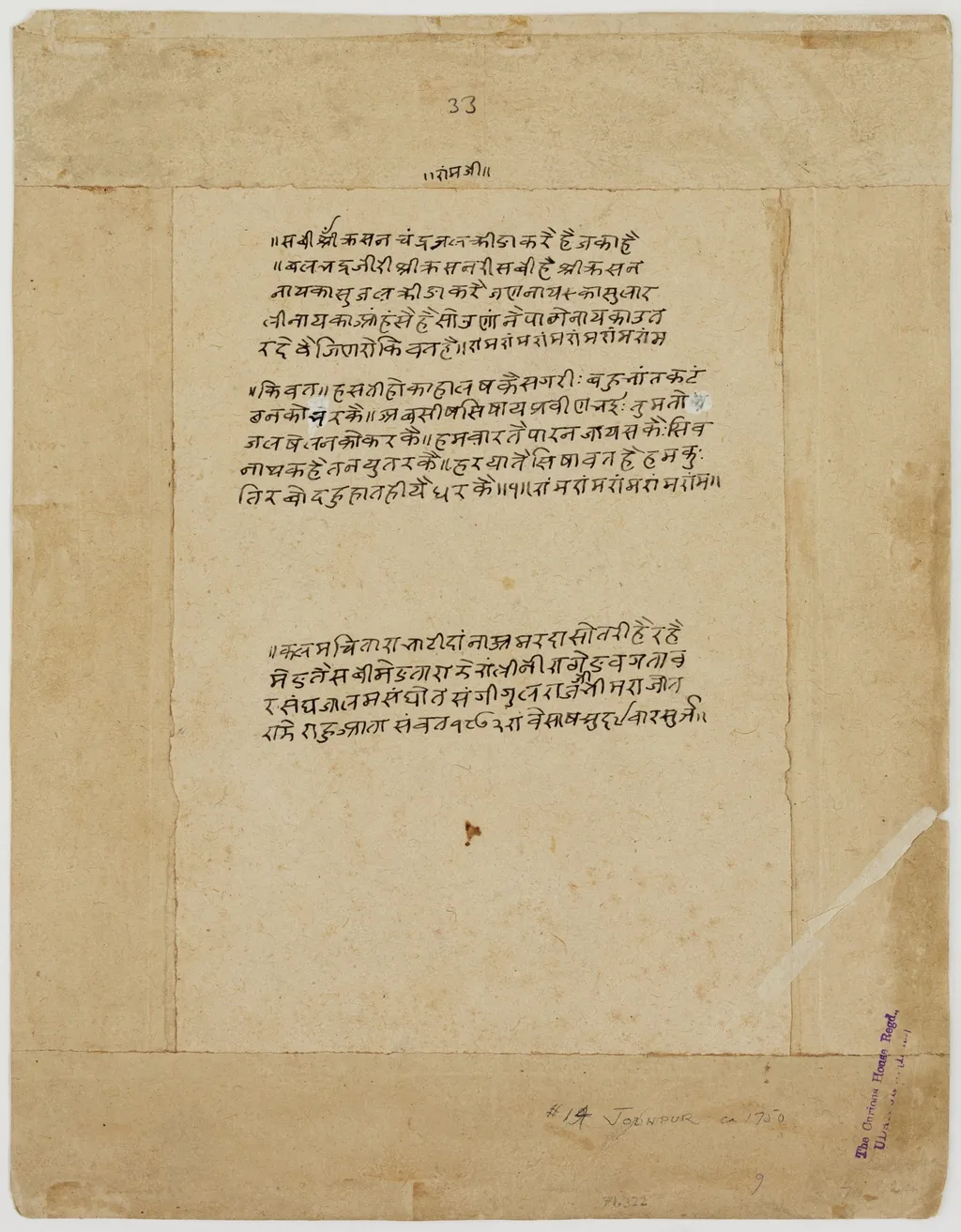
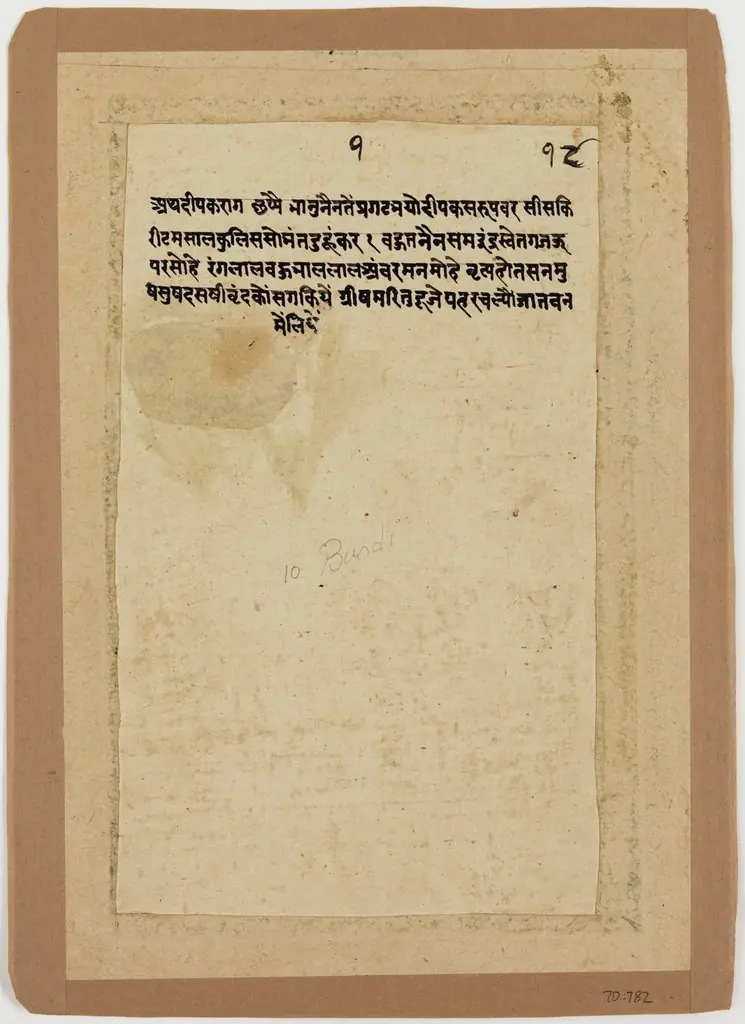
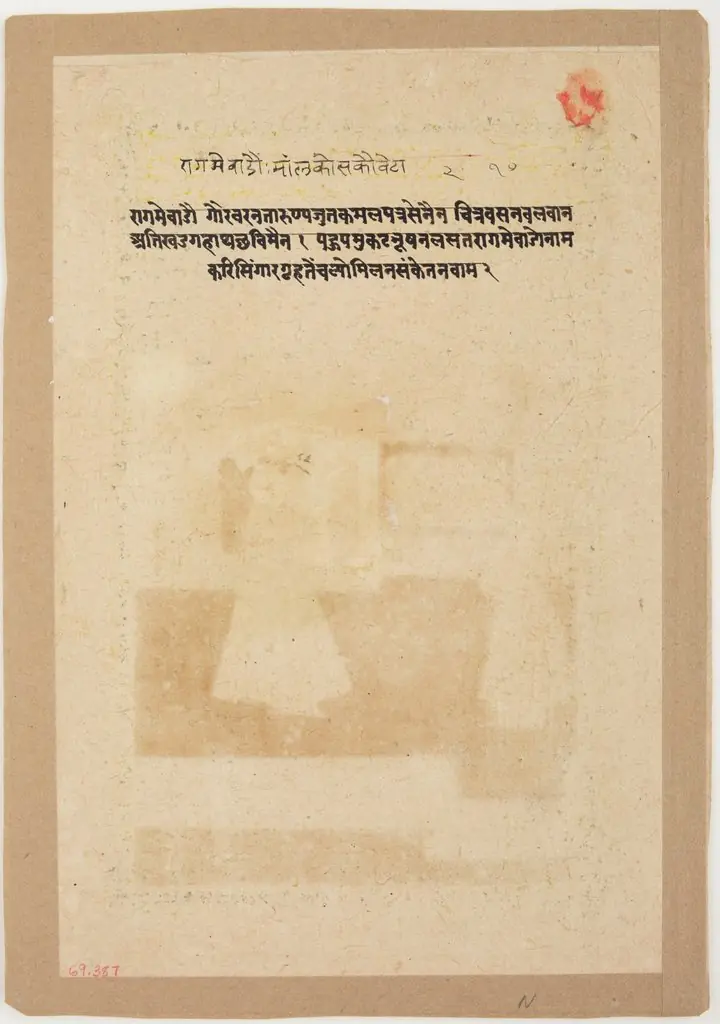
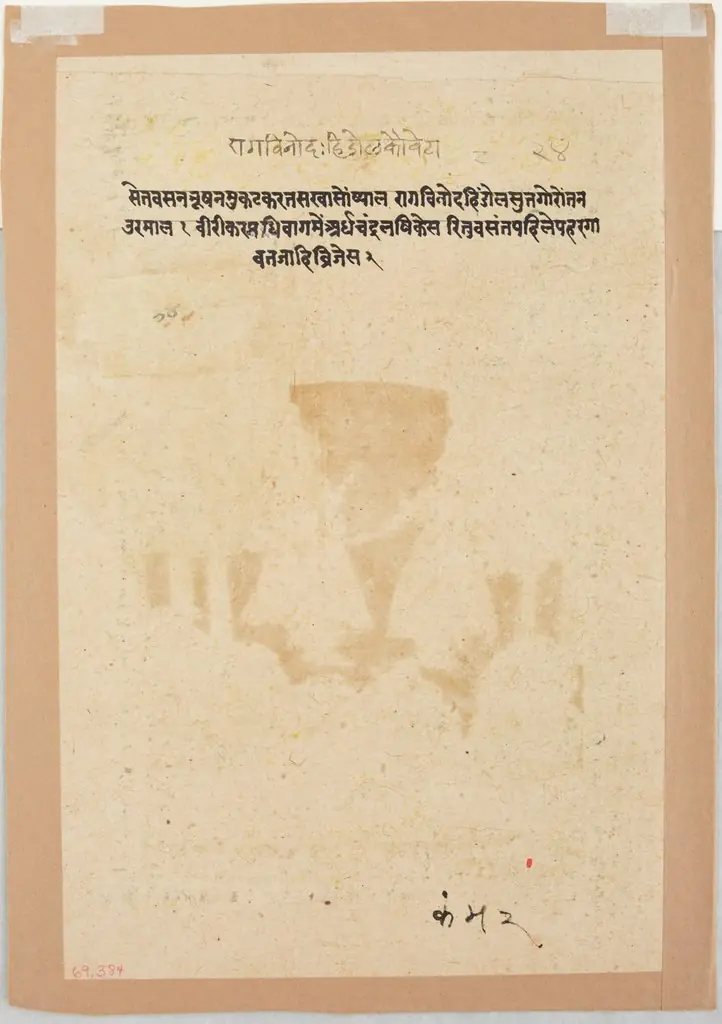
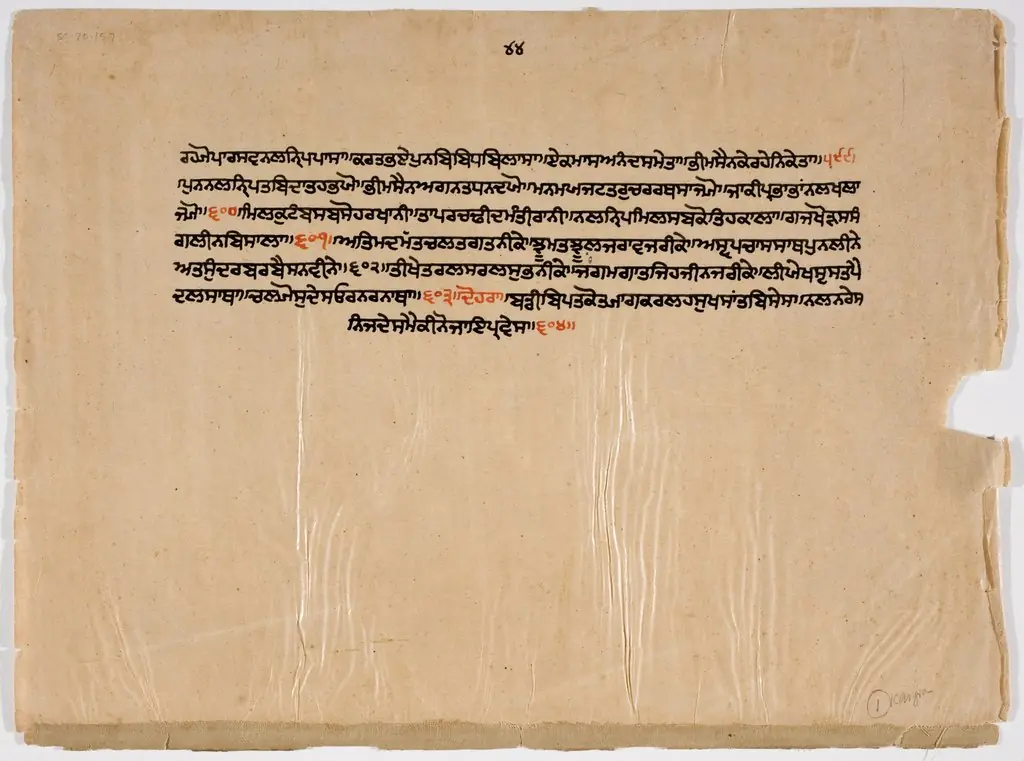
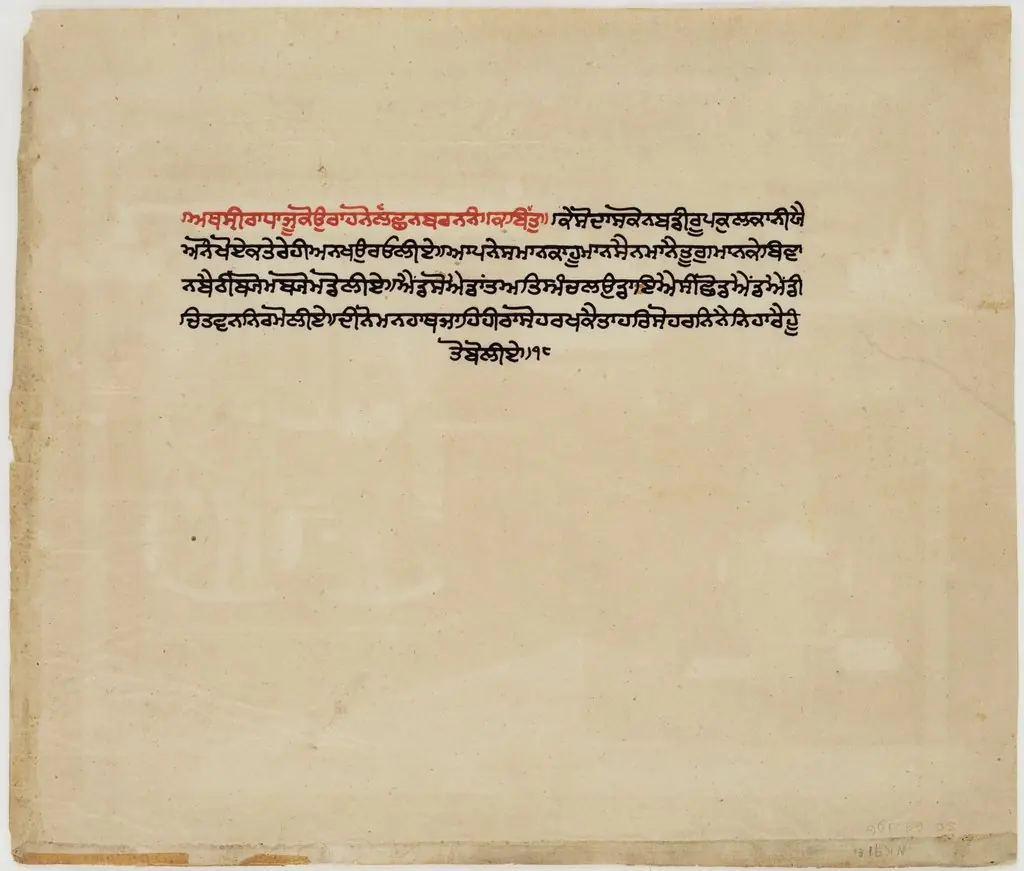
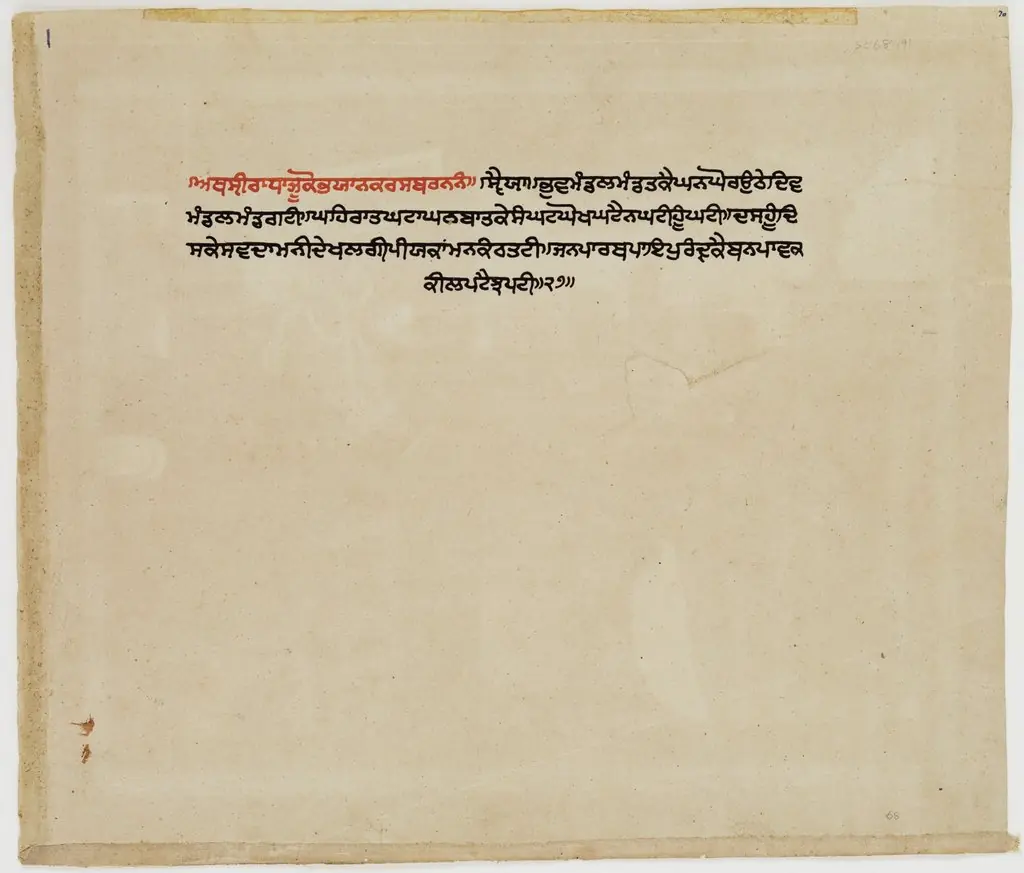
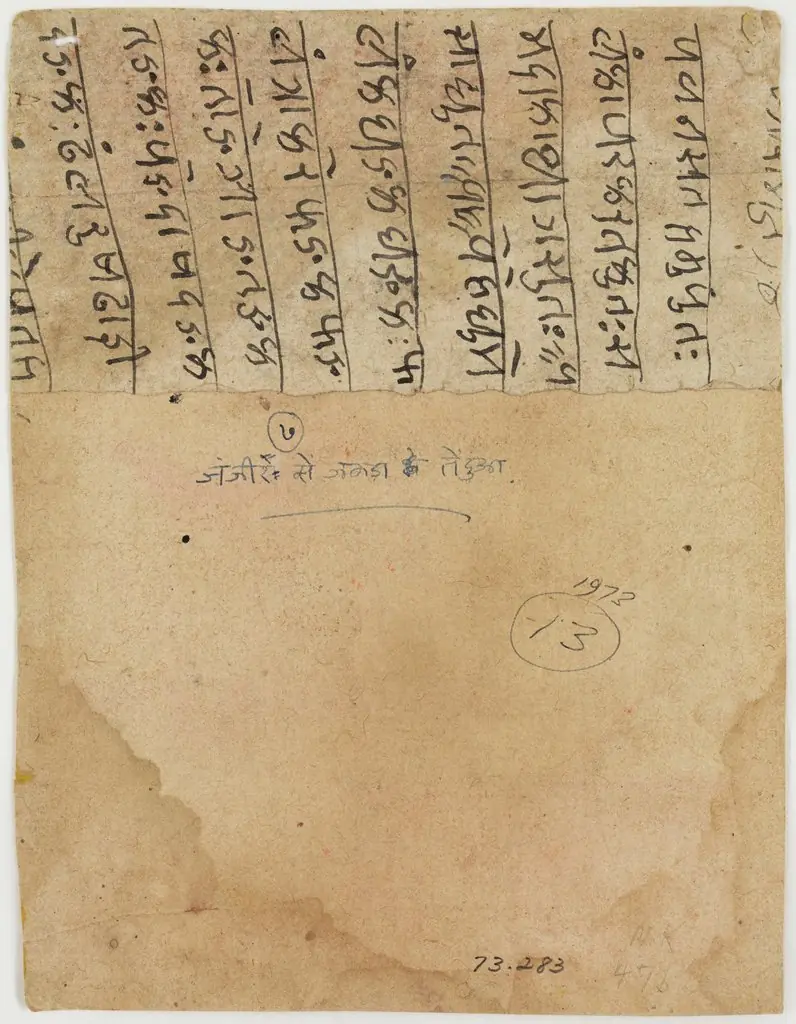
The writing fills most of the space, arranged in neat lines with some words underlined or marked.
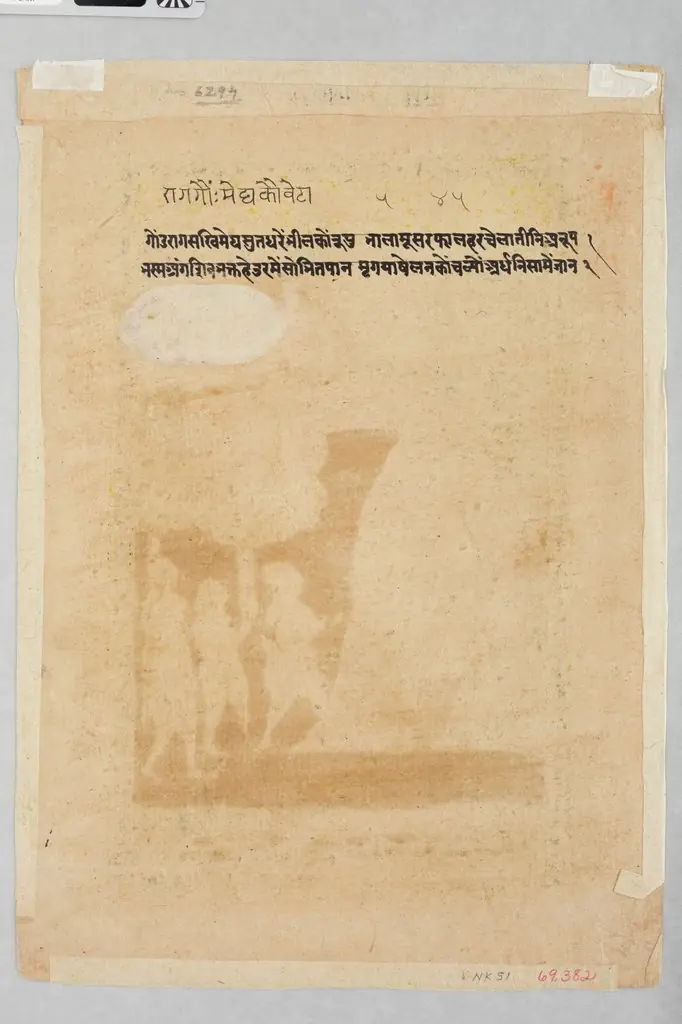
This page shows faded handwritten text in a script that looks old and yellowed. The paper is slightly torn at the edges, with a few stains. The writing fills most of the space, arranged in neat lines with some words underlined or marked.
The script appears to be in an Indian language, likely Sanskrit or a related language. There’s a small handwritten note in the corner that says "Jodhpur ca. 1750," which might hint at where or when this was made.
If you’re curious about this kind of writing, look up Krishna.
Overview
This painted folio depicts Krishna, Balarama, and the gopis engaged in a riverine scene, likely drawn from devotional narratives of their playful interactions. The artwork is accompanied by dense, faded handwritten script in an Indian language, possibly Sanskrit or a regional derivative, filling the surrounding space. A marginal note in pencil identifies the origin as Jodhpur, circa 1750, suggesting a Rajasthani courtly context. The paper shows signs of age: minor tears, discoloration, and stains, indicating prolonged handling or exposure.
Subject & Meaning
The scene illustrates a moment from Krishna’s childhood lore, where he and his brother Balarama, along with the gopis, bathe together in the Yamuna River. Such imagery symbolizes divine intimacy and the transcendence of social boundaries, as Krishna’s playful presence elevates ordinary acts into spiritual expressions. The accompanying text likely contains verses or commentary from Bhagavata Purana or related devotional literature, reinforcing the theological significance of the depicted episode.
Technique & Style
The painting employs a restrained palette and delicate line work typical of early Rajasthani miniatures, with figures rendered in simplified, graceful forms. Background elements are minimal, focusing attention on the central group. The script is written in a precise, cursive hand, possibly in Devanagari or a local variant, with selected words underlined for emphasis.
The integration of text and image reflects a manuscript tradition where visual and verbal narratives mutually reinforce each other.
History & Provenance
The folio likely originated in a royal or aristocratic library in Jodhpur during the mid-18th century, a period when Rajasthani courts actively commissioned illustrated religious texts. The marginal note suggests local attribution, though the exact patron or artist remains unidentified. Its physical condition, faded ink, paper damage, and staining, indicates it was handled over time, possibly used in private devotion or scholarly study before entering a modern collection.
Context
In 18th-century Rajasthan, illustrated manuscripts of Krishna’s life were common in Hindu devotional circles, especially among ruling elites who supported temple and literary culture. The pairing of image with sacred text was standard practice, serving both aesthetic and pedagogical functions. This folio reflects a broader tradition in which visual art functioned as a medium for transmitting religious stories, blending courtly refinement with spiritual devotion.
Legacy
As a surviving fragment of a larger manuscript, this folio offers insight into the material culture of devotional art in pre-modern India. Its combination of painting and handwritten script preserves a rare example of how textual and visual traditions coexisted in religious practice. Though incomplete, it remains a tangible link to the intellectual and spiritual life of an 18th-century Rajasthani court.
Artist & collection









- Princes Juggling Balls in Courtyard
 Holding Hands in a Pavilion
 Hero and Heroine Subject: Lovers in Pavilion; Two Attendants in Courtyard
 Raja on White Elephant with Female Attendants
 Prince with Attendant Musician
 Two Princes in Forest Clearing
 Guru Resting on Platform Beneath Tree
 Story of Krishna and Radha
 Muni Shri Sukdevji Preaching to the Raja Parikshit
 Prince and Attendants Hunting
 Story of Krishna and Radha
 Palace Scene with Cheetah on Chain, Prince and Attendant