Artwork
Krishna Ferrying Radha Across the Yamuna River (recto); Parivati Placing a Wedding Garland on Shiva (verso)
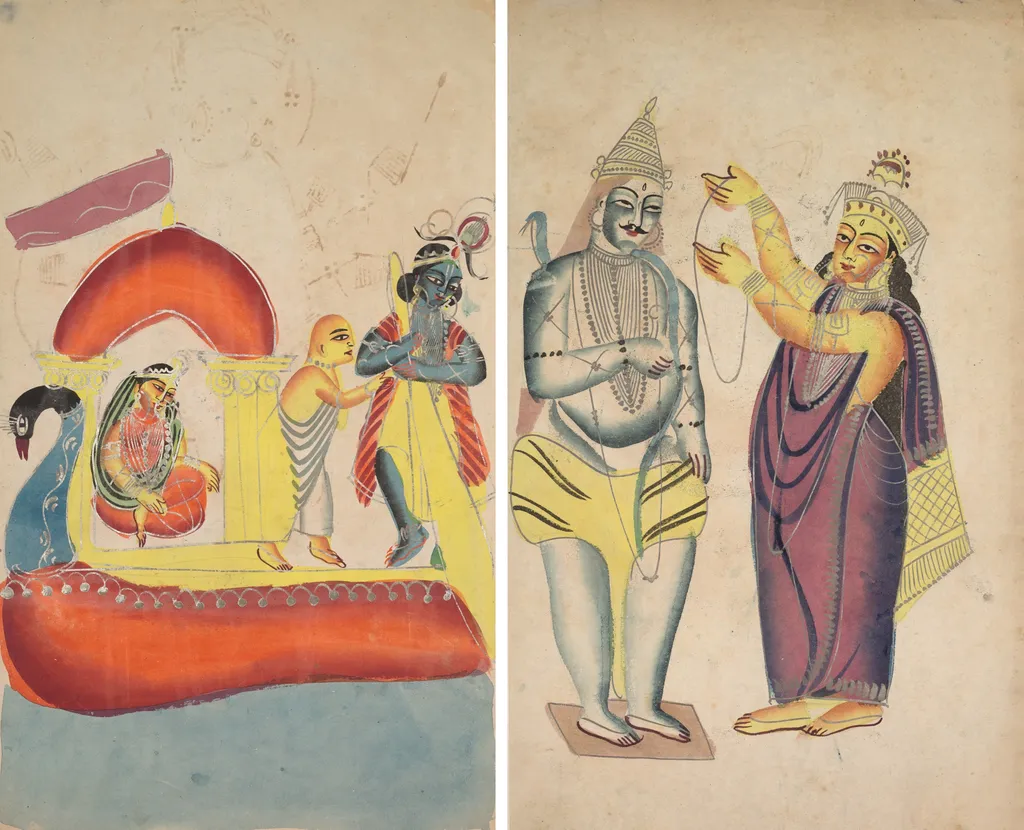
Krishna Ferrying Radha Across the Yamuna River (recto); Parivati Placing a Wedding Garland on Shiva (verso) is an unspecified painting. It dates from 1896 and is held in the collection of the Cleveland Museum of Art. This painting presents two distinct narratives from Hindu mythology, each depicted on a separate side of the same support.
About this work
Subject & Meaning
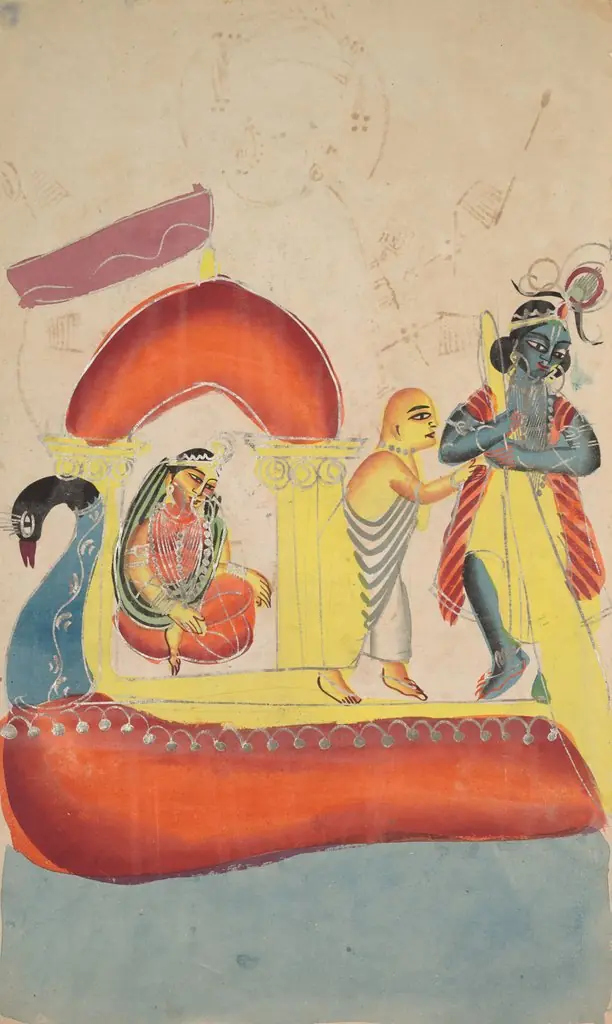
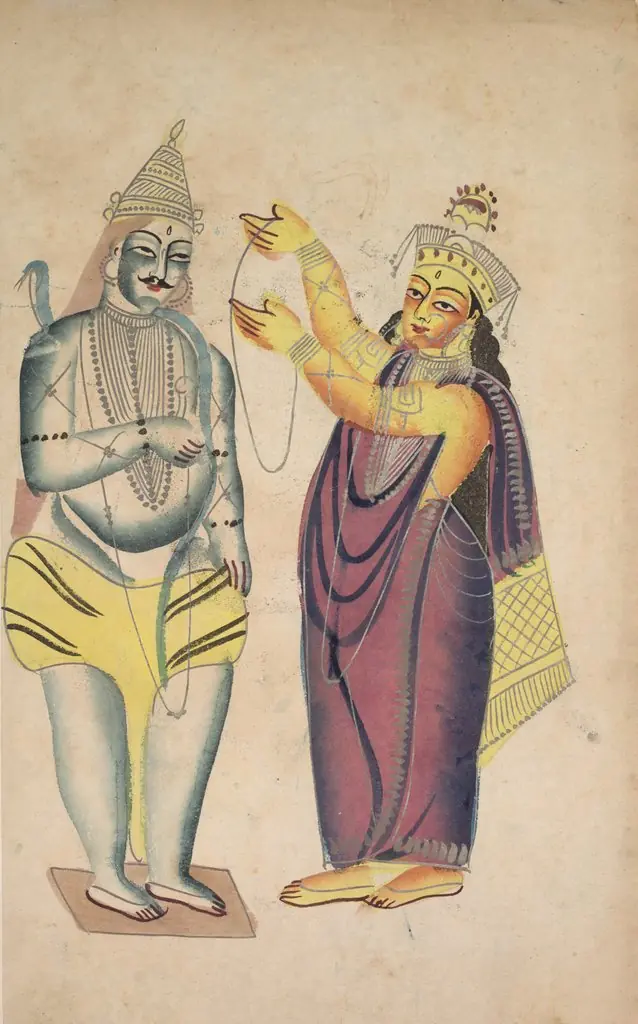
The recto of the painting shows Krishna carrying Radha across the Yamuna River, while the verso portrays Parvati placing a wedding garland on Shiva.
The recto of the painting shows Krishna carrying Radha across the Yamuna River, while the verso portrays Parvati placing a wedding garland on Shiva. Both scenes belong to Hindu mythological narratives that feature the divine lover Krishna and the goddesses Radha, Parvati, and Shiva. The work is dated 1890 and was created in Kolkata, though the artist is recorded only by a Wikidata identifier and is otherwise unknown. Its dual composition unites themes of divine partnership and marital ceremony within a single canvas.
History & Provenance
This double-sided painting was created in 1890 in Kolkata by an artist whose identity remains unknown. The work, which depicts Krishna ferrying Radha on the recto and Parvati garlanding Shiva on the verso, eventually entered the collection of the Cleveland Museum of Art. It is currently held by the institution under the accession number 2003.129.
No specific details regarding the original commission or the intermediate ownership chain between its creation in the late nineteenth century and its acquisition by the museum are provided in the available records.
Krishna Ferrying Radha Across the Yamuna River (recto); Parivati Placing a Wedding Garland on Shiva (verso) is held by the Cleveland Museum of Art in Cleveland, Ohio. The work is accessioned under the number 2003.129, as recorded in the museum’s collection documentation. Created in 1890 in Kolkata, the piece is classified as a painting.
No exhibition history is mentioned in the cited sources, suggesting that the work has not been listed in documented exhibitions.
Legacy
The painting entered the Cleveland Museum of Art collection, securing its status as a documented work of the period and prompting further study of the artist’s oeuvre. Its dual-sided composition, depicting Krishna Ferrying Radha Across the Yamuna River on the front and Parivati Placing a Wedding Garland on Shiva on the reverse, illustrates a rare devotional theme from the late 19th‑century Bengali school. Documentation of its creation in Kolkata in 1890, together with its classification as a painting, supports ongoing academic interest in the piece as an example of colonial‑era Indian religious art.
Overview
This painting presents two distinct narratives from Hindu mythology, each depicted on a separate side of the same support. On the recto, the divine figure Krishna is shown assisting Radha in a river crossing. The verso illustrates the wedding of Shiva and Parvati, a pivotal moment in their sacred union.
The artwork employs a vibrant palette, featuring strong reds, blues, yellows, and golds that stand out against a lighter ground, characteristic of narrative painting traditions.
Technique & Style
The artist utilized a clear and direct visual language to convey these mythological stories. Bold and saturated hues, including prominent reds, blues, and yellows, define the figures and their attire, creating a striking contrast with the lighter background. The composition focuses on the key actions of the narratives, such as the river crossing and the exchange of the garland, rendered with distinct forms and an emphasis on the figures' interactions.
Artist & collection

- Krishna Ferrying Radha Across the Yamuna River (recto); Parivati Placing a Wedding Garland on Shiva (verso)
 Krishna Ferrying Radha Across the Yamuna River (recto)
 Parivati Placing a Wedding Garland on Shiva (verso)
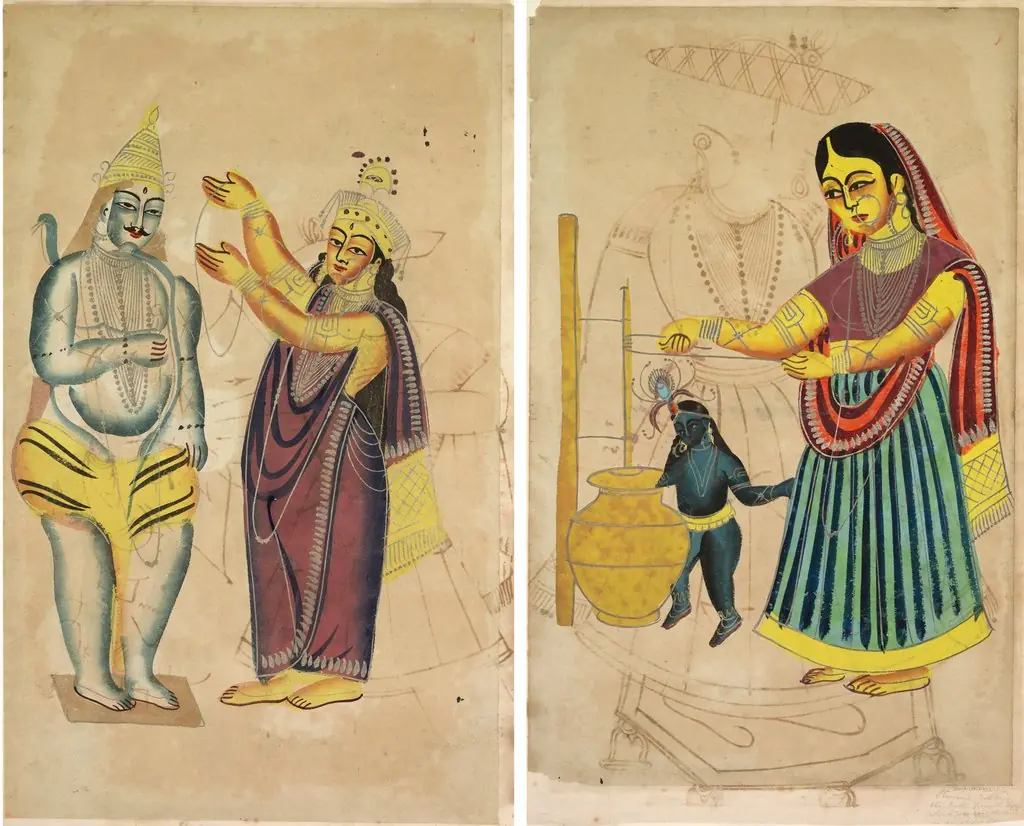 Leaf from a Kalighat album: Parvati Placing a Wedding Garland on Shiva (recto); Yasoda Churning Butter (verso)
 Leaf from a Kalighat album: Parvati Placing a Wedding Garland on Shiva (recto); Yasoda Churning Butter (verso)
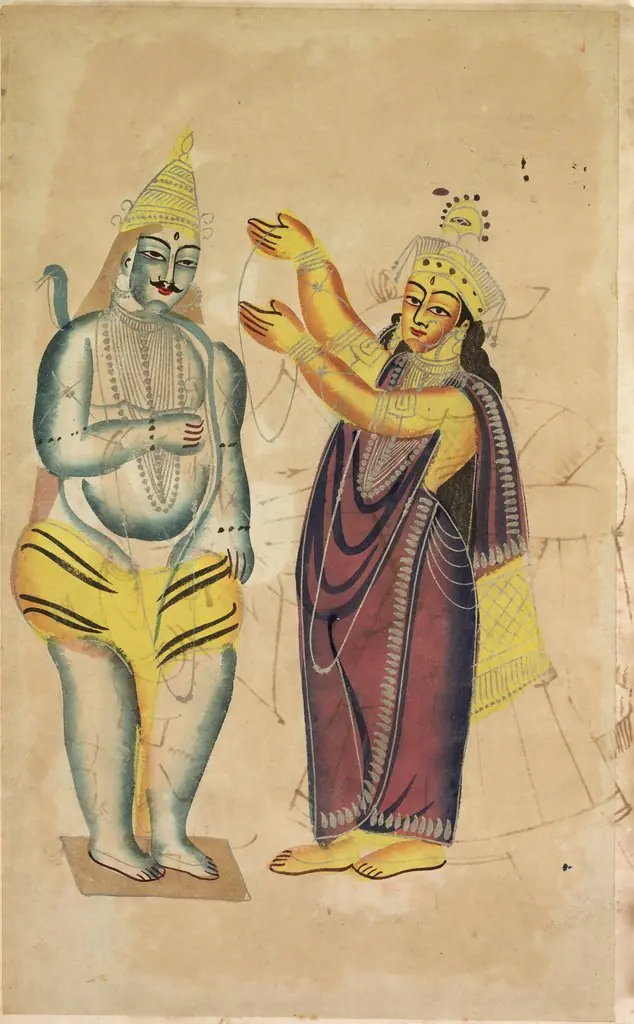 Parvati Placing a Wedding Garland on Shiva (recto), from a Kalighat album
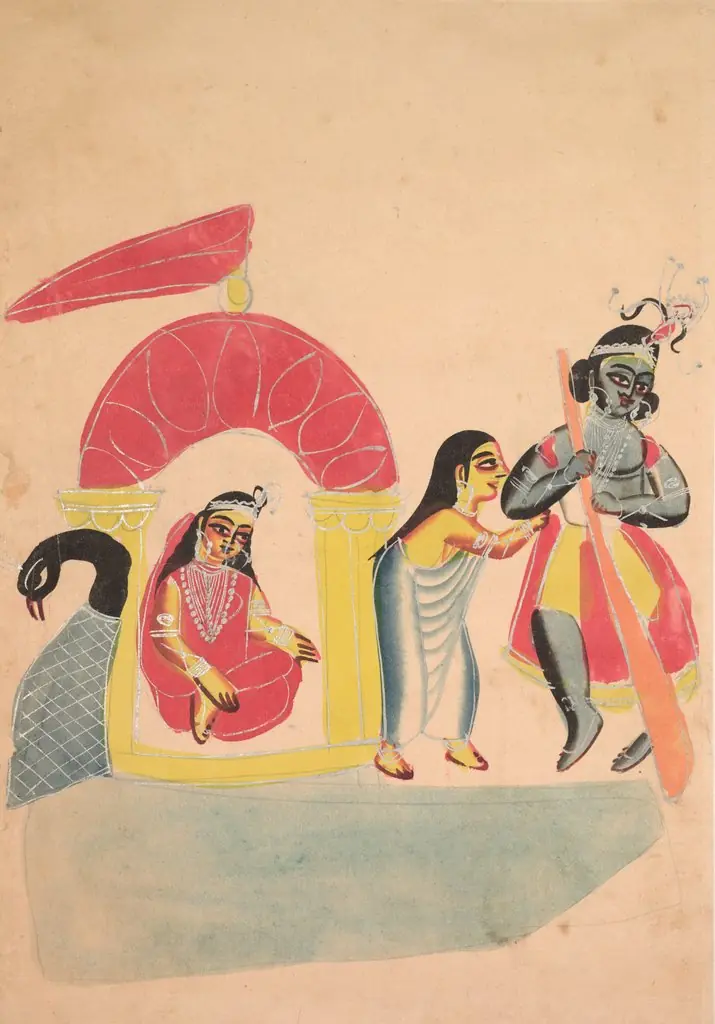 Krishna Ferrying Radha Across the Yamuna River
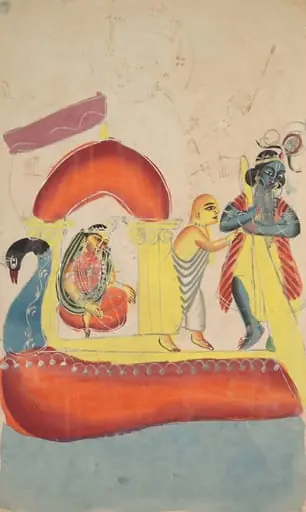 Krishna Ferrying Radha Across the Yamuna River (recto)
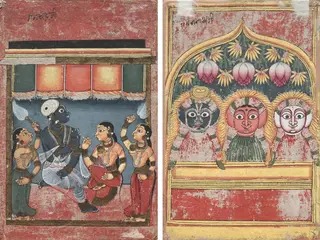 Krishna with Radha and Two Attendants (recto); Jagannath, Subhadra and Balarama in an Arch (verso)
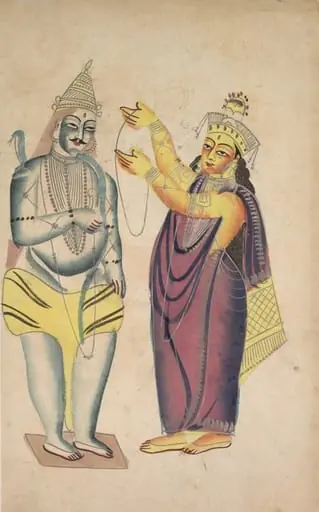 Parivati Placing a Wedding Garland on Shiva (verso)
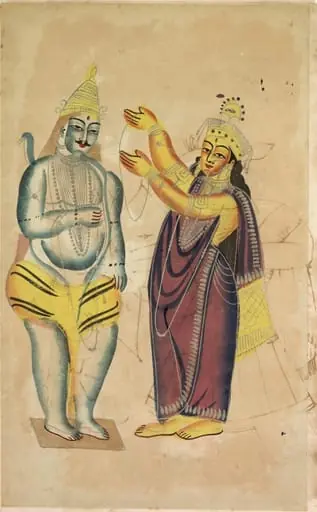 Parvati Placing a Wedding Garland on Shiva (recto), from a Kalighat album
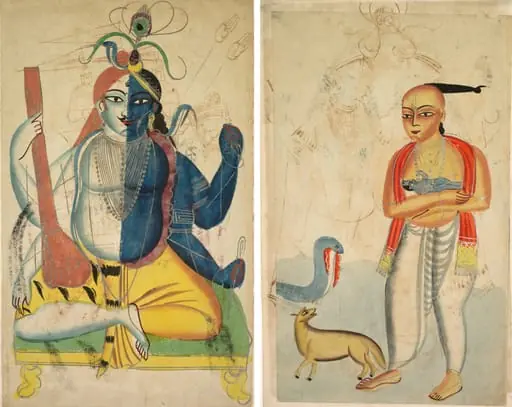 Leaf from a Kalighat album: Hari-Hara (recto); Vasudeva (Krishna's Father) Fleeing with Krishna Encounters a Cobra and a Jackal (verso)
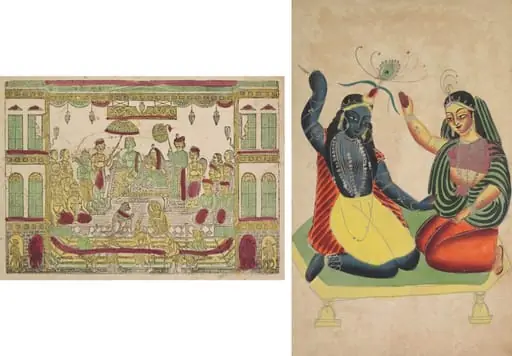 Leaf from a Kalighat album: Rama and Sita in the Royal Palace (recto); Radha and Krishna (verso)
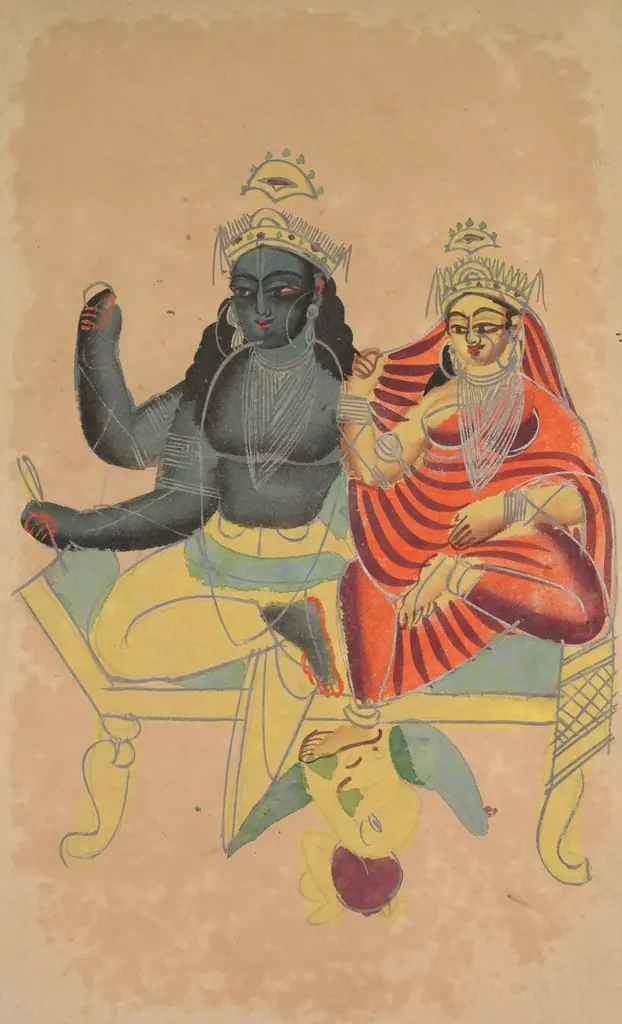 Vishnu and Lakshmi
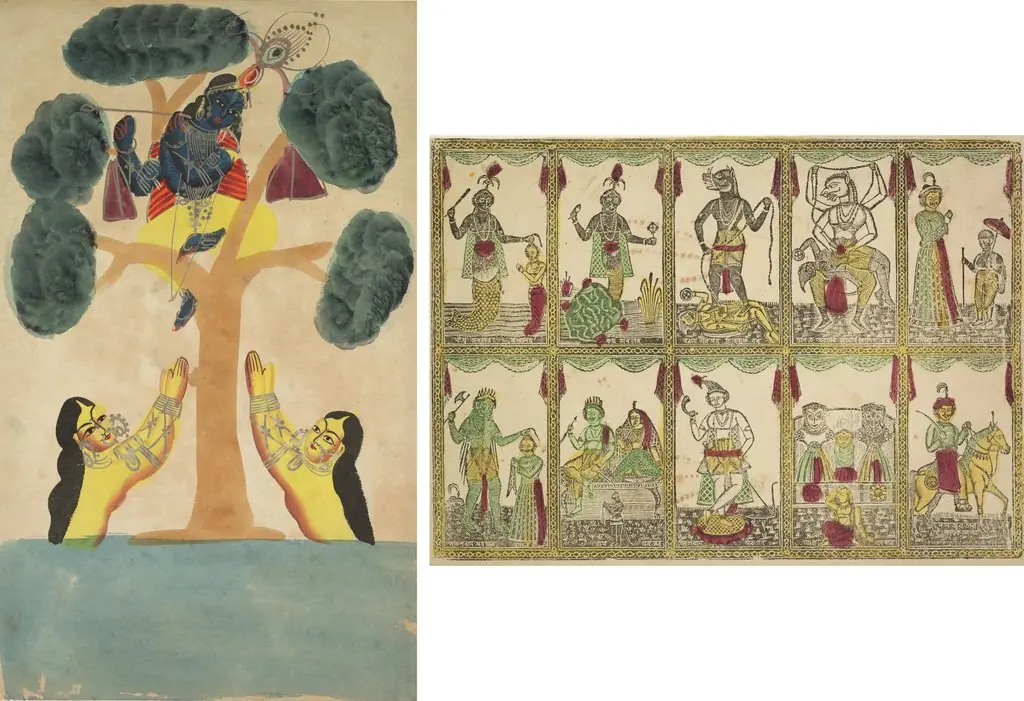 Leaf from a Kalighat album: Krishna Steals the Clothes of the Cowgirls (Gopis) (recto); Das Avataras, Ten Incarnations of Vishnu (verso)
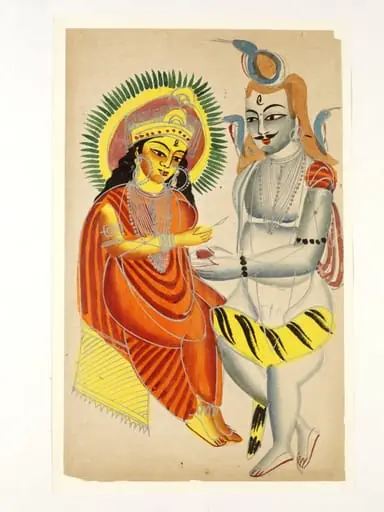 Annapurna and Shiva
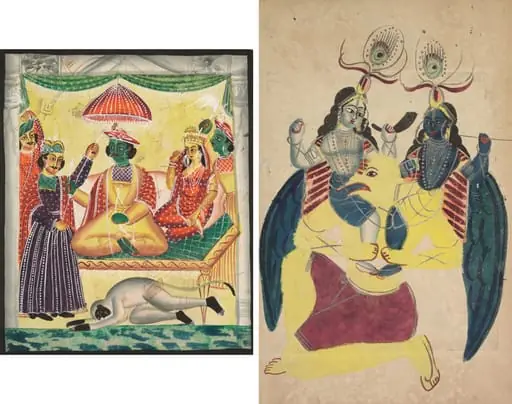 Leaf from a Kalighat album: Rama and Sita enthroned (recto); Garuda carrying Balarama and Krishna (verso)