Artwork
Madonna and Child
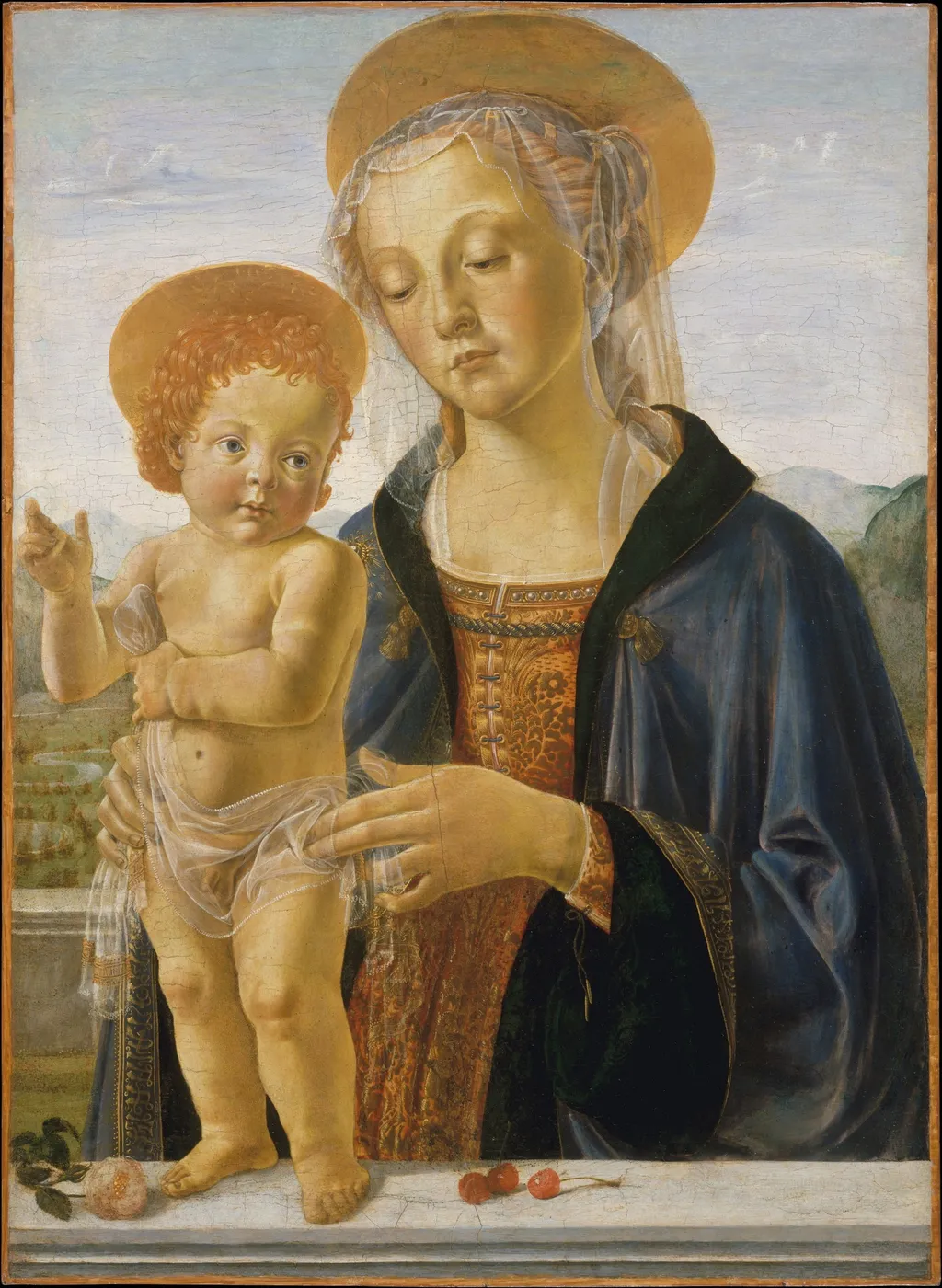
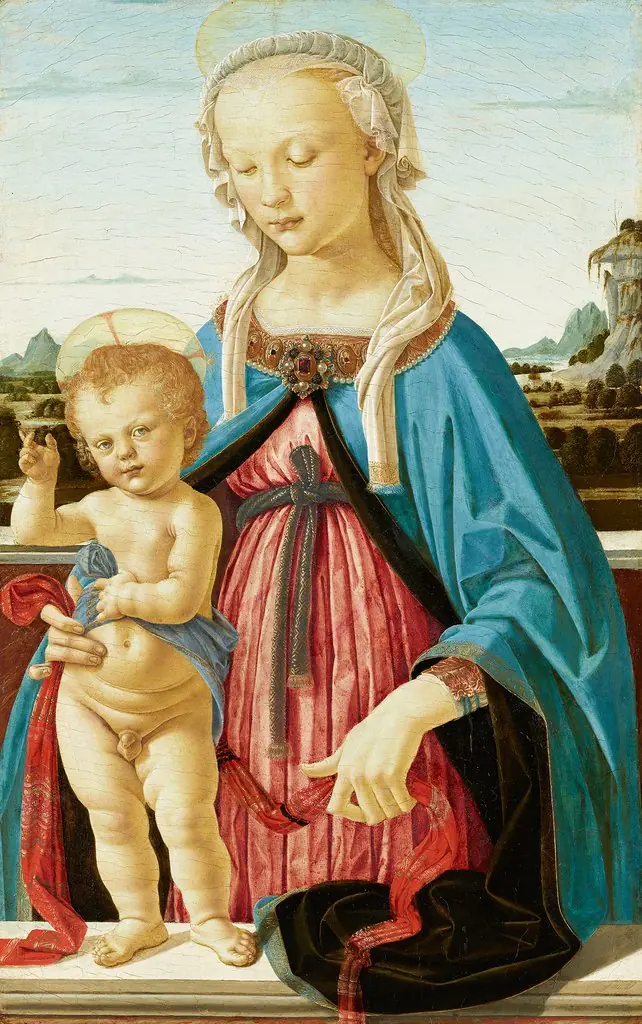
Madonna and Child is a tempera painting. It dates from 1470 and is held in the collection of the Metropolitan Museum of Art.
About this work
Subject & Meaning
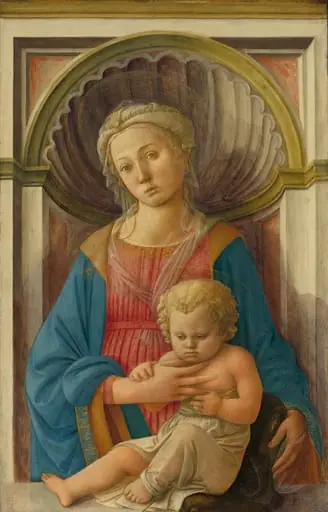
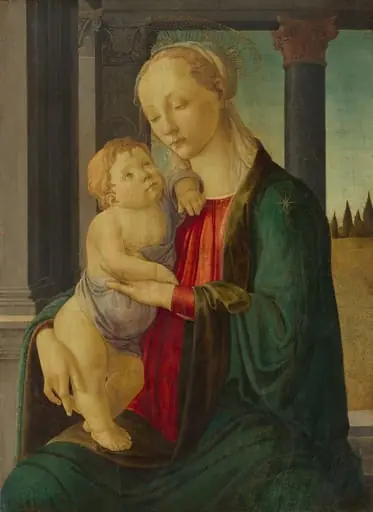
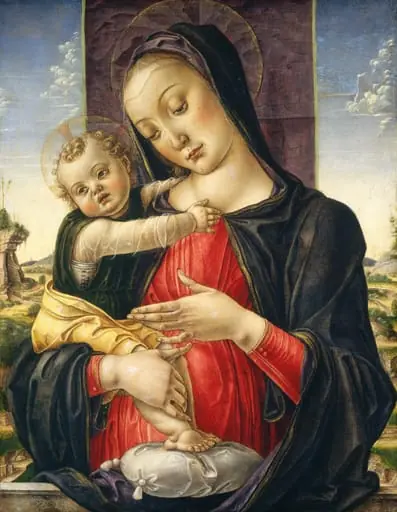
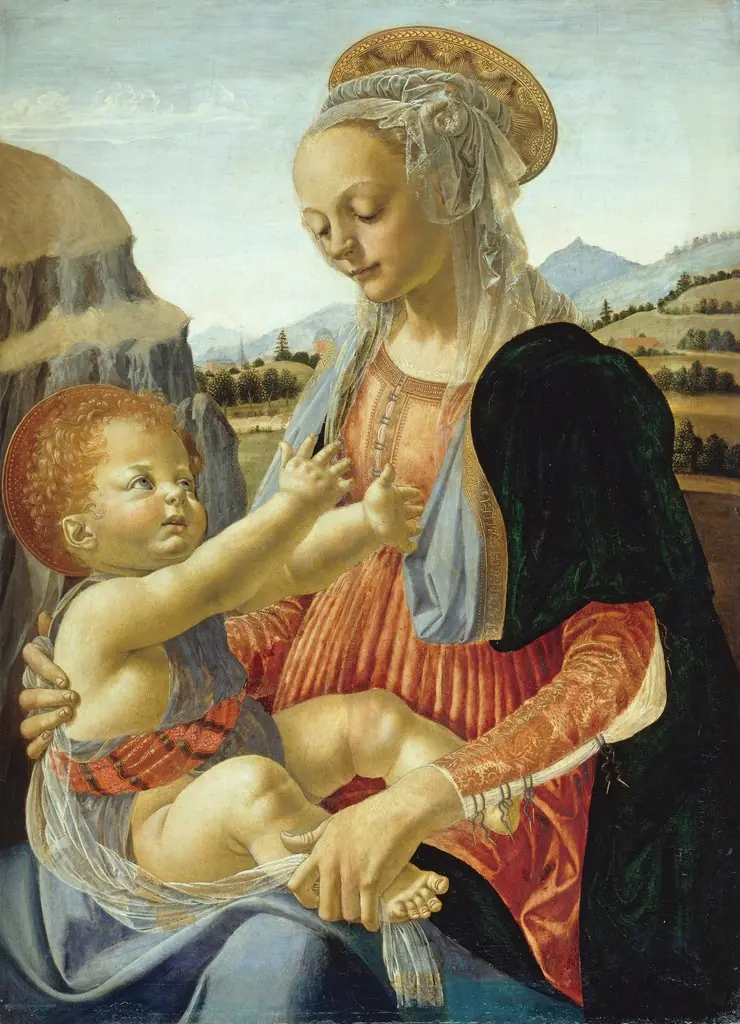
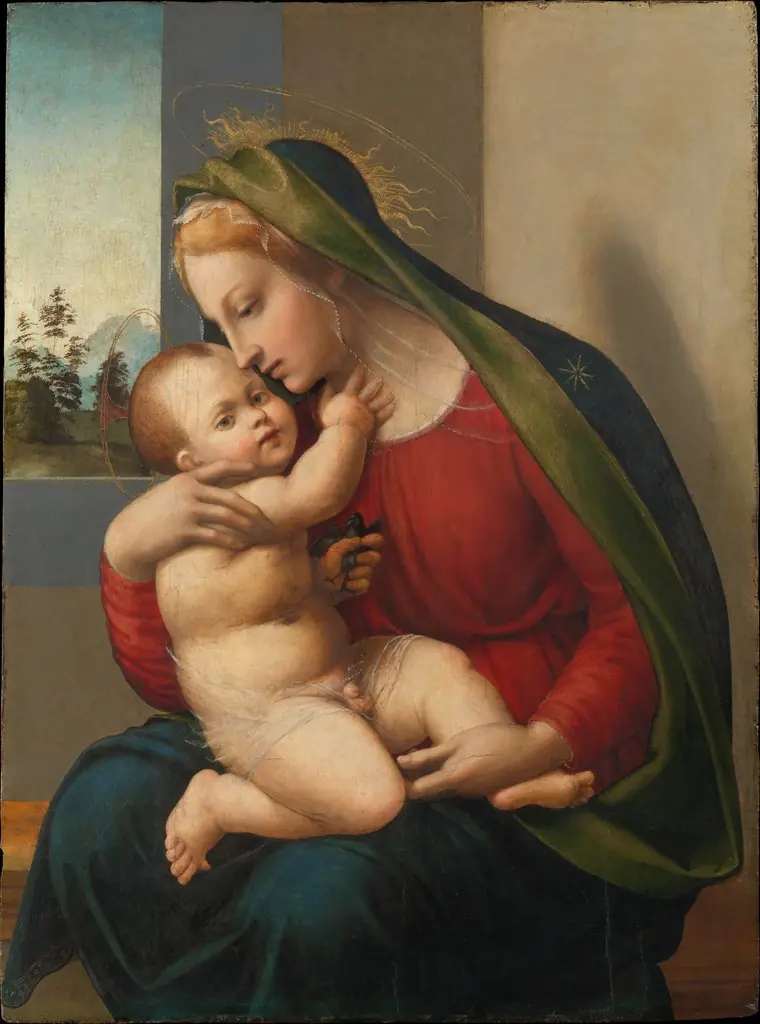
The painting depicts the Virgin Mary holding the Christ Child, a traditional Madonna and Child composition. In addition to the figures, a cherry is rendered alongside them, a detail noted in the work’s description. As a religious genre piece from circa 1470, the image conveys the Christian theme of the Virgin’s maternal role and the incarnation of Jesus, emphasizing devotion to the holy family.
Technique & Style
While the museum’s catalogue does not detail recent conservation treatment, the work remains structurally sound and retains its original visual impact.
The work is executed on a wooden panel, a support typical of 15th‑century panel paintings. Its surface is layered with tempera pigment, supplemented by delicate applications of gold leaf that heighten the sacred narrative. The composition follows the conventional Madonna and Child iconography, with the Virgin seated and cradling the infant Christ, rendered in a restrained palette and soft modeling characteristic of the Verrocchio workshop.
The painting’s dimensions (approximately 66 × 48 cm) and its dated execution in 1470 place it within the early Renaissance period. While the museum’s catalogue does not detail recent conservation treatment, the work remains structurally sound and retains its original visual impact.
History & Provenance
The painting, attributed to the workshop of Andrea del Verrocchio, is dated to circa 1470 and executed in tempera and gold leaf on a wood panel. While the original commission is not recorded in the surviving sources, the work’s ownership history traces from early collectors Walter Bromley‑Davenport, Walter Farquhar and Charles Butler to Benjamin Altman, who owned it before it entered the Metropolitan Museum of Art’s collection. The panel has been exhibited in the Royal Academy Winter Exhibition, the Art Treasures of the Metropolitan, and the Florentine Paintings in the Metropolitan Museum shows.
The Madonna and Child is held in the Metropolitan Museum of Art in New York, forming part of the institution’s collection and previously belonging to collector Benjamin Altman. Although no specific accession number is provided in the sources, the work is recorded as owned by Altman within the Met’s holdings. Its exhibition history comprises three notable shows: the Royal Academy Winter Exhibition, the Art Treasures of the Metropolitan, and the Florentine Paintings in the Metropolitan Museum.
These exhibitions highlight the painting’s presence in major scholarly and public presentations of the museum’s Italian Renaissance holdings.
Context
Created around 1470, the Madonna and Child is attributed to the workshop of Andrea del Verrocchio, situating the work within the vibrant Florentine artistic milieu of the late Quattrocento. Executed in tempera and gold leaf on wood, the painting exemplifies the workshop's engagement with religious iconography during this period. The piece entered the collection of the Metropolitan Museum of Art through the bequest of Benjamin Altman, following a provenance that included Walter Bromley-Davenport, Walter Farquhar, and Charles Butler.
Its historical significance is further underscored by its inclusion in major exhibitions such as the Royal Academy Winter Exhibition and shows dedicated to Florentine Paintings in the Metropolitan Museum. While specific critical debates regarding its attribution are not detailed in the available records, its presence in significant institutional displays highlights its recognized status as a representative work of Verrocchio's circle.
Overview
This painting, rendered on wood, depicts the traditional Christian subject of the Madonna and Child. It presents a serene woman cradling a young child, whose posture suggests movement and engagement. The composition emphasizes a gentle interaction between the figures, set against a backdrop of soft colors and subtle illumination, creating an intimate and contemplative scene.
Artist & collection