Artwork
Madonna
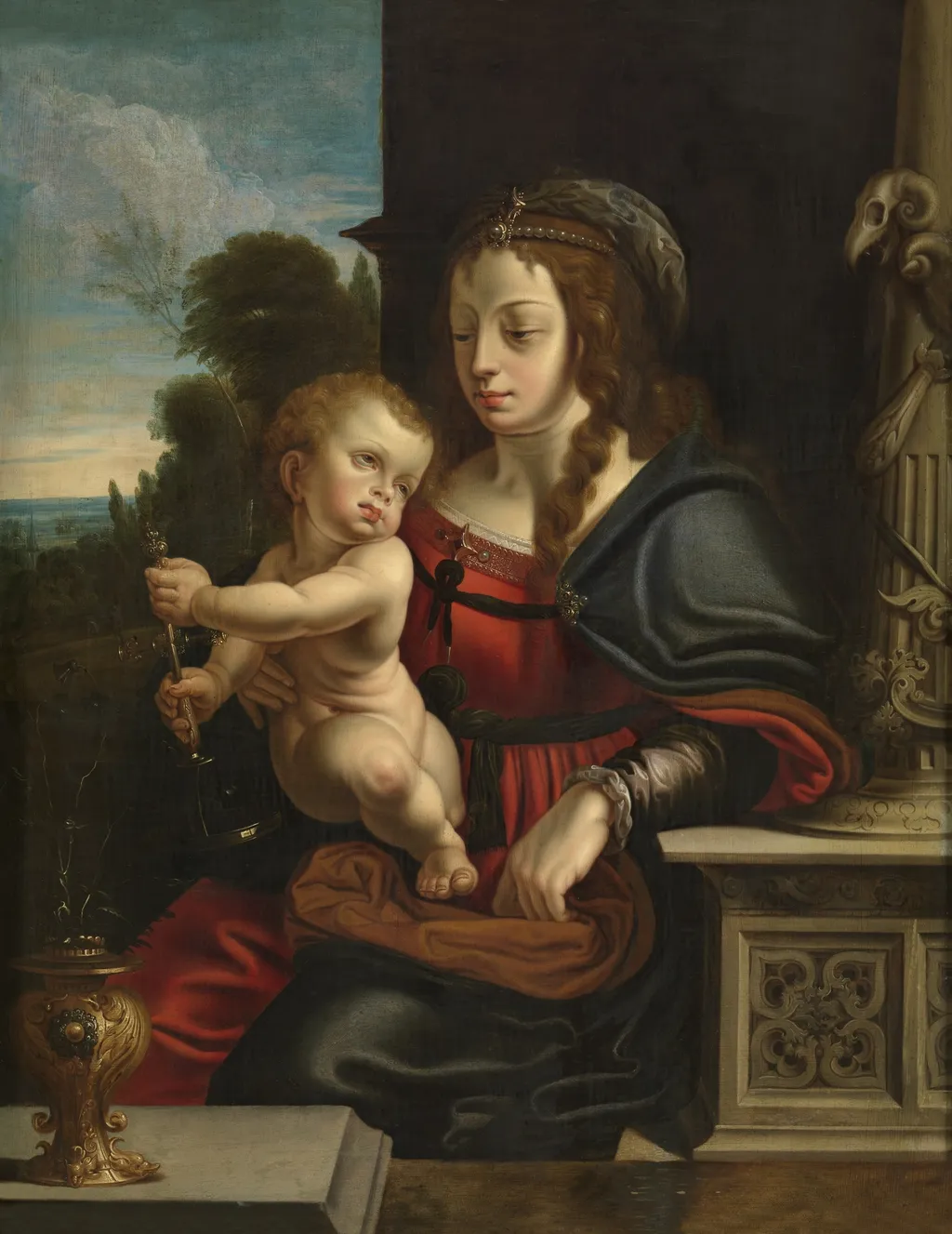
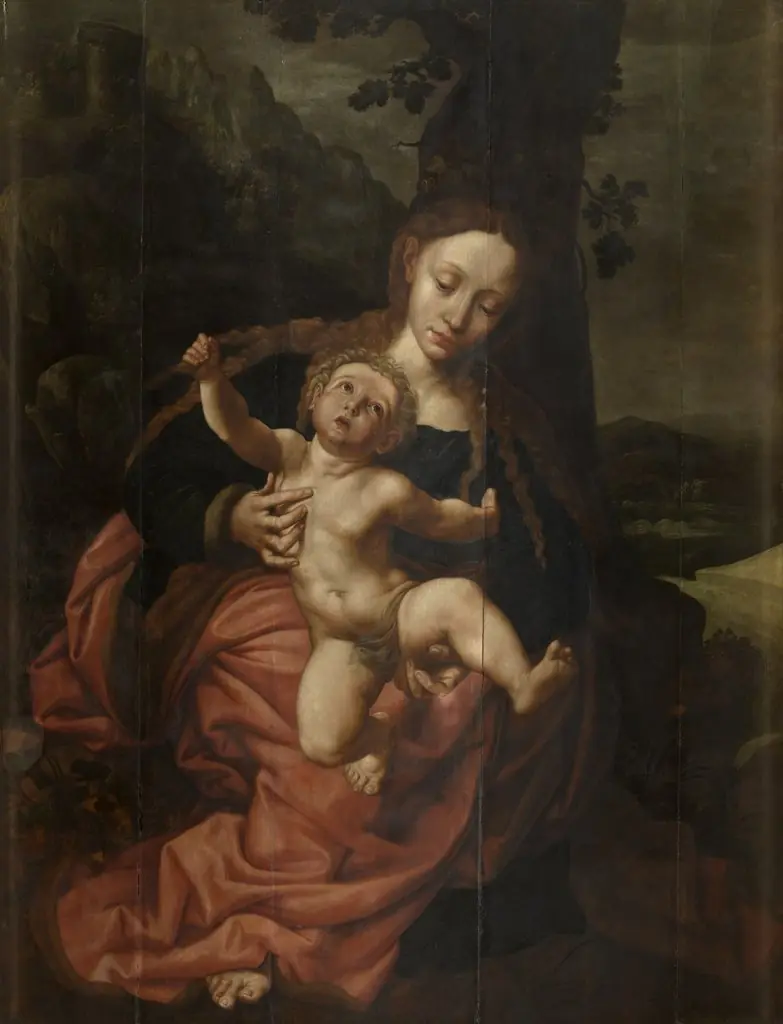
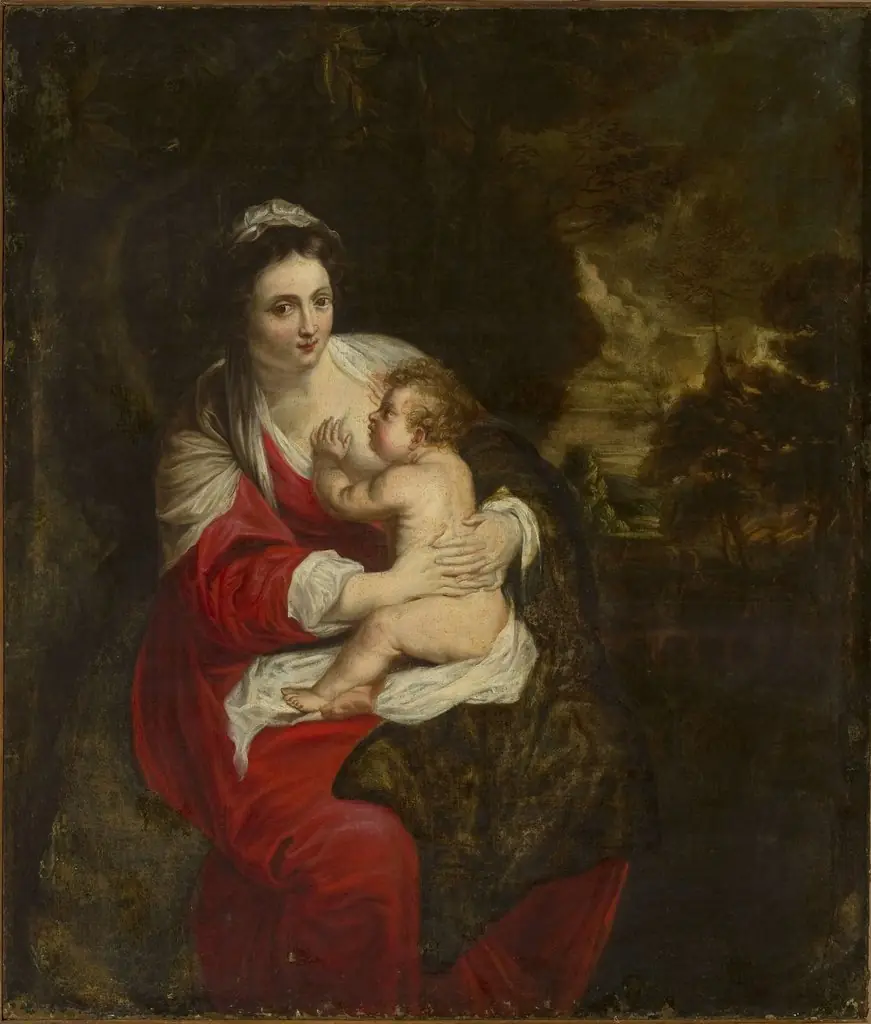
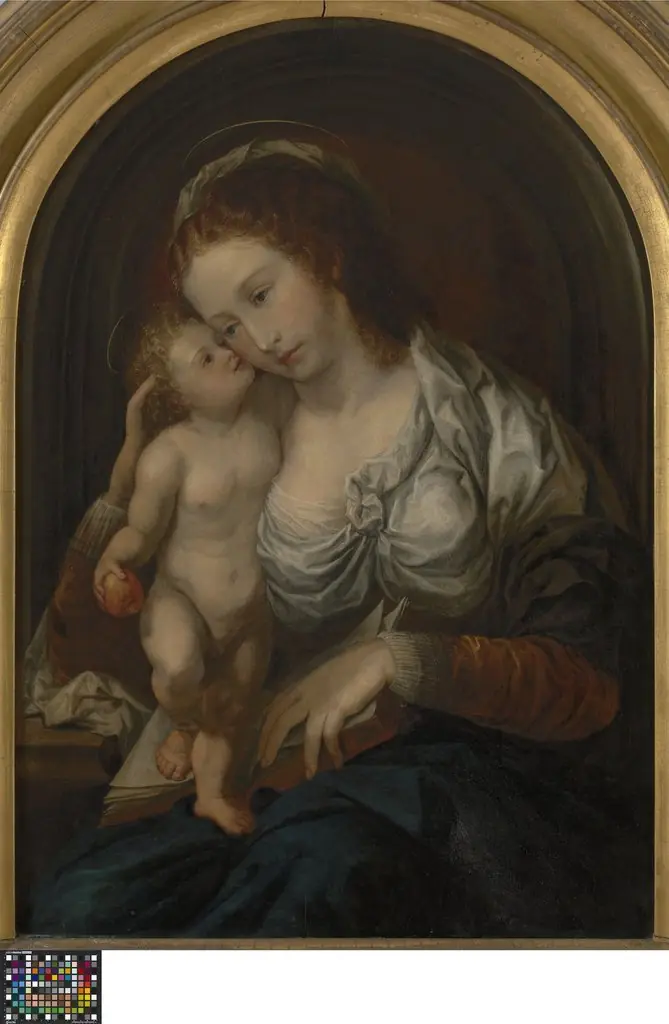
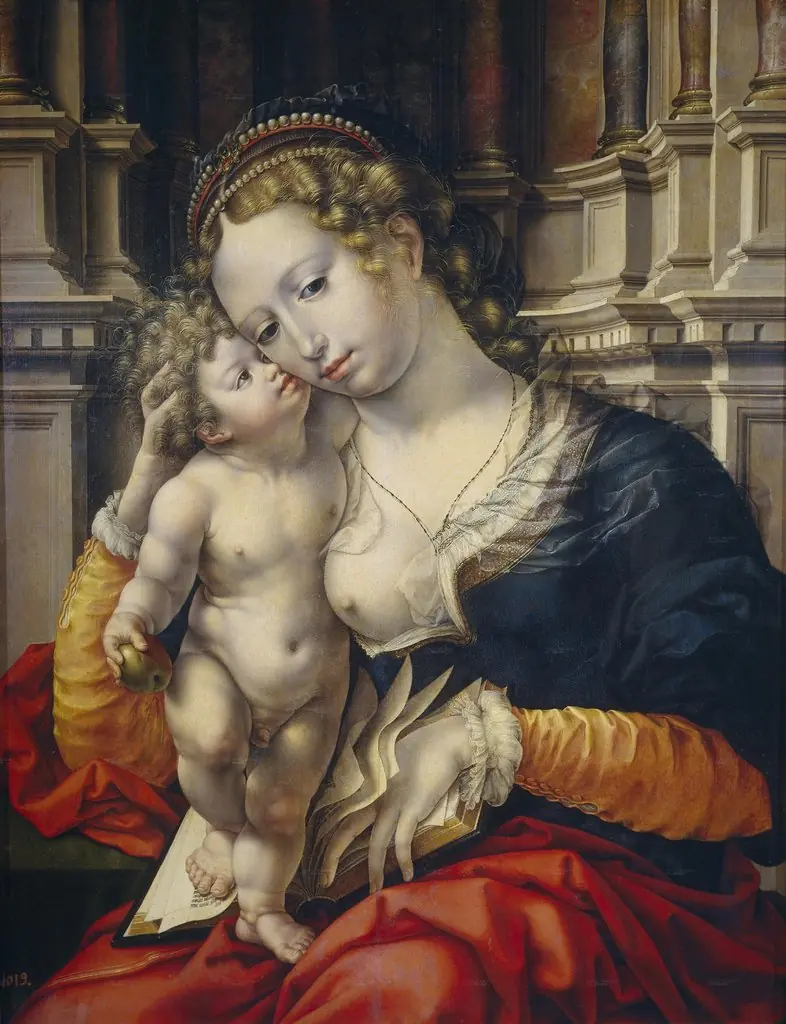
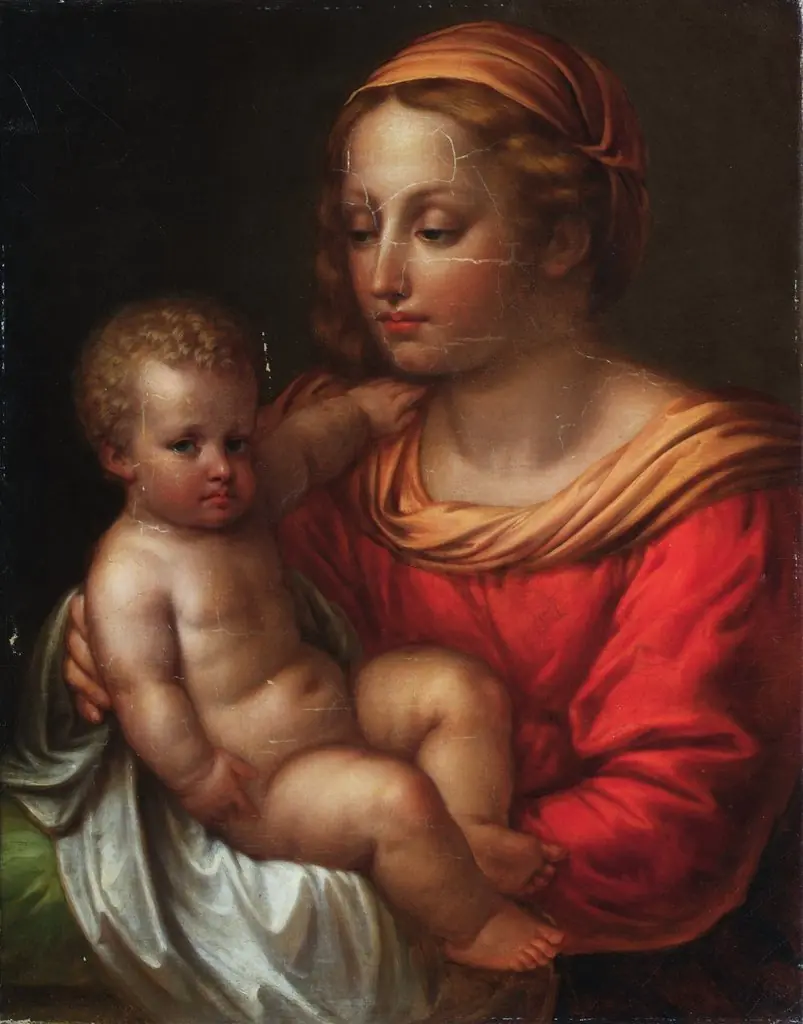
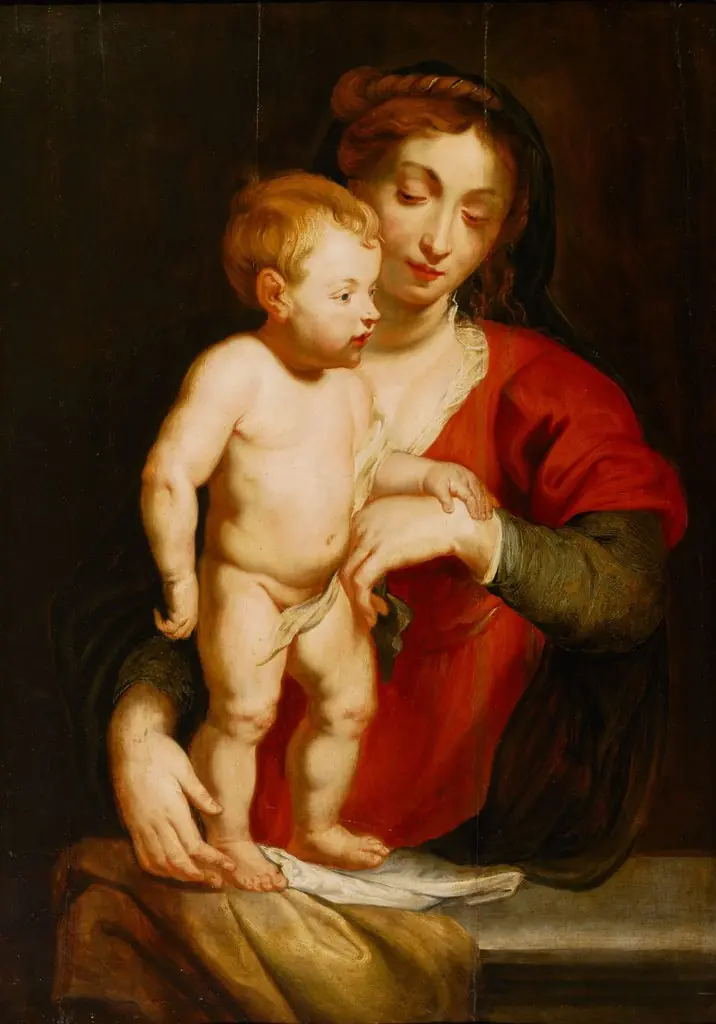
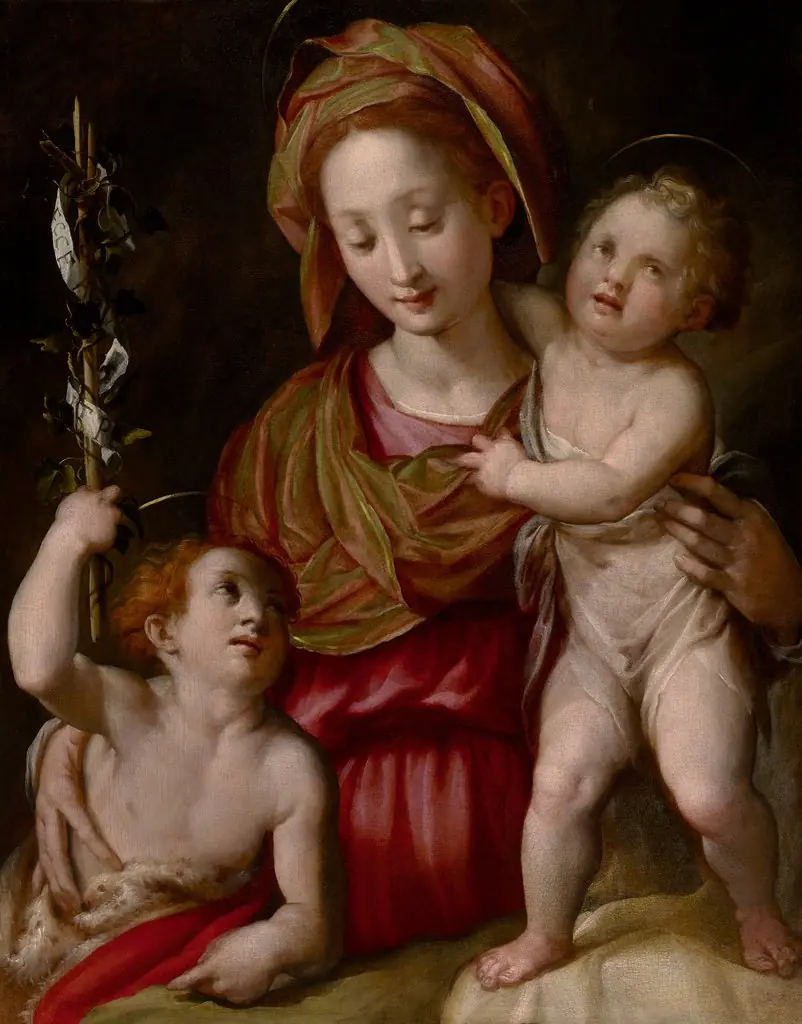
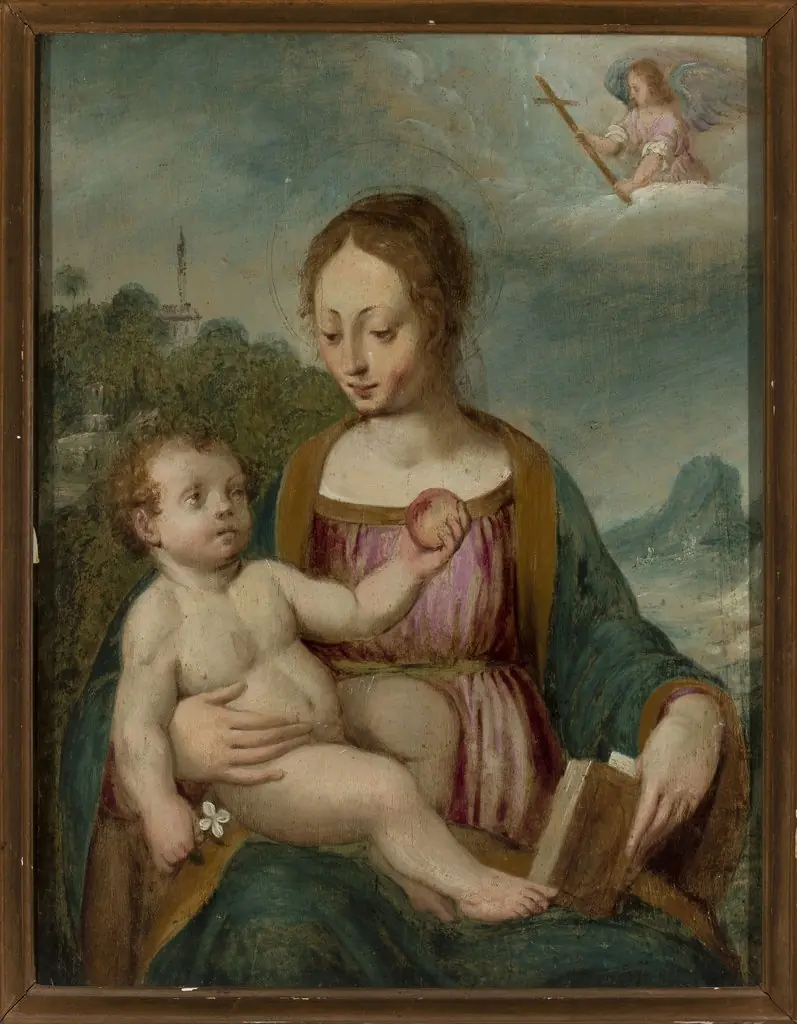
Madonna is an oil painting by the Mannerist artist Unknown. It dates from 1525 and is held in the collection of the Royal Museum of Fine Arts Antwerp. The work is an oil painting depicting a woman in a dark blue mantle cradling a partially nude child.
About this work
Subject & Meaning
The work’s compact composition and restrained palette reflect the devotional character typical of early sixteenth-century Netherlandish religious art.
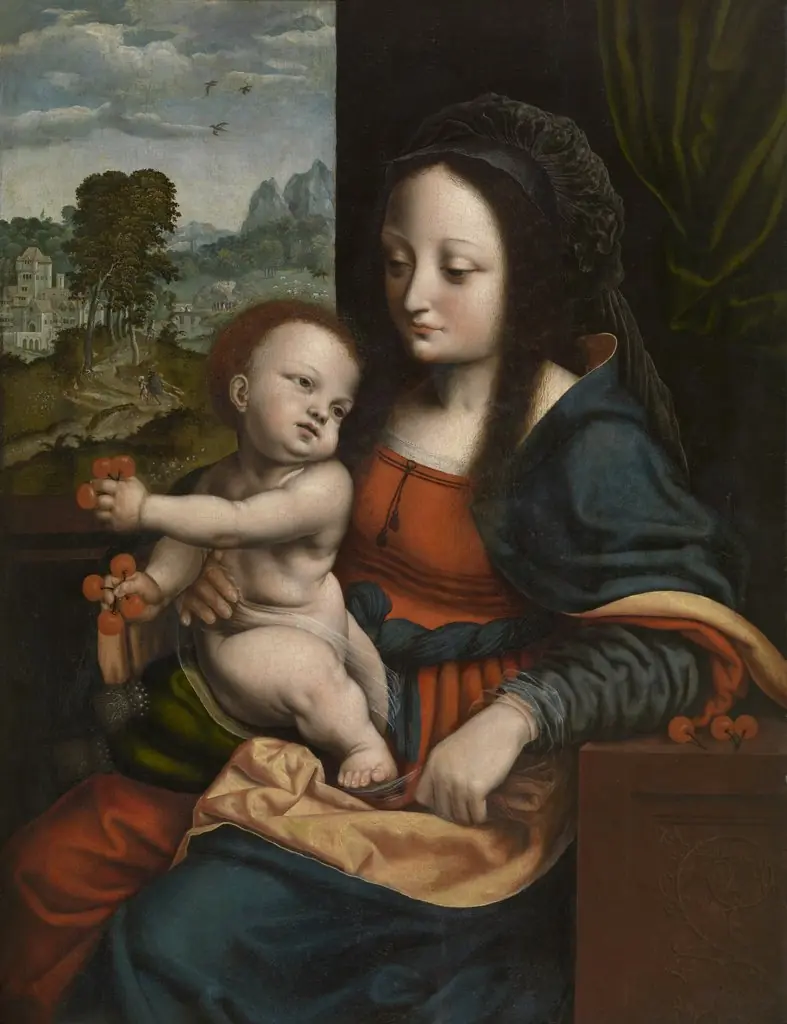
The painting depicts the Virgin Mary holding the Christ Child, a conventional subject in Christian iconography known as the Madonna and Child. Mary is shown in a frontal pose, cradling the infant Jesus, who turns toward the viewer while holding a scroll, a reference to his future role as teacher and bearer of divine revelation. The work’s compact composition and restrained palette reflect the devotional character typical of early sixteenth-century Netherlandish religious art.
Within the Antwerp tradition, such representations emphasized intimacy and reverence rather than dramatic narrative, aligning with contemporary piety focused on contemplation of the incarnate God.
The Christ Child’s scroll, while not an elaborate symbol, signals his identity as the Word made flesh, while Mary’s calm demeanor underscores her role as the Mother of God and intercessor.
Technique & Style
The work is executed in oil paint on a wooden panel support, a common medium for early sixteenth-century Netherlandish devotional panels. The measured dimensions are 73.5 cm in height by 55.5 cm in width. Stylistically, the composition centers on a seated Virgin and Child rendered with softly modeled forms and delicate chiaroscuro, aligning with the refined devotional imagery of the South Netherlandish tradition in the first half of the 1520s.
Handling shows careful brushwork and a restrained palette, emphasizing luminous flesh tones against a darker, neutral ground that isolates the figures and directs attention to their quiet intimacy.
History & Provenance
The painting was produced in 1525, executed in oil on panel by an anonymous South Netherlandish master active in the first half of the sixteenth century. Its early ownership history is documented through the collector Frans Hens, who held the work before it entered the Royal Museum of Fine Arts Antwerp. The painting is now part of the museum's holdings under the Flemish Art Collection (Vlaamse Kunstcollectie), catalogued as KMSKA 5016.
The transition from private ownership by Hens to the Antwerp museum marks the principal recorded stage in the work's provenance chain.
Context
The Madonna and Child composition was created circa 1525 by an anonymous Antwerp painter, reflecting the dominant religious art genre of early sixteenth-century Flanders. Executed in oil on panel, the work measures 73.5 cm in height and 55.5 cm in width, depicting the Virgin Mary tenderly holding the infant Christ. It was originally owned by Frans Hens before entering the collection of the Royal Museum of Fine Arts Antwerp, where it remains part of their Flemish art holdings.
Legacy
The Madonna has shaped religious art through its devotional focus on Mary and the infant Christ, influencing countless depictions of maternal tenderness across centuries. Its formal qualities, particularly the intimate scale and naturalistic rendering of the figures, established compositional precedents adopted by later artists. The work's presence in the Royal Museum of Fine Arts Antwerp's collection has ensured continued scholarly attention to early Netherlandish interpretations of Marian imagery.
Overview
The work is an oil painting depicting a woman in a dark blue mantle cradling a partially nude child. The child clutches a small cross, while a golden cup rests on the floor nearby. A stone pillar frames the right side of the composition, and a window behind the figures opens onto a blue sky dotted with clouds and distant trees.
Artist & collection