Artwork
Maharaja Abhai Singh of Marwar (reigned 1724–49), Equestrian, Watching Girls Swinging at the Teej Festival
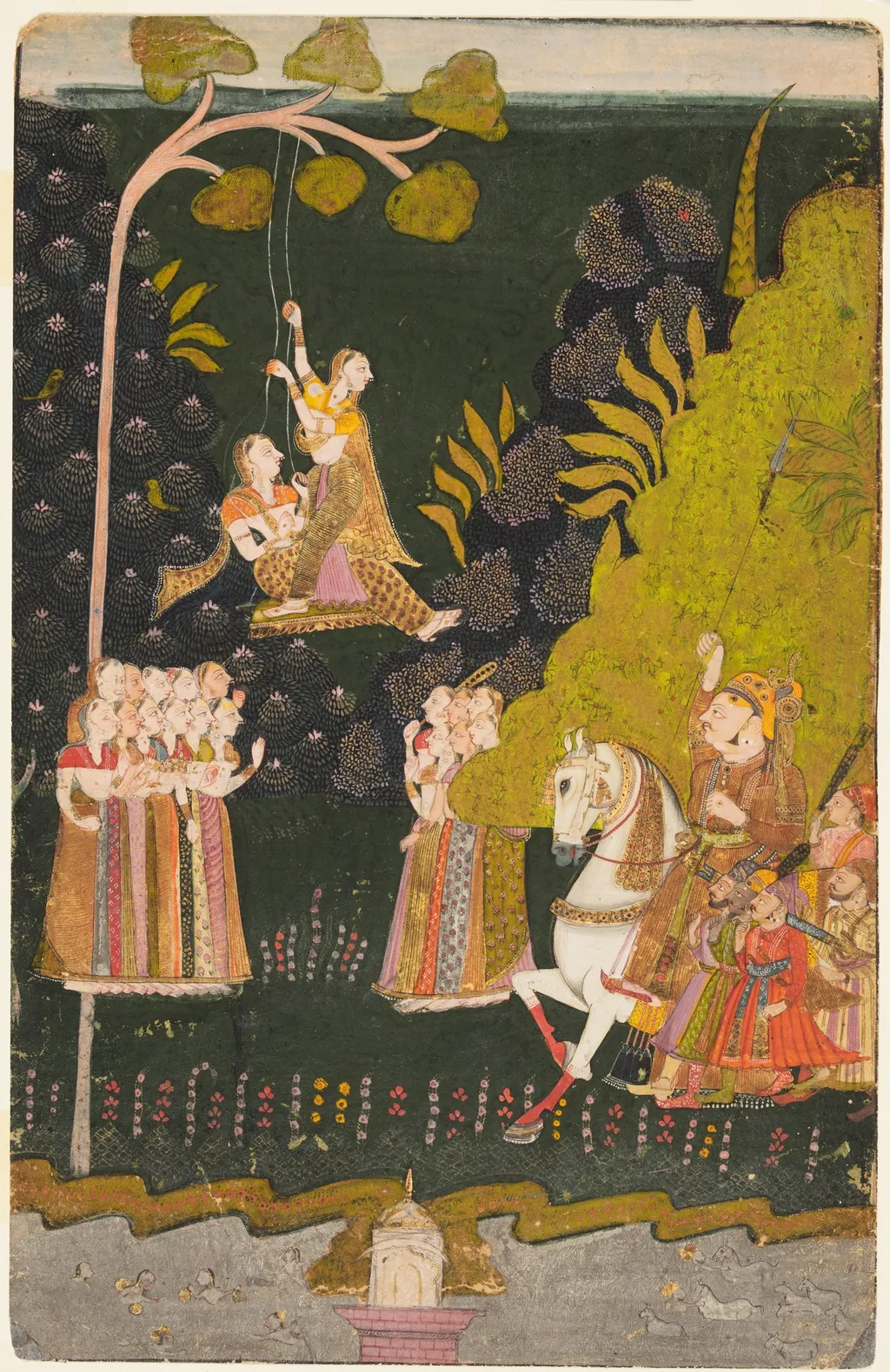
Maharaja Abhai Singh of Marwar (reigned 1724–49), Equestrian, Watching Girls Swinging at the Teej Festival is an unspecified painting. It dates from 1740 and is held in the collection of the Cleveland Museum of Art.
About this work
Subject & Meaning
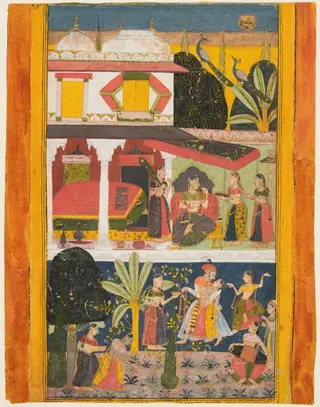
He observes girls swinging during the Teej festival, a monsoon celebration associated with women, swings, and the worship of Parvati and Shiva.
The painting depicts Maharaja Abhai Singh of Marwar, who reigned 1724–49, astride a horse. He observes girls swinging during the Teej festival, a monsoon celebration associated with women, swings, and the worship of Parvati and Shiva. The equestrian portrait format elevates the ruler's status, while his role as spectator to the festival scene integrates royal presence into a beloved seasonal ritual.
The work thus represents both political authority and cultural participation, merging the maharaja's public power with private enjoyment of a popular Rajasthani tradition.
History & Provenance
The painting titled Maharaja Abhai Singh of Marwar (reigned 1724–49), Equestrian, Watching Girls Swinging at the Teej Festival is dated to 1740 and attributed to an unknown artist. Classified as a painting, its inception is recorded as 1740-01-01. The work entered the Cleveland Museum of Art’s collection in 2018 and bears the accession number 2018.197.
It remains housed at the museum in Cleveland. No earlier ownership, commission, or provenance details are documented in the available sources.
The painting Maharaja Abhai Singh of Marwar (reigned 1724–49), Equestrian, Watching Girls Swinging at the Teej Festival is held in the collection of the Cleveland Museum of Art in Cleveland. The work is cataloged under the accession number 2018.197. Created in 1740, the piece was acquired by the museum and remains part of its permanent holdings.
Overview
The work portrays Maharaja Abhai Singh of Marwar, who ruled from 1724 to 1749, observing a festive scene in which two women swing from a rope during the Teej celebration. A rider on a white horse, identified as the Maharaja, looks toward the swinging figures while a crowd gathers below, creating a dynamic composition of courtly observation and communal festivity.
Technique & Style
The artist employs a vivid palette of saturated reds, blues, and golds, accentuating the celebratory atmosphere. Fine linear detailing renders the textiles and ornamental patterns of the participants’ garments, while the dark, star‑filled sky and distant yellow hill provide a contrasting backdrop that heightens the scene’s visual drama.
Context
Created during the early eighteenth century, the work belongs to the Rajput school of painting, which blended indigenous iconography with influences from Mughal court art. The depiction of a ruler observing a public celebration illustrates the period’s emphasis on the sovereign’s role as a cultural guardian within the Marwar kingdom.
Artist & collection

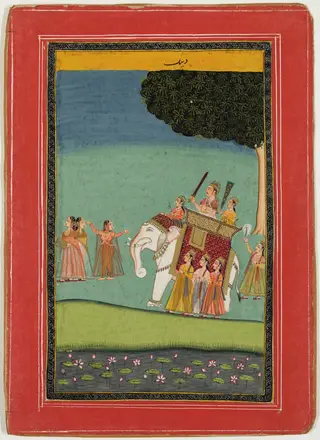 Raja on White Elephant with Female Attendants
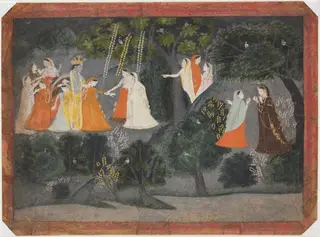 The Meeting of Radha and Krishna in the Forest of Brindaban
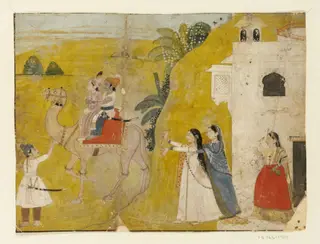 Sassi and Punun
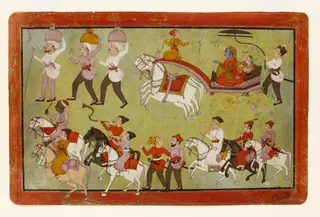 Rama and Sita
 Pradyumna and Mayavati Fly to Dvaraka, from the Large Basohli Bhagavata Purana
 Rao Chhattar Sal
 A Heroine and Her Paramour: Malavi Ragini, from a Ragamala
 Untitled
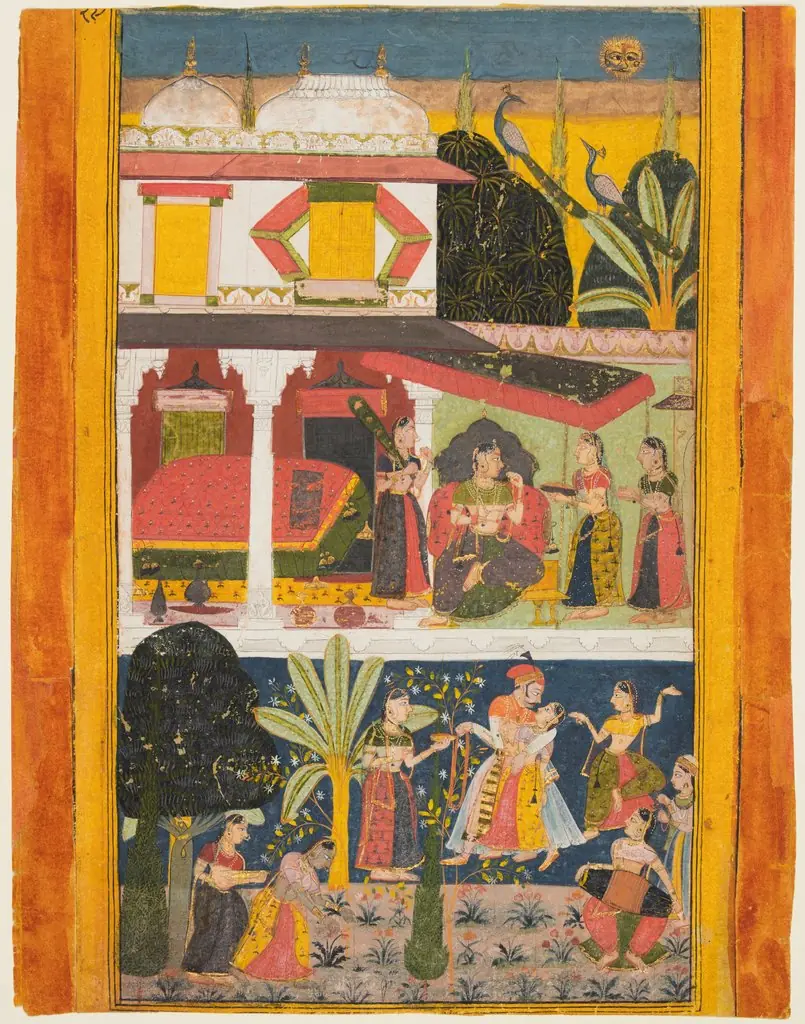
 A Heroine and Her Paramour: Malavi Ragini, from a Ragamala