Artwork
Maharana Amar Singh of Mewar
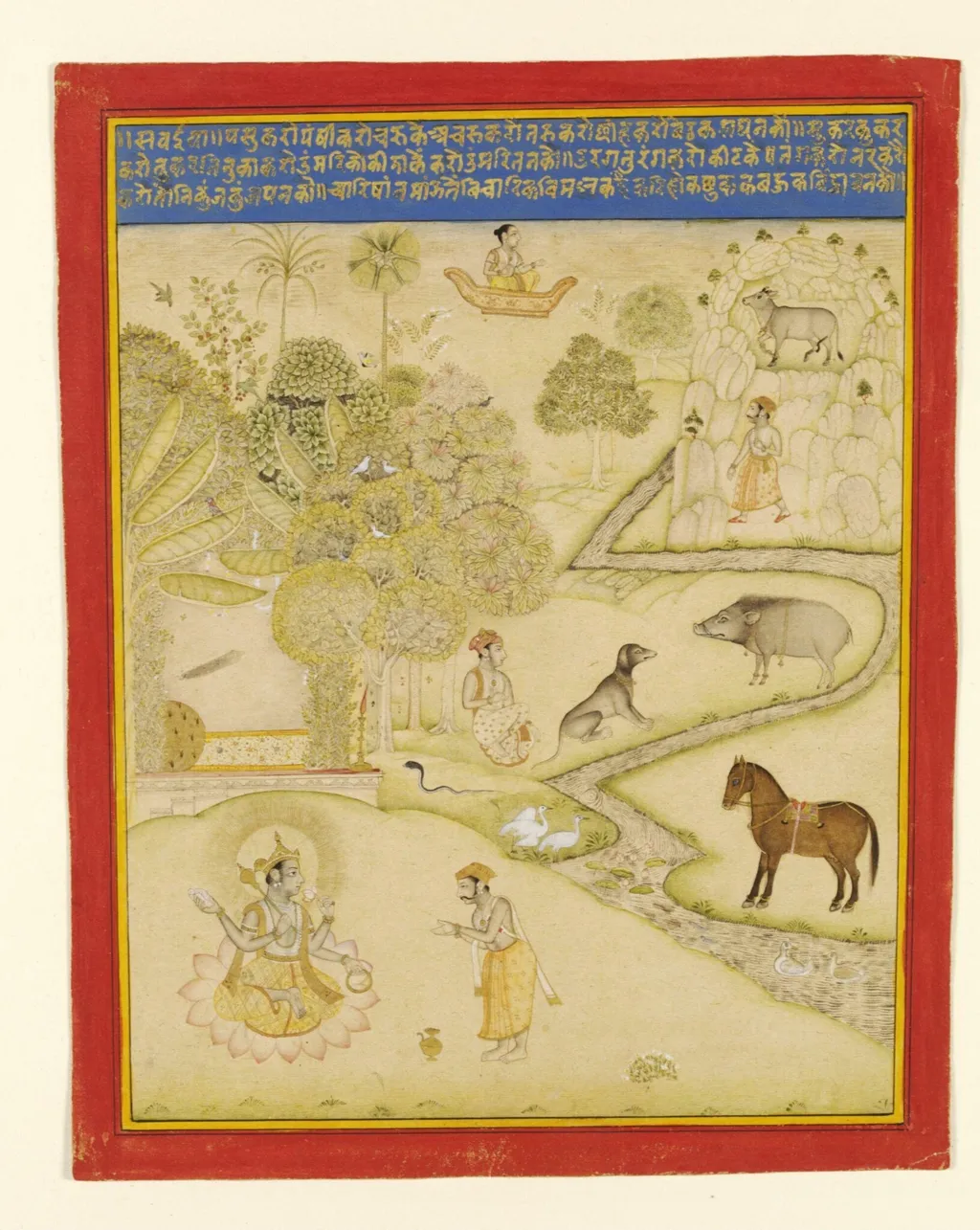
Maharana Amar Singh of Mewar is a paint painting by the Baroque artist Unknown. It dates from 1705 and is held in the collection of the Victoria and Albert Museum.
About this work
Overview
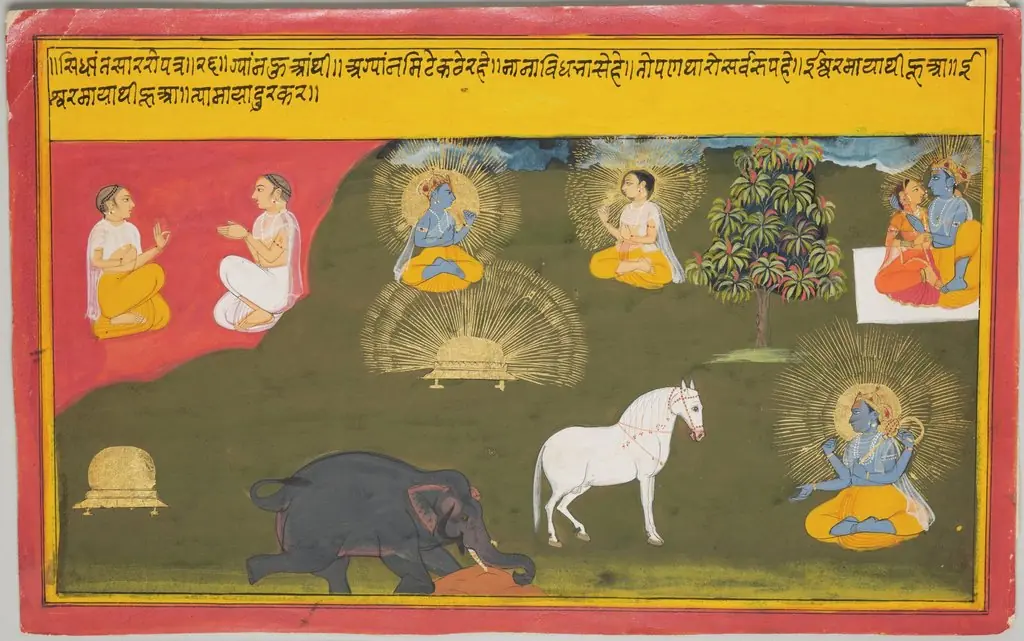
This painting depicts Maharana Amar Singh of Mewar, who ruled from 1698 to 1710, in a moment of quiet devotion. He kneels on a rocky outcrop, facing a small image of Vishnu resting on a lotus at the lower edge. The surrounding landscape, filled with animals and vegetation, occupies most of the composition, suggesting a sacred natural order rather than a formal temple setting.
Subject & Meaning
The scene functions as a devotional invocation, with the inscription honoring Vishnu as the source of all creation. The inclusion of diverse animals and plants reinforces the idea of divine presence in nature. Amar Singh’s posture of reverence, isolated yet surrounded by life, positions him as both worshipper and witness to a cosmos sustained by the deity.
Technique & Style
The work employs a stippled brush technique known as meenakari, applying fine dots of pale pigments to model forms and suggest diffuse light. This method, favored at the Mewar court around 1705, produces a soft, luminous texture that unifies the landscape and figures. The muted palette enhances the contemplative mood, distancing the image from theatricality.
History & Provenance
Created during Amar Singh’s reign, the painting reflects the aesthetic preferences of his court, where delicate, introspective styles replaced bolder Mughal influences. It likely originated as a personal devotional object, possibly commissioned for private worship. The painting is now held in the Victoria and Albert Museum, where its provenance traces back to royal Mewar collections.
Context
In early 18th-century Mewar, Rajput rulers increasingly turned to intimate, nature-infused devotional imagery as expressions of spiritual authority.
In early 18th-century Mewar, Rajput rulers increasingly turned to intimate, nature-infused devotional imagery as expressions of spiritual authority. This work aligns with a broader trend among Hindu courts to emphasize Vishnu’s role as cosmic sustainer, using landscape not as backdrop but as sacred manifestation. The style contrasts with contemporary Mughal portraiture, favoring symbolism over realism.
Legacy
The painting exemplifies a distinctive phase in Rajput painting, where personal piety and natural observation merged through refined technique. Its use of stippling influenced later regional styles, and its thematic focus on creation remains a touchstone for understanding how devotional art conveyed theological ideas without textual reliance.
Artist & collection









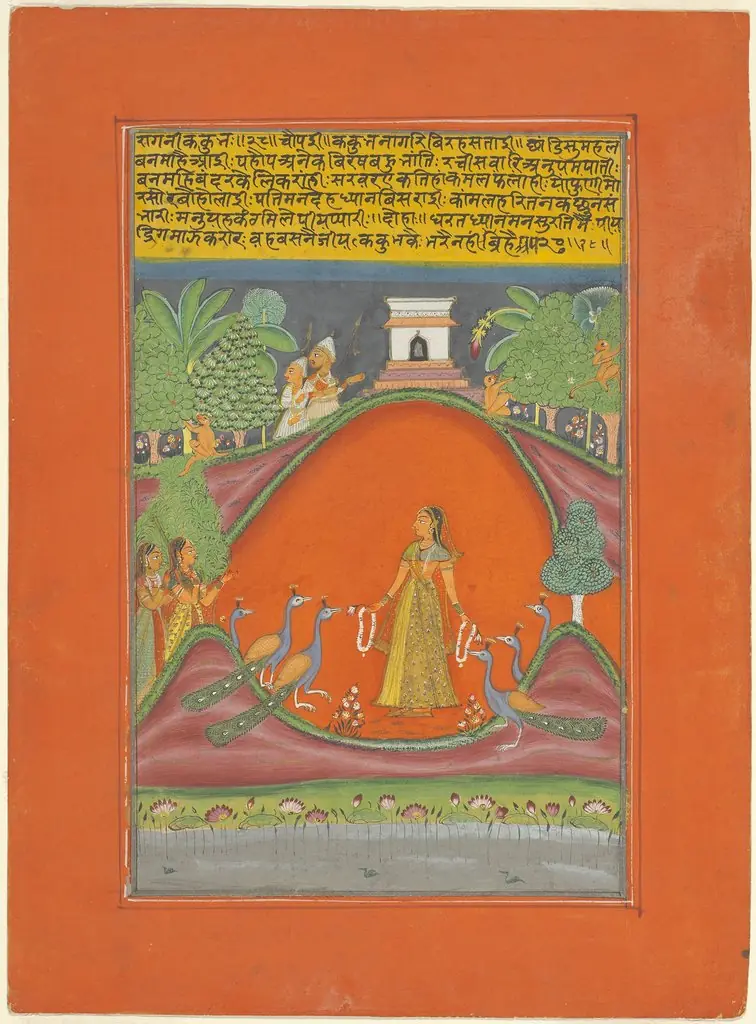 Ragini Kakubha, Page from a Jaipur Ragamala Set
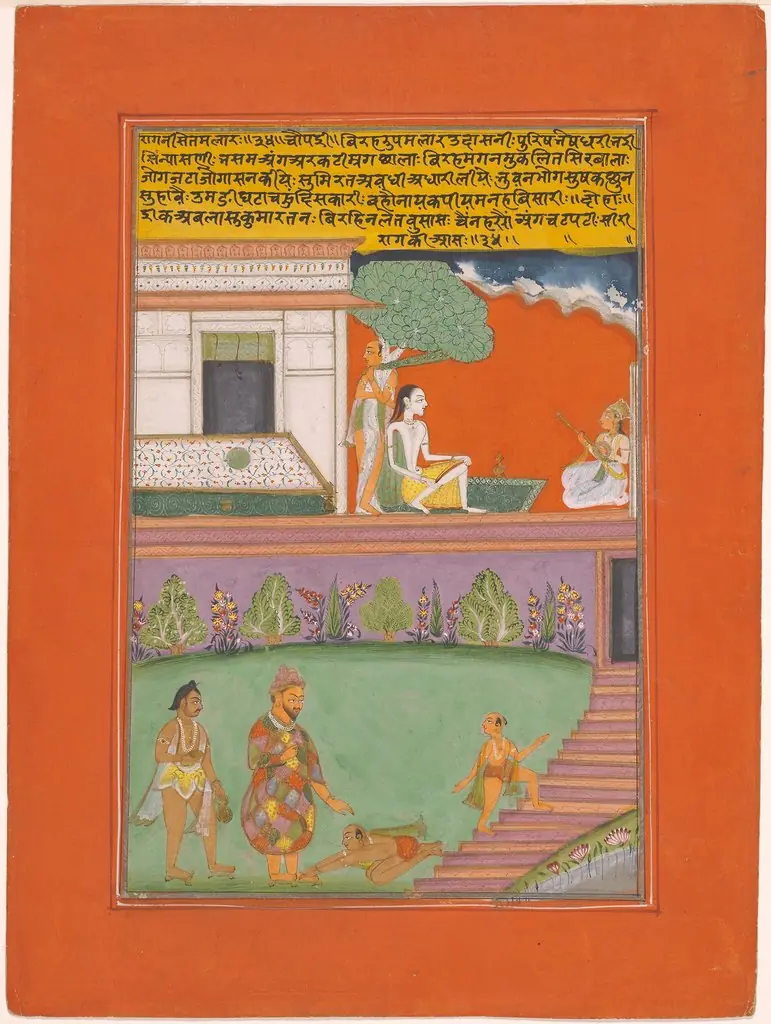 Ragini Setmalar, Page from a Jaipur Ragamala Set
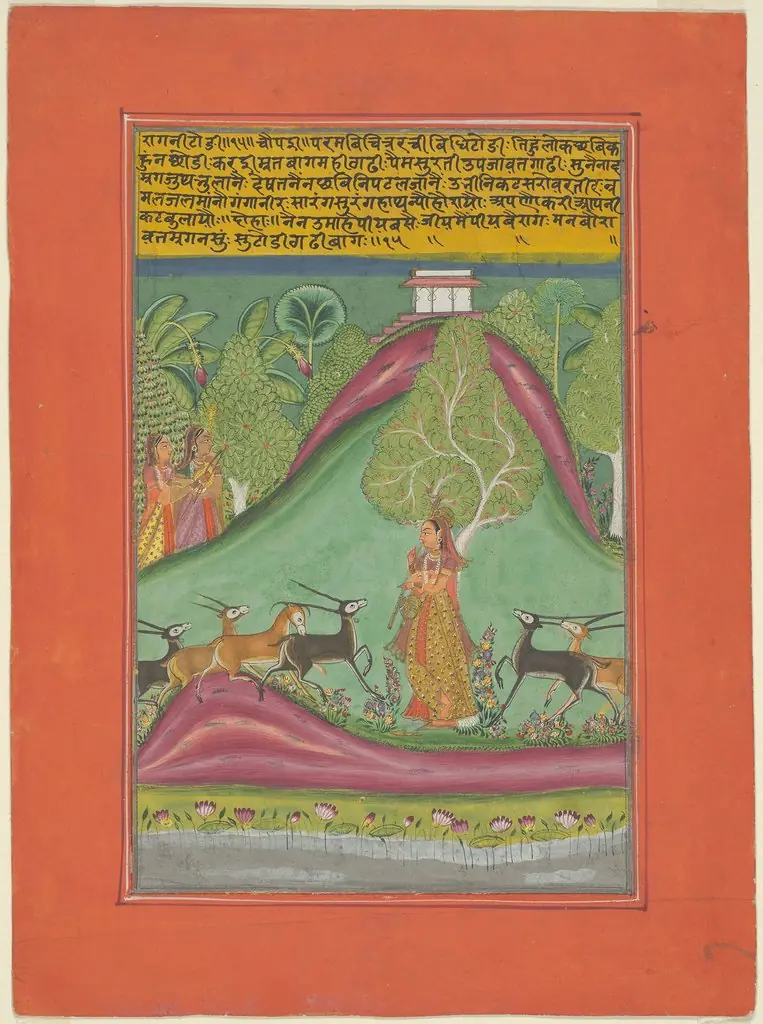 Ragini Todi, Page from a Jaipur Ragamala Set
 Untitled
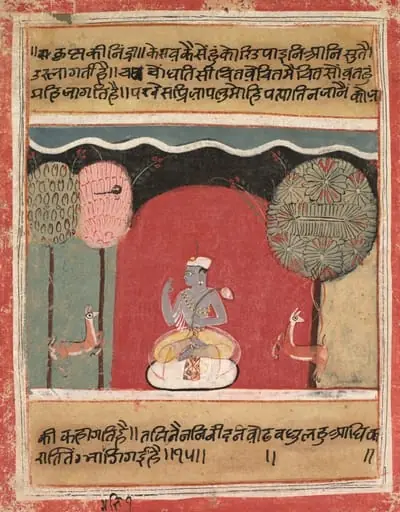 Krishna's Insomnia, Page from a Rasikapriya
 Untitled
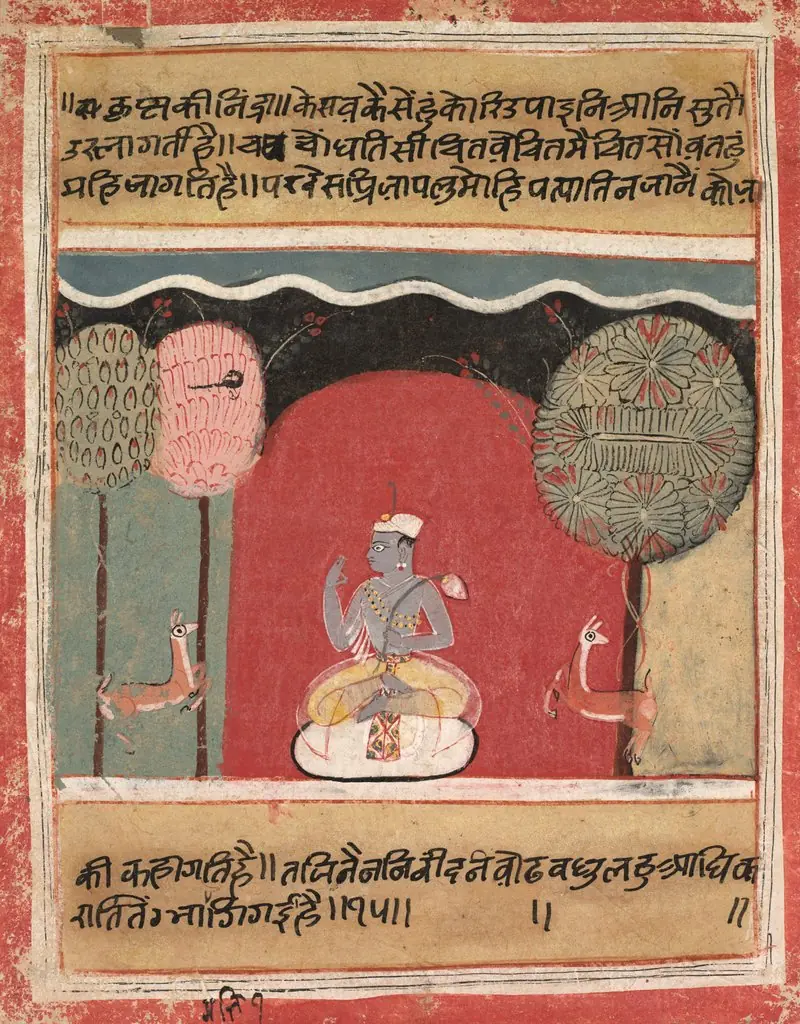 Krishna's Insomnia, Page from a Rasikapriya
 Untitled
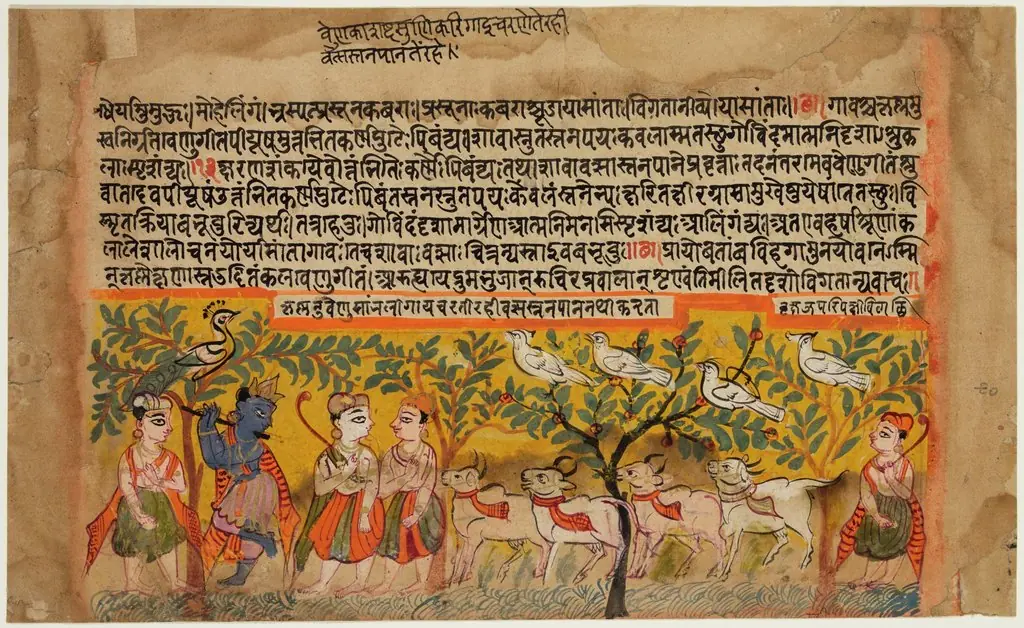 Krishna Fluting
 Untitled
 Worship of the Gods (2 of 17)
- Radha and Krishna