Artwork
Man Dhata in Yogi Position
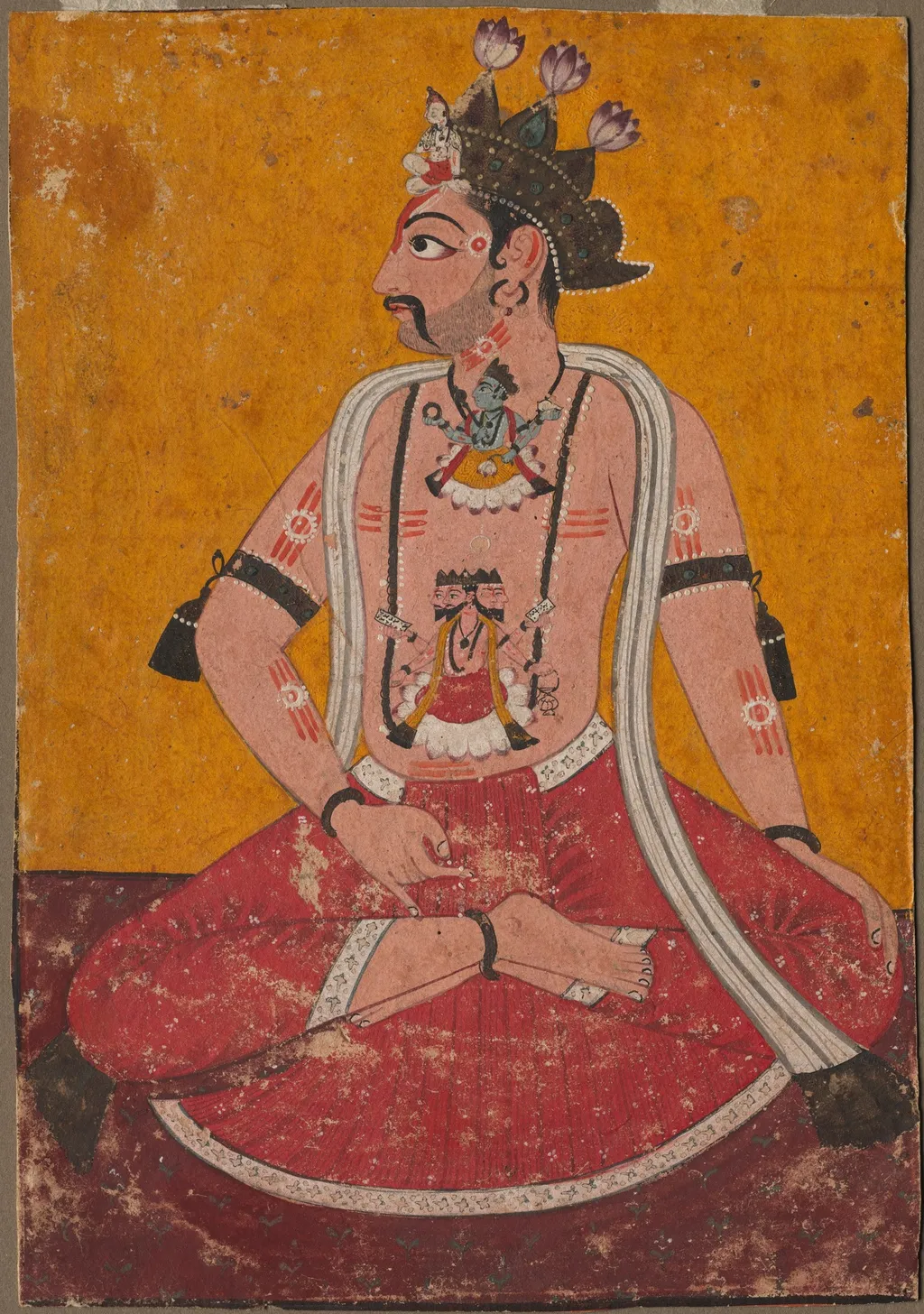
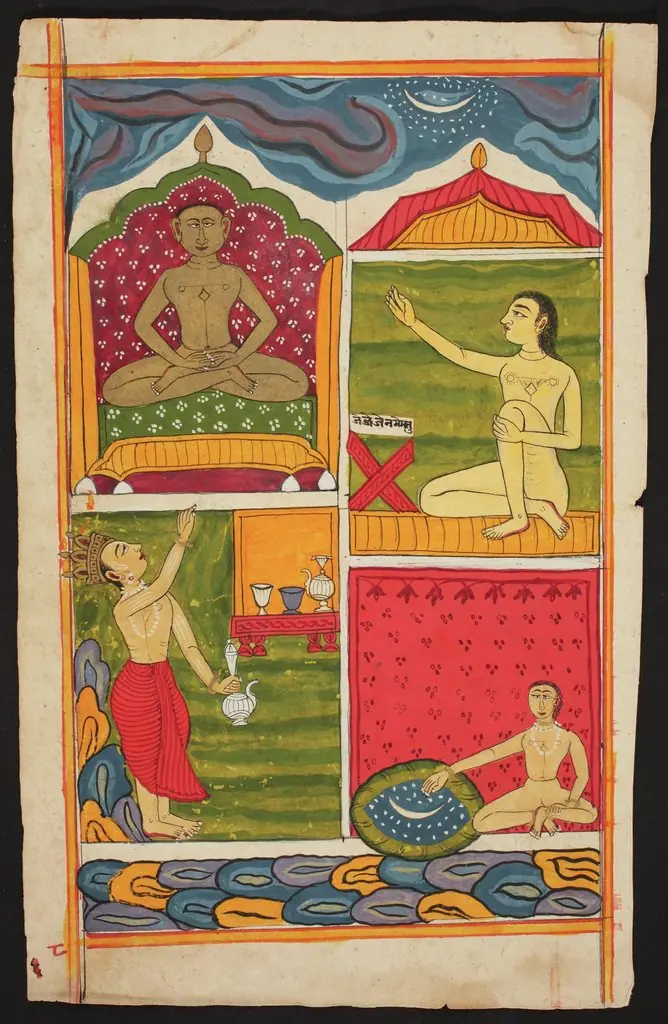
Man Dhata in Yogi Position is an unspecified painting. It dates from 1698 and is held in the collection of the Cleveland Museum of Art.
About this work
History & Provenance
No records survive identifying a patron, commissioner, or the circumstances of its creation, so the work’s origins remain obscure.
Man Dhata in Yogi Position is a painting dated to 1695, attributed to an unknown artist. It is classified as a painting. No records survive identifying a patron, commissioner, or the circumstances of its creation, so the work’s origins remain obscure.
The painting entered the Cleveland Museum of Art in 1966 as accession number 1966.27 and has remained in the museum’s collection since. Earlier ownership history is not documented in the available sources.
The painting Man Dhata in Yogi Position, dated to 1695, is held in the collection of the Cleveland Museum of Art in Cleveland. The work is cataloged under the accession number 1966.27. The attribution lists the artist as unknown. No specific exhibition history is recorded in the provided sources.
Overview
The work titled Man Dhata in Yogi Position is a painted panel depicting a seated male figure. He is shown with a tranquil expression and a faint smile, dressed in a red skirt and a white sleeveless garment trimmed with black armbands. A small, flower‑adorned headpiece crowns his head, and his hands rest lightly on his knees.
Subject & Meaning
The figure’s cross‑legged, relaxed pose corresponds to the yogi posture traditionally associated with meditation and spiritual discipline. The miniature scene painted on his chest, showing a rider on a creature, suggests an additional narrative or symbolic layer, though its specific significance remains uncertain.
Technique & Style
The composition is set against a uniform gold background, creating a flat, luminous field that emphasizes the central figure. The paint surface shows signs of wear along the edges, indicating age or handling. The use of vivid reds, stark whites, and contrasting black armbands highlights the figure’s attire and status.
Context
The depiction of a meditative male figure aligns with broader artistic traditions that portray ascetics, deities, or sages in contemplative poses. The incorporation of a small narrative scene on the chest echoes a practice of embedding secondary stories within a primary portrait, a feature observed in several regional painting schools.
Artist & collection

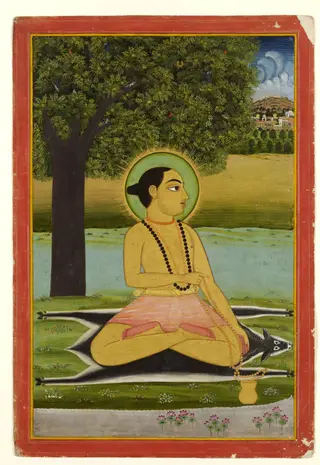 Holy man seated on a gazelle skin
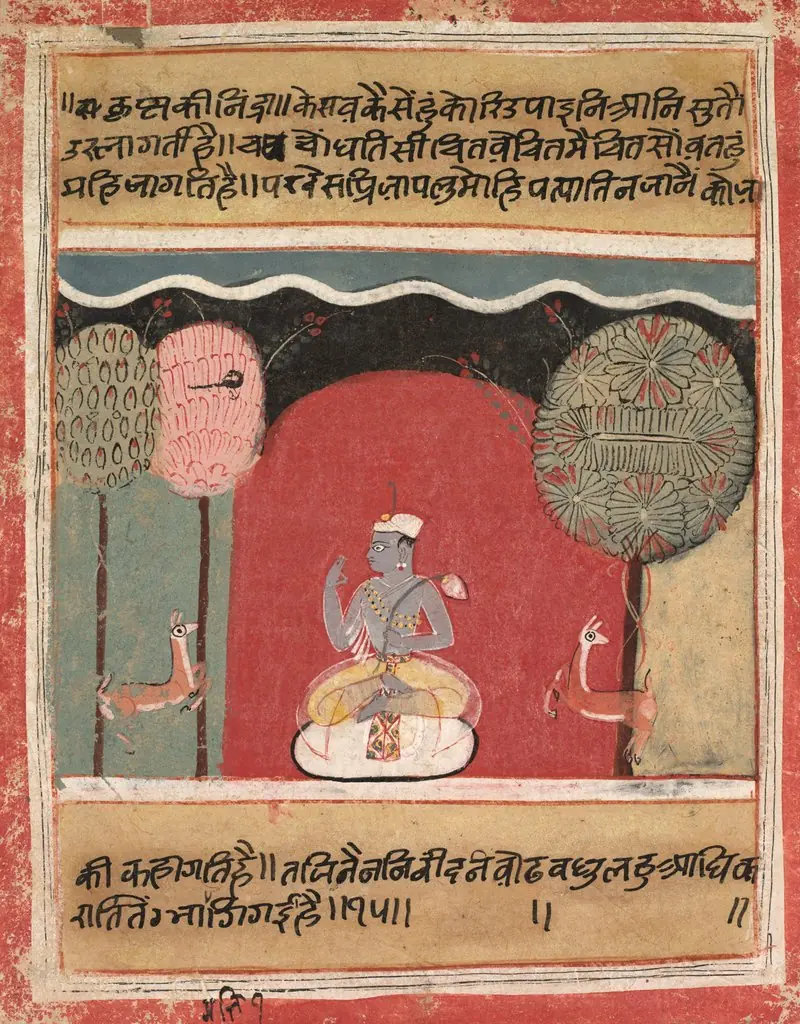 Krishna's Insomnia, Page from a Rasikapriya
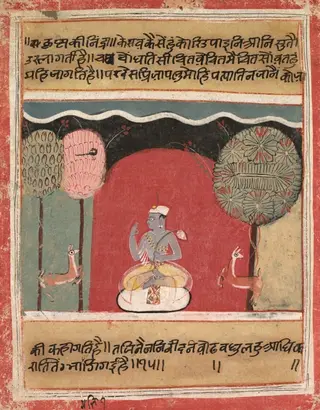 Krishna's Insomnia, Page from a Rasikapriya
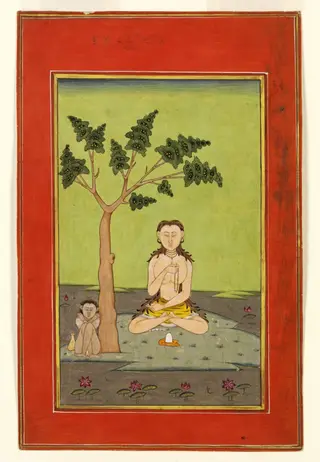 Devagandhari Ragini
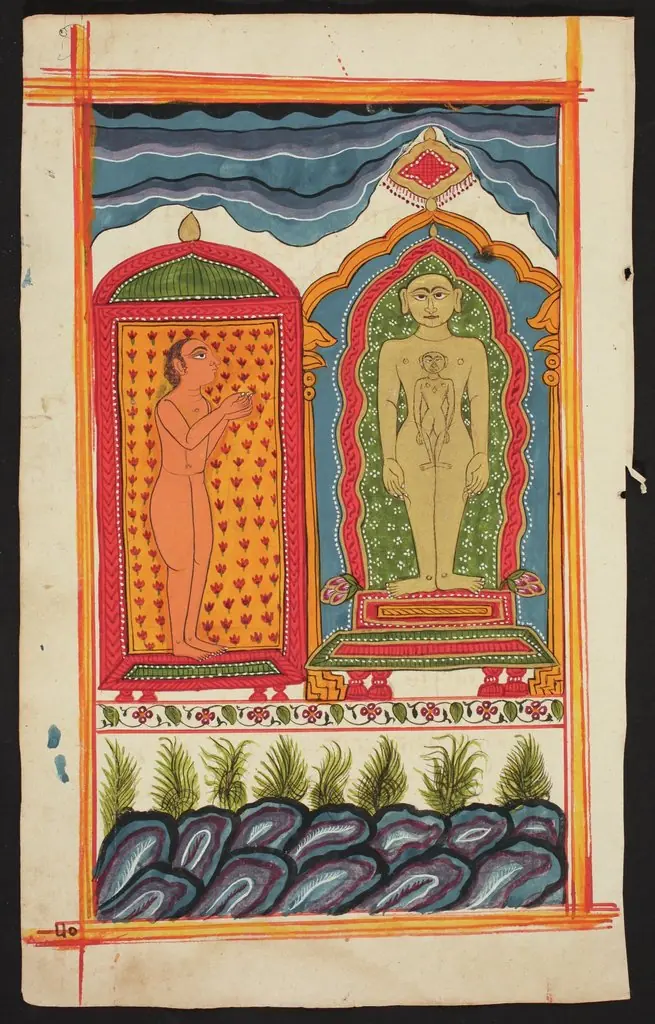 Folio from the Bhaktamara Stotra (“Hymn of the Immortal Devotee”)
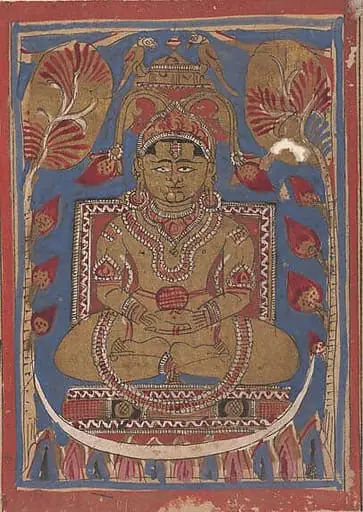 Untitled
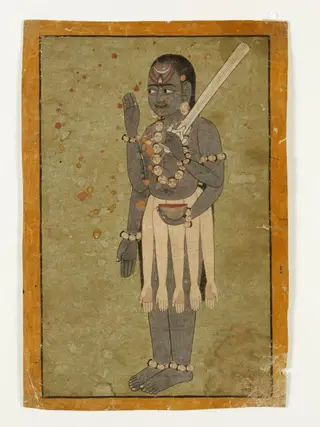 Bhairava
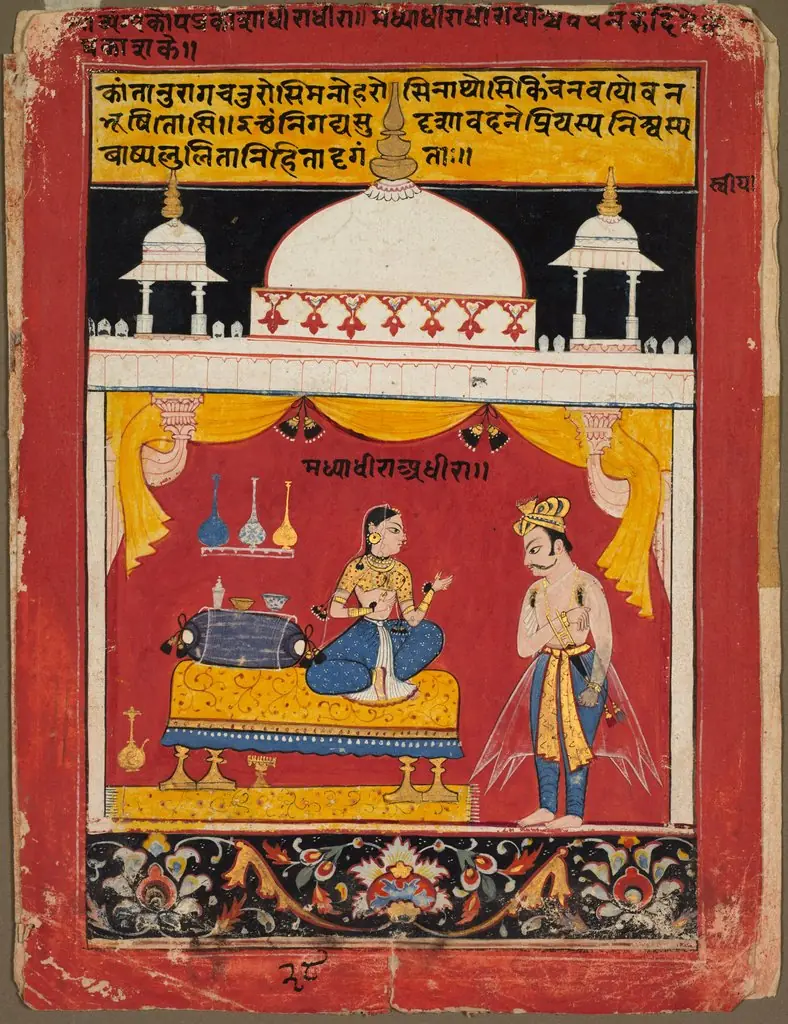 A Young, Angry Heroine, Folio 28 from a Rasamanjari
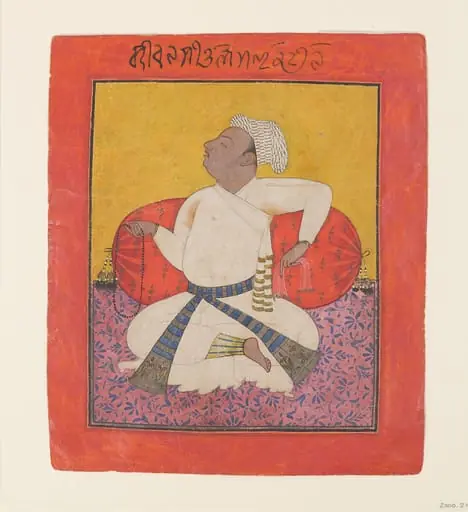 Untitled
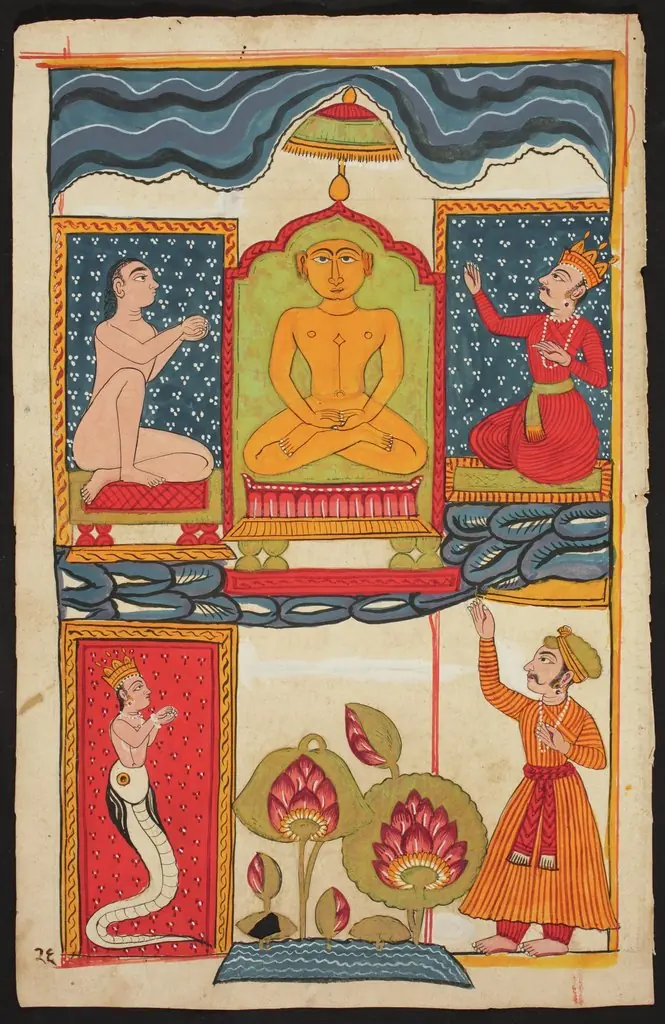 Folio from the Bhaktamara Stotra (“Hymn of the Immortal Devotee”)
 Folio from the Bhaktamara Stotra (“Hymn of the Immortal Devotee”)
- Man Dhata in Yogi Position