Artwork
Untitled
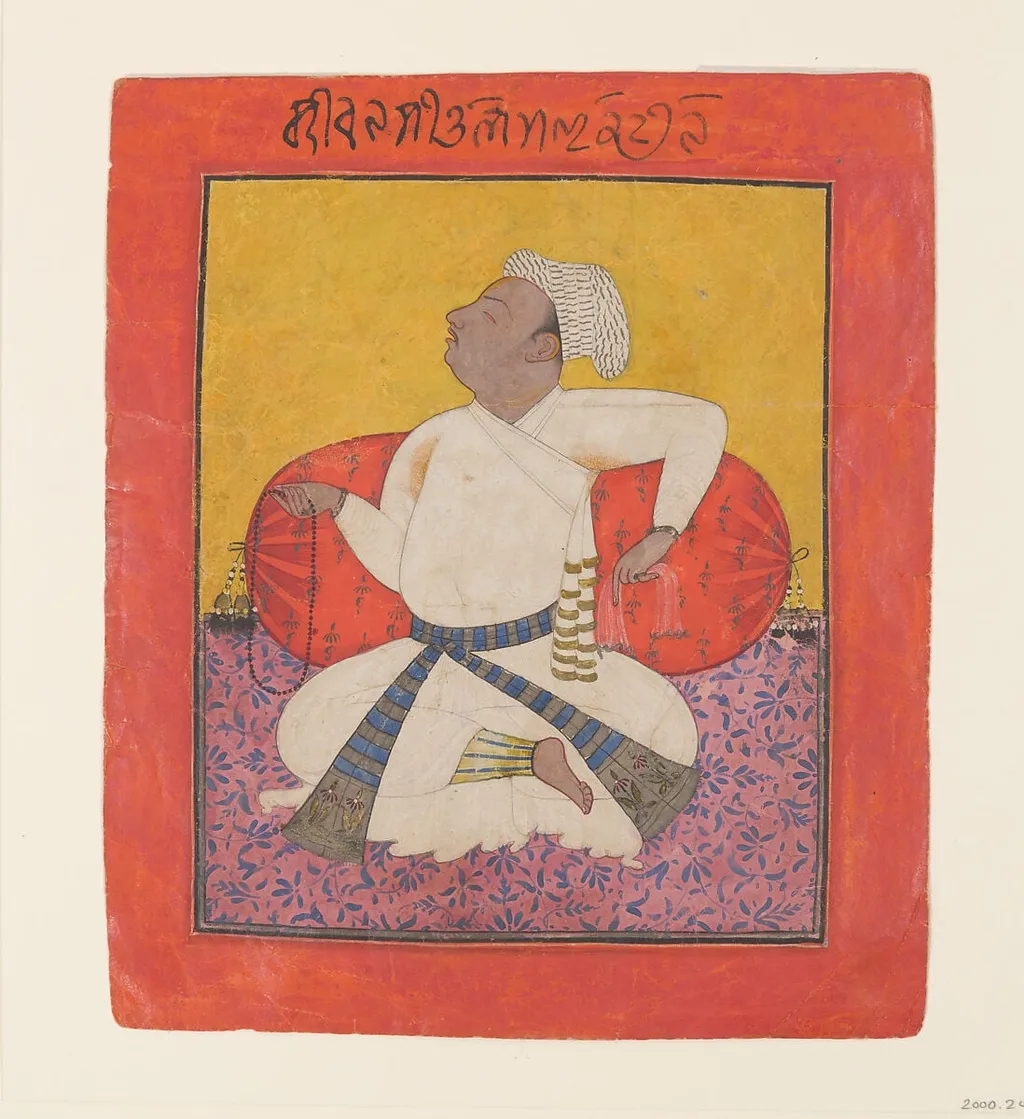
Untitled is a watercolor painting. It dates from 1690 and is held in the collection of the Metropolitan Museum of Art.
- Accession no.
- 2000.24
- Credit line
- Purchase, Cynthia Hazen Polsky Gift, 2000
About this work
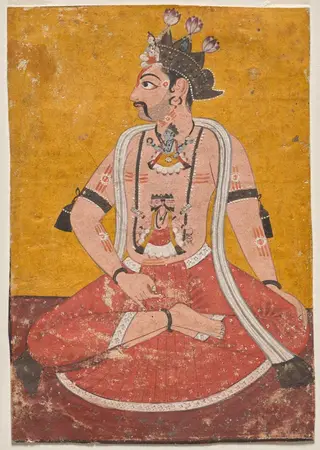
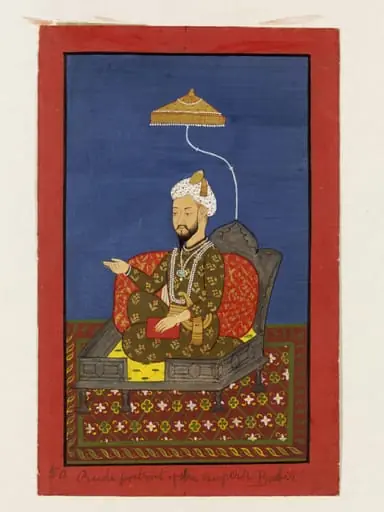
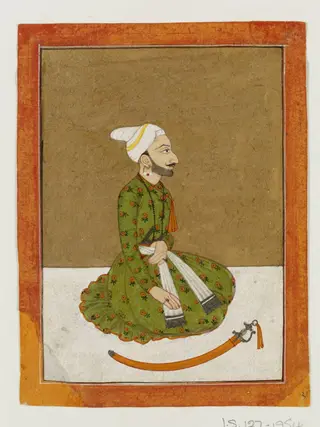
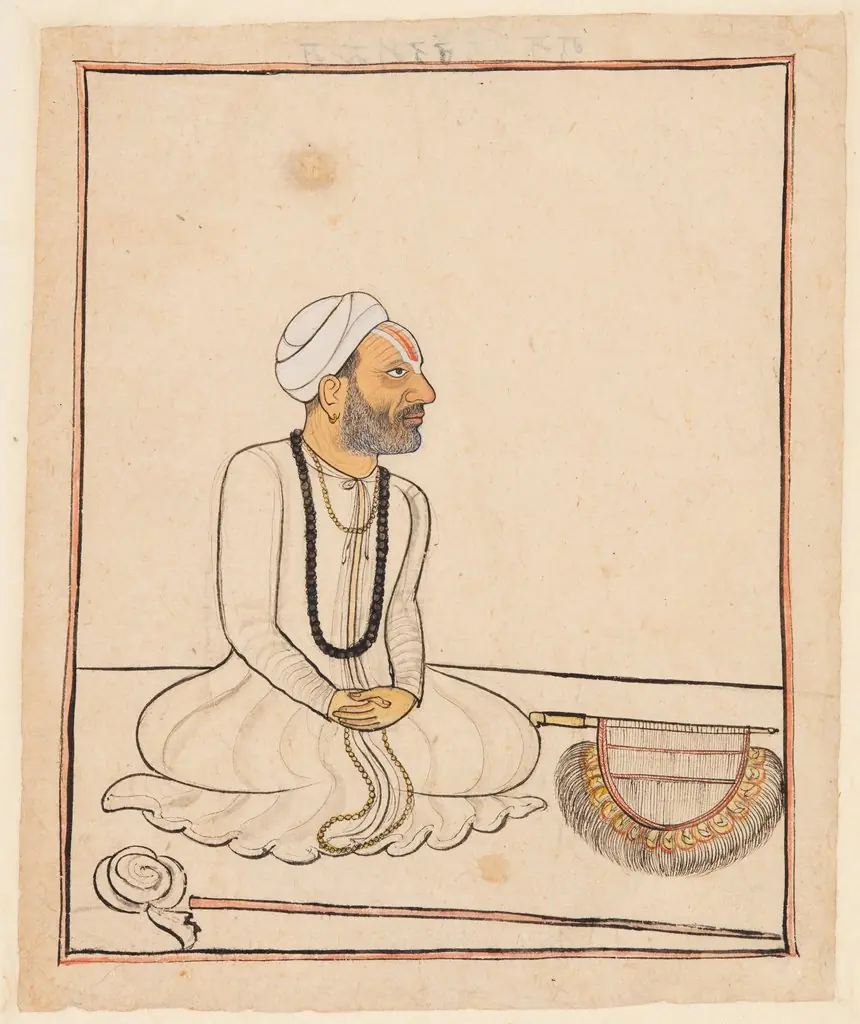
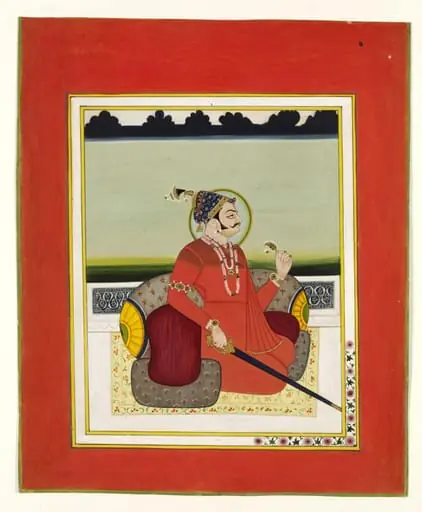
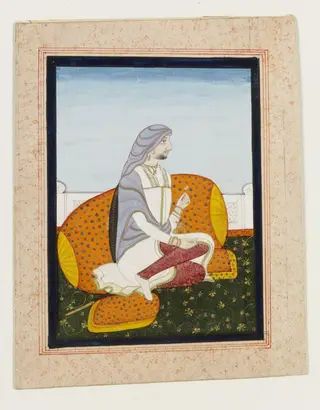
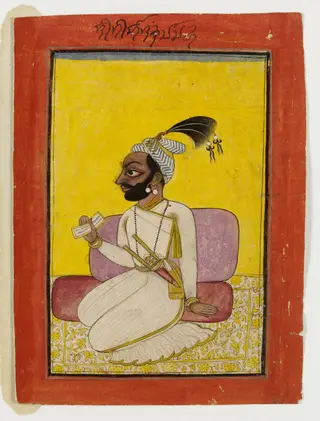
A man in a red turban sits cross-legged, holding a long string of prayer beads, his face calm and half in shadow. The paper glows with silver and deep blues. It comes from the Punjab Hills of northern India, around 1690, where artists often worked for royal courts on small, detailed pieces. The silver leaf has tarnished into a soft gray shimmer.
Subject & Meaning
The work is a portrait of a man, rendered in ink, opaque watercolor, and silver on paper, dated 1690 and attributed to an anonymous painter working in India.
The work is a portrait of a man, rendered in ink, opaque watercolor, and silver on paper, dated 1690 and attributed to an anonymous painter working in India. Beyond the sitter himself, the only specific subject element identified in the cataloguing is a rosary, which the figure is shown holding or wearing. In South Asian devotional portraiture of the late seventeenth century, a rosary (japamala) is a standard attribute signaling piety, prayer, and religious devotion, most often associated with Hindu or Sufi practice.
Its inclusion suggests the sitter is presented not merely as an individual likeness but as a person of faith, with the beads functioning as a visual marker of his spiritual identity. No further iconographic details or symbolic program are documented in the available records.
History & Provenance
Created in India in 1690, this ink, opaque watercolor, and silver portrait on paper was executed by an anonymous artist. The work, which depicts a man holding a rosary, is held in the collection of the Metropolitan Museum of Art. No details regarding its original commission, early ownership, or the chain of custody prior to the museum's acquisition are provided in the available records, and no exhibition history is documented.
Context
The painting, dated 1690 and attributed to an anonymous Indian artist, is recorded in the Metropolitan Museum of Art’s collection and has been discussed in scholarly literature as an example of early modern portraiture that blends indigenous iconography with European stylistic influences. Its depiction of a man holding a rosary has been cited in studies of religious visual culture in 17th‑century India, situating the work within broader dialogues on cross‑cultural artistic exchange. Classification as a portrait within the museum’s Paintings department underscores its significance for understanding anonymous artistic production in the region.
Legacy
The work’s inclusion in the Metropolitan Museum of Art’s collection has positioned it as a reference point for scholarship on 17th‑century Indian portraiture, influencing how researchers evaluate anonymous painting practices in the region. Its depiction of a man with a rosary, rendered in ink, opaque watercolor and silver, exemplifies the hybrid aesthetic that emerged under Mughal influence, and the piece is frequently cited in studies of cross‑cultural artistic exchange. Exhibition histories at the Met have brought the painting to broader public attention, reinforcing its reputation as a rare surviving example of early Indian portraiture and encouraging further inquiry into the workshop traditions of the period.
Overview
This untitled painting, executed with ink, opaque watercolor, and silver on paper, originated in the Punjab Hills of northern India around 1690. It portrays a figure seated cross-legged, engaged in prayer or meditation, holding a string of beads. The artwork is characterized by its rich palette, including deep blues, and the subtle gleam of silver, which has aged to impart a soft, grayish luminescence to the surface.
Technique & Style
The artist utilized ink and opaque watercolor on paper, further enriching the composition with silver applications. Originally, the silver leaf would have provided a bright, reflective quality, but over centuries, it has oxidized, resulting in a muted, grayish shimmer that now contributes to the painting's aged aesthetic. The work exemplifies the detailed and refined approach characteristic of small-scale court paintings from this era.
Artist & collection