Artwork
Man Seated in a European Chair Smoking a Margila Pipe, from a Kalighat album
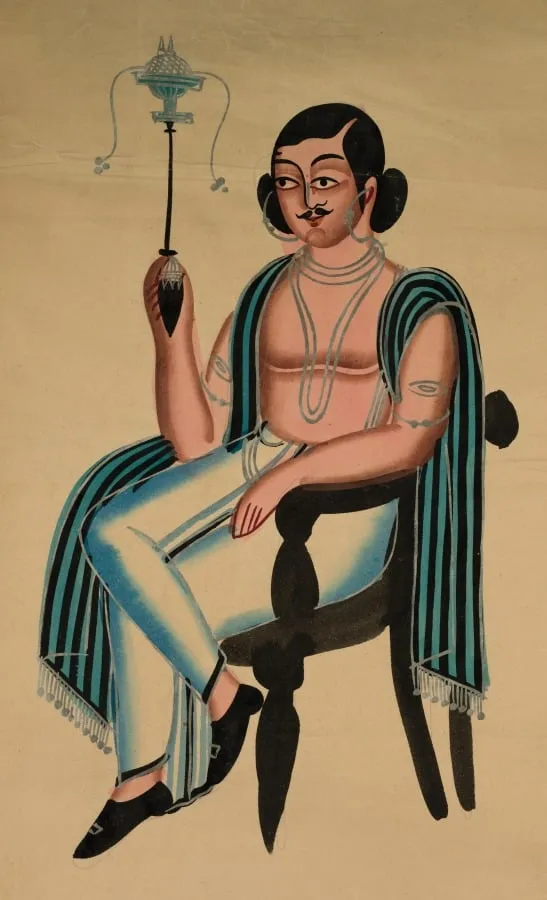
Man Seated in a European Chair Smoking a Margila Pipe, from a Kalighat album is an unspecified painting by the Patna School of Painting artist Unknown. It dates from 1880 and is held in the collection of the Cleveland Museum of Art.
- Accession no.
- 1984.221
- Credit line
- Gift of Mr. and Mrs. William E. Ward
About this work
Overview
The figure wears loose, striped trousers, a sleeveless top, and a draped cloth over one shoulder, with bare feet resting on the ground.
Created circa 1880, this watercolor on paper is a portrait from a Kalighat album, depicting a man seated in a European-style wooden chair while smoking a curved Margila pipe. The figure wears loose, striped trousers, a sleeveless top, and a draped cloth over one shoulder, with bare feet resting on the ground. His posture is relaxed, with one hand holding the pipe and the other resting on his knee.
The composition features a plain, unadorned background that isolates the subject, a characteristic technique of Kalighat painting that directs full attention to the figure's attire and demeanor. This work exemplifies the genre's engagement with colonial modernity, capturing the adoption of Western furniture and leisure habits by Indian subjects during the late 19th century. Produced by an anonymous artist in the Kalighat bazaar area of Kolkata, the piece reflects the school's shift from traditional mythological themes to contemporary social observation.
The vibrant yet economical use of color and bold outlines demonstrates the distinctive aesthetic of the Kalighat patuas, who adapted their craft to meet the demands of a changing urban market.
Subject & Meaning
The sitter appears as a casual, perhaps everyday individual, engaged in the act of smoking a margila pipe. The juxtaposition of traditional Indian attire with a European-style chair suggests a commentary on cultural exchange, highlighting the coexistence of indigenous customs and colonial influences within a single domestic scene.
Technique & Style
Executed in the Kalighat school’s characteristic flatness and bold outlines, the painting employs a limited palette and simplified forms. The figure’s clothing is rendered with linear patterns, while the chair’s perspective is rendered with a more realistic, three‑dimensional treatment, creating a deliberate visual tension between indigenous folk aesthetics and Western realism.
Context
Kalighat paintings emerged in 19th‑century Bengal as popular prints sold near the Kalighat temple, often portraying contemporary life and social satire. This piece reflects the genre’s interest in documenting everyday subjects while simultaneously engaging with the visual language introduced by British colonial presence, embodying the hybrid visual culture of the period.
Artist & collection









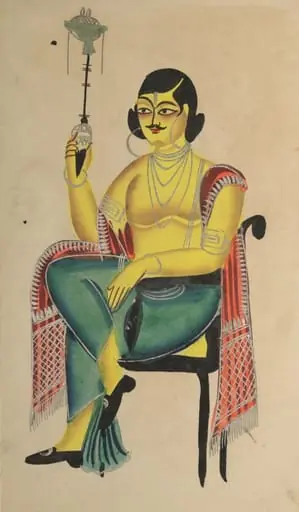 English Babu (Native Indian Clerk) Holding a Hookah
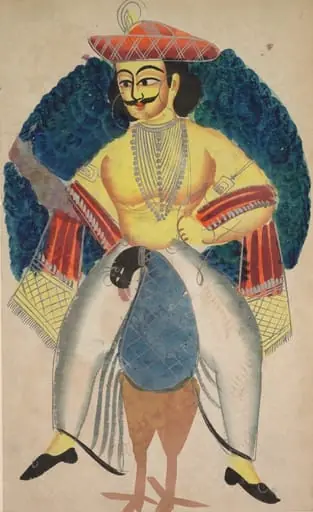 Kartikeya, from a Kalighat album
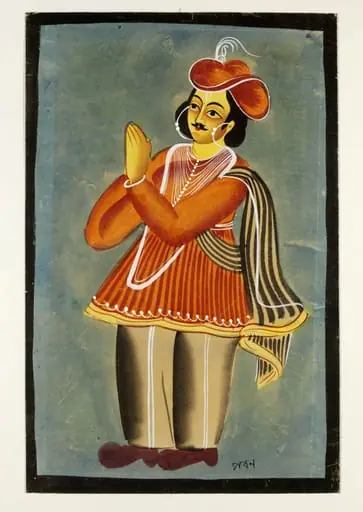 Pavana
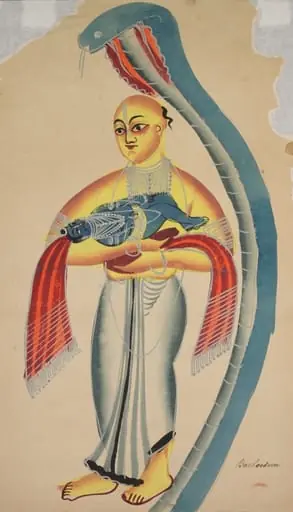 A Serpent Protects Vasudeva Taking His Infant Son Krishna to Safety
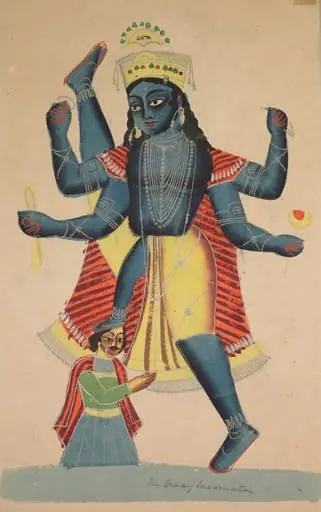 Trivikramapada (Three Steps of Vishnu)
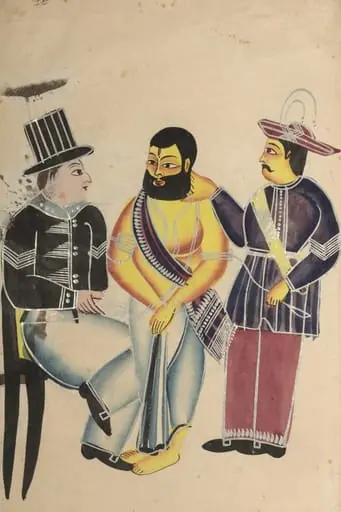 Jailer Receiving the Mahant of Tarakeshwar in Prison
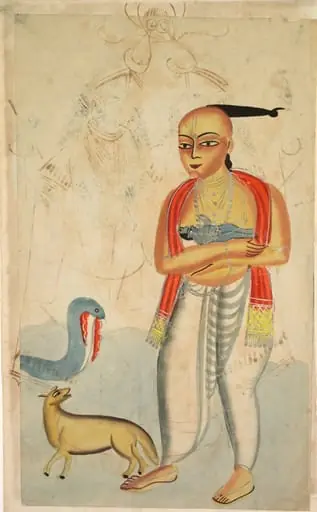 Vasudeva (Krishna's Father) Fleeing with Krishna Encounters a Cobra and a Jackal (verso), from a Kalighat album
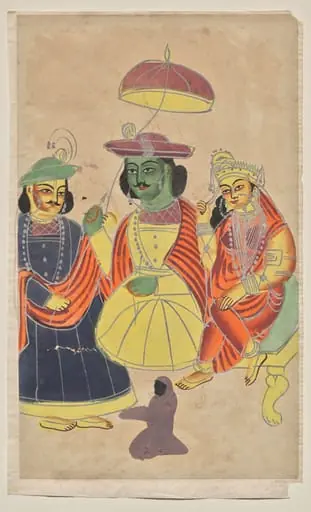 Rama and Sita enthroned with Lakshmana and Hanuman attending, from a Kalighat album
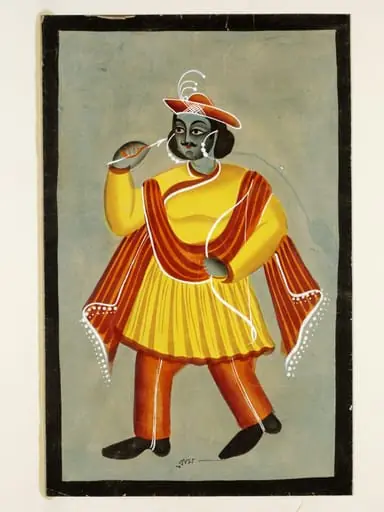 Rama
Rama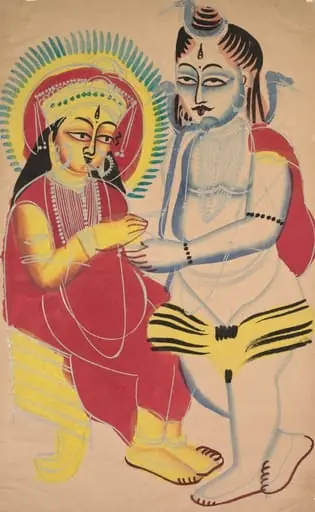 Annapurna and Shiva
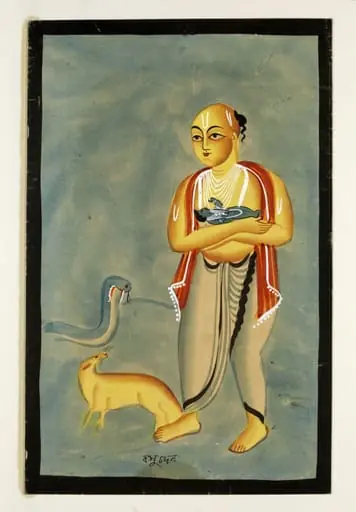 Vasudeva and Krishna
- Man Seated in a European Chair Smoking a Margila Pipe, from a Kalighat album