Artwork
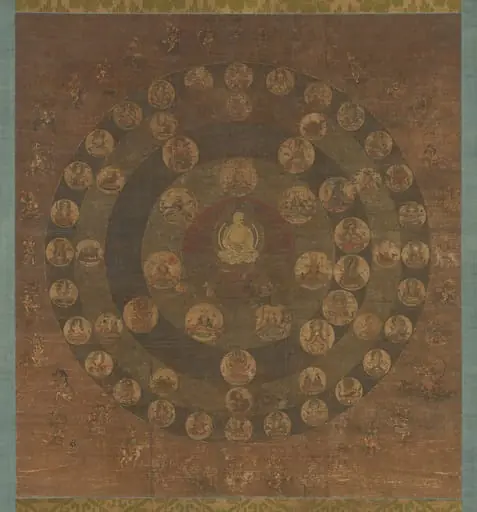
八字文殊曼荼羅図|Mandala of the Bodhisattva Monju (Manjushri) of the Eight Syllables
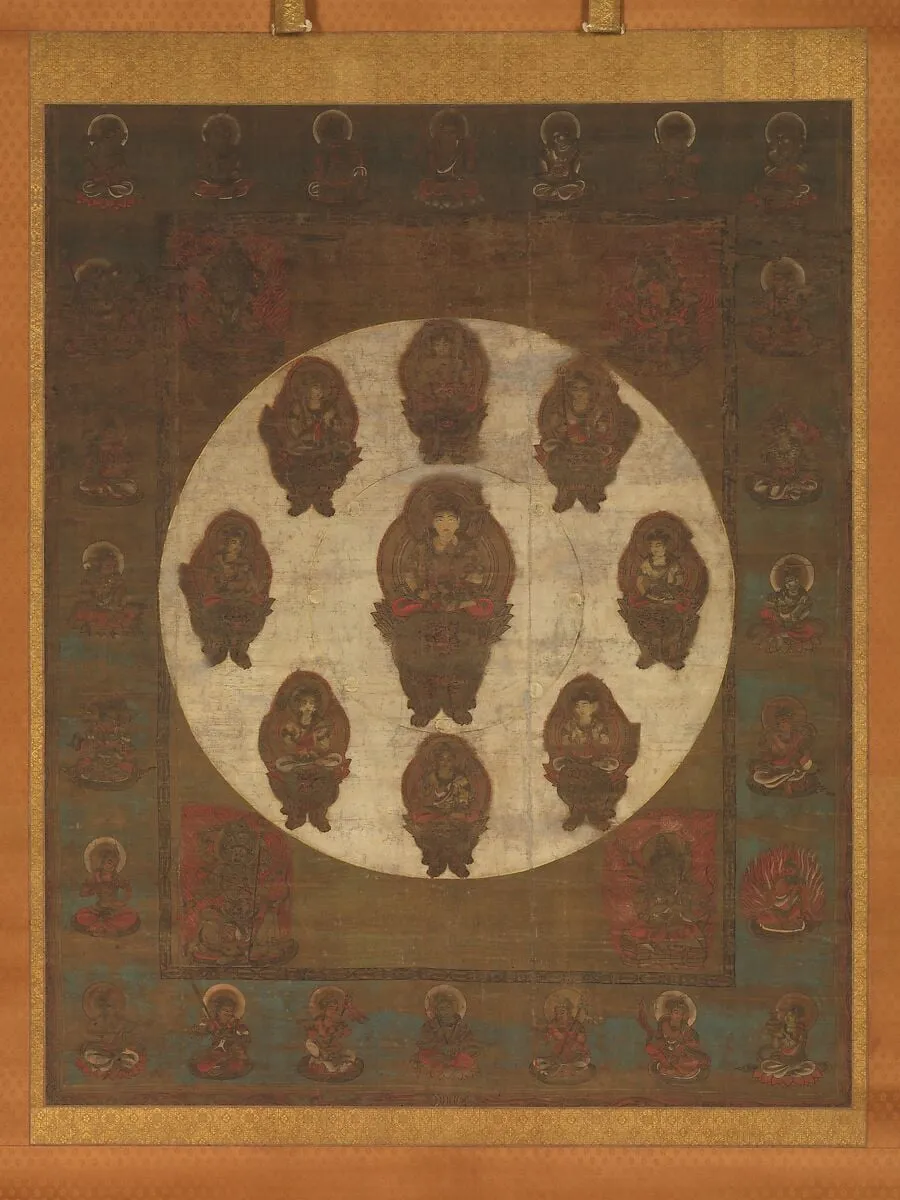
八字文殊曼荼羅図|Mandala of the Bodhisattva Monju (Manjushri) of the Eight Syllables is an ink painting. It dates from 1249 and is held in the collection of the Metropolitan Museum of Art. This artwork, titled Mandala of the Bodhisattva Monju (Manjushri) of the Eight Syllables, is a hanging scroll painting.
About this work
Subject & Meaning
Created in 1249 in Japan, this hanging scroll depicts the Bodhisattva Mañjuśrī (Monju) as the central figure within a Buddhist mandala structure.
Created in 1249 in Japan, this hanging scroll depicts the Bodhisattva Mañjuśrī (Monju) as the central figure within a Buddhist mandala structure. The work represents the esoteric concept of the 'Eight Syllables,' a specific mantra associated with the wisdom deity, serving as a visual focus for meditation and ritual practice. As a religious painting utilizing ink, color, and gold leaf on silk, the composition illustrates Mañjuśrī alongside other divine figures, embodying core Buddhist principles.
The iconography functions as a sacred map, guiding the viewer toward the realization of wisdom inherent in the Eight Syllables doctrine. This artwork serves as a tangible representation of the deity's power and the philosophical tenets of the tradition it honors.
Technique & Style
The work is executed as a hanging scroll, with ink, mineral pigments, and gold leaf applied to a silk support. The medium consists of ink outlines, colored washes, and areas of gold and gold leaf that highlight the mandala’s eight syllables and surrounding deities. No details about the painting’s handling or current condition are provided in the sources, and the sources do not elaborate on its formal or stylistic qualities beyond its identification as a religious painting dated 1249.
History & Provenance
The Mandala of the Bodhisattva Monju (Manjushri) of the Eight Syllables is dated to 1249, placing its creation in the Kamakura period of Japan, where the work was made. The painting is executed on silk as a hanging scroll using ink, color, gold, and gold leaf, and is attributed to an anonymous painter. It is currently held in the collection of the Metropolitan Museum of Art.
The available records do not document the original commission, an earlier ownership chain, or a specific provenance history prior to its accession at the Metropolitan Museum of Art.
Legacy
The hanging scroll dated 1249, titled 八字文殊曼荼羅図|Mandala of the Bodhisattva Monju (Manjushri) of the Eight Syllables, is preserved in the Metropolitan Museum of Art, where its status as a rare Kamakura‑period Buddhist mandala has made it a reference point for scholars studying eight‑syllable mantra iconography. Its attribution to an anonymous Japanese painter and the depiction of Mañjuśrī alongside Buddha and other bodhisattvas underscore its ritual function and artistic significance. The work’s inclusion in a major Western collection has contributed to sustained academic attention, influencing subsequent research on East Asian esoteric visual culture.
Overview
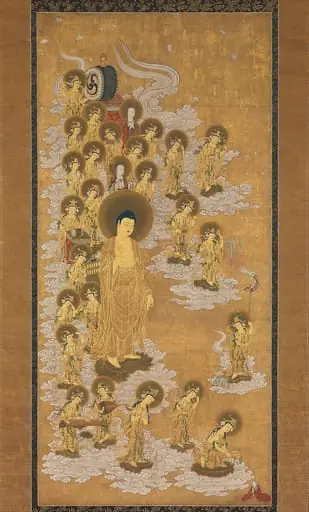
This artwork, titled Mandala of the Bodhisattva Monju (Manjushri) of the Eight Syllables, is a hanging scroll painting. It depicts a complex sacred diagram, known as a mandala, rendered with vibrant colors and shimmering gold. The central figure, Monju, is surrounded by numerous smaller forms and symbols, all contained within a prominent golden circular design. This piece served as a visual aid for spiritual practice within Buddhist traditions.
Artist & collection

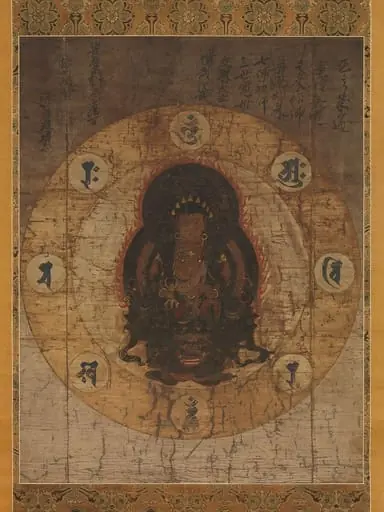
- 八字文殊菩薩像|Monju Bosatsu with Eight Sacred Sanskrit Syllables
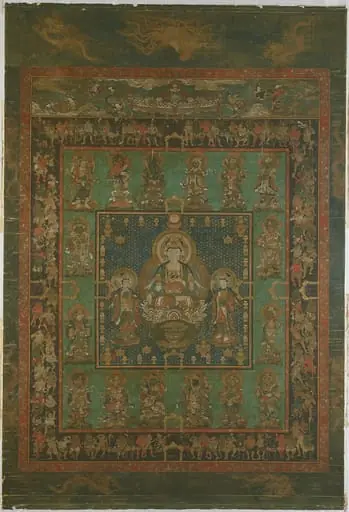 般若菩薩曼荼羅図|Mandala of the Bodhisattva Hannya (Prajnaparamita)
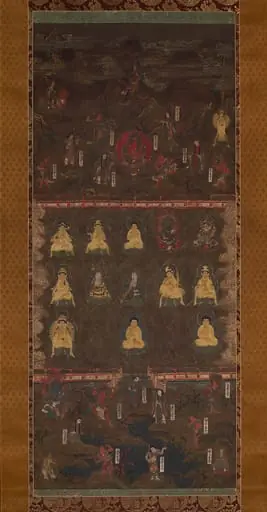 熊野曼茶羅図|Mandala of Kumano Shrine
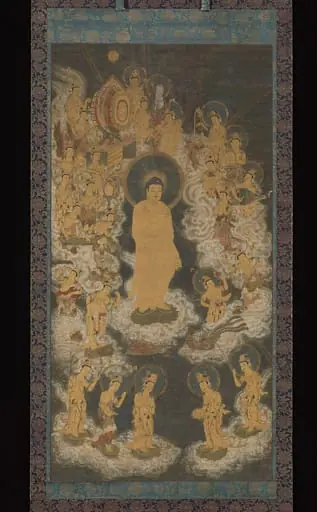 阿弥陀聖衆来迎図 |Welcoming Descent of Amida and Bodhisattvas
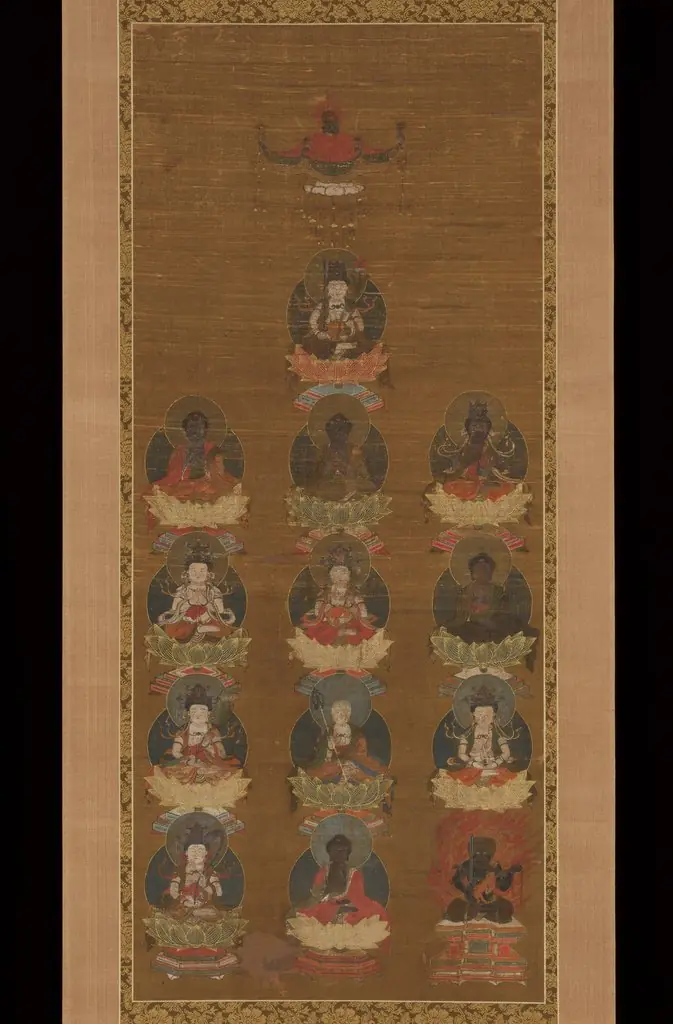 Mandala of the Thirteen Buddhas (Jūsan butsu mandara)
 阿弥陀二十五菩薩来迎図|Welcoming Descent of Amida Buddha and Twenty-five Bodhisattvas