Artwork
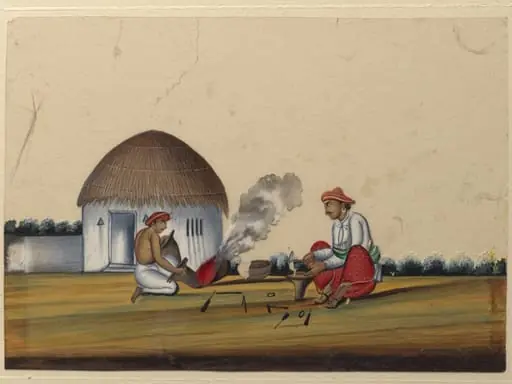
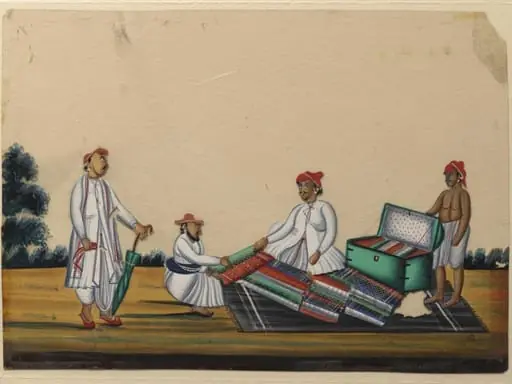
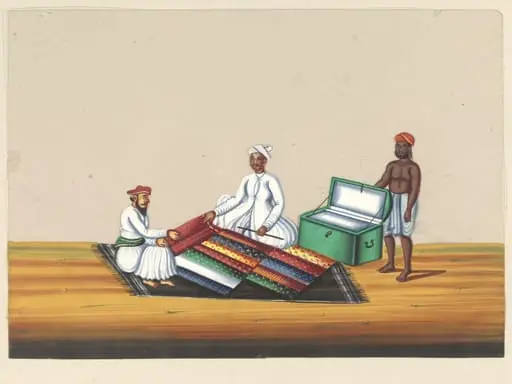
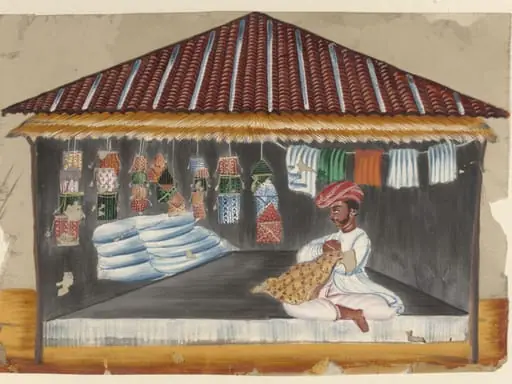
One of ten paintings of occupations and one of buildings.
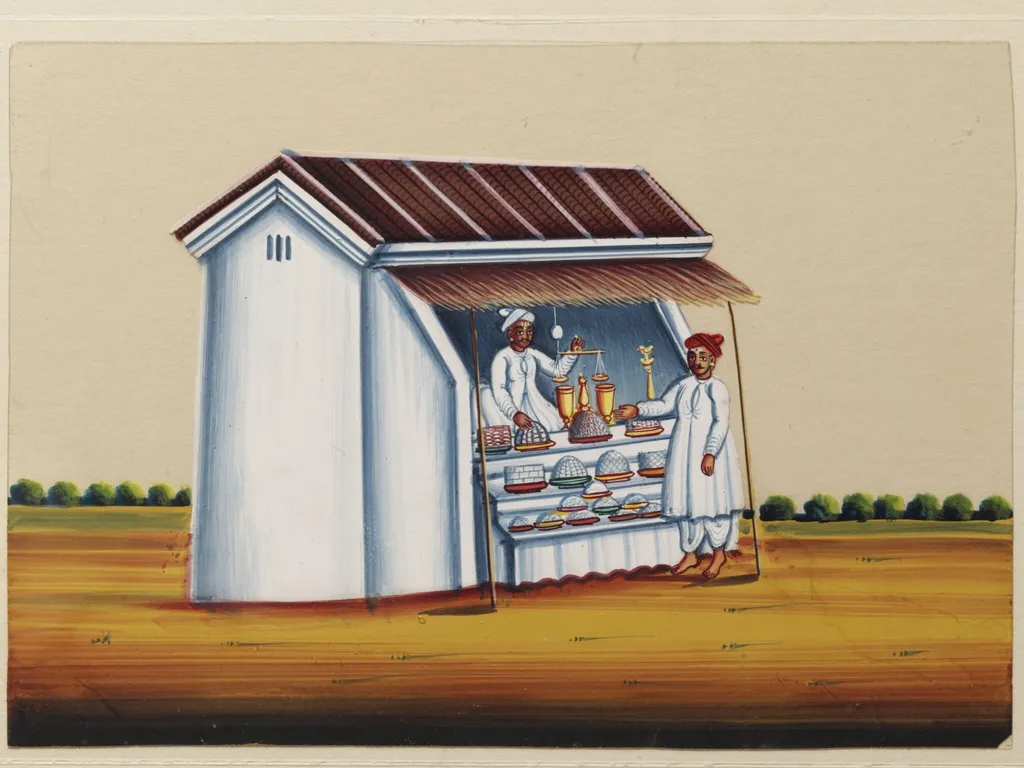
One of ten paintings of occupations and one of buildings. is a gouache painting by the Impressionist artist Unknown. It dates from 1870 and is held in the collection of the Victoria and Albert Museum. This gouache painting on mica is one of ten works depicting daily trades and urban architecture.
About this work
Overview
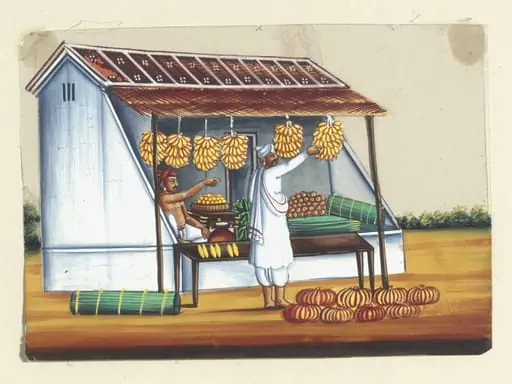
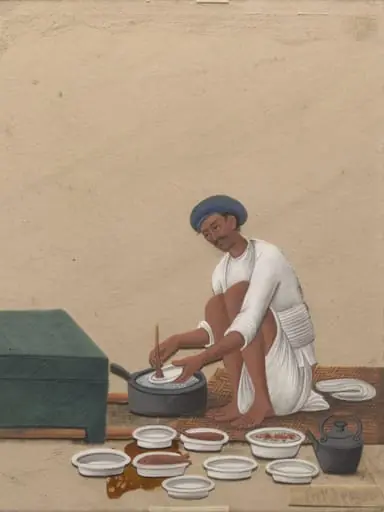
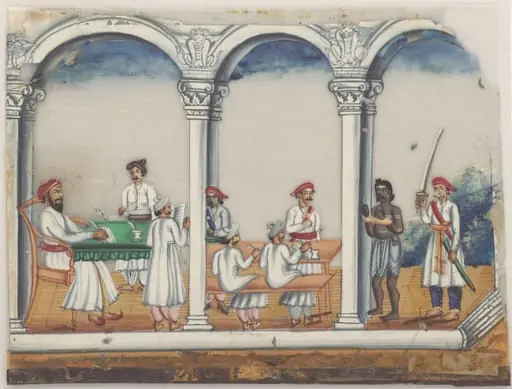
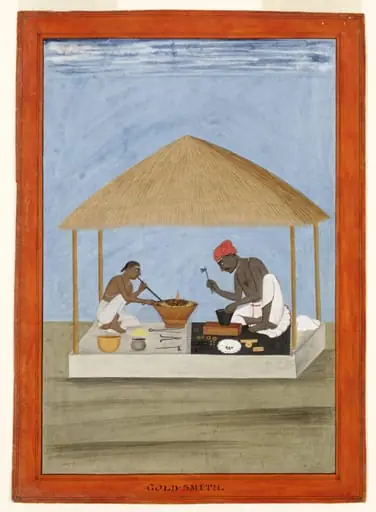
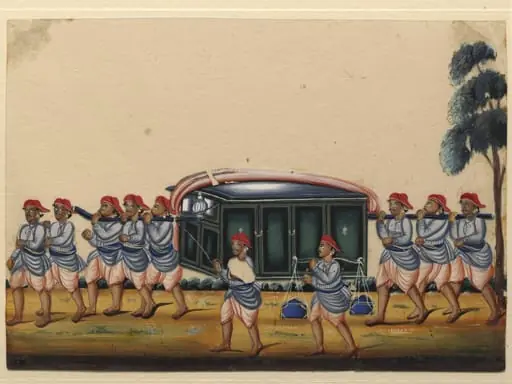
This gouache painting on mica is one of ten works depicting daily trades and urban architecture. It captures a sweetmeat-seller at his stall, rendered with fine detail against a reflective surface that enhances the vibrancy of pigments. The medium’s luminous quality suits the colorful confections on display, emphasizing texture and light in a compact, intimate format.
Subject & Meaning
The scene centers on a vendor offering traditional sweets, surrounded by jars, baskets, and stacked treats. His traditional attire and the arrangement of goods suggest a specific regional commerce, likely tied to local festivals or daily rituals. The focus on a single artisan underscores the dignity of skilled labor, presenting commerce as a quiet, orderly part of urban life.
Technique & Style
Gouache, an opaque water-based paint, was applied in layered strokes on thin sheets of mica, a naturally reflective mineral. This technique allowed for vivid, saturated colors and fine linear detail, ideal for capturing the glossy surfaces of candies and the woven textures of baskets. The small scale invites close viewing, rewarding attention to subtle brushwork and material contrast.
History & Provenance
Created as part of a series documenting occupational life, the painting likely originated in late 18th- or early 19th-century India, where such commissions were common among regional courts and colonial collectors. Its preservation on mica, a durable support, helped it survive transport and changing ownership, though its exact provenance before modern institutional acquisition remains undocumented.
Context
These paintings emerged during a period when local artisans documented everyday life for both domestic and foreign audiences. The series functioned as ethnographic records, aligning with broader trends in South Asian visual culture that valued precision over idealization. The sweetmeat-seller’s depiction reflects a society where food vendors occupied visible, respected roles in public space.
Legacy
As part of a rare surviving group of occupational paintings, this work contributes to the study of pre-colonial and colonial visual documentation. Its use of mica and gouache highlights regional material practices distinct from European traditions. Today, it serves as a reference for understanding the visual language of labor and commerce in early modern South Asia.
Artist & collection