Artwork
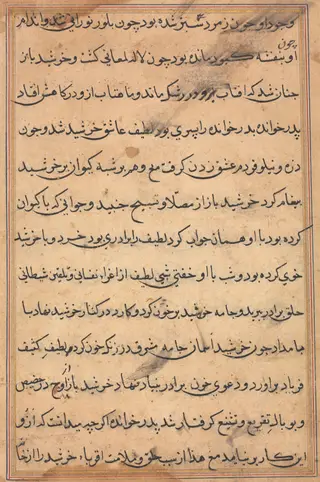
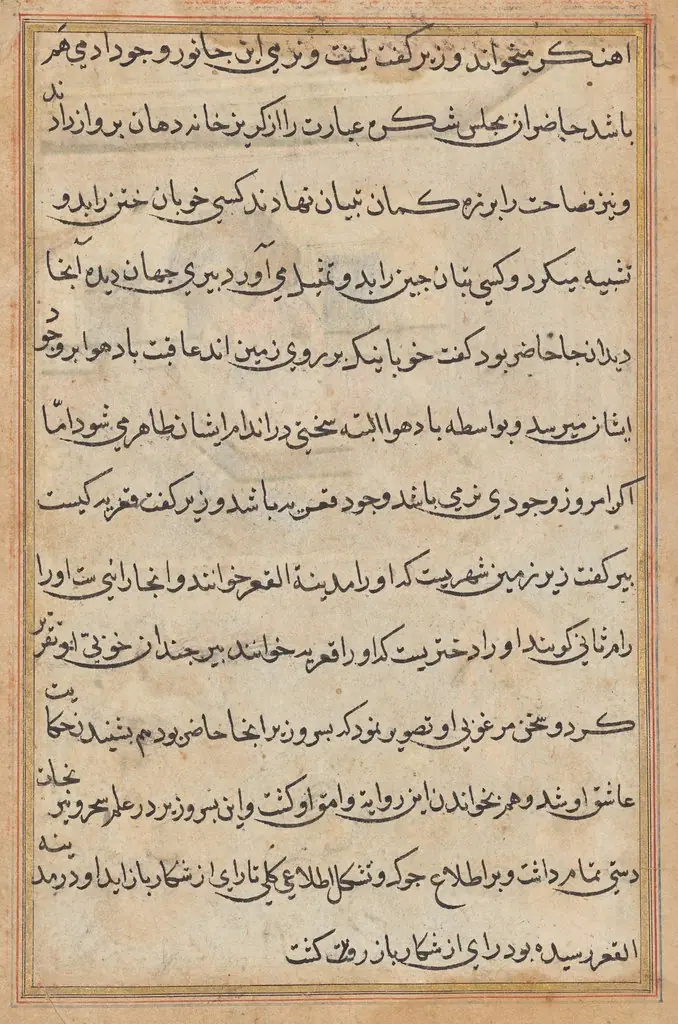
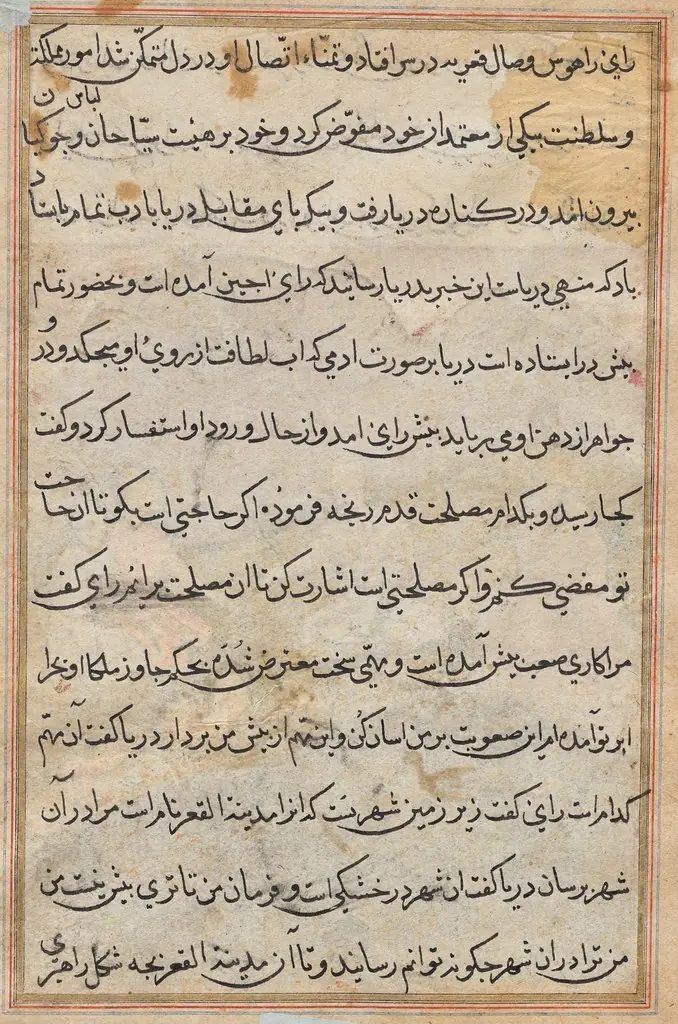
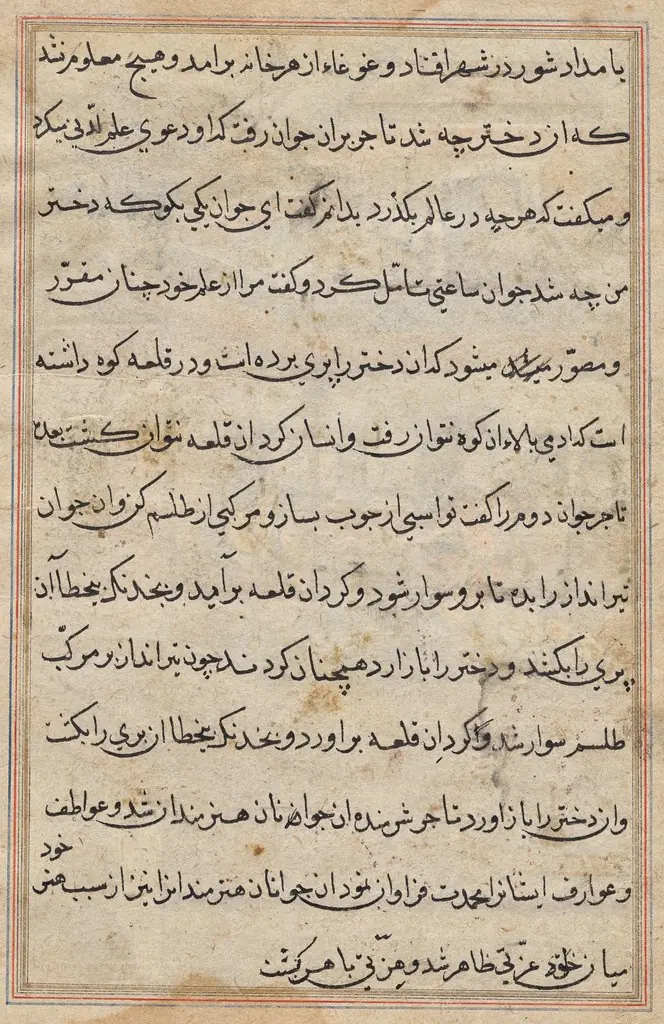
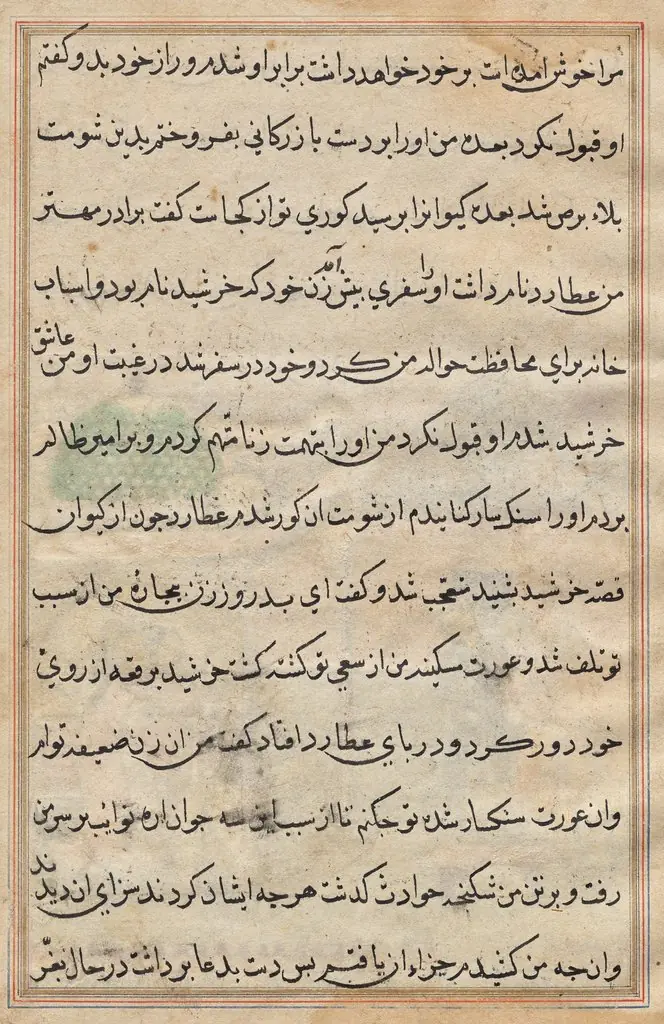
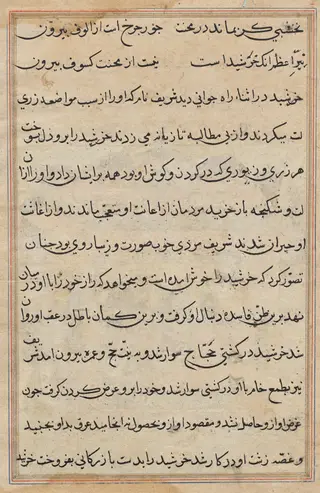
Page from Tales of a Parrot (Tuti-nama): text page
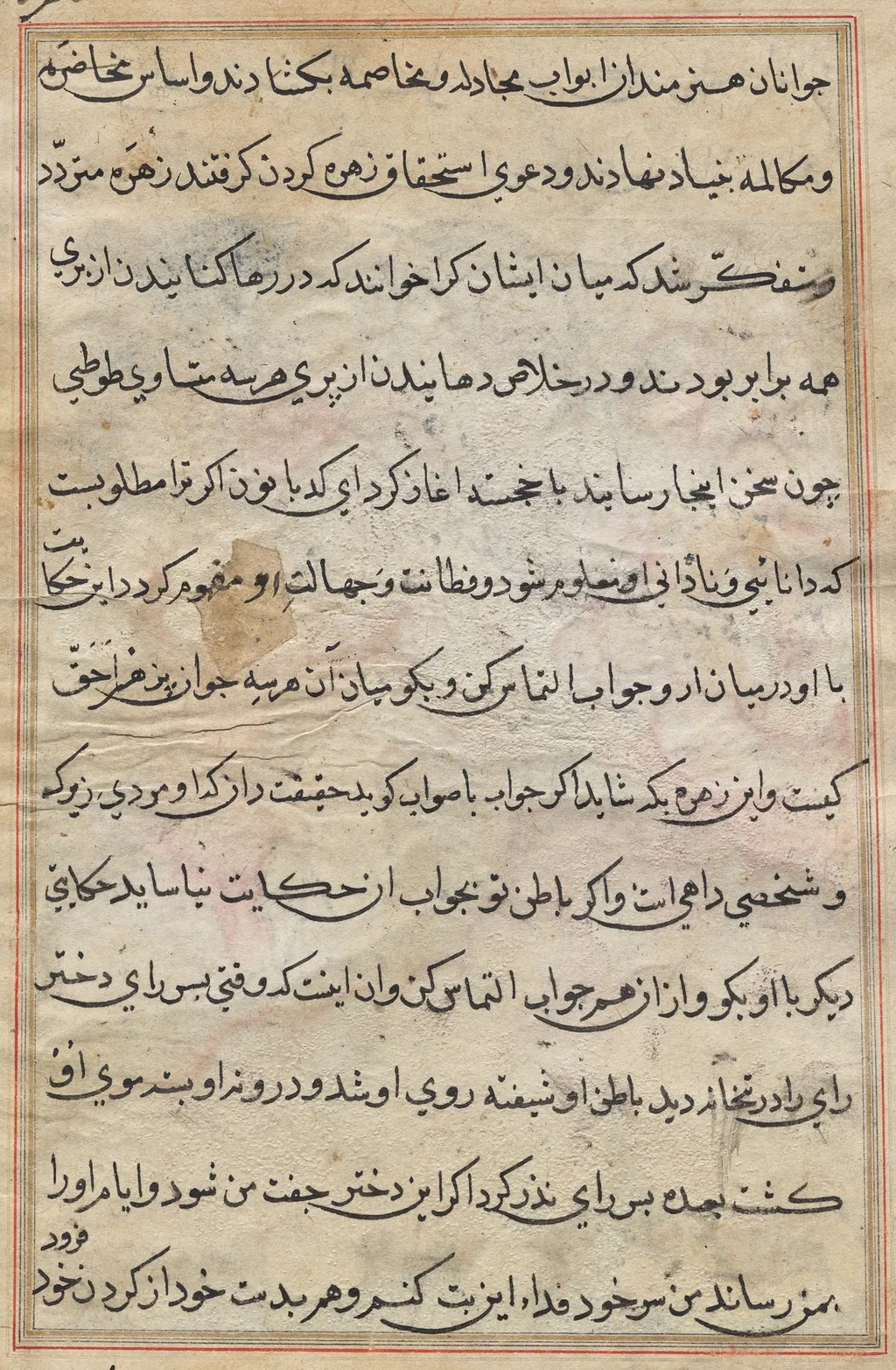
Page from Tales of a Parrot (Tuti-nama): text page is an unspecified painting. It dates from 1560 and is held in the collection of the Cleveland Museum of Art.
About this work
History & Provenance
It formed part of the illustrated Tuti-nama manuscript, though no specific commission or patron is recorded in the sources.
The text page from the Tales of a Parrot (Tuti-nama) was created circa 1560 in the Mughal Empire by an unknown artist. It formed part of the illustrated Tuti-nama manuscript, though no specific commission or patron is recorded in the sources. Prior to entering a museum collection, its ownership history is undocumented.
The page is now held by the Cleveland Museum of Art, where it bears the accession number 1962.279.226.b, indicating it entered the museum’s holdings in 1962.
Context
The page originates from a 1560 manuscript produced in the Mughal Empire, reflecting the courtly literary tradition of the period. It is attributed to an anonymous artist whose work circulates in collections such as the Cleveland Museum of Art, indicating broader scholarly interest in early South Asian manuscript illumination. The piece is cataloged as a painting within the Tuti-nama narrative tradition, underscoring its significance in the study of manuscript art and its reception among historians.
Legacy
The miniature text page from the Tuti-nama, produced in the Mughal Empire around 1560, established a visual language of narrative illustration that later Persian and Indian manuscript traditions adapted and expanded. Its compositional strategies and didactic function influenced subsequent illustrated moral and mystical texts across South Asia, ensuring the work’s structural model remained a reference point for later manuscript production.
The piece is held in the Cleveland Museum of Art, where it is catalogued as part of the museum’s collection of Mughal paintings.
Overview
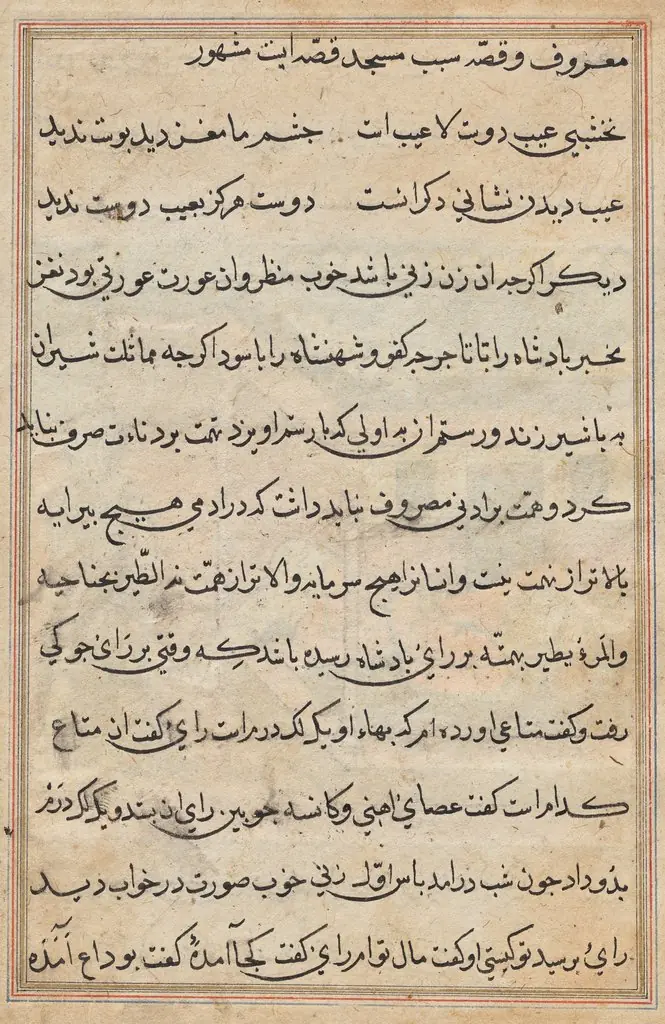
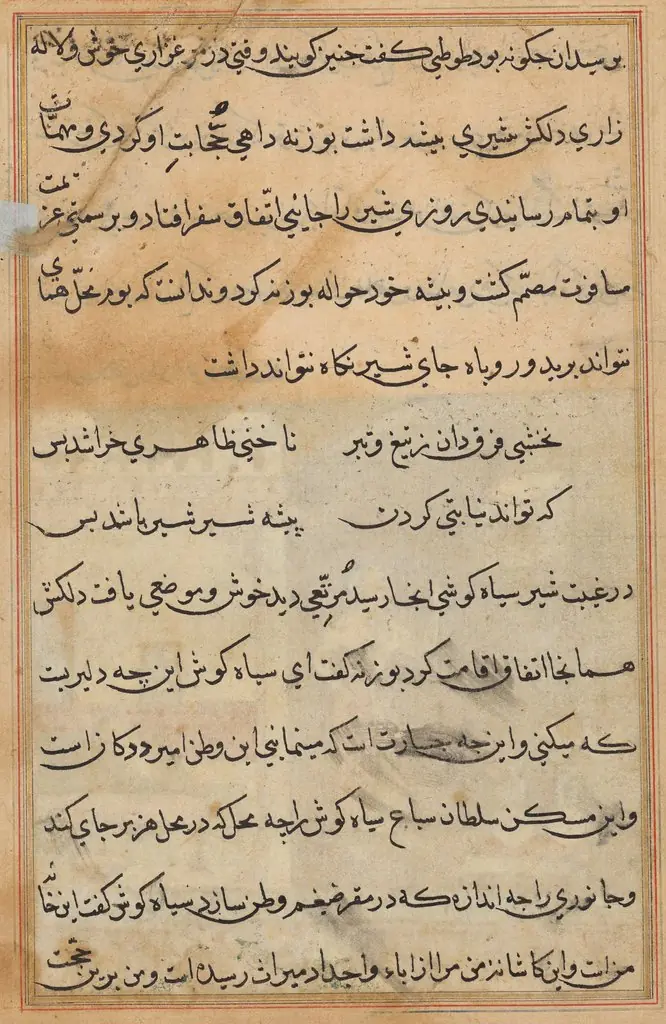
This manuscript leaf, part of the illustrated work known as Tales of a Parrot (Tuti‑nama), consists of a single paper page covered in dense black calligraphic script. The surface is lightly yellowed with a narrow red border framing its edges, and minor wear marks indicate age and handling.
Subject & Meaning
The text, arranged in orderly rows, forms part of a narrative intended for a patron named Prince Salim. While the specific story on this page is not provided, the Tuti‑nama tradition typically conveys moral or romantic tales drawn from Persian literary sources.
Technique & Style
The script is rendered in a fine, uniform hand characteristic of Persian courtly manuscripts, using black ink on paper. The red marginal line serves both decorative and protective functions, a common feature in early modern Persian book production.
Artist & collection

 Page from Tales of a Parrot (Tuti-nama): text page
 Page from Tales of a Parrot (Tuti-nama): text page
 Page from Tales of a Parrot (Tuti-nama): text page
 Tuti-Nama (Tales of a Parrot)
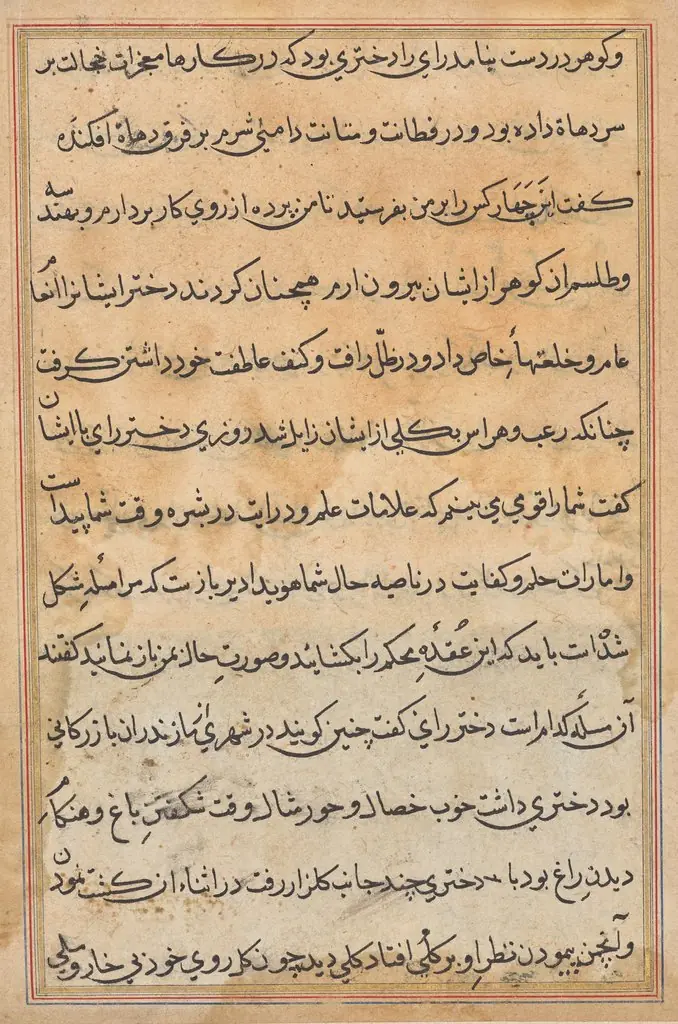 Page from Tales of a Parrot (Tuti-nama): text page
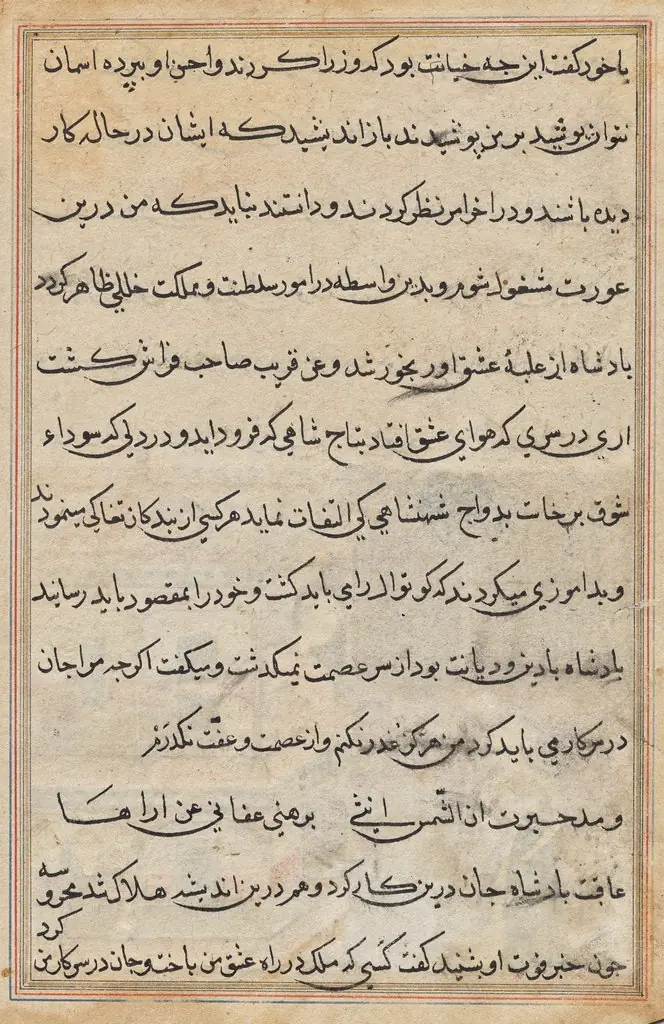 Page from Tales of a Parrot (Tuti-nama): text page
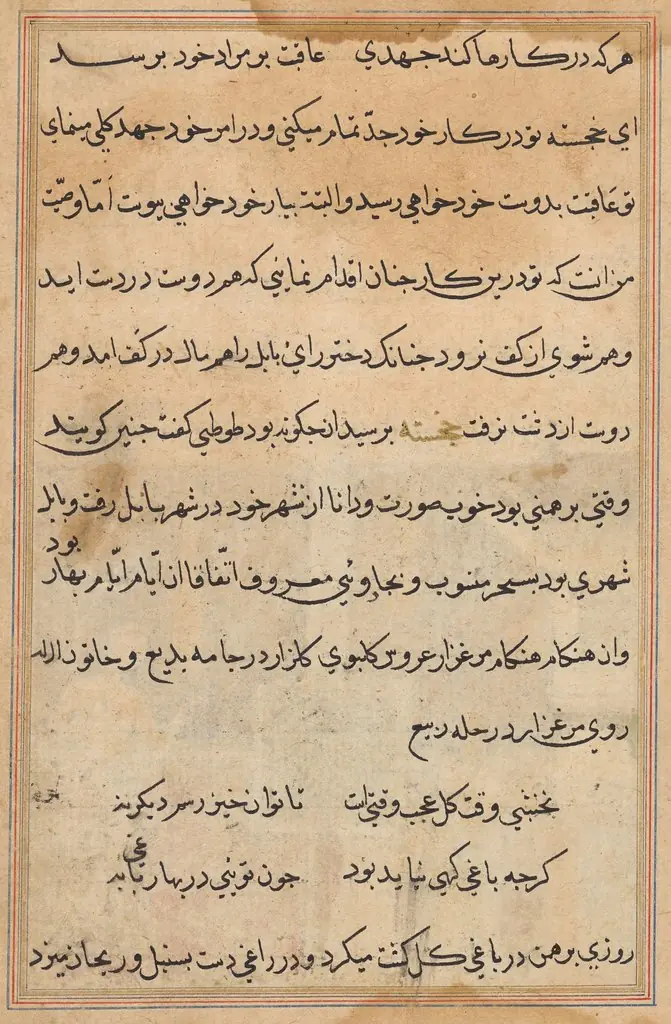 Page from Tales of a Parrot (Tuti-nama): text page
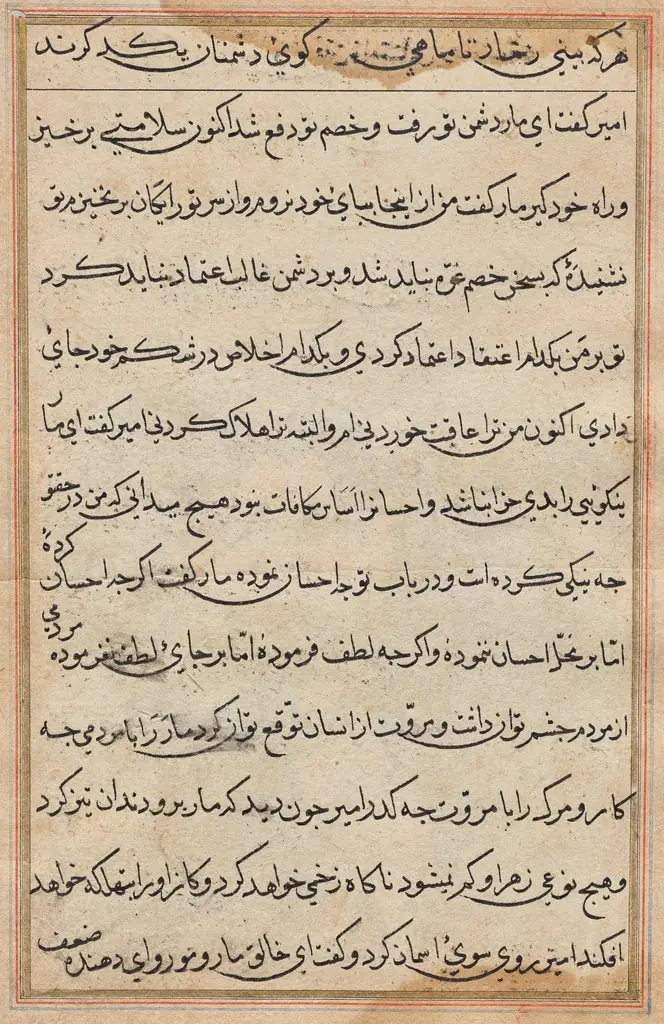 Page from Tales of a Parrot (Tuti-nama): text page
 Page from Tales of a Parrot (Tuti-nama): text page