Artwork
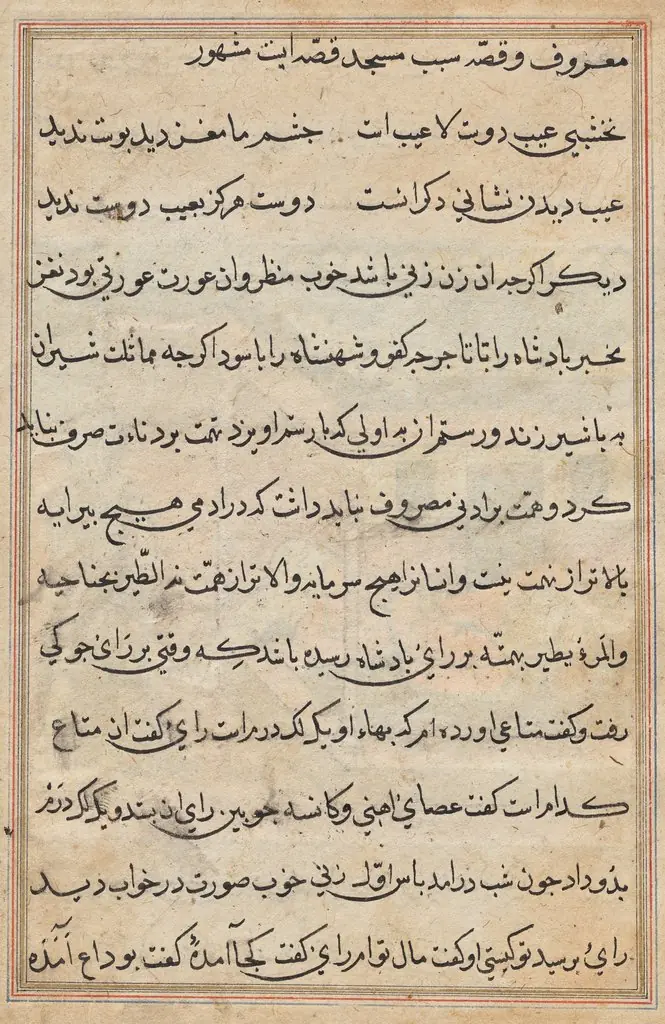
Page from Tales of a Parrot (Tuti-nama): text page
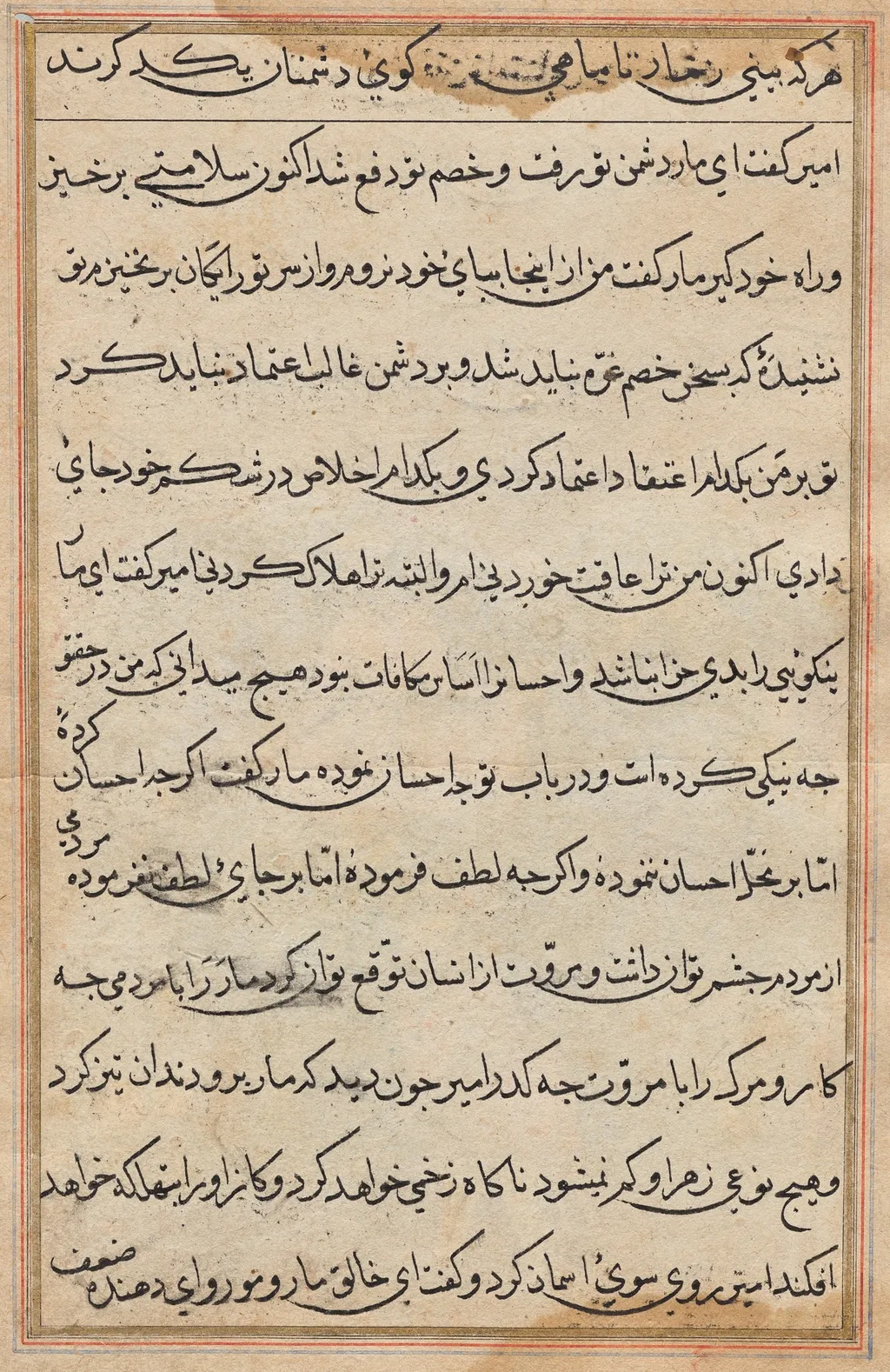
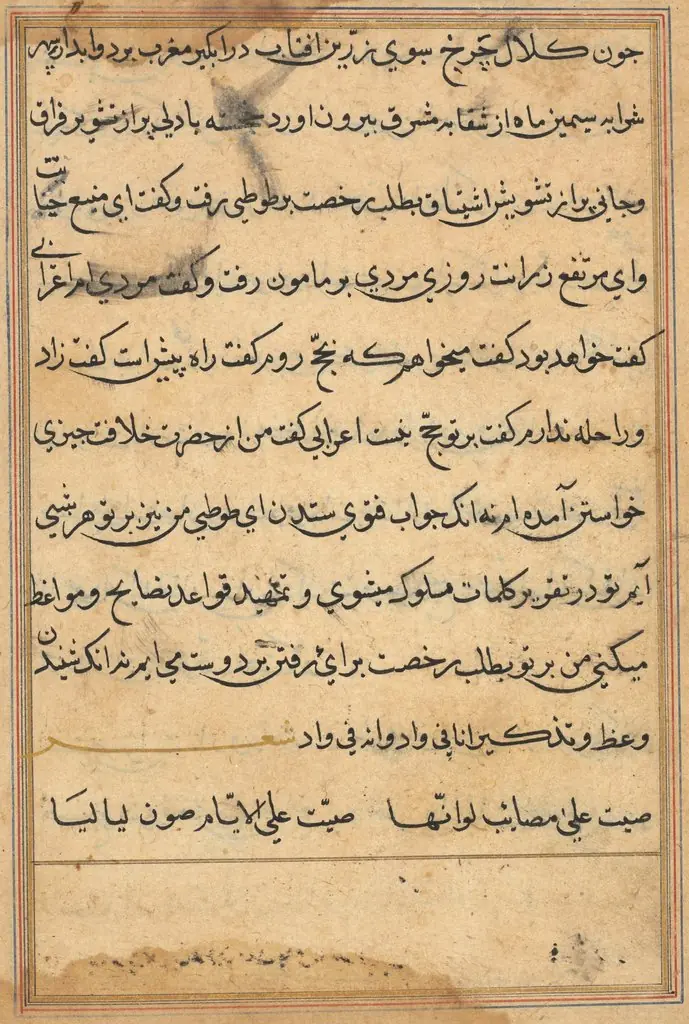
Page from Tales of a Parrot (Tuti-nama): text page is an unspecified painting. It dates from 1560 and is held in the collection of the Cleveland Museum of Art. This illuminated page belongs to the Persian manuscript Tales of a Parrot (Tuti‑nama), a narrative composed for Prince Salim.
About this work
History & Provenance
It is attributed to an unknown artist and forms part of the Tuti-nama manuscript tradition, reflecting Mughal artistic conventions of the mid-sixteenth century.
The painting was created in 1560 in the Mughal Empire and presently resides in the collection of the Cleveland Museum of Art. It is attributed to an unknown artist and forms part of the Tuti-nama manuscript tradition, reflecting Mughal artistic conventions of the mid-sixteenth century. The work was acquired by the museum as part of its South Asian holdings and is cataloged under the accession number 1962.279.287.a.
The painting is housed in the Cleveland Museum of Art, where it is catalogued under accession number 1962.279.287.a. It was created in 1560 within the Mughal Empire.
The work has not been recorded in any major exhibition history according to the available documentation.
Legacy
The manuscript page depicting a parrot from the Tuti-nama, produced in 1560 within the Mughal artistic milieu, exemplifies the synthesis of Persian narrative traditions with Indian court aesthetics that would inform later regional painting schools. Though executed anonymously, the work's compositional clarity and naturalistic detail circulated through manuscript copying practices, contributing to the visual vocabulary of later Indo-Persian illustrated texts such as the Razmnama translations. Its presence in the Cleveland Museum of Art collection preserves a tangible link to the diffusion of Mughal narrative imagery into the broader corpus of South Asian artistic heritage.
Overview
This illuminated page belongs to the Persian manuscript Tales of a Parrot (Tuti‑nama), a narrative composed for Prince Salim. The sheet is covered with dense black calligraphy arranged in tight, orderly rows, framed by a slender red border. The paper shows signs of age, with a slightly faded ink surface and scattered minute specks, indicating long use and handling.
Subject & Meaning
The text recounts episodes from the Tales of a Parrot, a collection of moral and romantic stories popular in Safavid Iran. Addressed to Prince Salin, the work served both as entertainment and as a vehicle for ethical instruction, using the parrot’s voice as a literary device to convey wisdom and courtly values.
Technique & Style
The script exemplifies a precise Persian Nastaʿlīq hand, noted for its elegant elongation and looping of certain letters. Ink, originally a deep black, has faded over centuries, while the thin red border, applied with pigment brushwork, provides a subtle visual frame. The page’s surface bears fine dust‑like dots, likely remnants of pigment or mineral particles from the manuscript’s production.
Artist & collection

- Page from Tales of a Parrot (Tuti-nama): text page
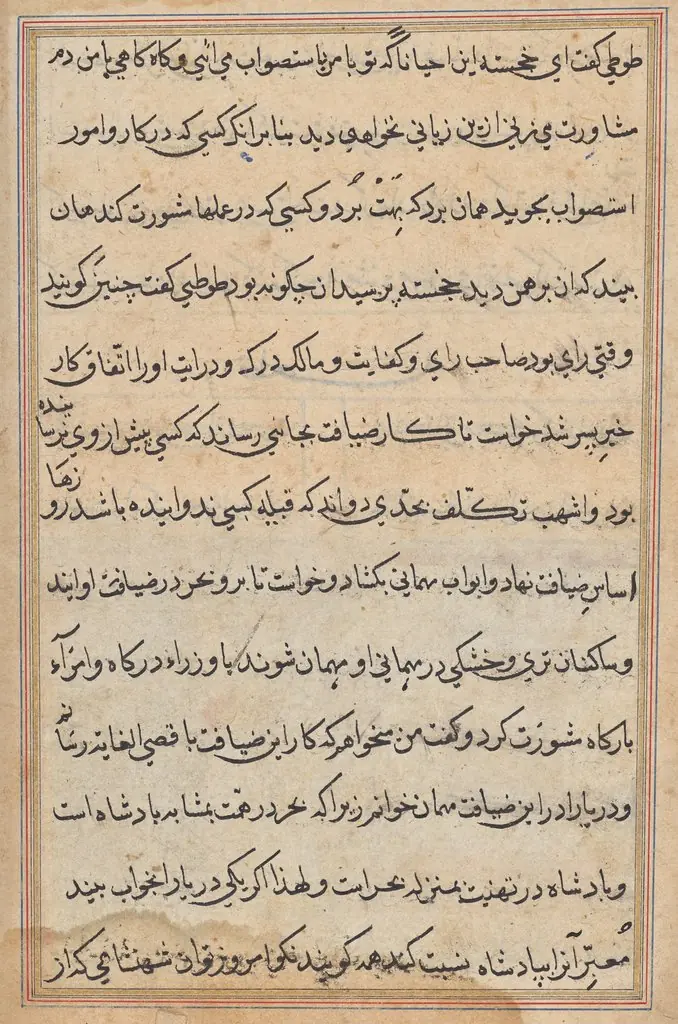 Page from Tales of a Parrot (Tuti-nama): text page
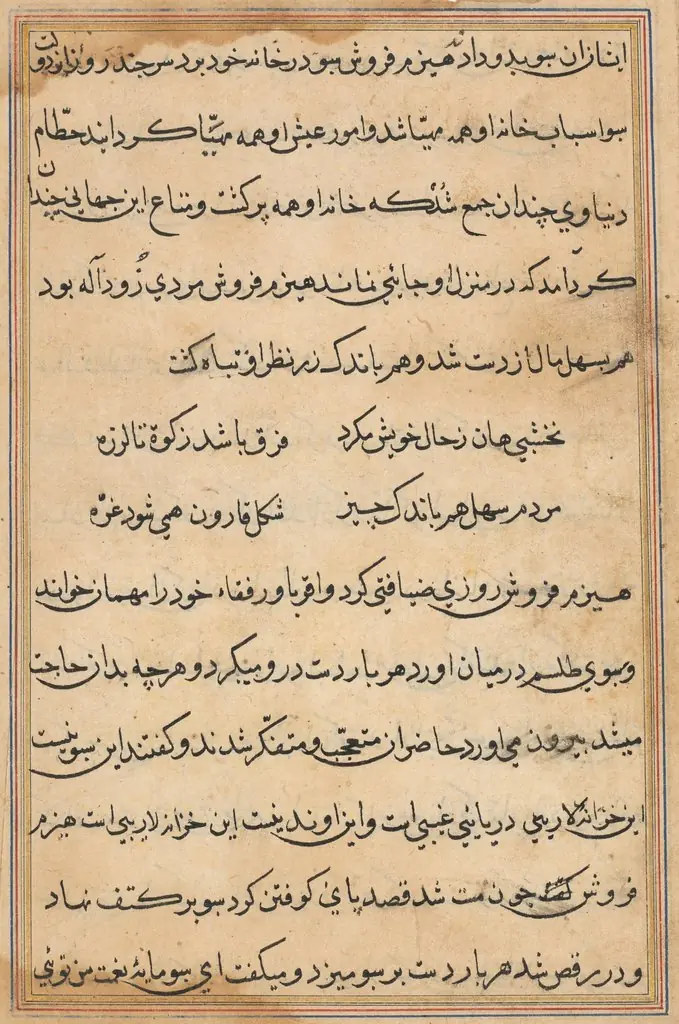 Page from Tales of a Parrot (Tuti-nama): text page
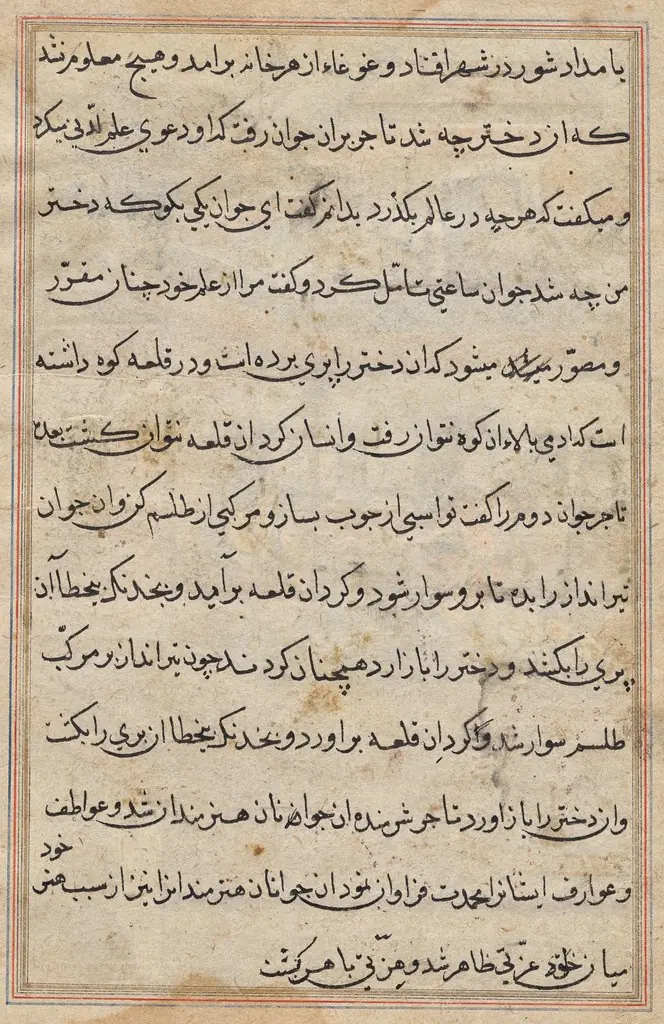 Page from Tales of a Parrot (Tuti-nama): text page
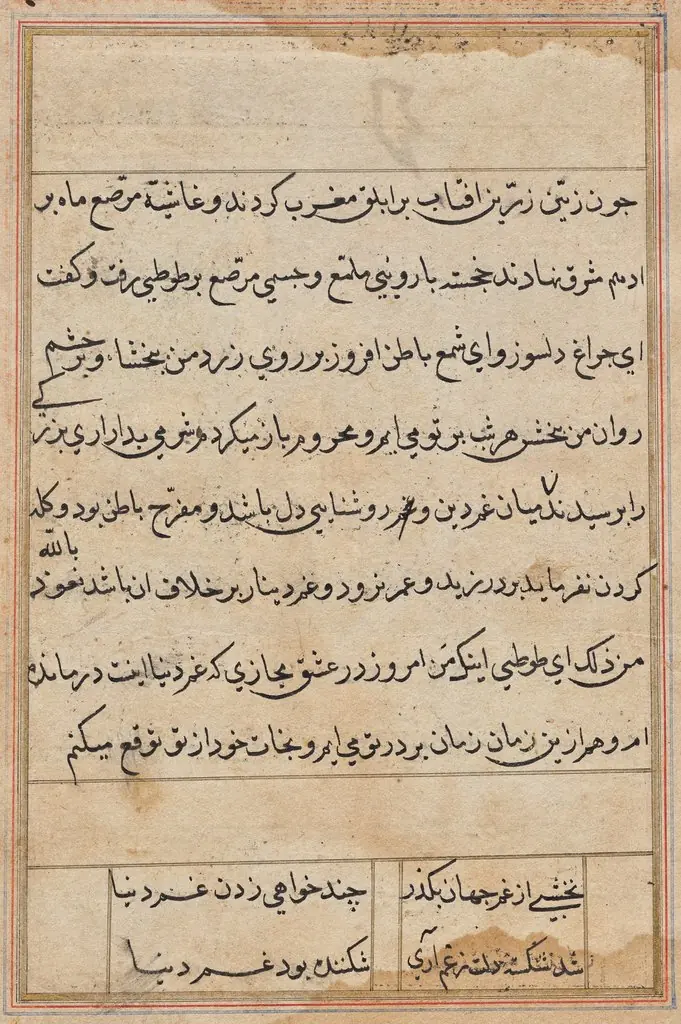 Page from Tales of a Parrot (Tuti-nama): text page
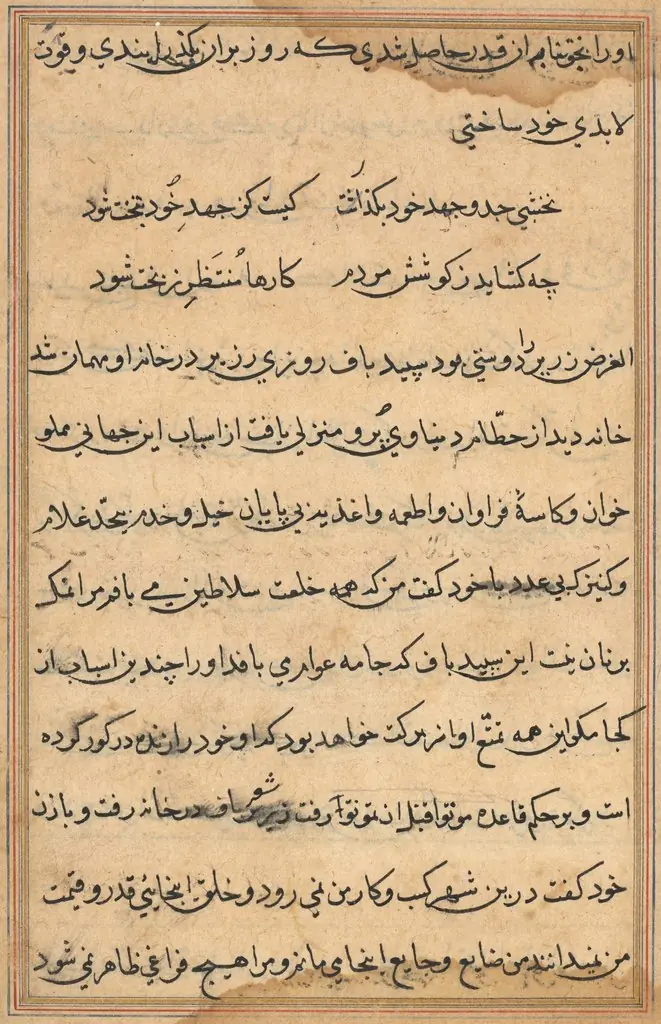 Page from Tales of a Parrot (Tuti-nama): text page
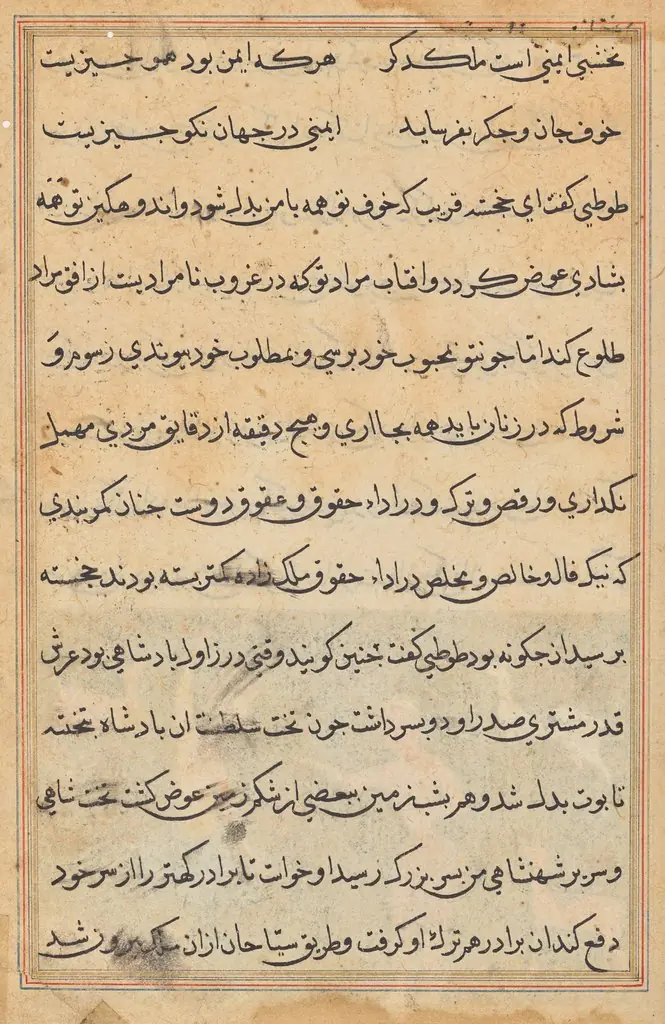 Page from Tales of a Parrot (Tuti-nama): text page
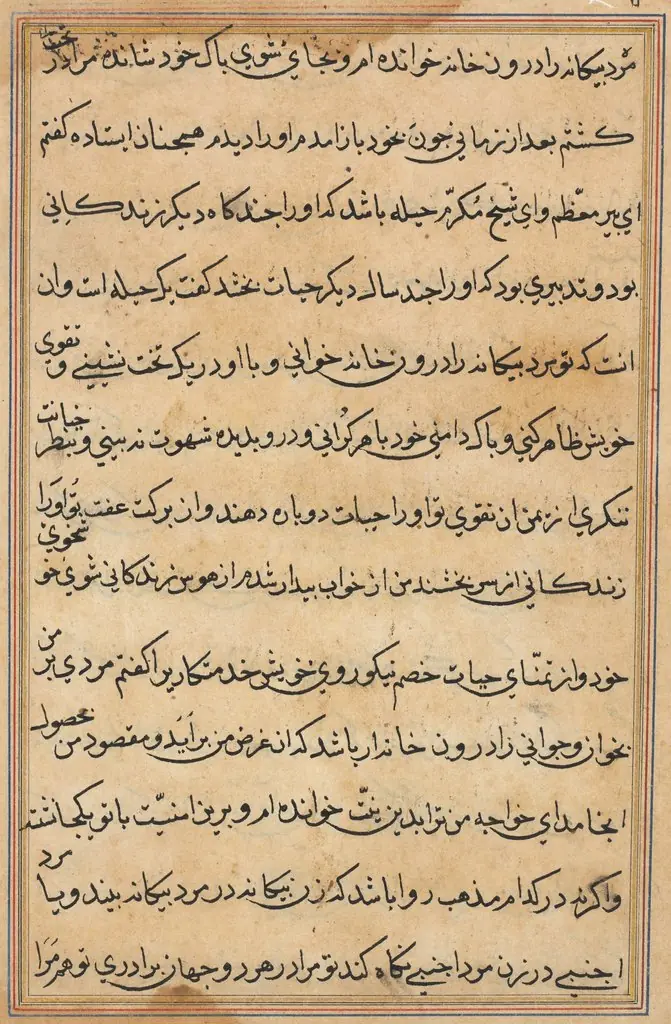 Page from Tales of a Parrot (Tuti-nama): text page
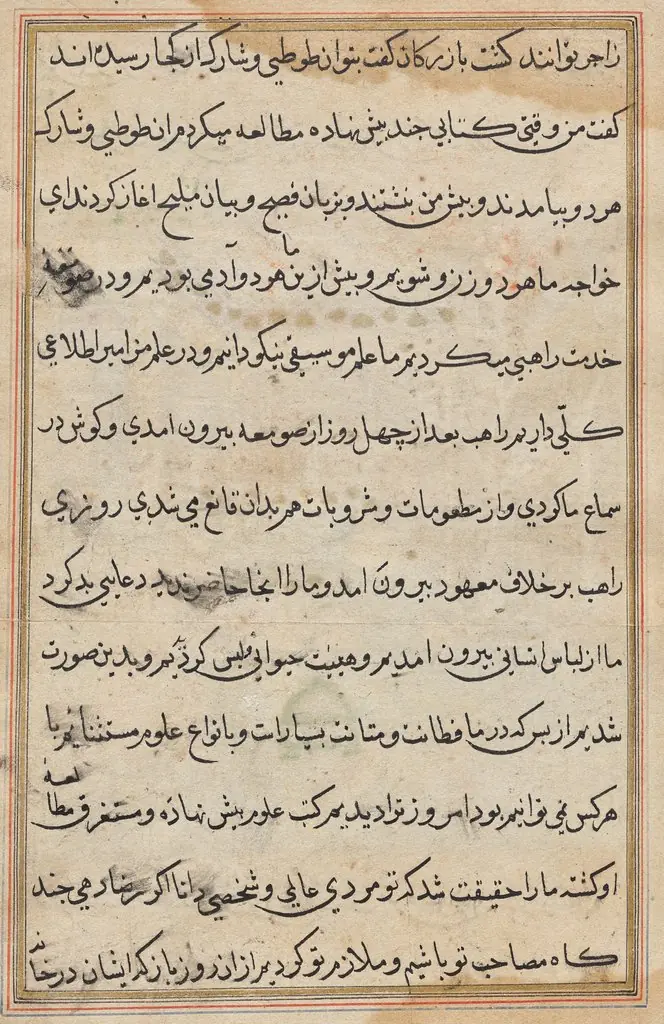 Page from Tales of a Parrot (Tuti-nama): text page
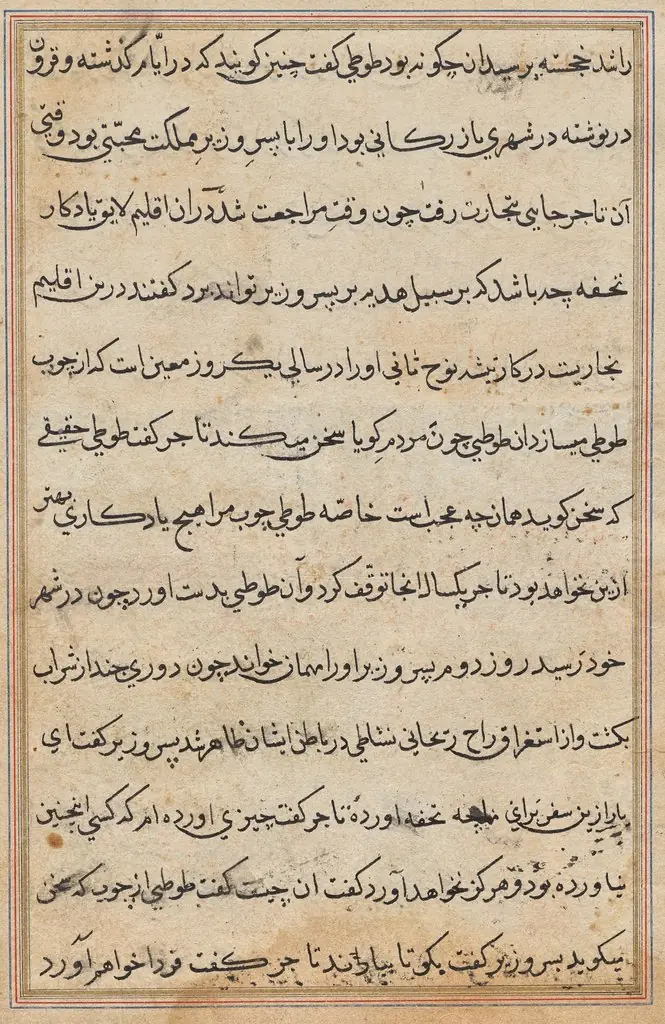 Page from Tales of a Parrot (Tuti-nama): text page
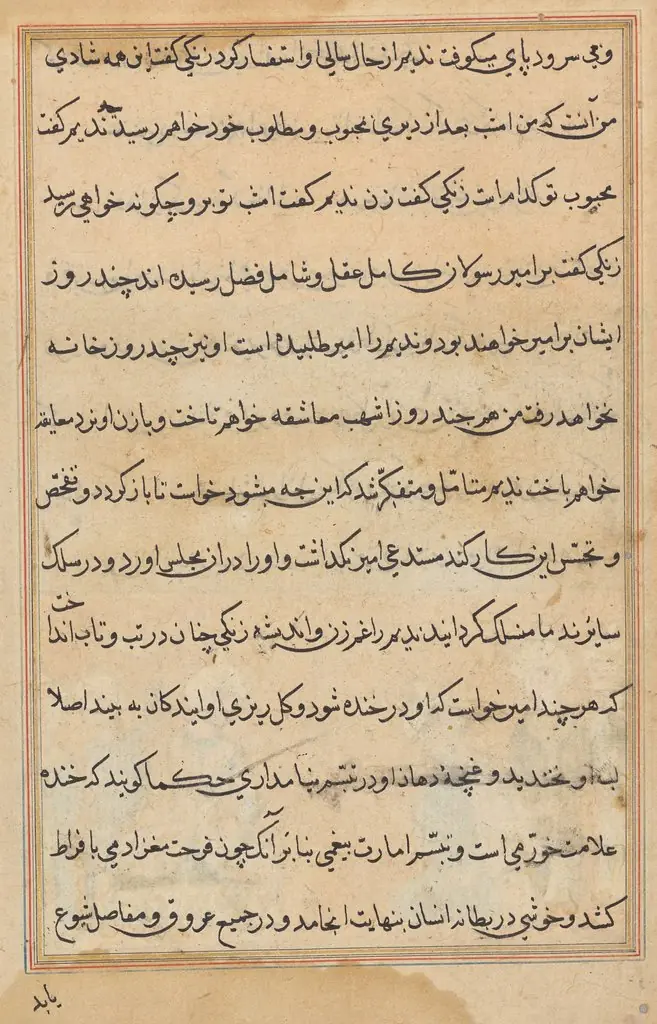 Page from Tales of a Parrot (Tuti-nama): text page
 Page from Tales of a Parrot (Tuti-nama): text page