Artwork
Page from Tales of a Parrot (Tuti-nama): text page
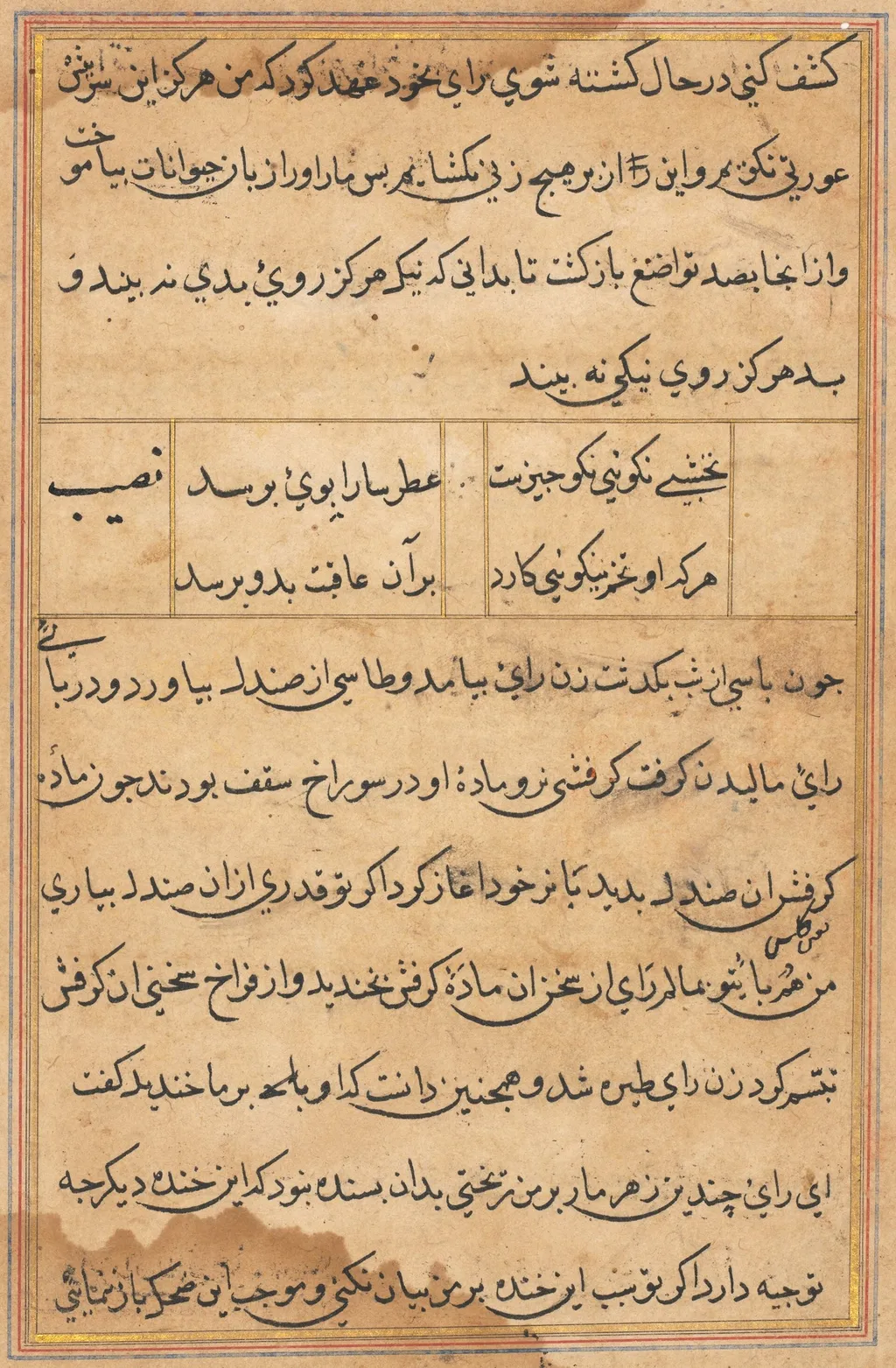
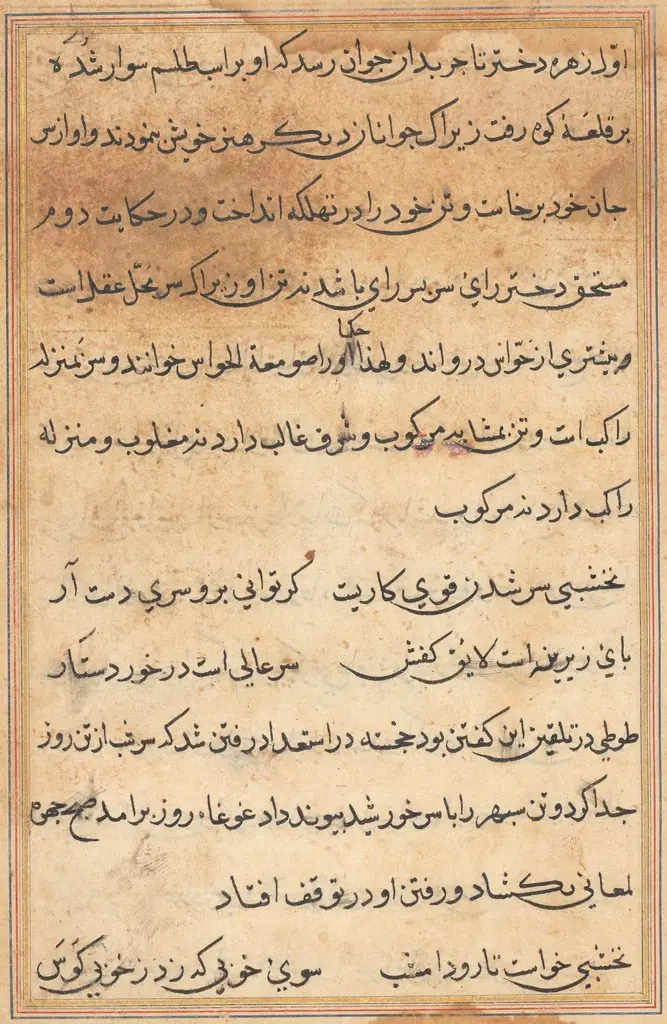
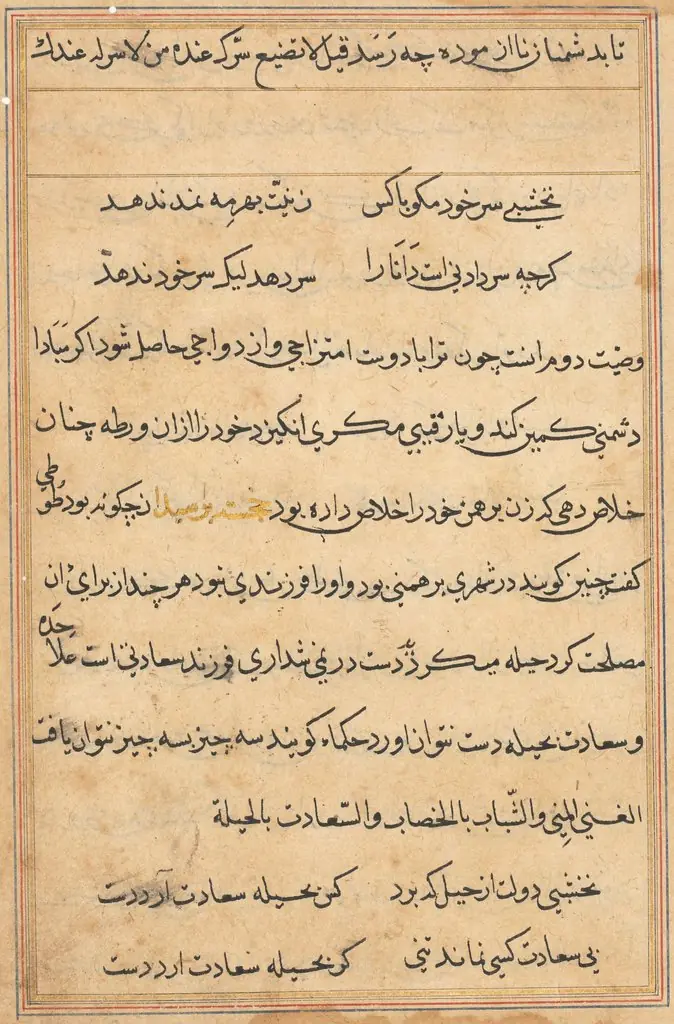
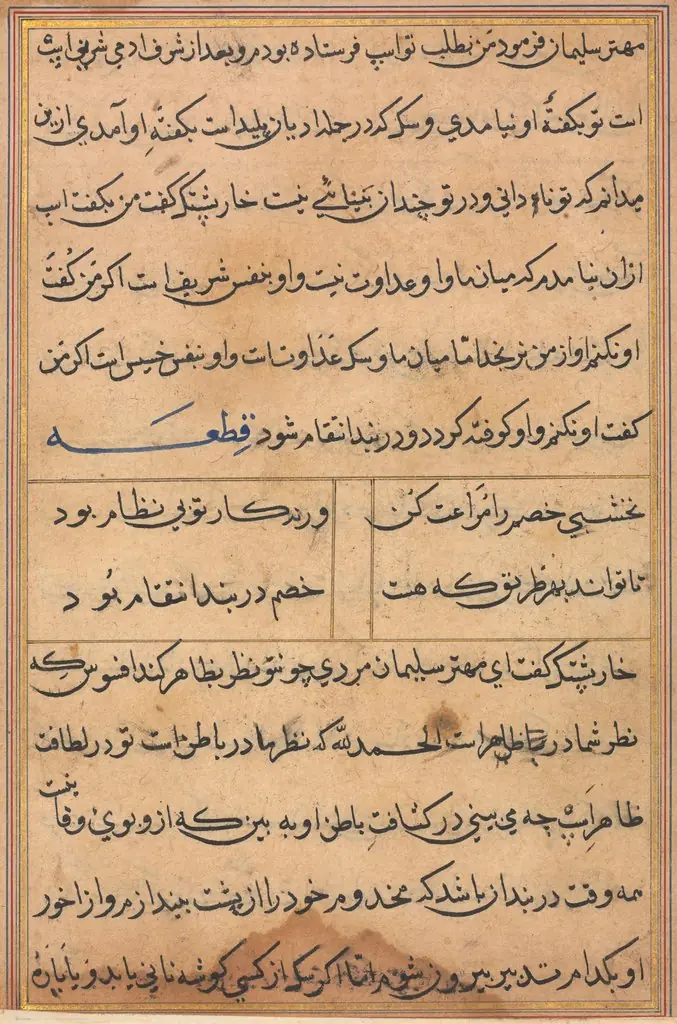
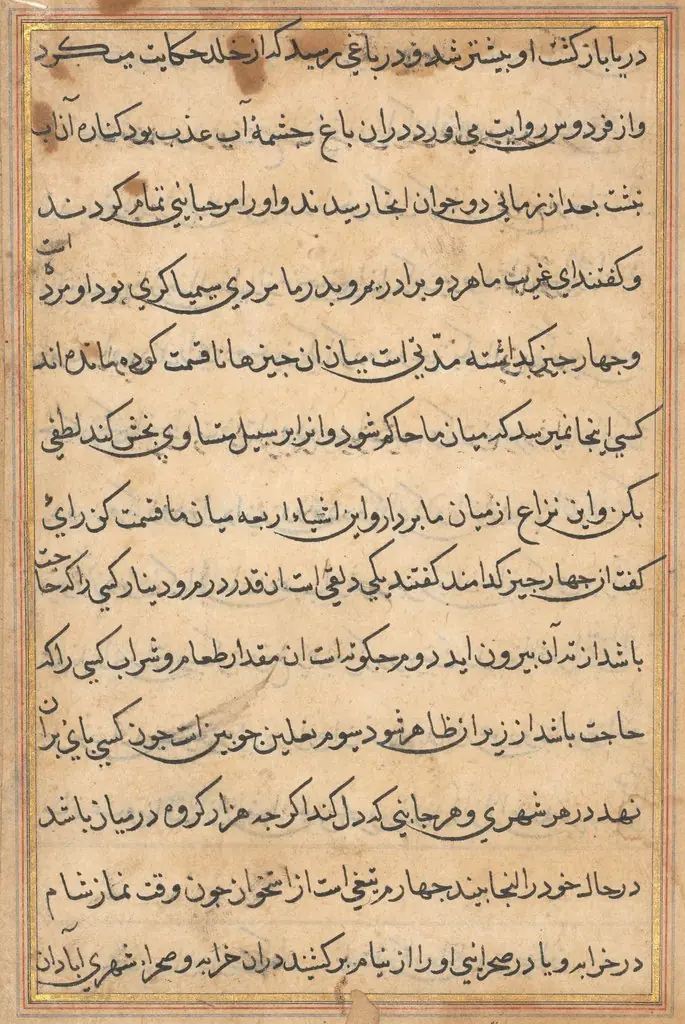
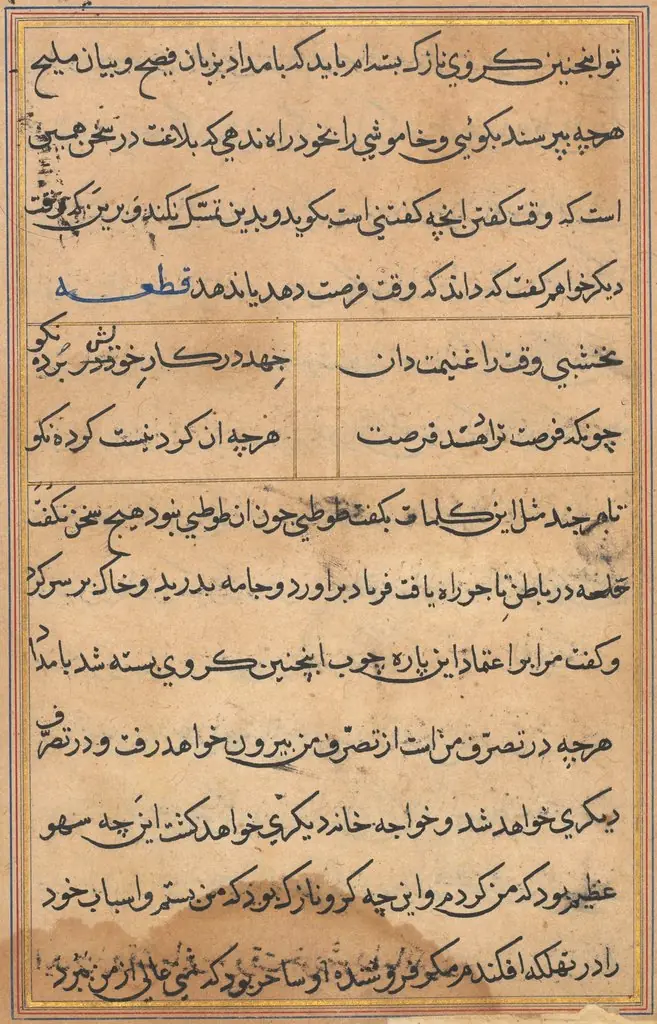
Page from Tales of a Parrot (Tuti-nama): text page is an unspecified painting. It dates from 1560 and is held in the collection of the Cleveland Museum of Art. The object is a painted page from the illustrated manuscript known as Tales of a Parrot (Tuti‑nama).
About this work
Subject & Meaning
The text is part of a larger illustrated manuscript tradition, but this specific page contains only text without accompanying miniature imagery.
The depicted subject is a narrative excerpt from the Persian Sufi text Tuti-nama, illustrating a moral lesson through a parrot's speech; the work functions as a didactic page within a Mughal manuscript tradition, symbolizing wisdom and caution through its textual content rather than figurative iconography. The painting's meaning is tied to its role in a didactic literary context, reflecting 16th-century Persian literary culture transmitted in the Mughal court, where such texts served as vehicles for moral instruction. No additional symbolic motifs are documented, and the work represents a textual fragment rather than a figurative scene, emphasizing its function as a page of written narrative within the manuscript.
The text is part of a larger illustrated manuscript tradition, but this specific page contains only text without accompanying miniature imagery.
History & Provenance
This text page from the Tales of a Parrot (Tuti-nama) was created in 1560 within the Mughal Empire. The work is attributed to an unknown artist and serves as an illuminated manuscript leaf. It is currently held in the collection of the Cleveland Museum of Art, where it is cataloged under the accession number 1962.279.279.b. The specific commissioning details and the full chain of ownership prior to its acquisition by the museum are not detailed in the available records.
Overview
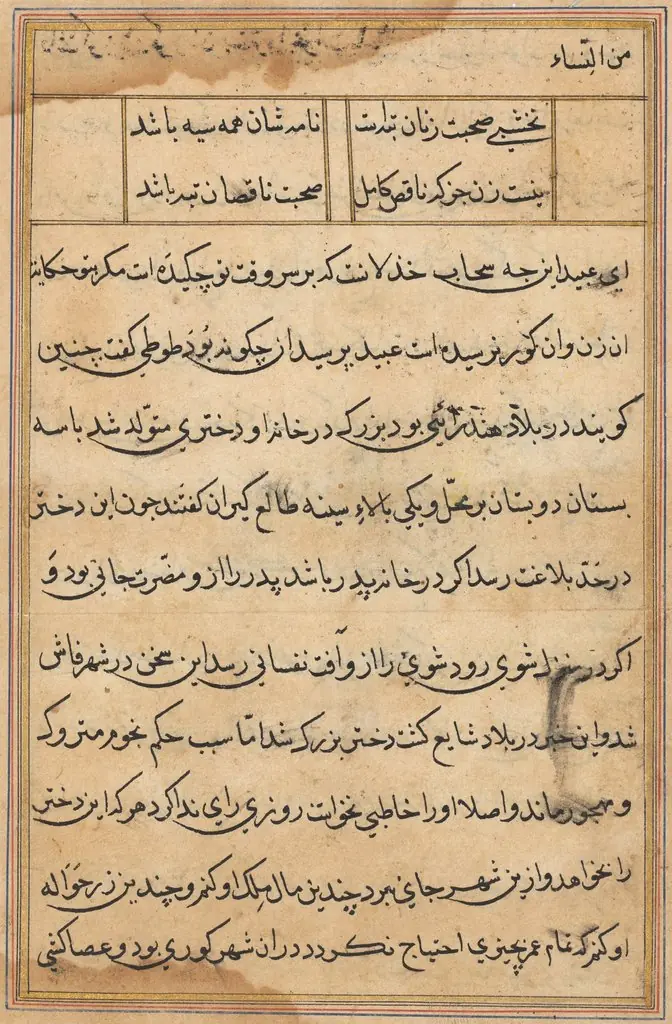
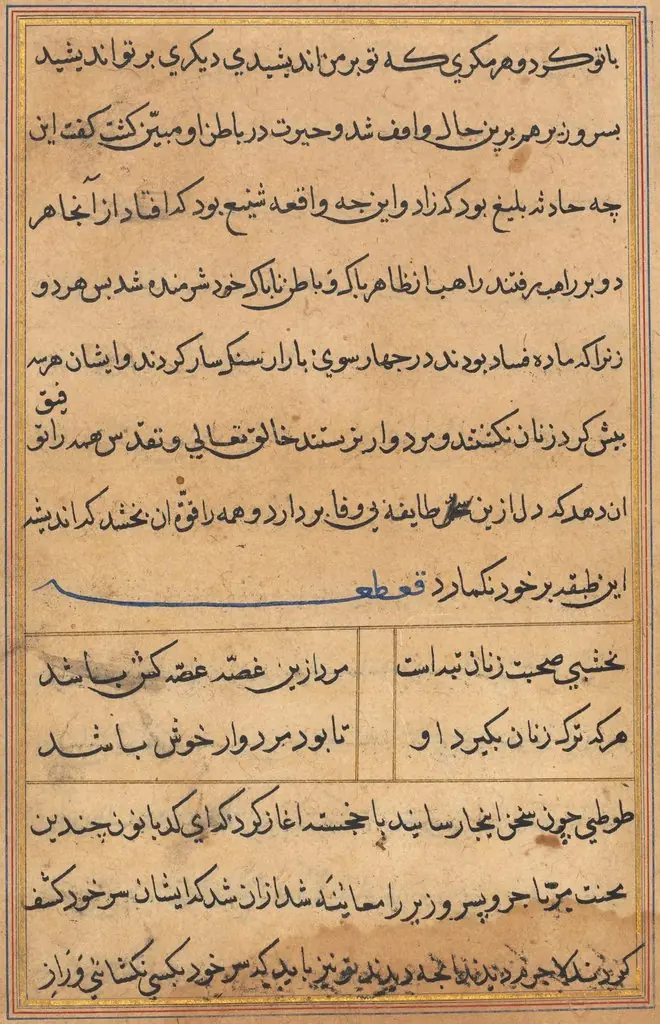
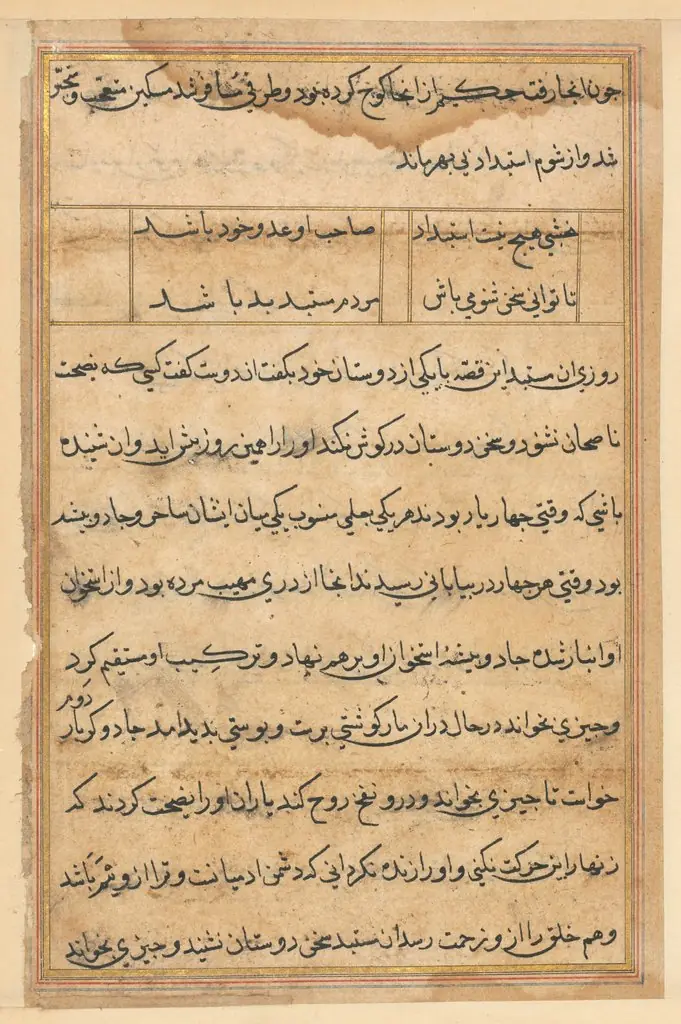
The object is a painted page from the illustrated manuscript known as Tales of a Parrot (Tuti‑nama). Executed on paper, the surface shows an aged, warm tone with subtle brown discolorations. Thin gold lines border the page, and a horizontal rule divides the text into two balanced blocks.
Technique & Style
The calligraphy displays a precise hand, combining curved and angular strokes to create a rhythmic visual flow. Gold leaf or gold paint outlines the margins, adding a decorative frame that contrasts with the muted paper. The use of red ink for highlights provides visual hierarchy within the script.
Context
Tuti‑nama manuscripts were popular in the early modern period of the Islamic world, blending storytelling with elaborate illumination. The integration of calligraphy, gold edging, and occasional color accents reflects the aesthetic conventions of manuscript production in that era.
Artist & collection

 Page from Tales of a Parrot (Tuti-nama): text page
 Page from Tales of a Parrot (Tuti-nama): text page
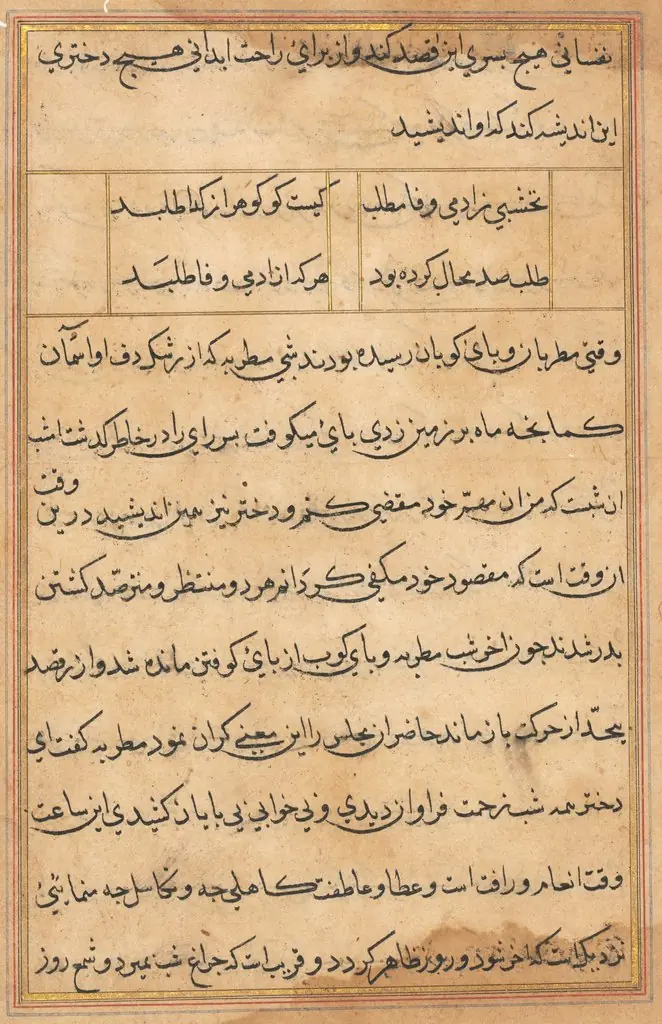 Page from Tales of a Parrot (Tuti-nama): text page
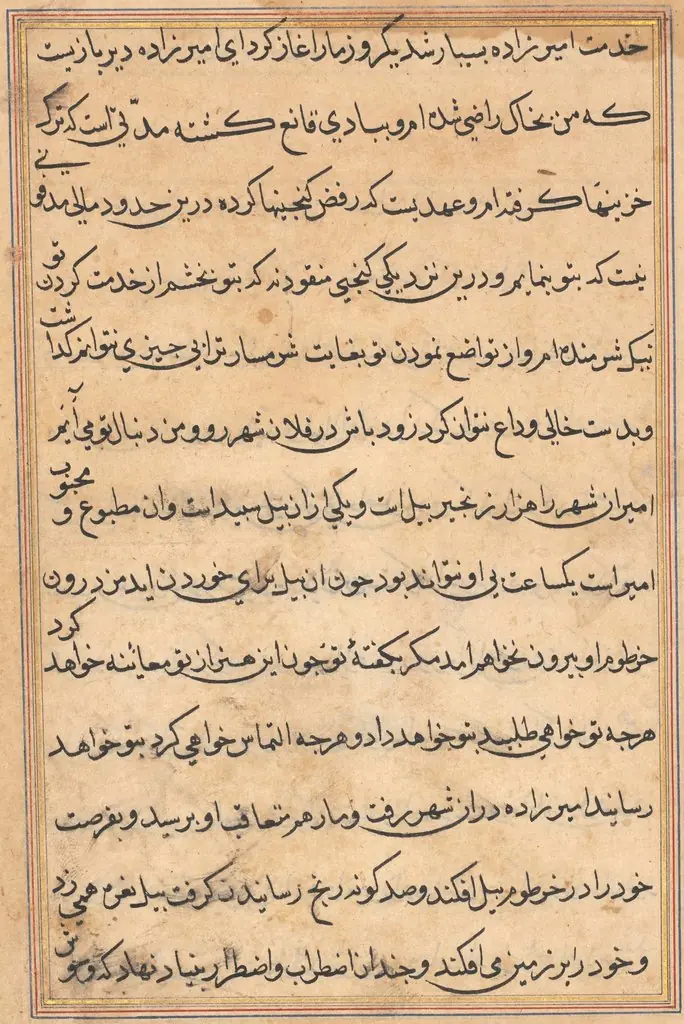 Page from Tales of a Parrot (Tuti-nama): text page
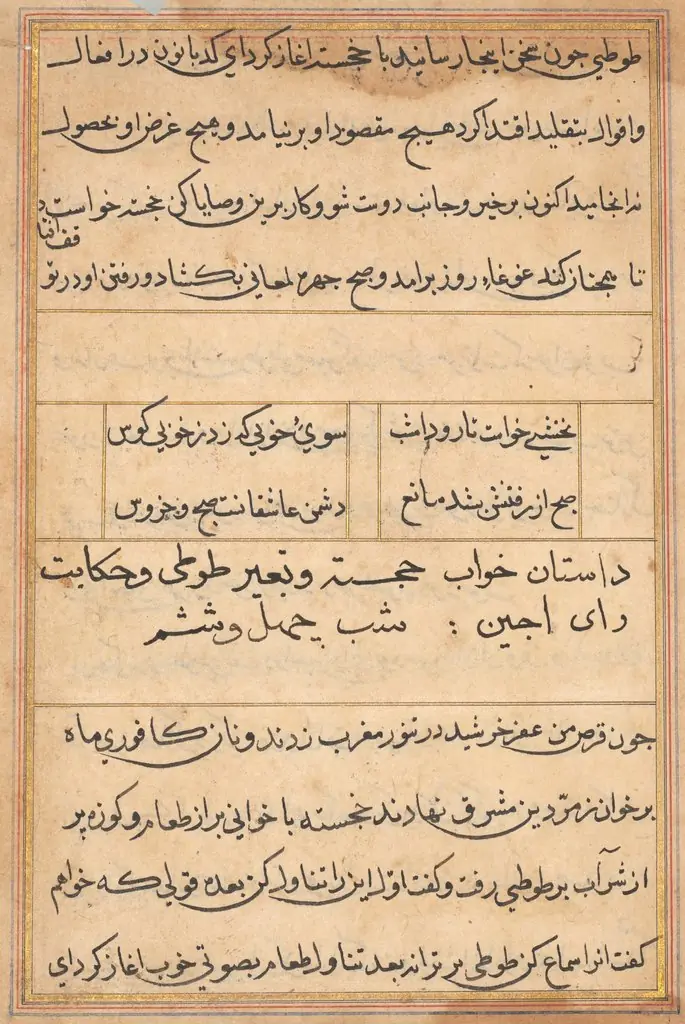 Page from Tales of a Parrot (Tuti-nama): text page
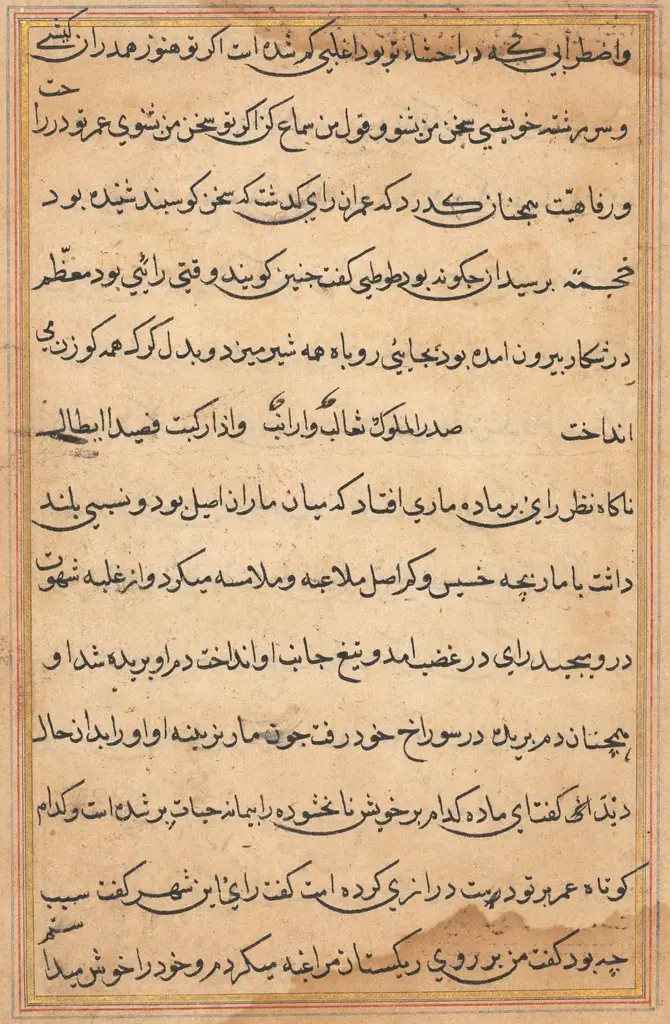 Page from Tales of a Parrot (Tuti-nama): text page
 Page from Tales of a Parrot (Tuti-nama): text page