Artwork
Page from Tales of a Parrot (Tuti-nama): text page
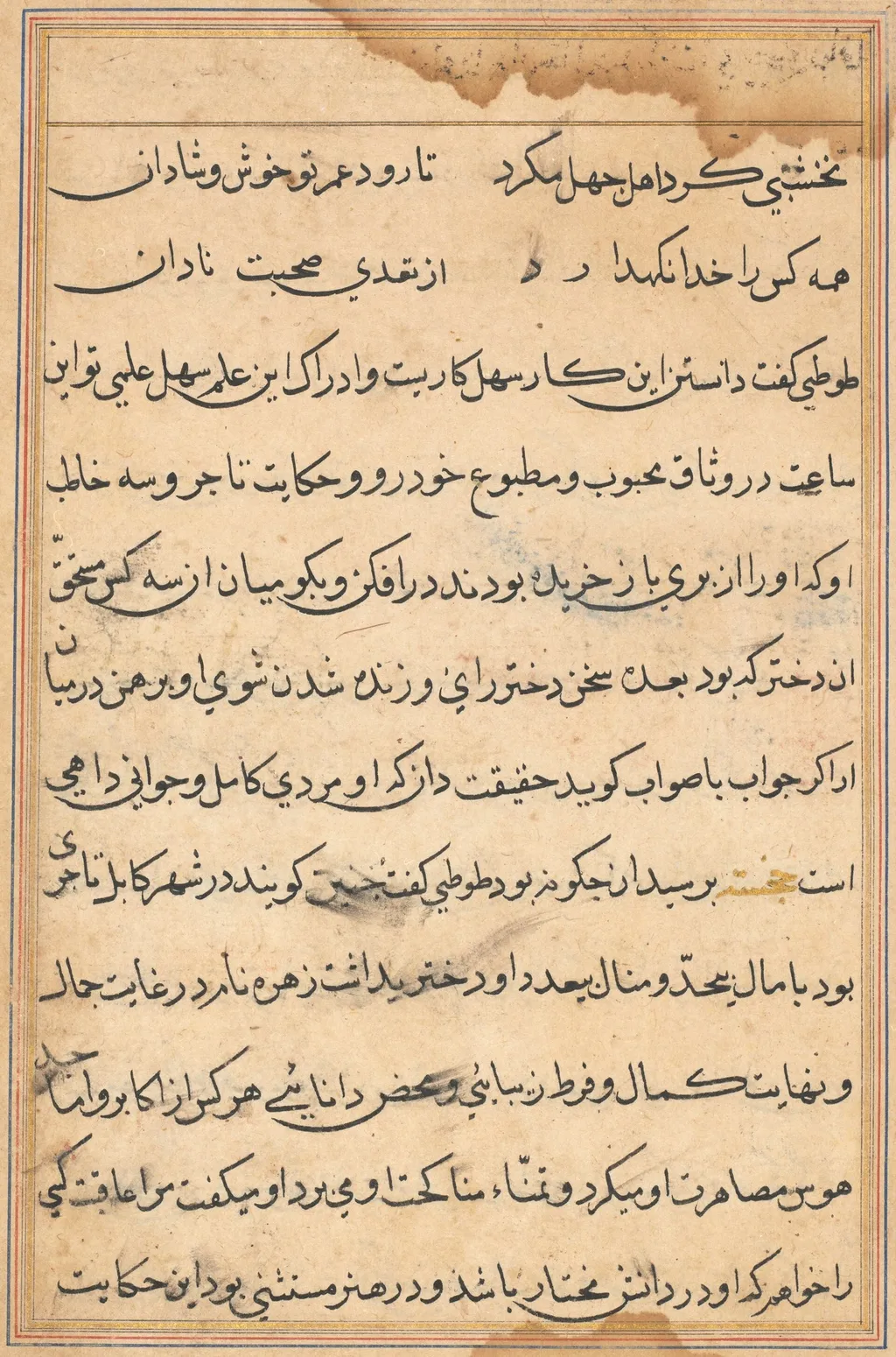
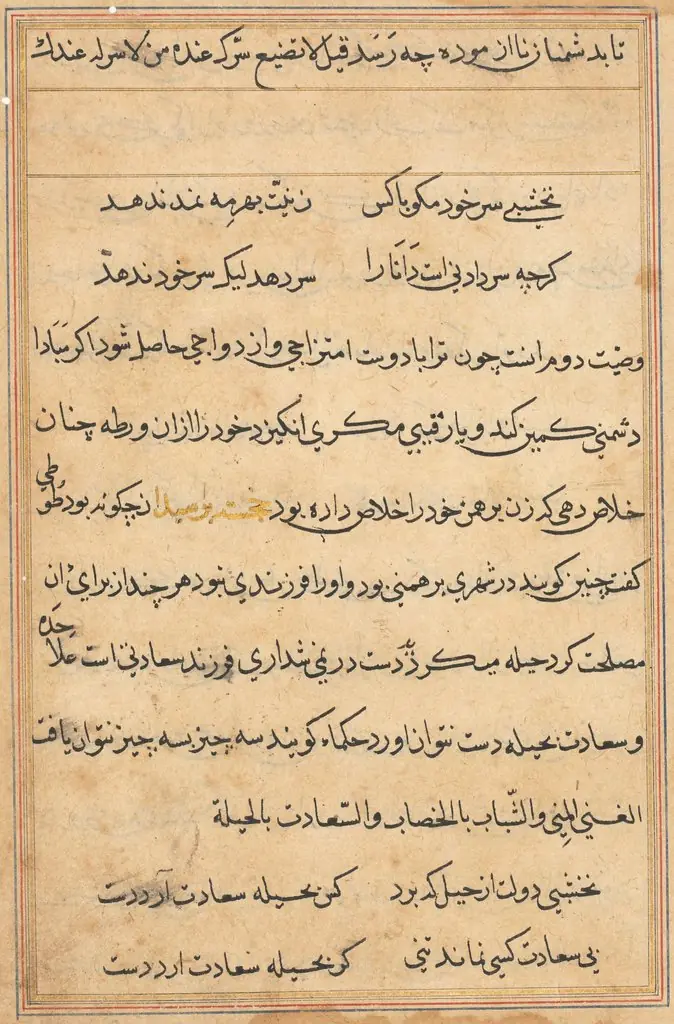
Page from Tales of a Parrot (Tuti-nama): text page is an unspecified painting. It dates from 1560 and is held in the collection of the Cleveland Museum of Art. The object is a single folio from an illustrated manuscript titled Tales of a Parrot (also known as Tuti‑nama).
About this work
Subject & Meaning
The parrot symbolizes wisdom and the transmission of knowledge, reflecting the broader cultural emphasis on didactic storytelling in Persianate courts.
A text page from the Tuti-nama manuscript depicts a parrot recounting a story, serving as a didactic vehicle for moral instruction within the Mughal literary tradition. The parrot symbolizes wisdom and the transmission of knowledge, reflecting the broader cultural emphasis on didactic storytelling in Persianate courts. This folio originates from a 1560 manuscript produced in the Mughal Empire, where narrative frames such as the parrot’s tales were employed to convey ethical lessons through allegorical animal speech.
The work’s meaning lies in its role as a didactic illustration, using animal allegory to communicate moral teachings, a common motif in Persian miniature painting that underscores the didactic purpose of the Tuti-nama narratives.
History & Provenance
The text page is from the Mughal-era manuscript Tales of a Parrot (Tuti-nama) and has been dated to circa 1560. It was produced in the Mughal Empire by an unknown artist, likely as part of the illustrated series that accompanied the Persian text. The leaf entered the Cleveland Museum of Art’s collection in 1962, where it is recorded under accession number 1962.279.224.a.
Prior to its acquisition by the museum, the ownership history of the page is not documented in the available sources.
This text page from the Tales of a Parrot (Tuti-nama) is held in the collection of the Cleveland Museum of Art. The institution assigns the work the accession number 1962.279.224.a. Created in 1560 within the Mughal Empire, the piece is classified as a painting by an unknown artist.
The provided records confirm its location and inventory details but do not list specific exhibitions where the object has been displayed.
Legacy
The textual page from the 1560 Tuti-nama manuscript circulated widely across Safavid artistic circles, shaping narrative illustration practices in subsequent Persian manuscripts. Its compositional strategies informed later illustrated works within the Mughal tradition, particularly evident in the stylistic treatment of courtly scenes produced at the imperial atelier in the late 16th century. The piece's survival in Western collections, including its presence in the Cleveland Museum of Art since 1962, has facilitated scholarly analysis of Safavid narrative art's transmission beyond its original manuscript context.
Overview
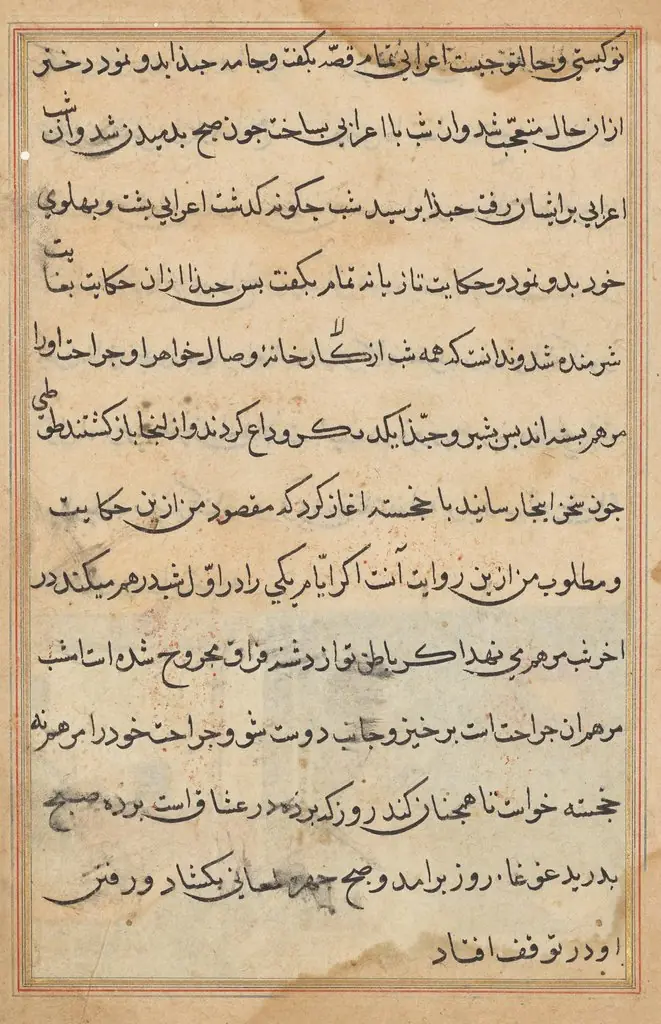
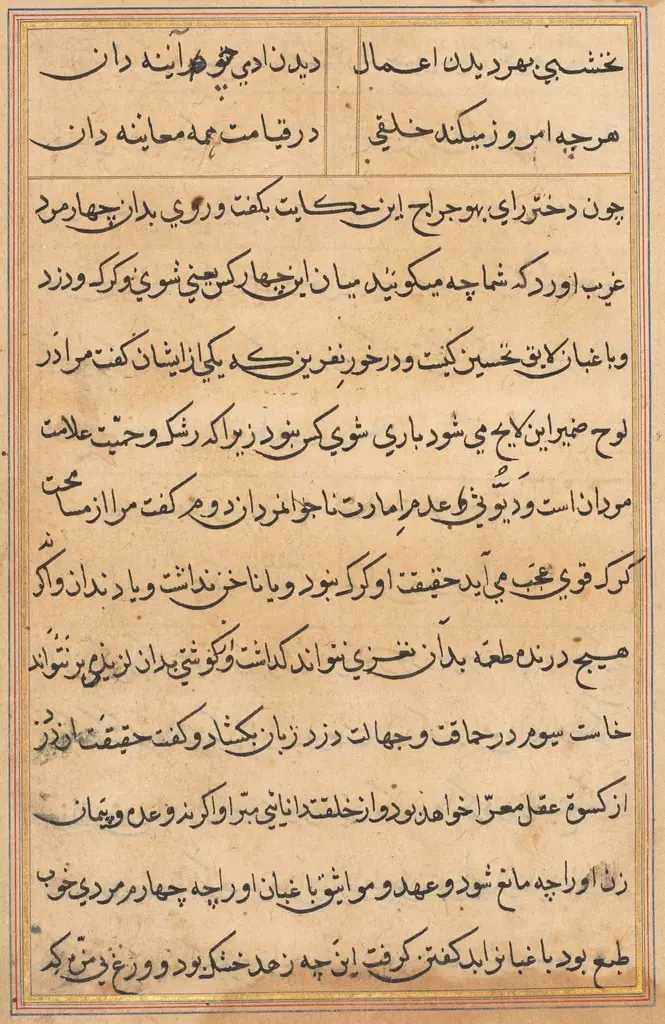
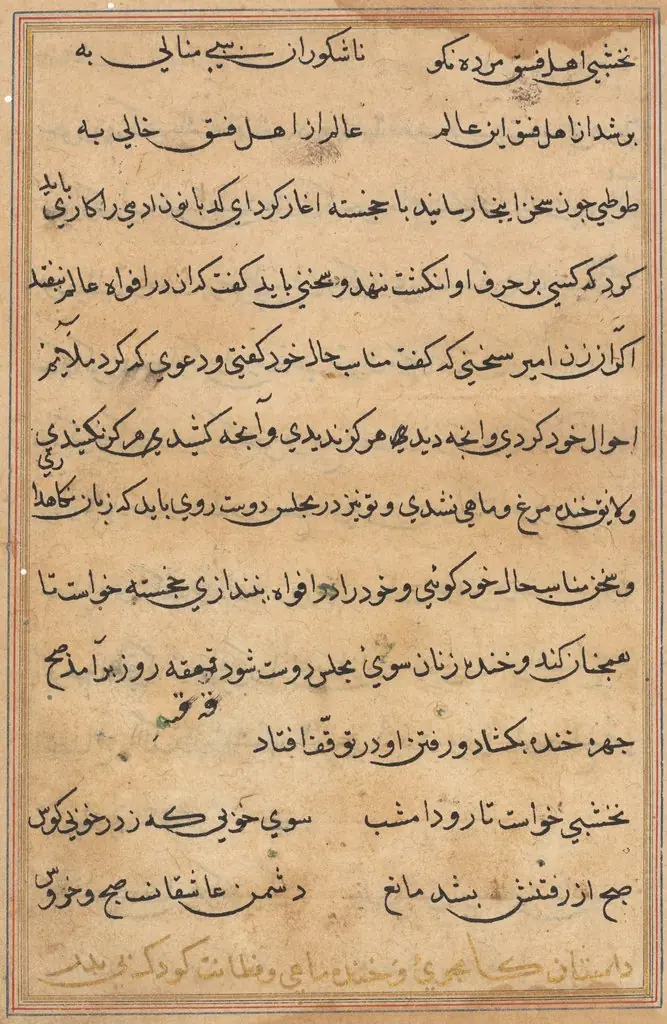
The object is a single folio from an illustrated manuscript titled Tales of a Parrot (also known as Tuti‑nama). The page consists solely of handwritten text rendered in black ink on a yellowed parchment that shows age‑related staining and minor tears along its margins. A thin, colored line, likely red or orange, frames the sheet, providing a modest decorative border.
Technique & Style
The calligraphy is executed in a flowing, cursive script typical of Persian or Arabic bookhands of the early modern period, with ornamental flourishes and punctuating dots that enhance legibility. The ink is a deep black, contrasting with the warm, yellowed substrate, while the thin colored border adds a subtle visual accent without detracting from the text.
Context
Tuti‑nama belongs to a genre of animal‑centered literature that flourished in Persianate societies, where birds often served as allegorical voices. The text’s dense layout reflects the manuscript’s function as a portable reference, aligning with contemporary practices of compiling extensive literary material in compact, hand‑written volumes.
Artist & collection

- Page from Tales of a Parrot (Tuti-nama): text page
 Page from Tales of a Parrot (Tuti-nama): text page
 Page from Tales of a Parrot (Tuti-nama): text page
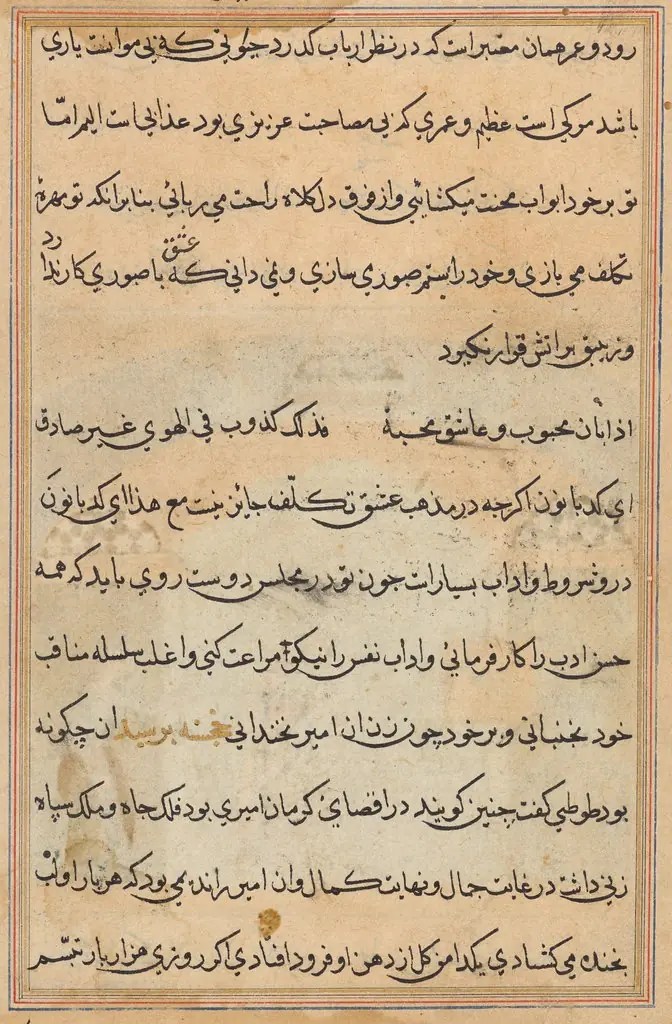 Page from Tales of a Parrot (Tuti-nama): text page
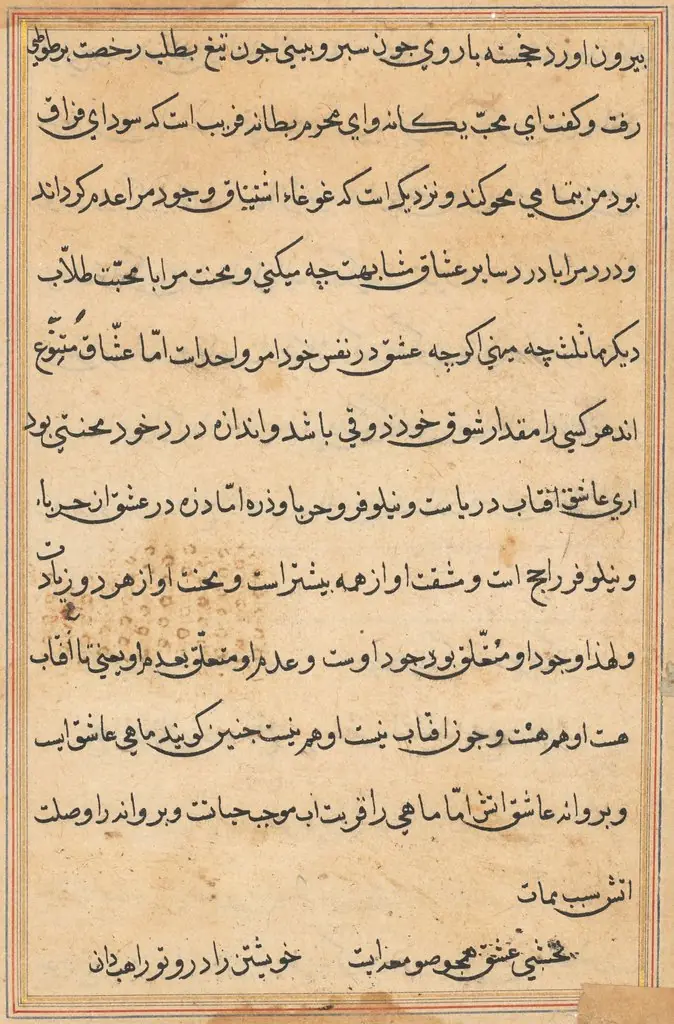 Page from Tales of a Parrot (Tuti-nama): text page
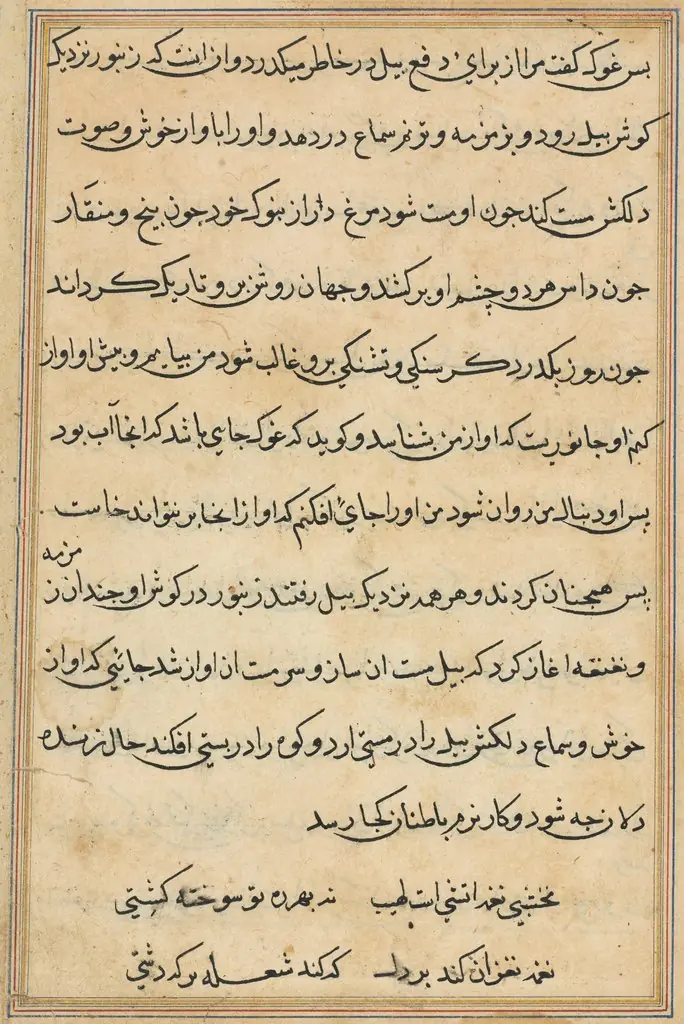 Page from Tales of a Parrot (Tuti-nama): text page
 Page from Tales of a Parrot (Tuti-nama): text page
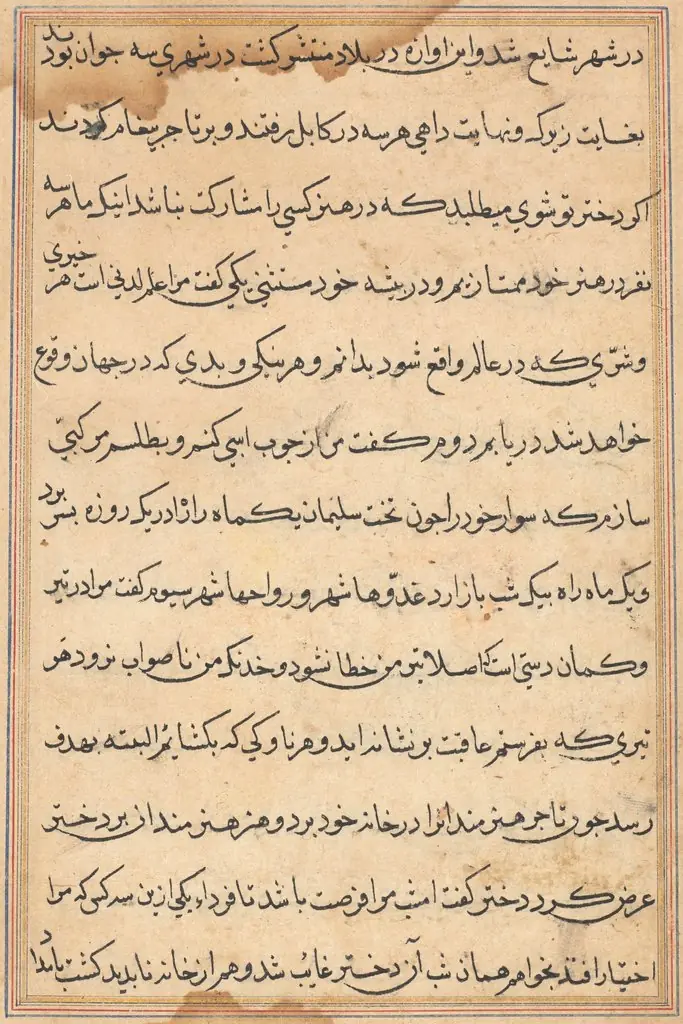 Page from Tales of a Parrot (Tuti-nama): text page
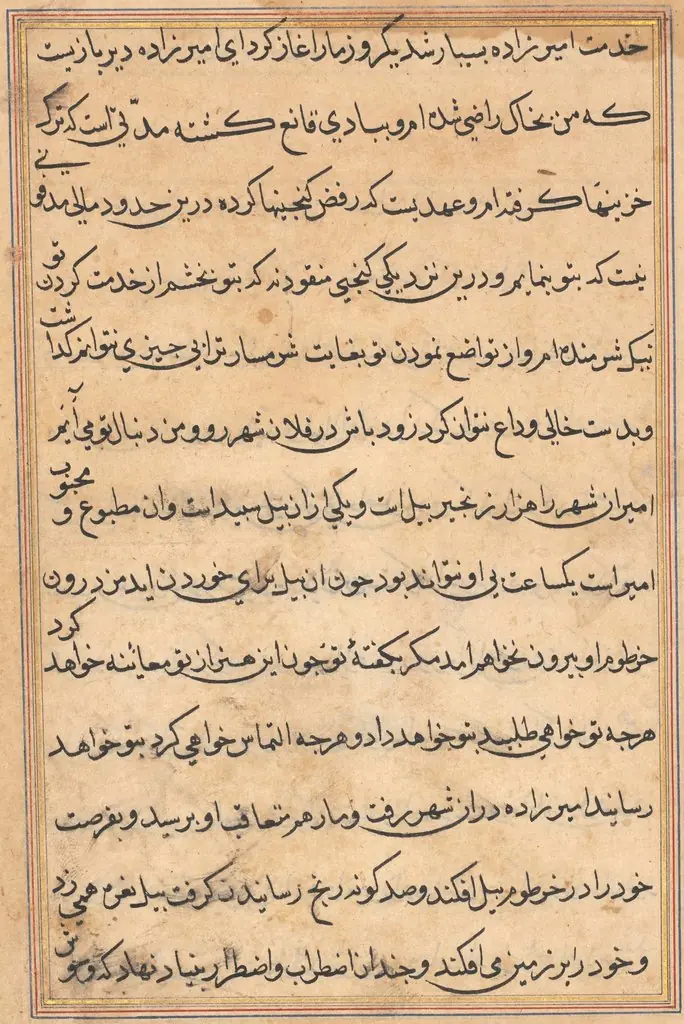 Page from Tales of a Parrot (Tuti-nama): text page
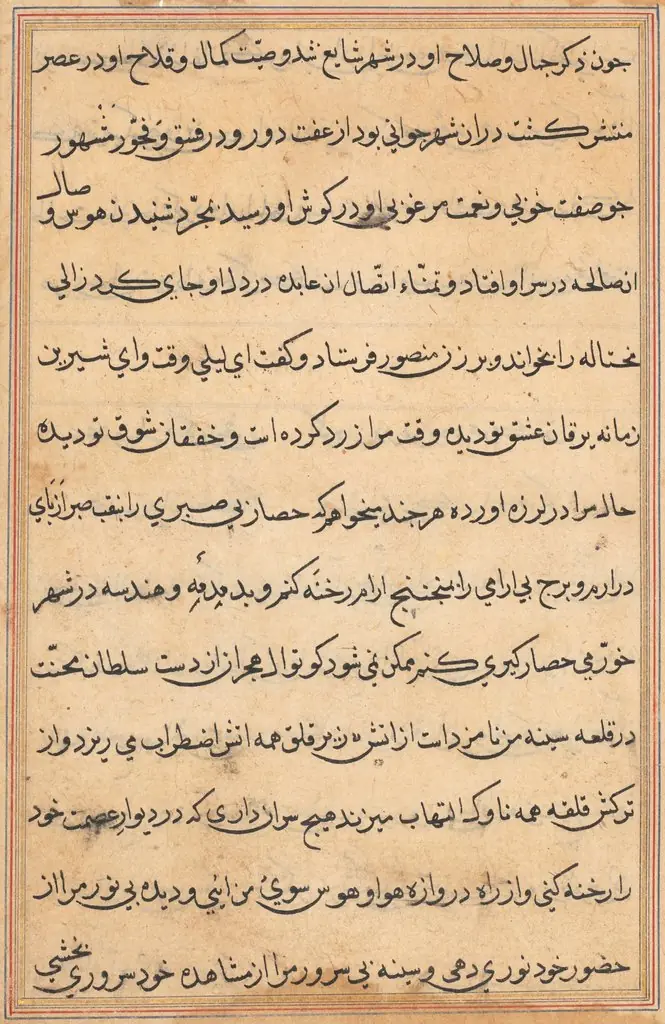 Page from Tales of a Parrot (Tuti-nama): text page
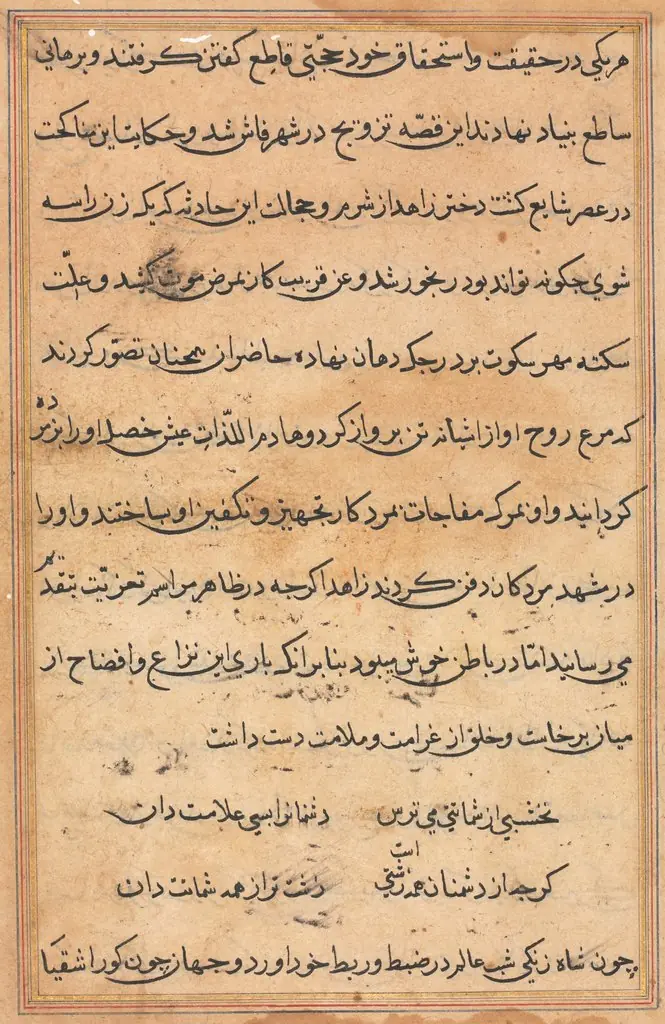 Page from Tales of a Parrot (Tuti-nama): text page
 Page from Tales of a Parrot (Tuti-nama): text page