Artwork
Page from Tales of a Parrot (Tuti-nama): text page
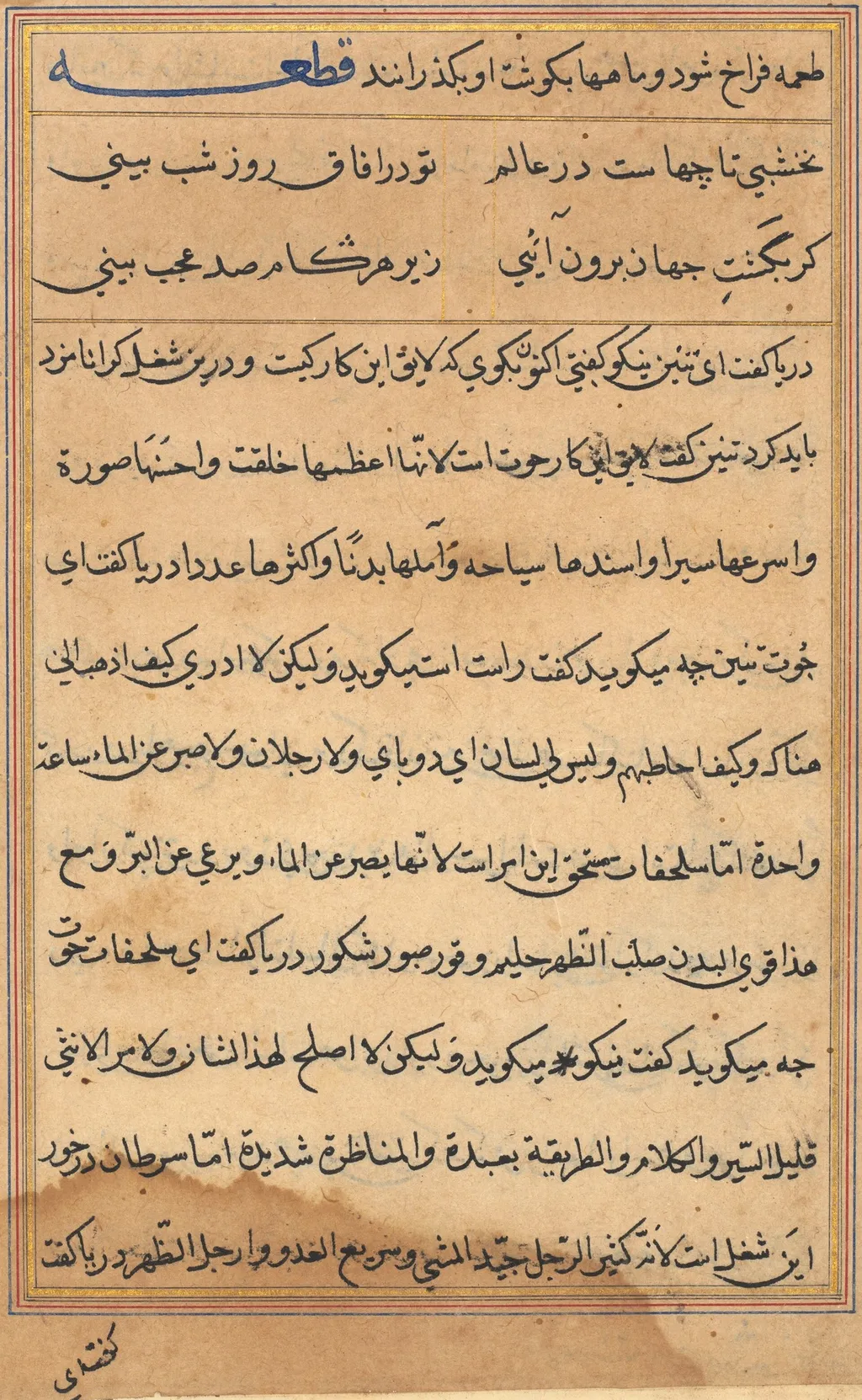
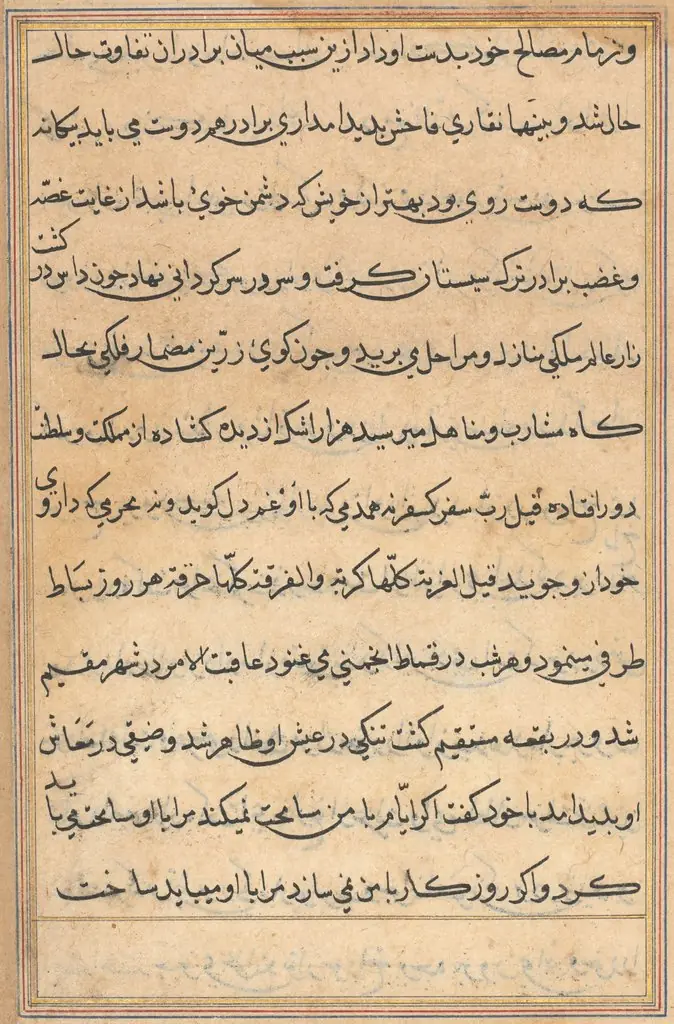
Page from Tales of a Parrot (Tuti-nama): text page is an unspecified painting. It dates from 1560 and is held in the collection of the Cleveland Museum of Art. This illuminated page originates from the Persian manuscript Tales of a Parrot (Tuti‑nama), a narrative compiled for Prince Salim.
About this work
History & Provenance
The text page is dated to 1560 and was produced in the Mughal Empire as part of the illustrated Tales of a Parrot (Tuti-nama) manuscript.
The text page is dated to 1560 and was produced in the Mughal Empire as part of the illustrated Tales of a Parrot (Tuti-nama) manuscript. Its artist remains unknown, and no record of a specific commission survives. Classified as a painting, the leaf is a text page from the manuscript.
It entered the Cleveland Museum of Art in 1962, where it is catalogued under accession number 1962.279.90.b and has remained in the museum’s collection since.
Legacy
The manuscript page, produced in the Mughal Empire in 1560, has become a reference point for scholars studying the transmission of Persian narrative art into Indian painting traditions. Its presence in the Cleveland Museum of Art collection has facilitated comparative studies with other illustrated Tuti-nama folios, influencing exhibitions on Indo-Persian manuscript illumination. The work's stylistic motifs have been cited in later regional miniatures, though its attribution remains linked to the broader Mughal workshop tradition without a named master.
Overview
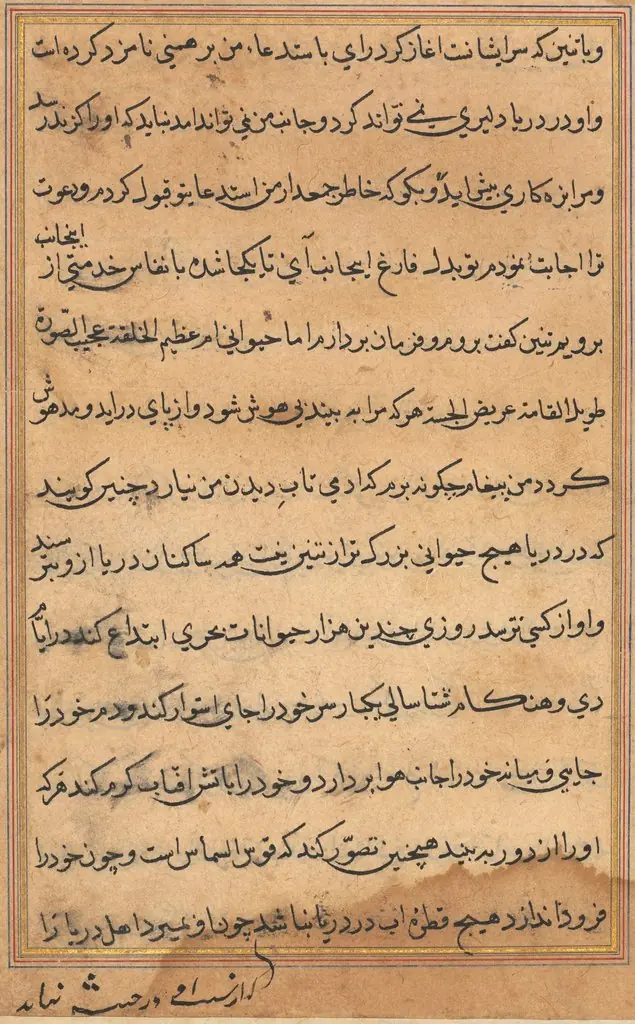
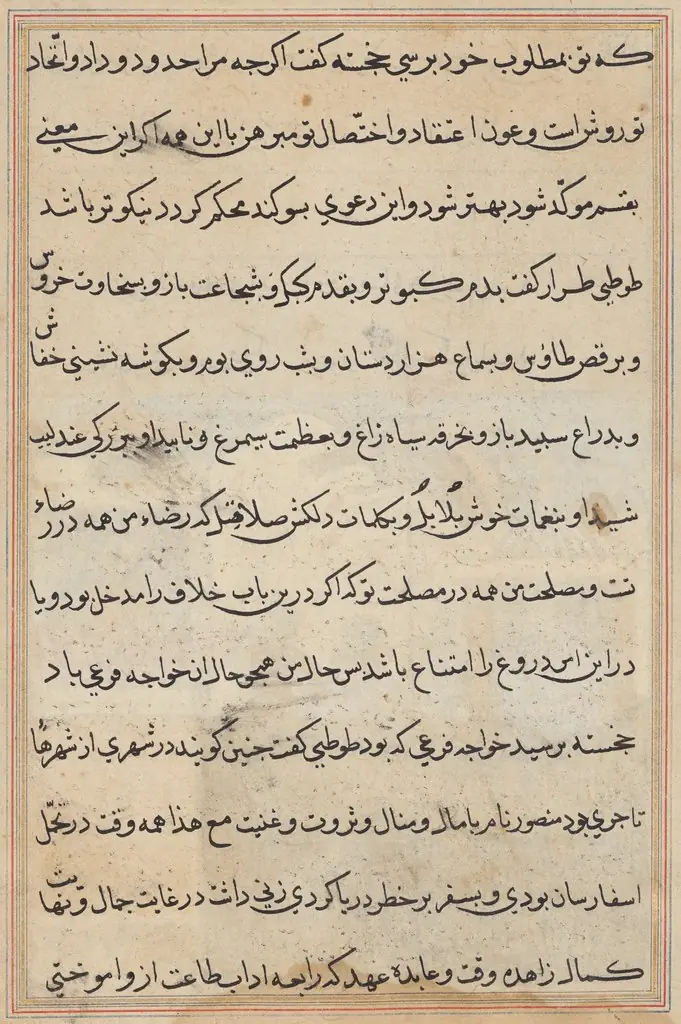
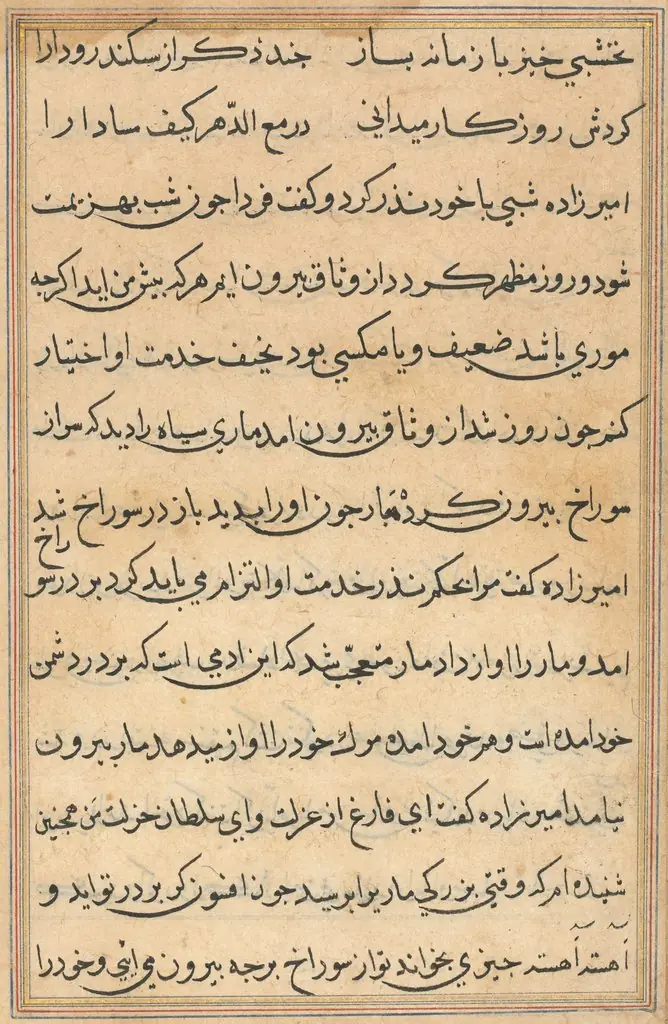
This illuminated page originates from the Persian manuscript Tales of a Parrot (Tuti‑nama), a narrative compiled for Prince Salim. Executed on light‑tan paper, the sheet features dense black ink calligraphy organized in orderly horizontal lines, with occasional blue underlining and decorative elements framing the text.
Subject & Meaning
The manuscript recounts a series of moral and romantic tales narrated by a parrot, a literary device common in Persian storytelling. Intended for a princely audience, the content blends entertainment with ethical instruction, reflecting the courtly culture of the Safavid period.
Technique & Style
The calligrapher demonstrates precise line work, employing a flowing script that balances legibility with aesthetic grace. Accents of blue underline specific words, while a thin red border and a blue ornamental header provide visual contrast, highlighting the page’s decorative function alongside its textual purpose.
Artist & collection

- Page from Tales of a Parrot (Tuti-nama): text page
 Page from Tales of a Parrot (Tuti-nama): text page
 Page from Tales of a Parrot (Tuti-nama): text page
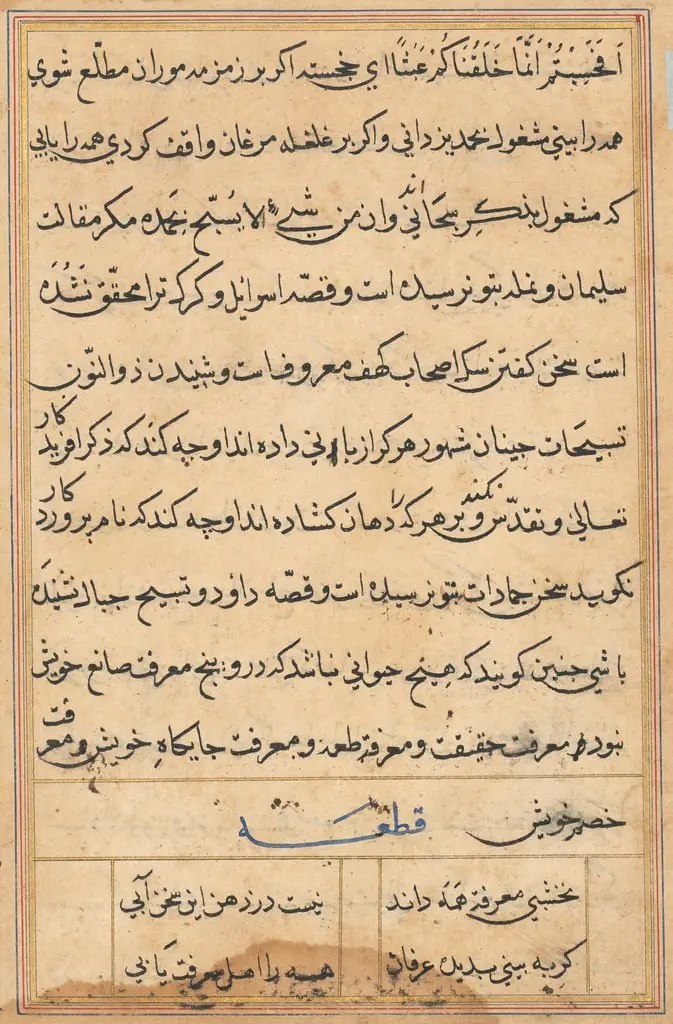 Page from Tales of a Parrot (Tuti-nama): text page
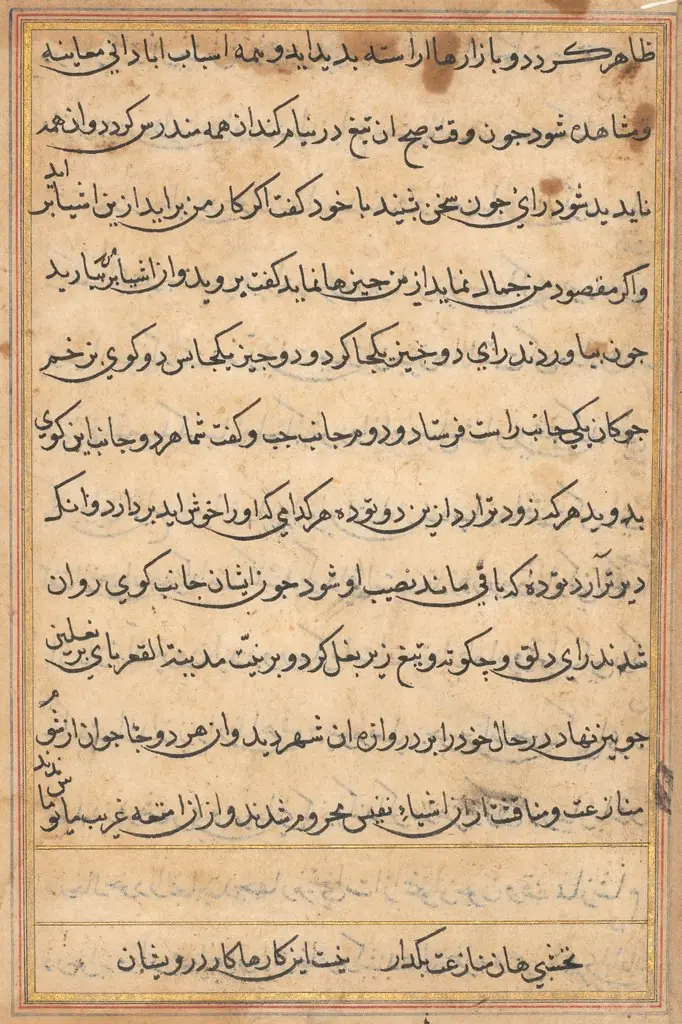 Page from Tales of a Parrot (Tuti-nama): text page
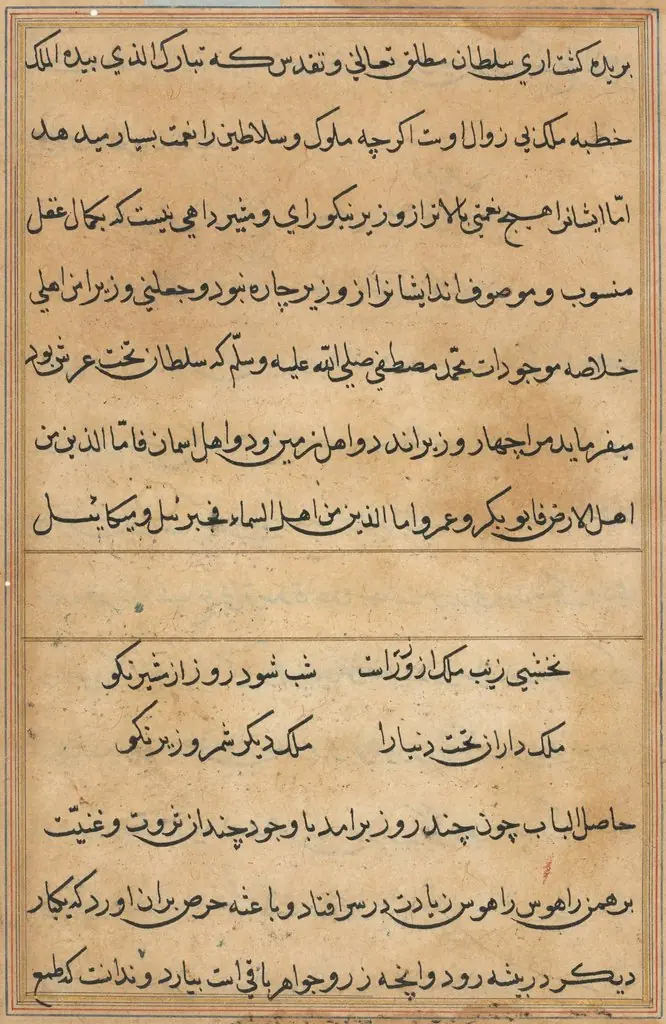 Page from Tales of a Parrot (Tuti-nama): text page
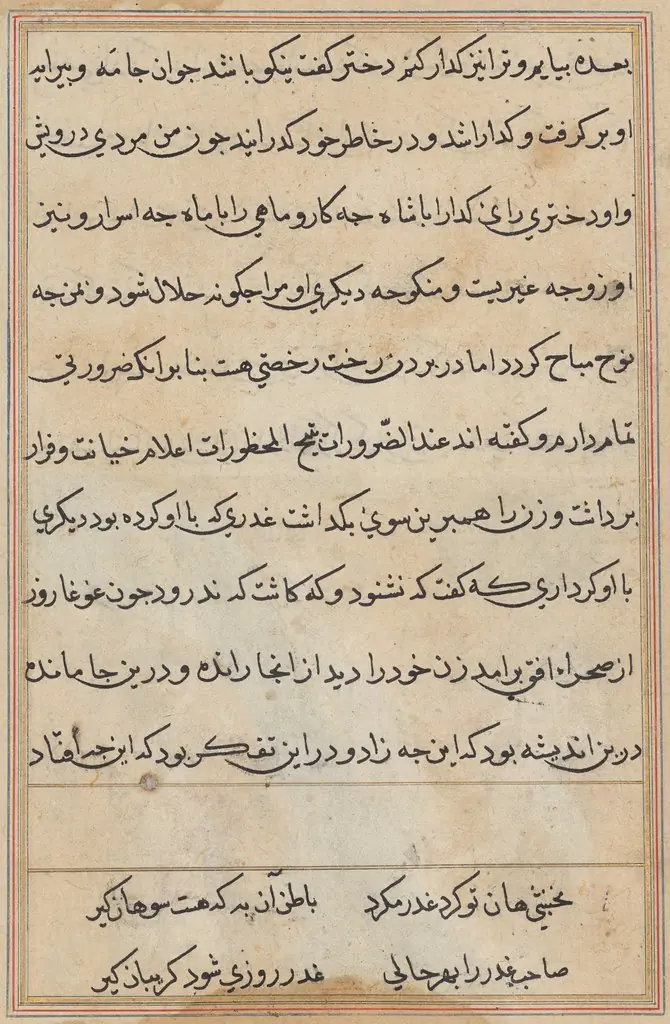 Page from Tales of a Parrot (Tuti-nama): text page
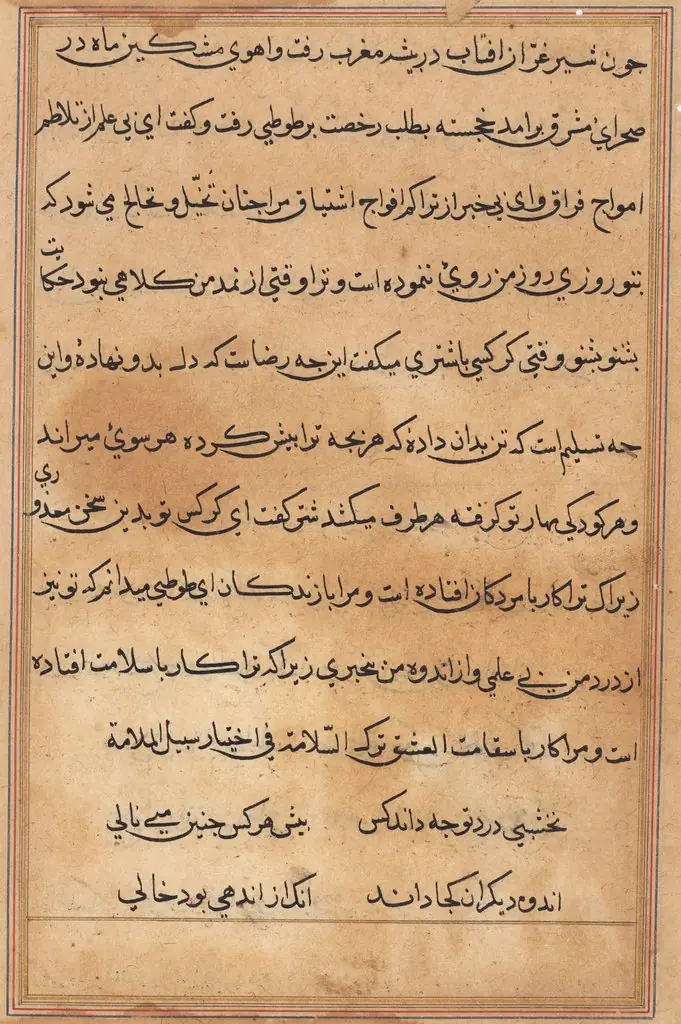 Page from Tales of a Parrot (Tuti-nama): text page
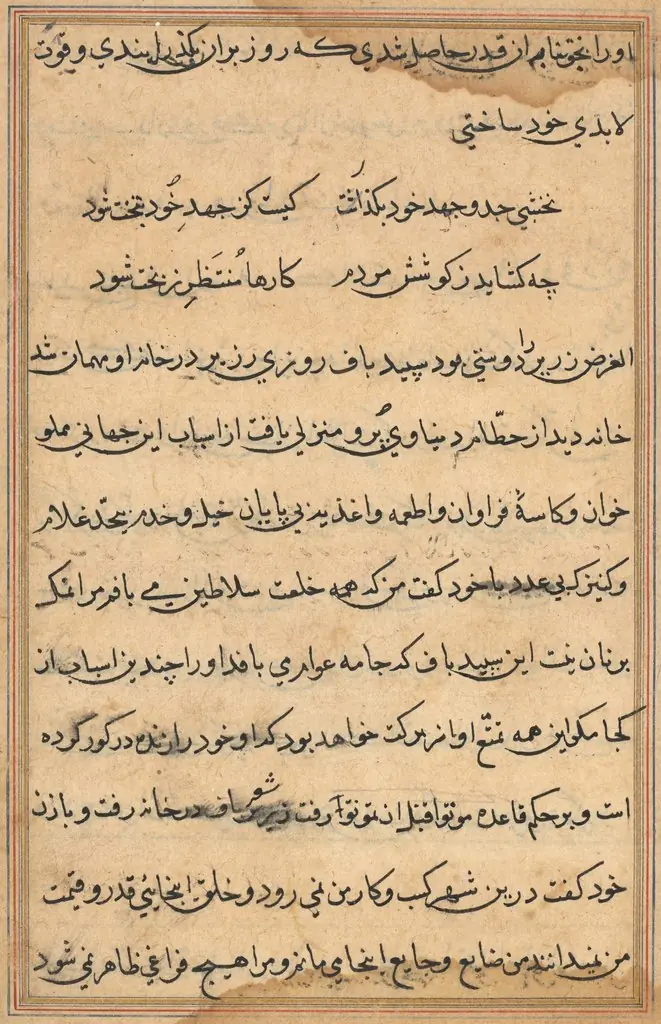 Page from Tales of a Parrot (Tuti-nama): text page
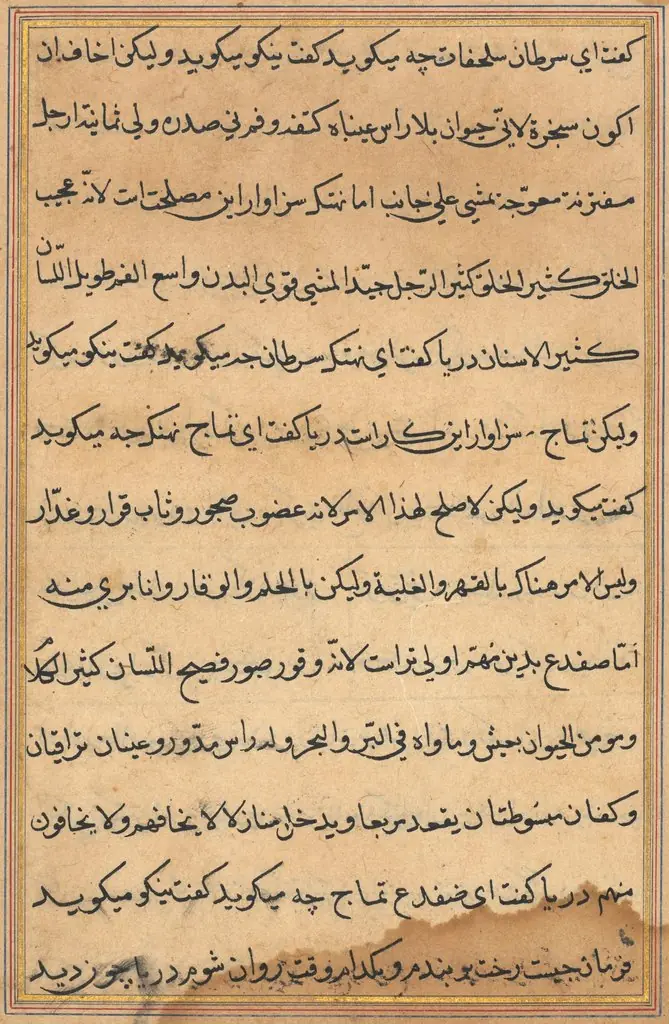 Page from Tales of a Parrot (Tuti-nama): text page
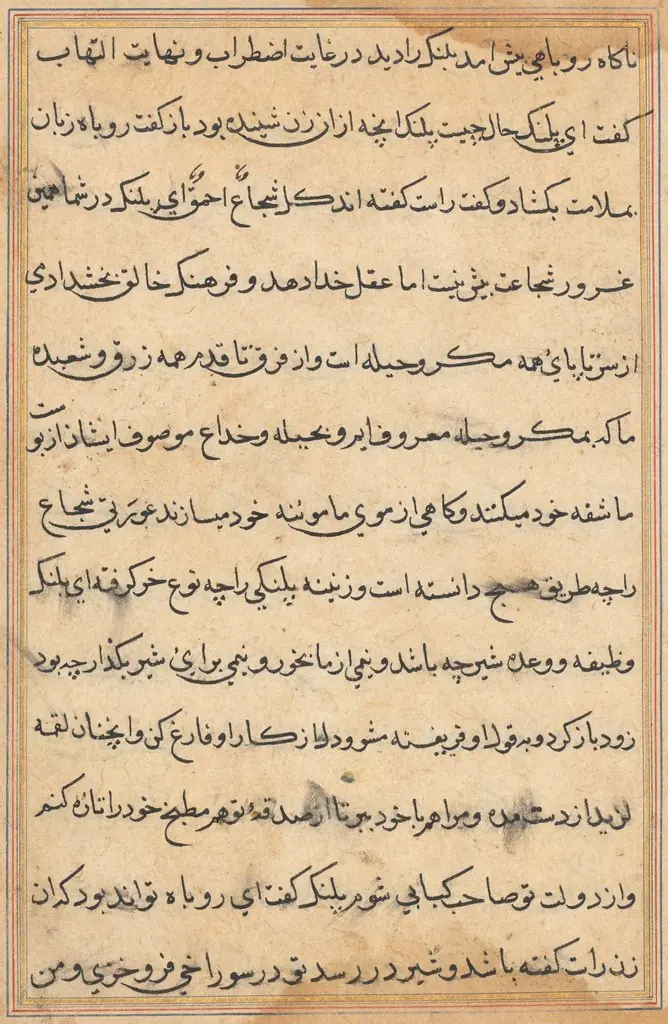 Page from Tales of a Parrot (Tuti-nama): text page
 Page from Tales of a Parrot (Tuti-nama): text page