Artwork
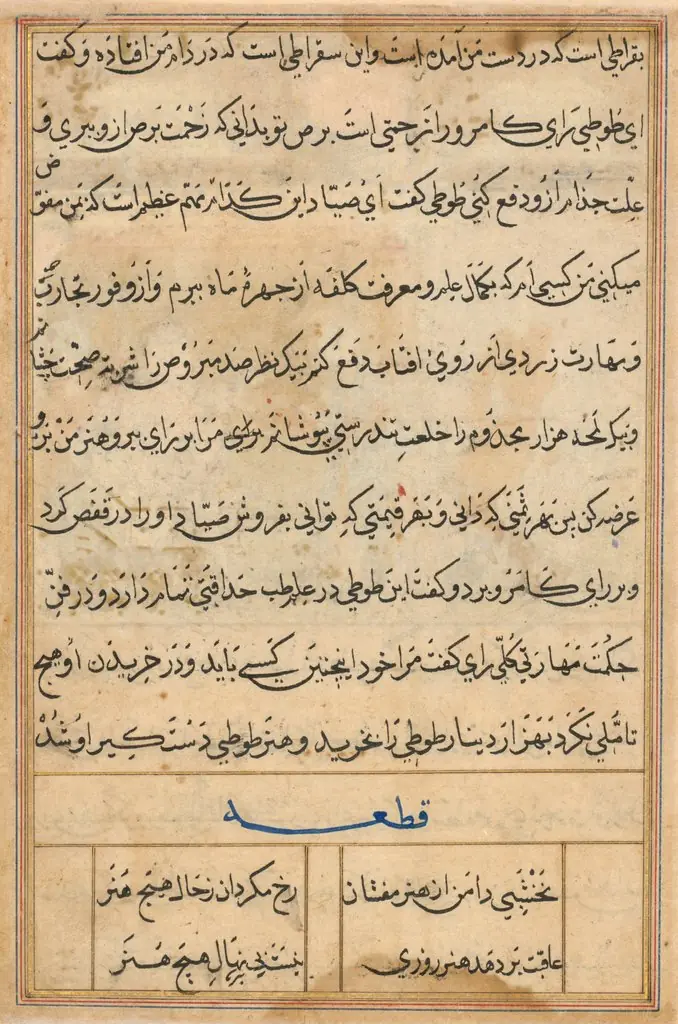
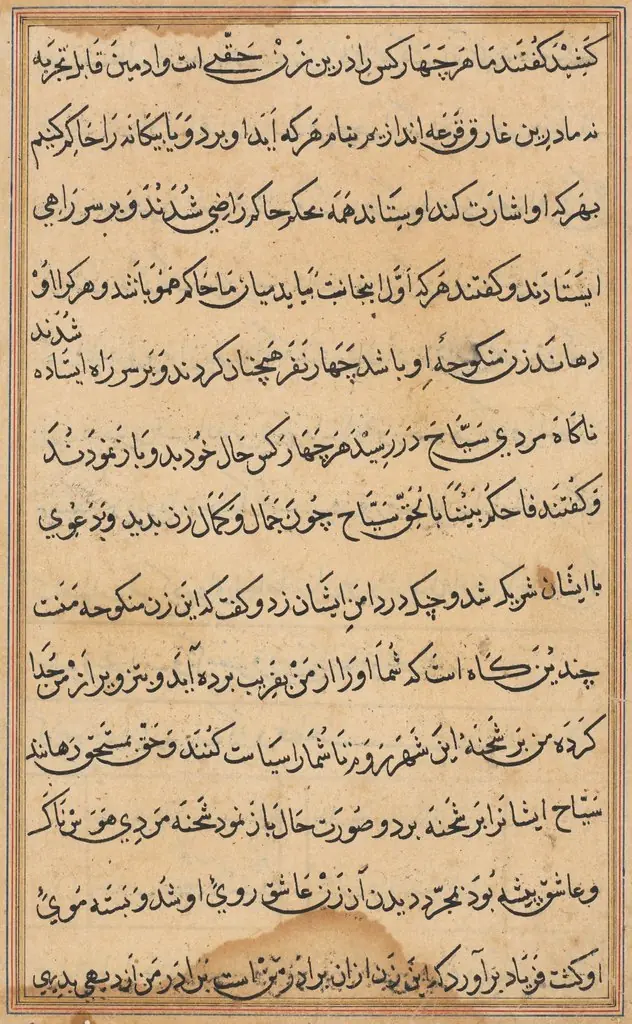
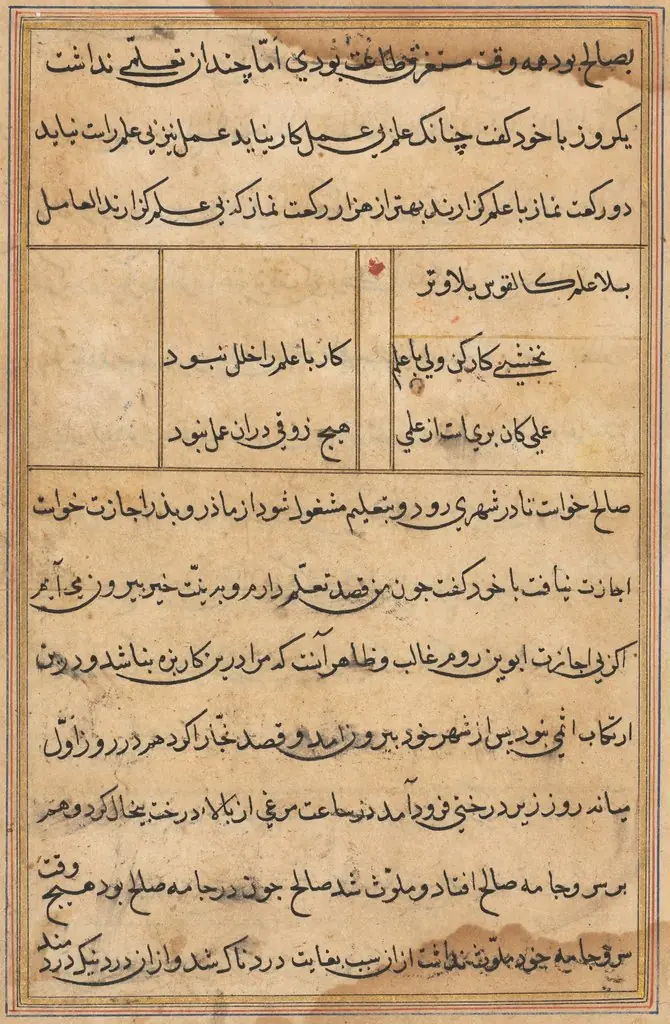
Page from Tales of a Parrot (Tuti-nama): text page
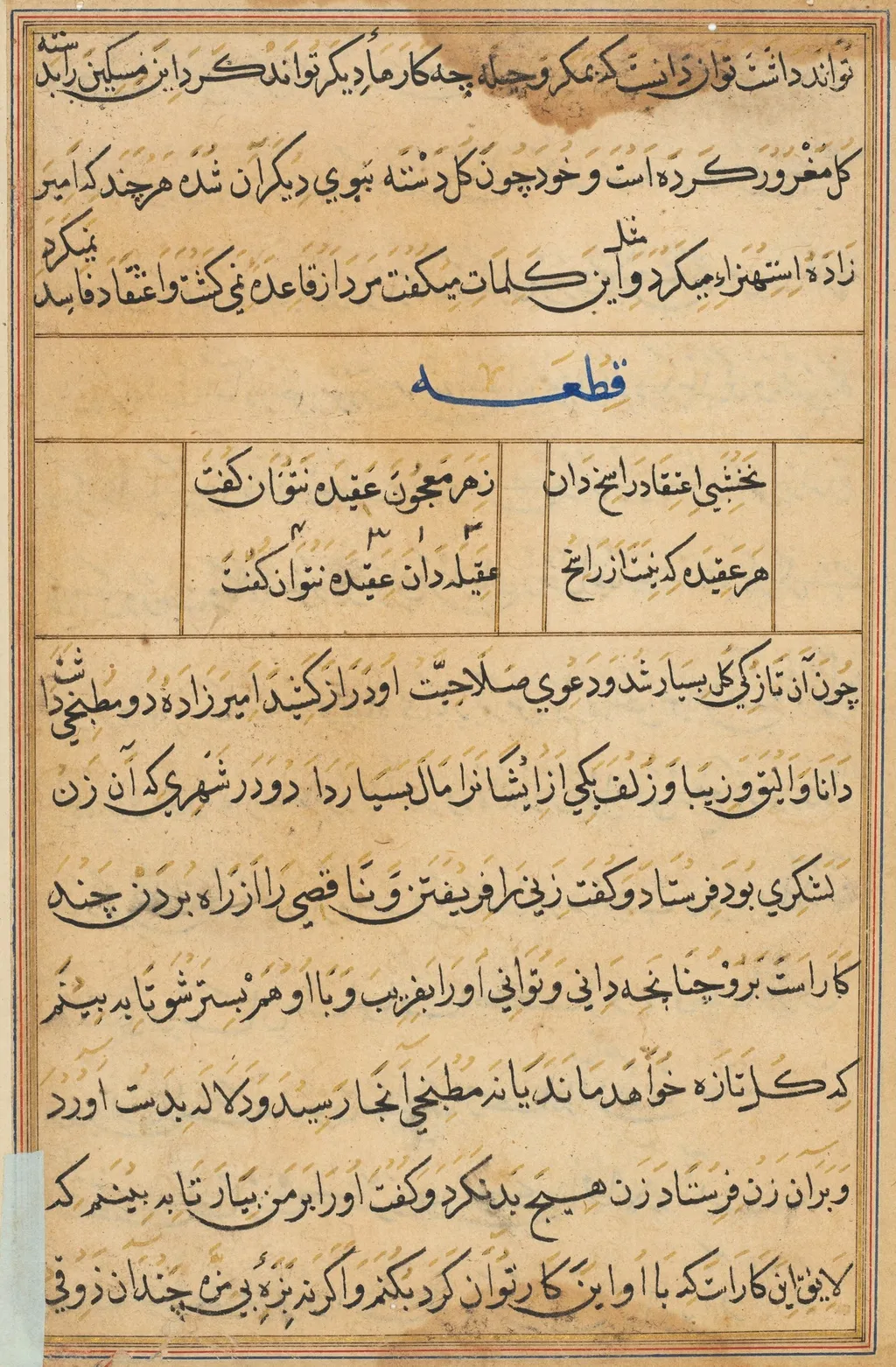
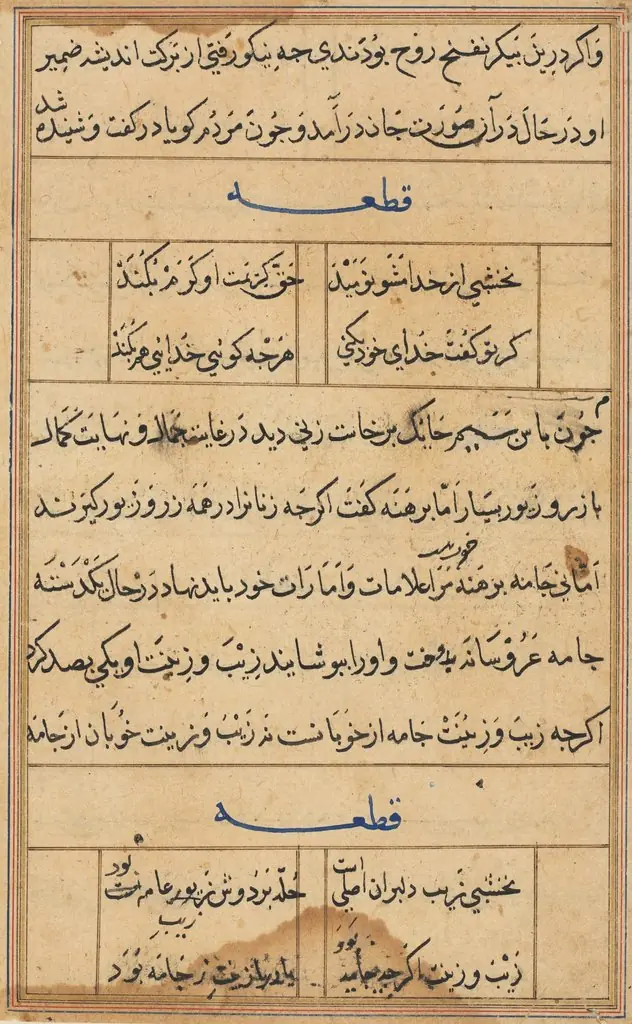
Page from Tales of a Parrot (Tuti-nama): text page is an unspecified painting. It dates from 1560 and is held in the collection of the Cleveland Museum of Art. The object is a single leaf from the manuscript known as Tuti‑nama (Tales of a Parrot).
About this work
History & Provenance
It was created in 1560 within the Mughal Empire and has not been documented in any exhibition history according to the available sources.
The page was created in 1560 within the Mughal Empire, as recorded in the work's cataloguing data. It is classified as a painting and is attributed to an unknown artist, with no surviving information about the patron who commissioned the manuscript or the circumstances of its production.
The page is held by the Cleveland Museum of Art, where it is catalogued under accession number 1962.279.28.a. The sources do not document any earlier owners, dealers, or transfers prior to the museum's acquisition, leaving the ownership chain between the sixteenth-century Mughal context and the Cleveland collection unrecorded in the available data.
The work is held at the Cleveland Museum of Art, where it is cataloged under inventory number 1962.279.28.a. It was created in 1560 within the Mughal Empire and has not been documented in any exhibition history according to the available sources.
Overview
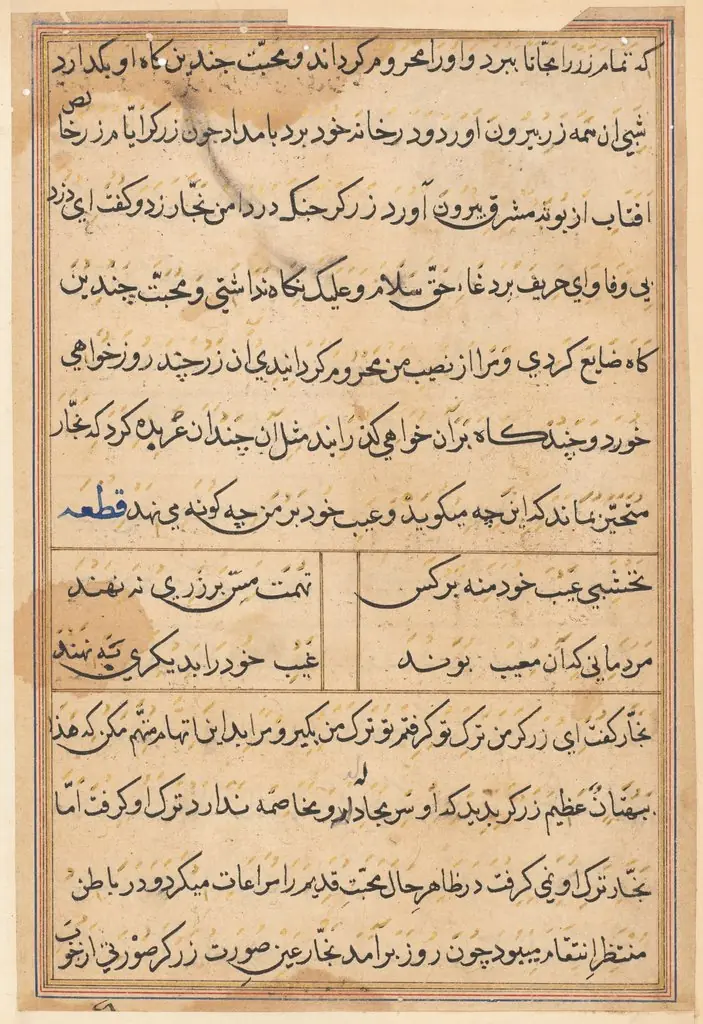
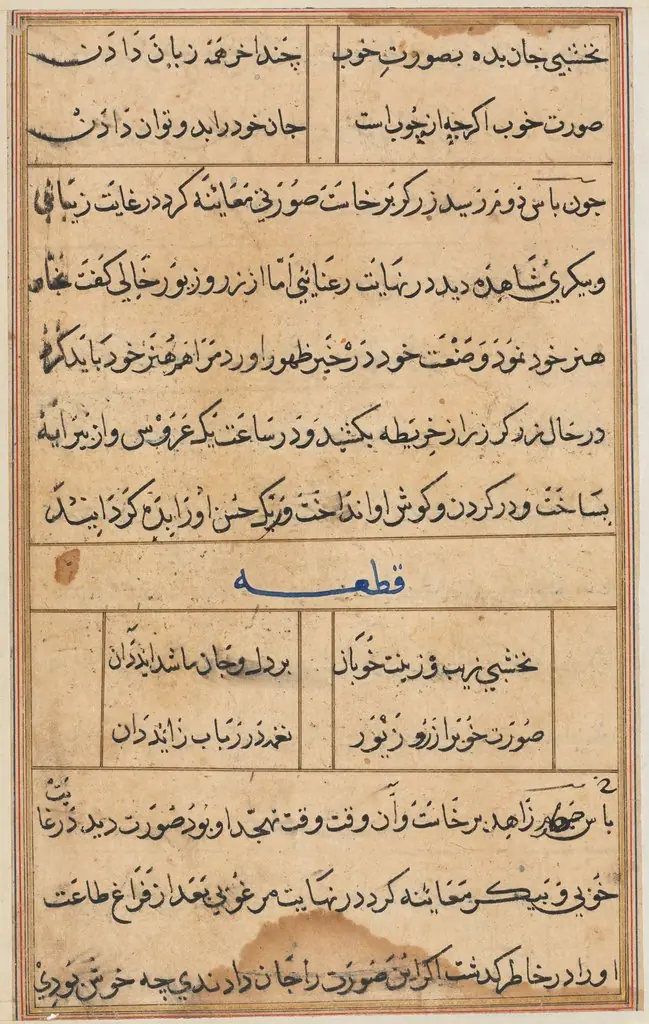
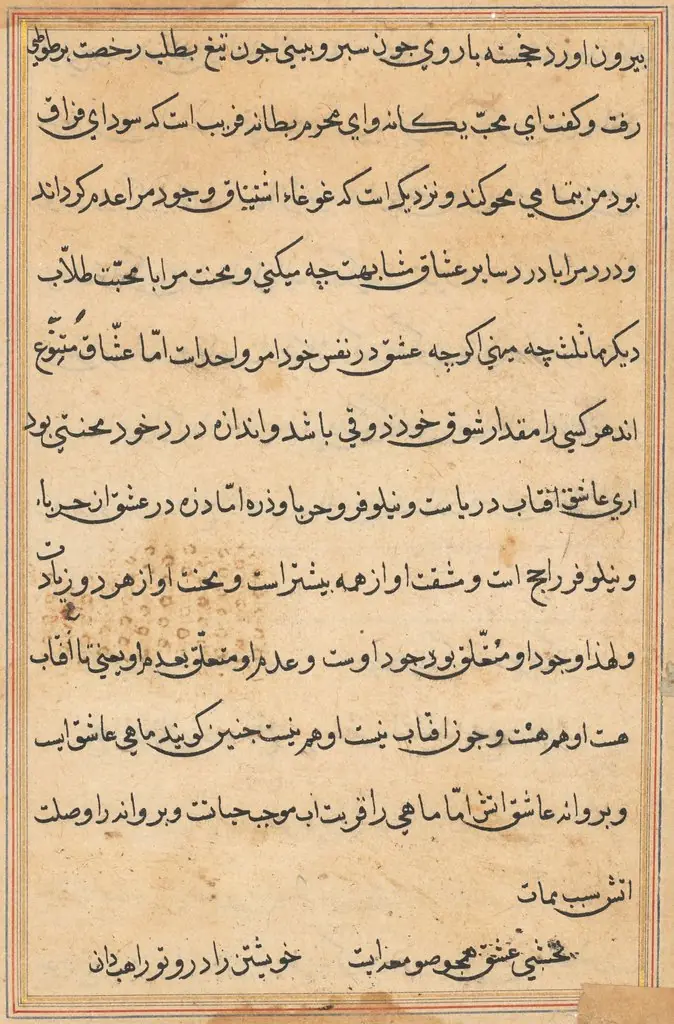
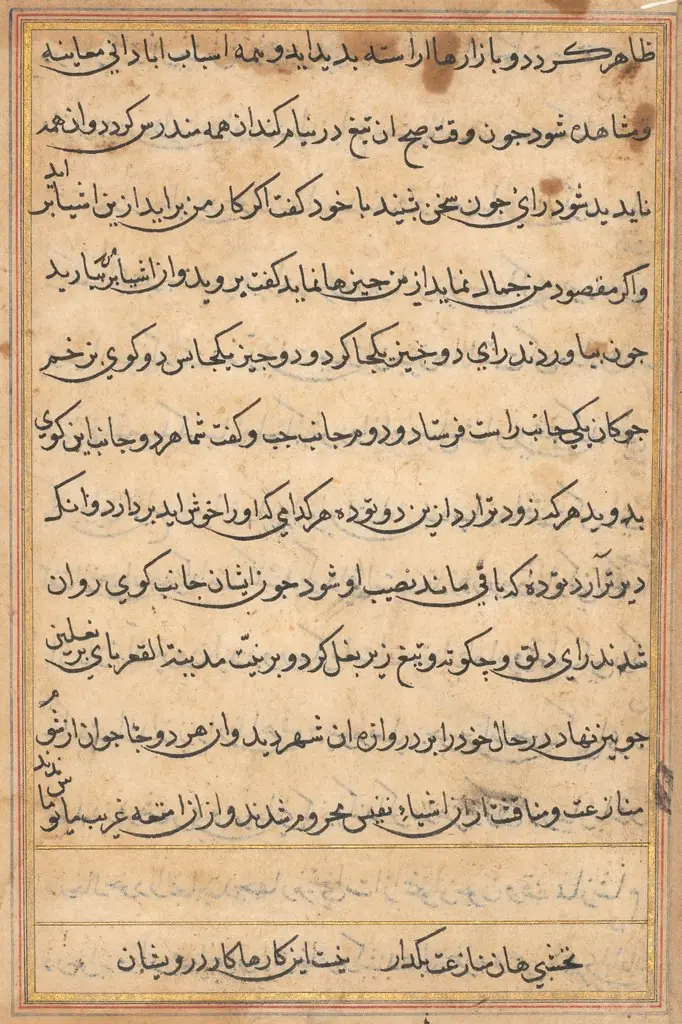
The object is a single leaf from the manuscript known as Tuti‑nama (Tales of a Parrot). It consists solely of handwritten text, presented on a light‑brown folio whose edges are bordered by darker brown lines. The paper shows signs of age, including minor tears and surface discoloration, typical of historic codices.
Subject & Meaning
The page contains narrative prose in an unfamiliar script, with certain passages emphasized through enlarged lettering. While the exact content is not translated here, the use of larger characters suggests a hierarchical or thematic significance within the broader story of the Tuti‑nama, a collection of moral and entertaining tales.
Technique & Style
The text is rendered in a decorative hand, employing a refined calligraphic style that balances legibility with ornamental flourish. The script’s varying size and the consistent brown ink on the parchment reflect conventional manuscript practices of the period, where visual hierarchy was achieved through typographic variation rather than illustration.
Context
Tuti‑nama belongs to a genre of didactic literature that blends fable, poetry, and moral instruction, often circulated in courtly and scholarly circles. Manuscripts of this type were commonly copied by hand, and their pages served both as literary vehicles and as objects reflecting the aesthetic values of their patrons.
Artist & collection

- Page from Tales of a Parrot (Tuti-nama): text page
 Page from Tales of a Parrot (Tuti-nama): text page
 Page from Tales of a Parrot (Tuti-nama): text page
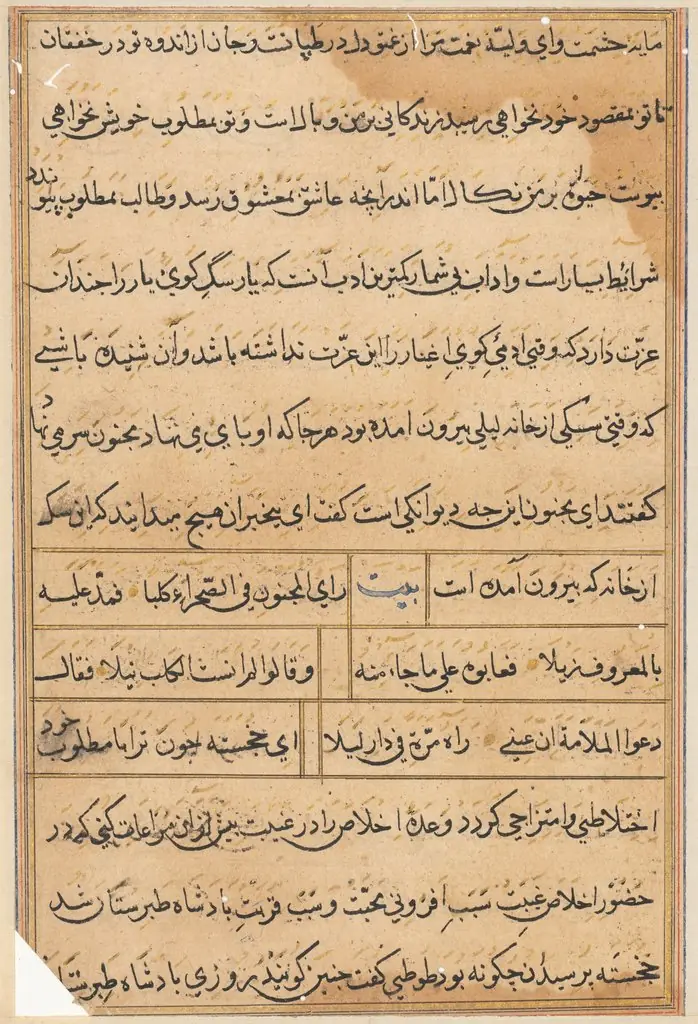 Page from Tales of a Parrot (Tuti-nama): text page
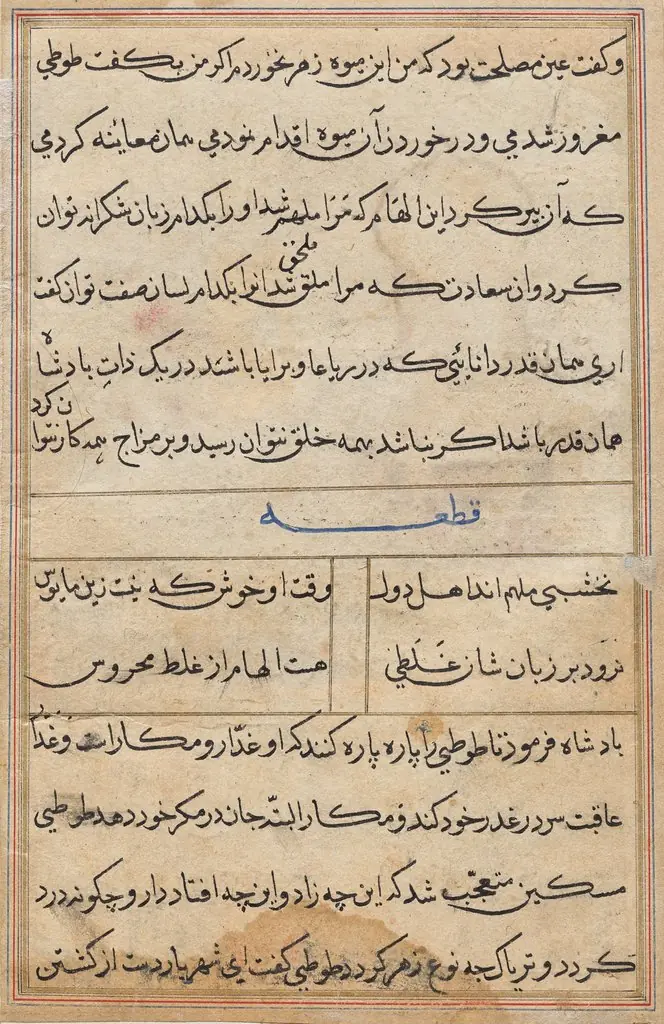 Page from Tales of a Parrot (Tuti-nama): text page
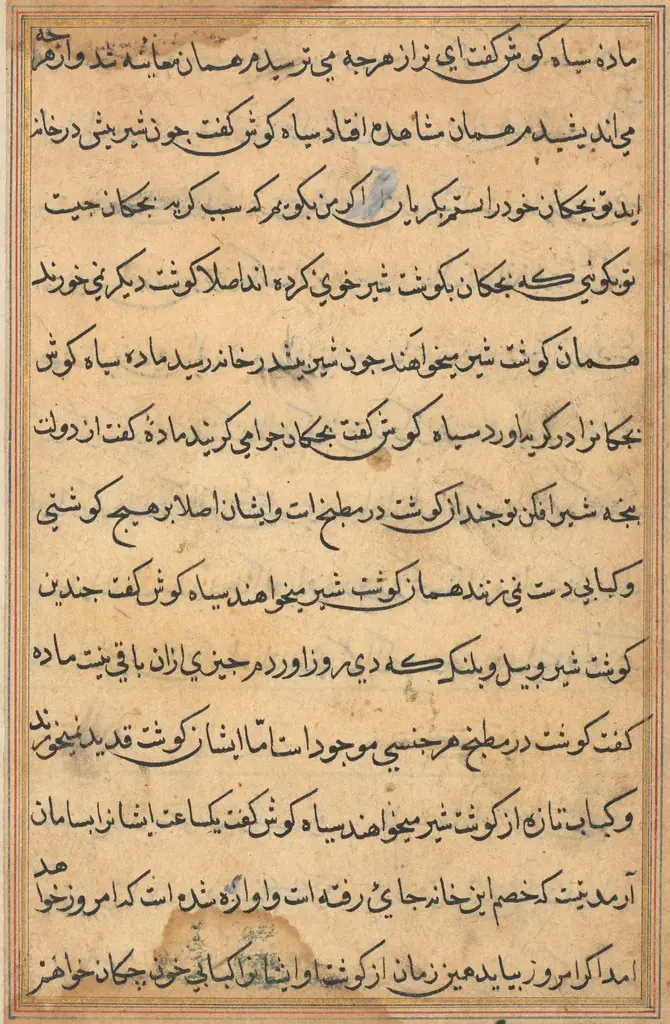 Page from Tales of a Parrot (Tuti-nama): text page
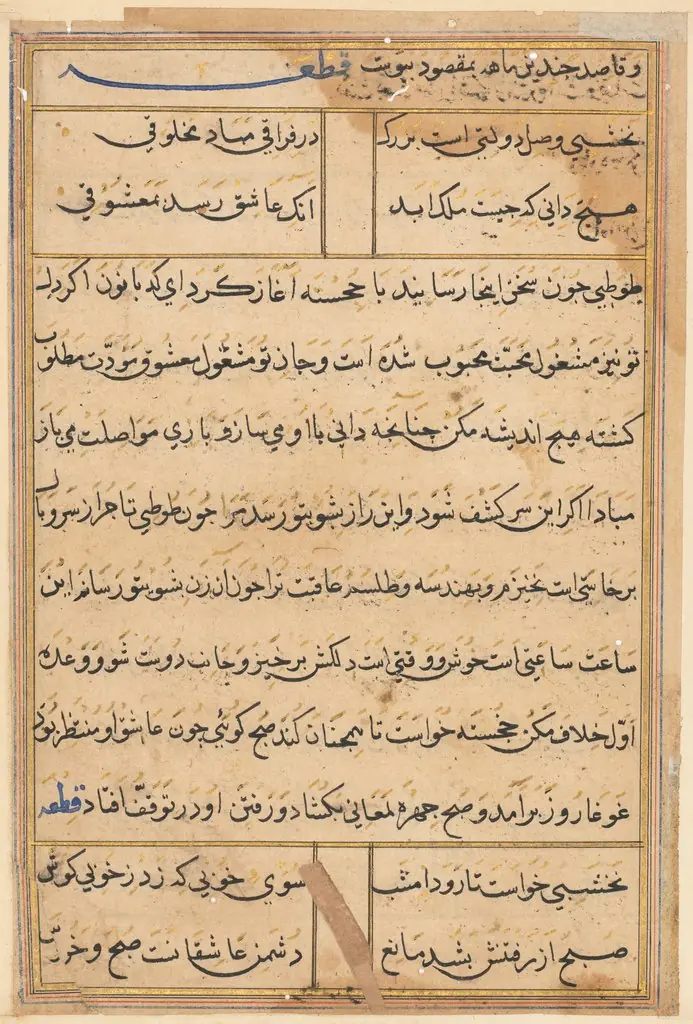 Page from Tales of a Parrot (Tuti-nama): text page
 Page from Tales of a Parrot (Tuti-nama): text page
 Page from Tales of a Parrot (Tuti-nama): text page
 Page from Tales of a Parrot (Tuti-nama): text page
 Page from Tales of a Parrot (Tuti-nama): text page
 Page from Tales of a Parrot (Tuti-nama): text page