Artwork
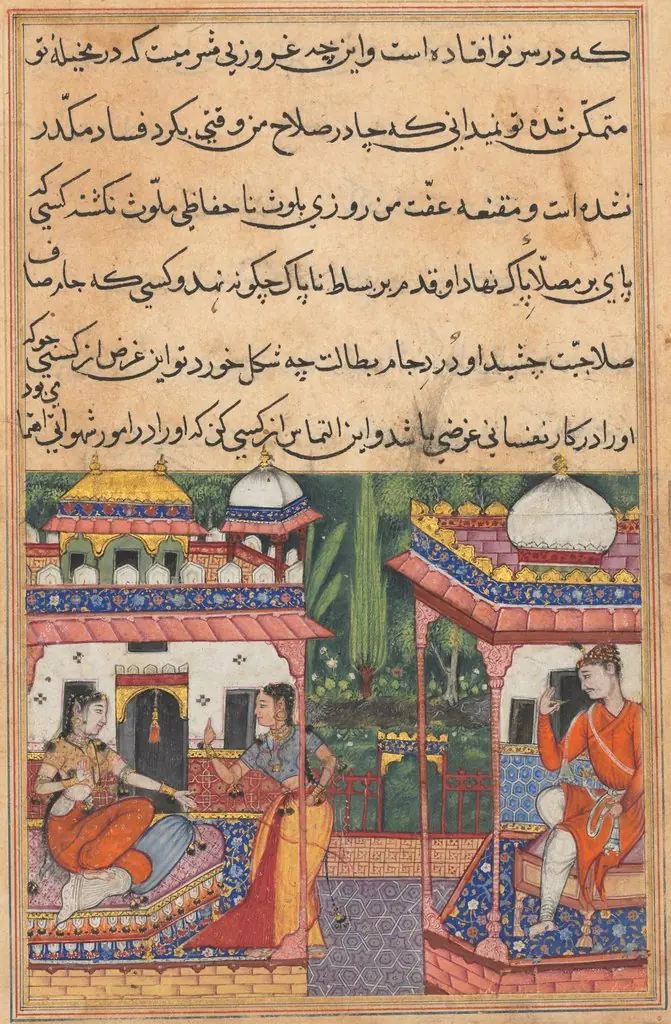
The third suitor strikes the devotee’s daughter and thus restores her to life, from a Tuti-nama (Tales of a Parrot): Twentieth Night
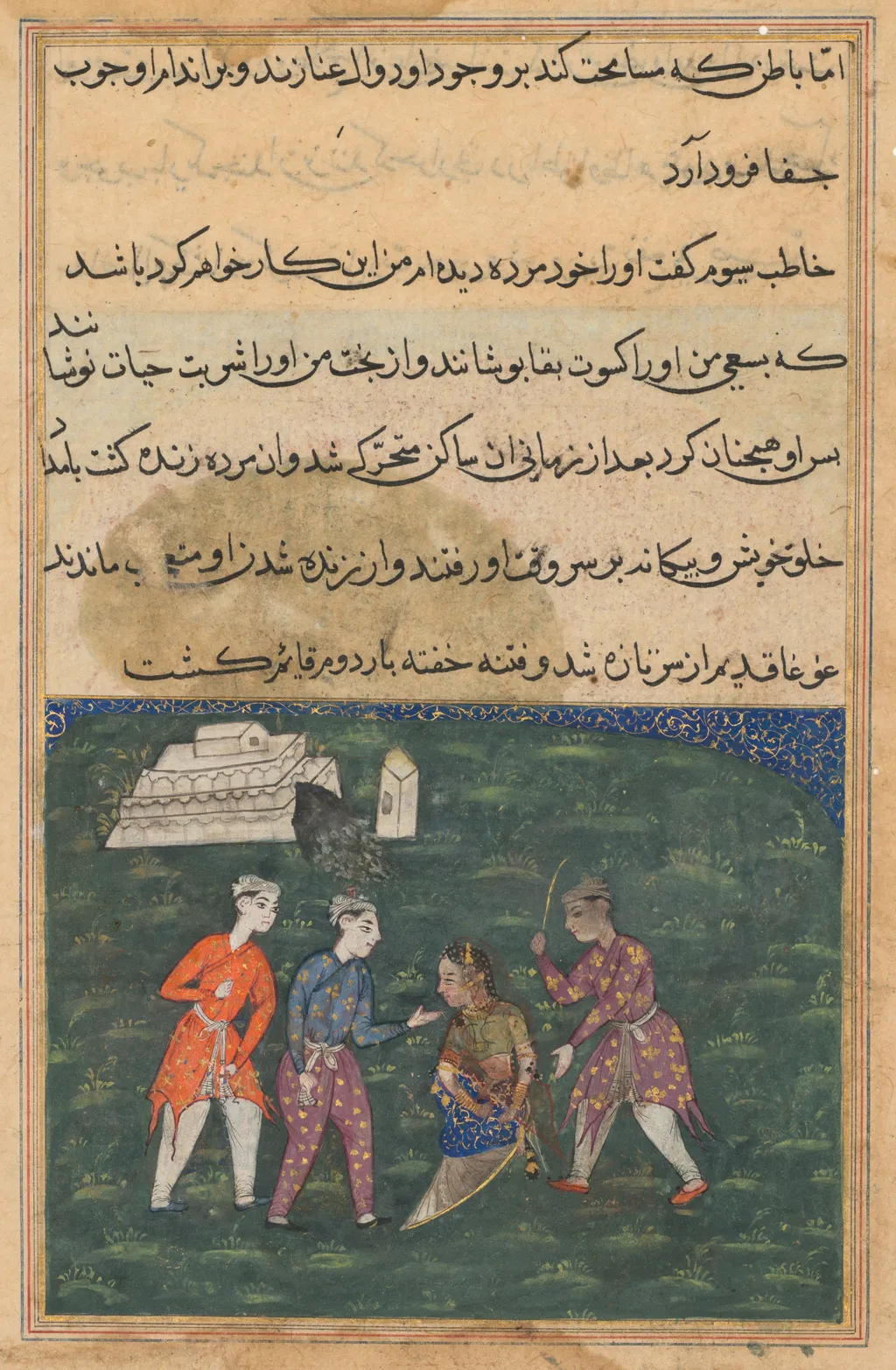
The third suitor strikes the devotee’s daughter and thus restores her to life, from a Tuti-nama (Tales of a Parrot): Twentieth Night is an unspecified painting. It dates from 1560 and is held in the collection of the Cleveland Museum of Art. The work illustrates a moment from the twentieth night of the Tuti‑nama, a narrative collection centered on a storytelling parrot.
About this work
Technique & Style
Executed on a rectangular support, the work exemplifies the precise draftsmanship and subtle color modulation characteristic of courtly manuscript illustration.
The painting was created using opaque watercolor on paper, in the Mughal artistic tradition prevalent in the mid-16th century. Executed on a rectangular support, the work exemplifies the precise draftsmanship and subtle color modulation characteristic of courtly manuscript illustration. The composition demonstrates a balanced arrangement of figures, with delicate line work and restrained modeling that conveys both narrative clarity and spiritual intensity.
History & Provenance
Created circa 1560 within the Mughal Empire, this painting illustrates the Twentieth Night of the Tuti-nama (Tales of a Parrot), executed by an unknown artist as part of a larger manuscript tradition. It is held in the collection of the Cleveland Museum of Art in Cleveland, Ohio, under accession number 1962.279.146.b, having entered the museum's holdings in 1962. The folio depicts the scene in which the third suitor strikes the devotee's daughter, restoring her to life. No exhibition history for this specific folio is documented in the available sources.
Overview
The work illustrates a moment from the twentieth night of the Tuti‑nama, a narrative collection centered on a storytelling parrot. In the scene a woman lies on the ground while three men in orange, blue and purple robes surround her; one figure wields a stick and appears to strike her. The setting includes a grassy hill and a distant small building, conveying a tense, dramatic atmosphere.
Subject & Meaning
The composition captures the climax of a tale in which the third suitor, by striking the devotee’s daughter, restores her to life. The act of violence is paradoxically linked to resurrection, reflecting the story’s themes of devotion, sacrifice and the transformative power of love.
Artist & collection

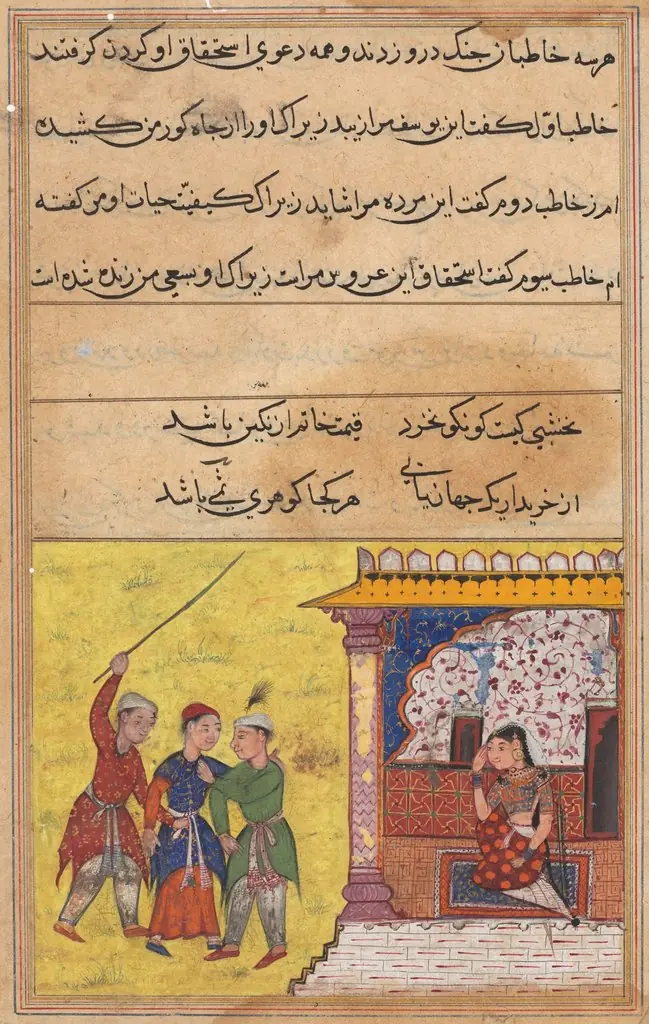
- The three suitors again begin to quarrel among themselves for the hand of the devotee’s daughter, from a Tuti-nama (Tales of a Parrot): Twentieth Night
 The third suitor strikes the devotee’s daughter and thus restores her to life, from a Tuti-nama (Tales of a Parrot): Twentieth Night
 The three suitors again begin to quarrel among themselves for the hand of the devotee’s daughter, from a Tuti-nama (Tales of a Parrot): Twentieth Night
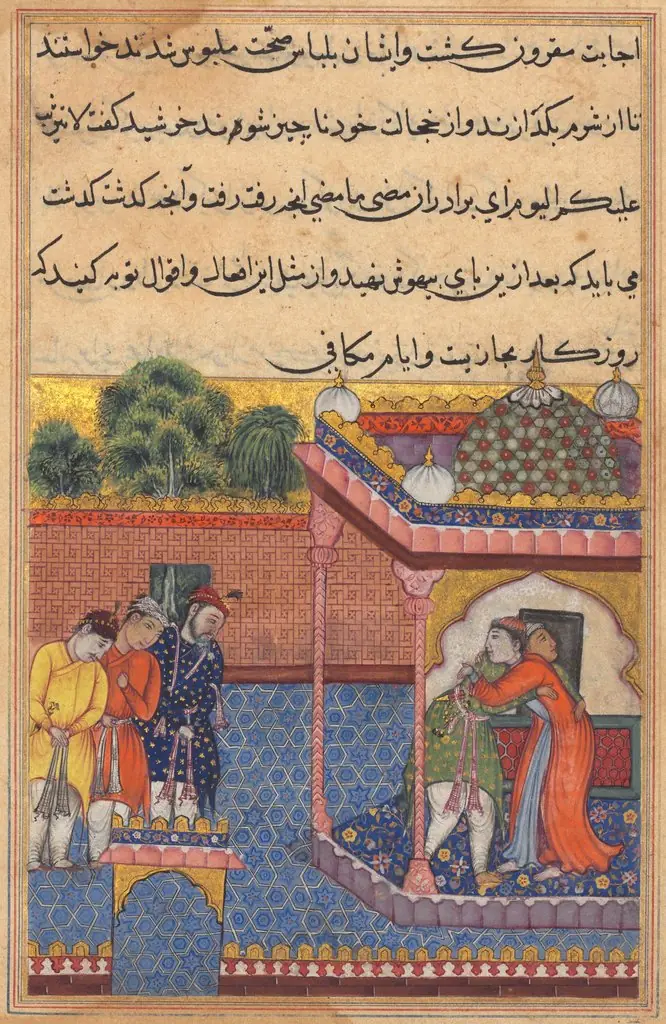 Khurshid reunited with her husband Utarid, from a Tuti-nama (Tales of a Parrot): Thirty-second Night
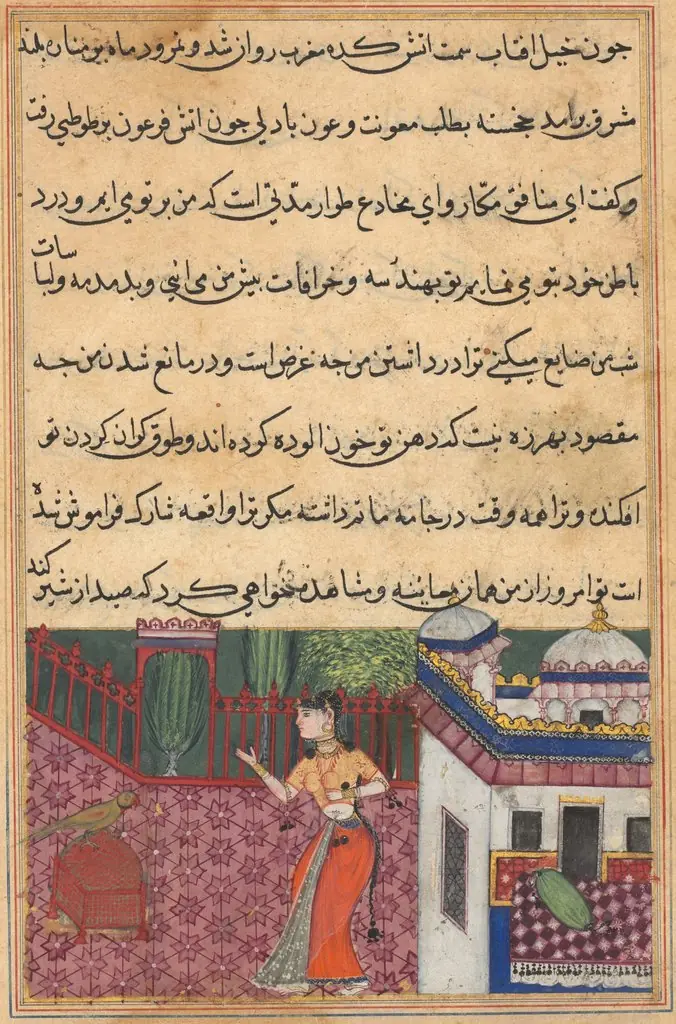 The parrot addresses Khujasta at the beginning of the thirty-third night, from a Tuti-nama (Tales of a Parrot)
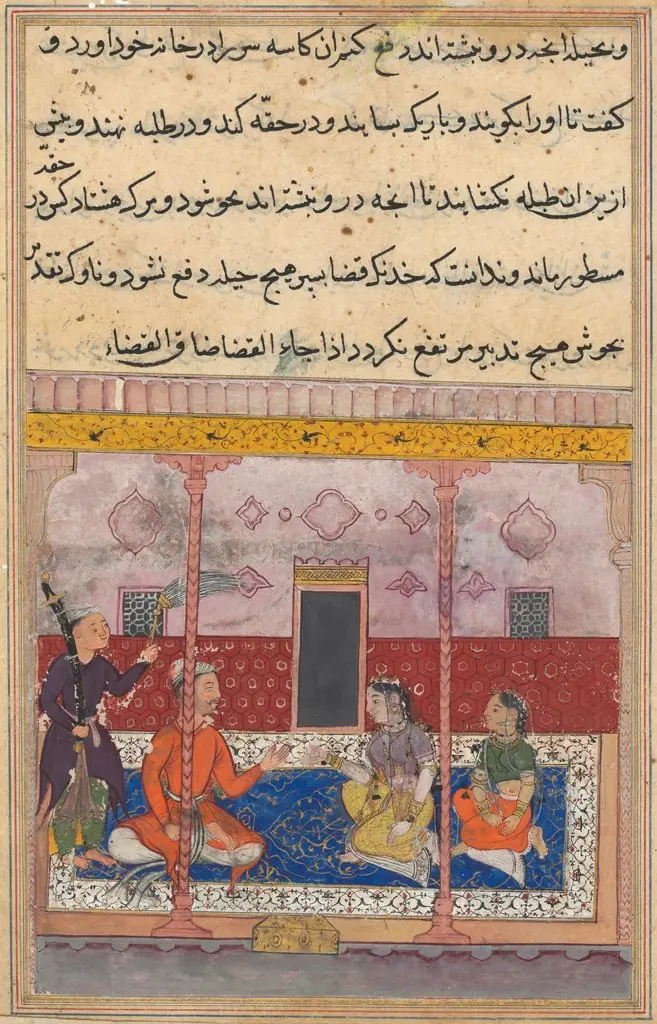 The merchant has the hateful skull ground and put into a box, from a Tuti-nama (Tales of a Parrot): Twenty-third Night
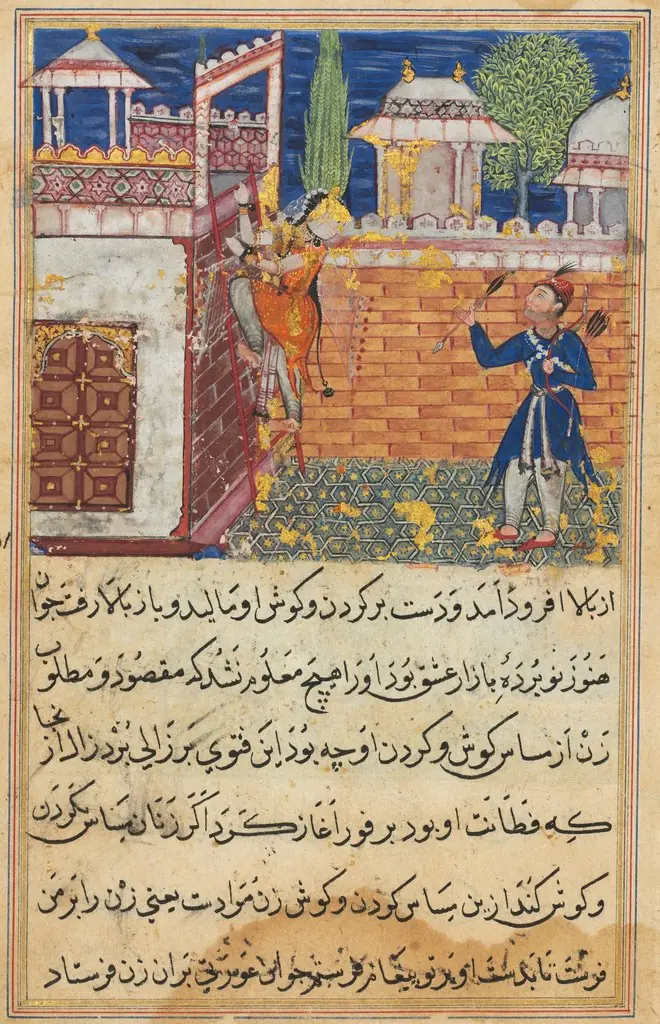 The deceitful wife returns to her terrace after caressing her lover, from a Tuti-nama (Tales of a Parrot): Eighth Night
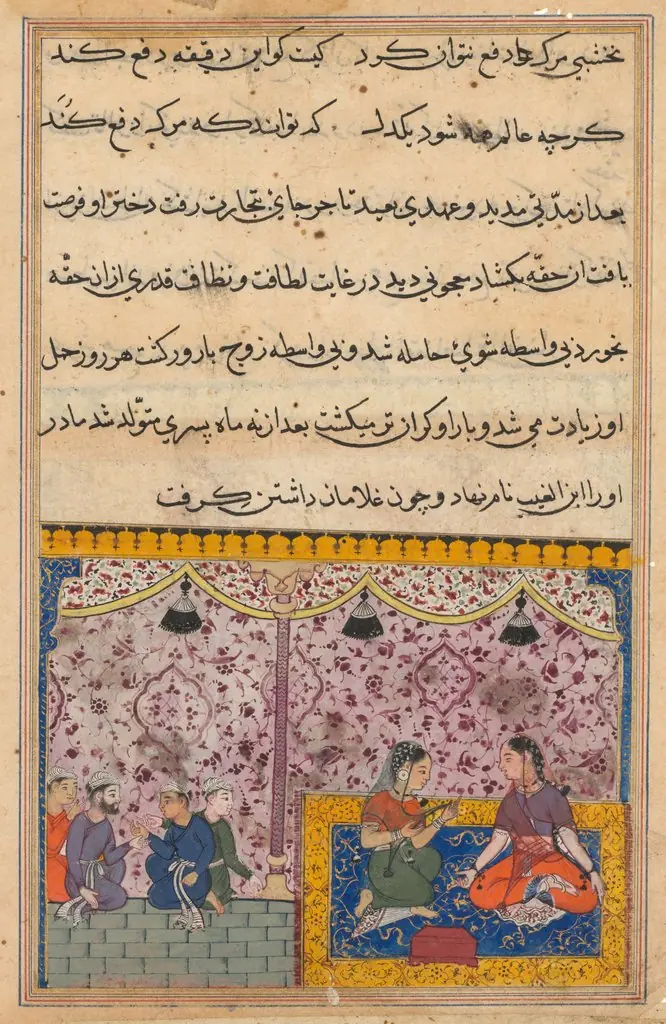 The merchant’s daughter gives birth to a son as a result of eating out of the box. The clever child recognizes the false gems from true, from a Tuti-nama (Tales of a Parrot): Twenty-third Night
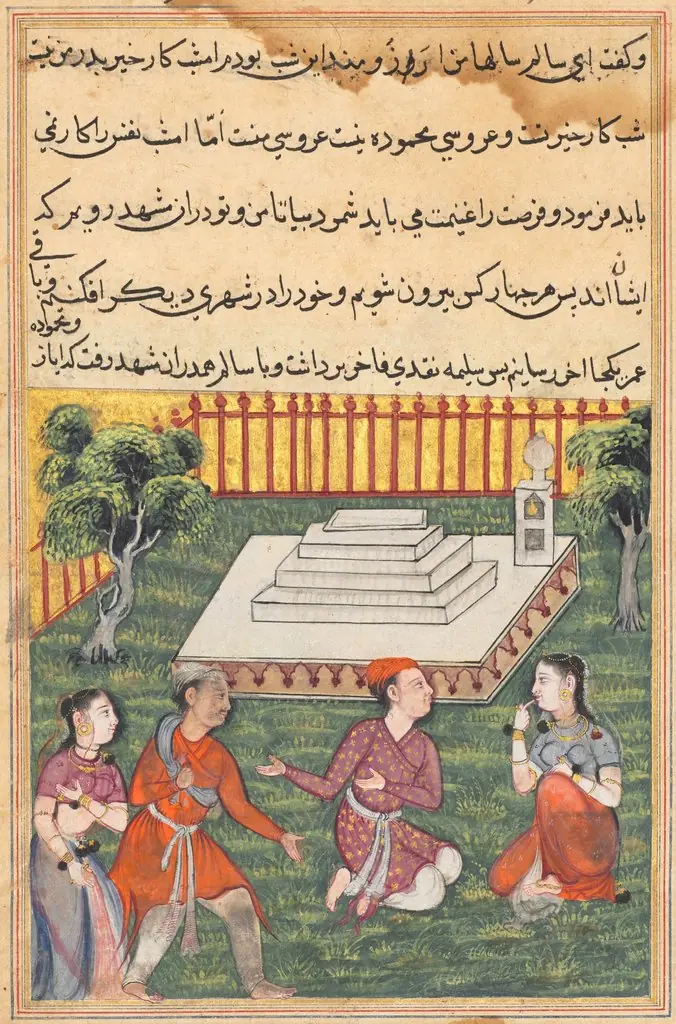 Salim and Salima return to Ayaz and Mahmuda in the sanctuary, from a Tuti-nama (Tales of a Parrot): Thirty-third Night
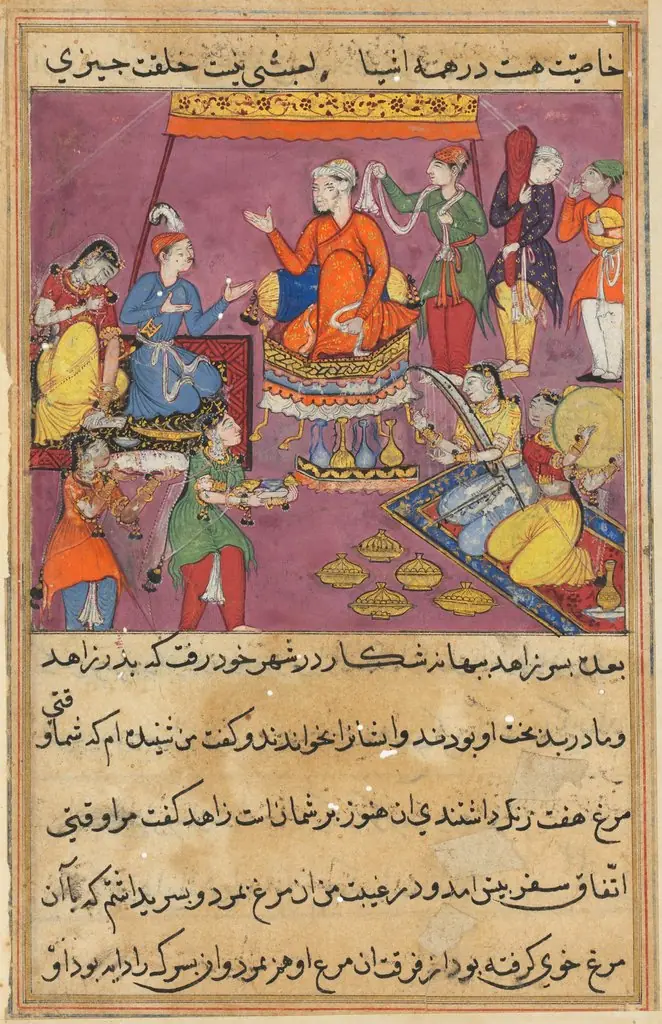 The king gives his daughter in marriage to the pious man’s son, from a Tuti-nama (Tales of a Parrot): Fifty-second Night
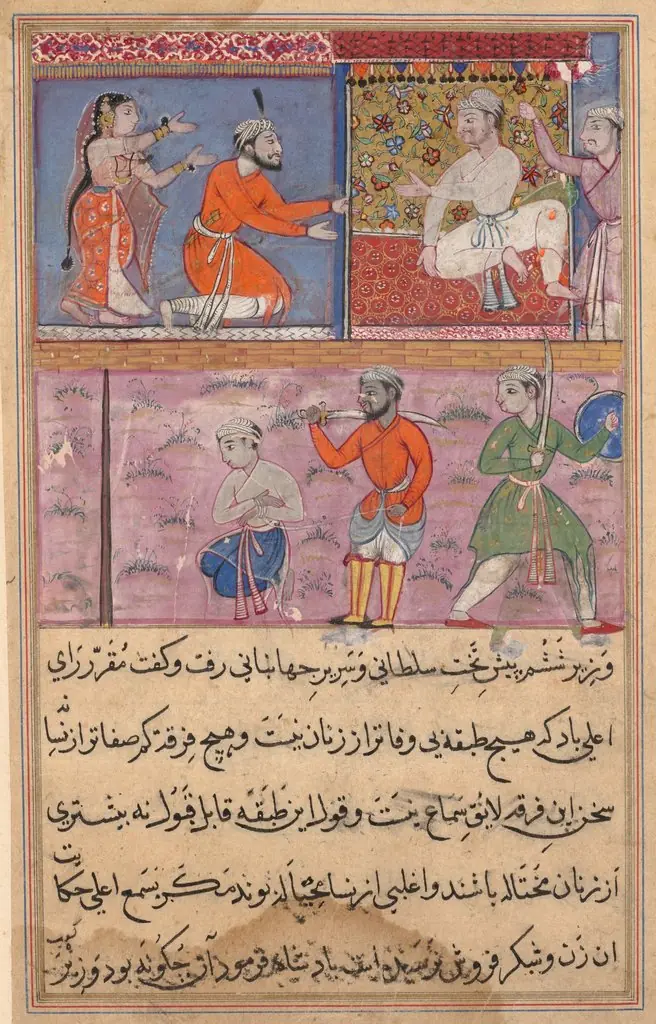 Page from Tales of a Parrot (Tuti-nama): text page
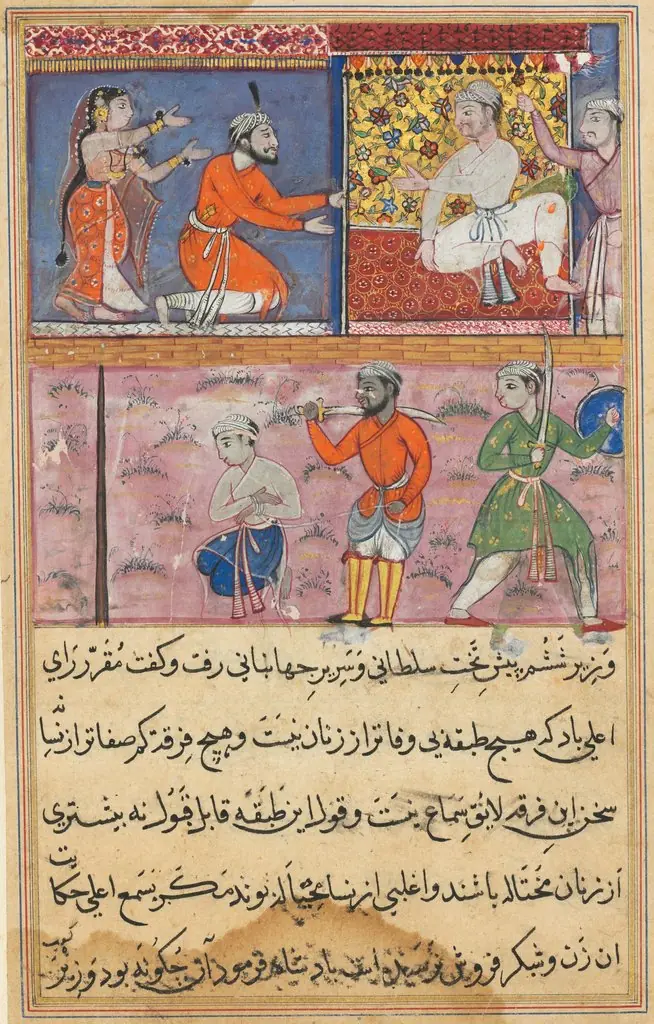 The prince sent back to the place of execution for the sixth time, from a Tuti-nama (Tales of a Parrot): Eighth Night
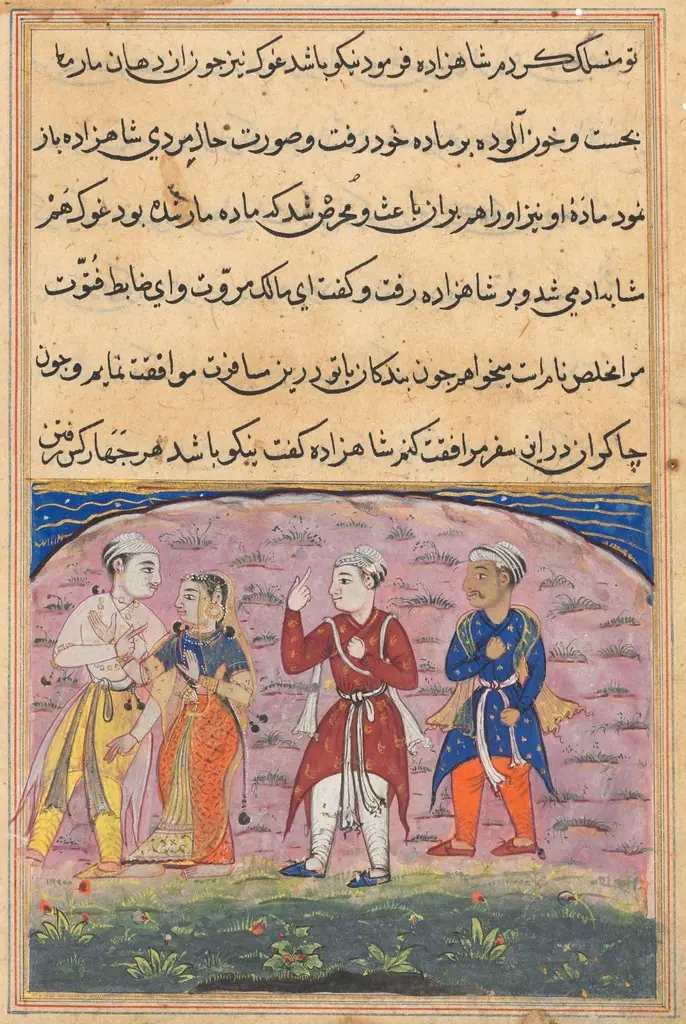 The prince and Nikfal are joined by Khalis and the Mukhlis who are the grateful snake and frog in human form, from a Tuti-nama (Tales of a Parrot): Eighteenth Night
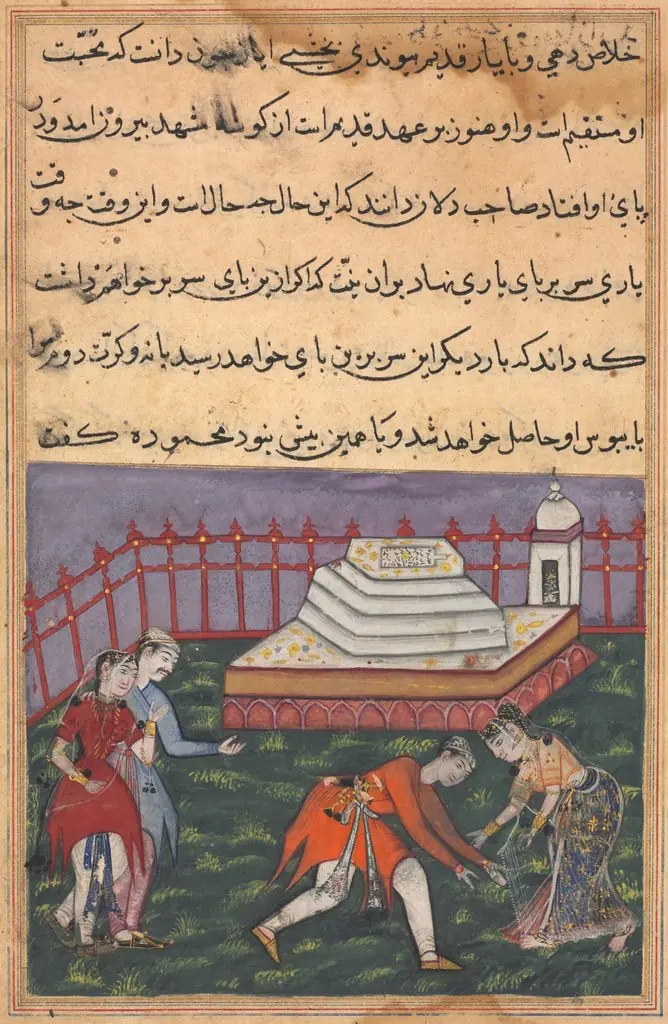 Hearing her declaration of love, Ayaz falls at the feet of Mahmuda at the holy shrine. The scene is witnessed by Salim, Ayaz’s friend, and a maid, from a Tuti-nama (Tales of a Parrot): Thirty-third Night
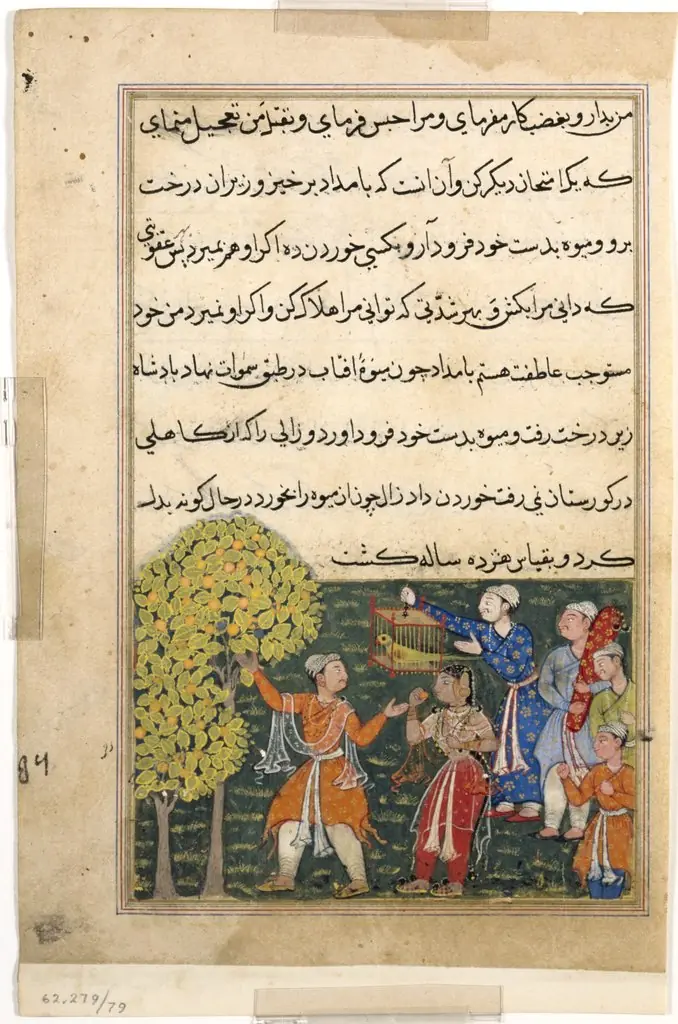 The king plucks fruit from the Tree of Life with his own hands and feeds it to a lady, from a Tuti-nama (Tales of a Parrot): Ninth Night
 Kaiwan sends a message of love to Khurshid, wife of his brother Utarid who is away on a journey, from a Tuti-nama (Tales of a Parrot): Thirty-second Night