Artwork
Tuti-Nama (Tales of a Parrot)
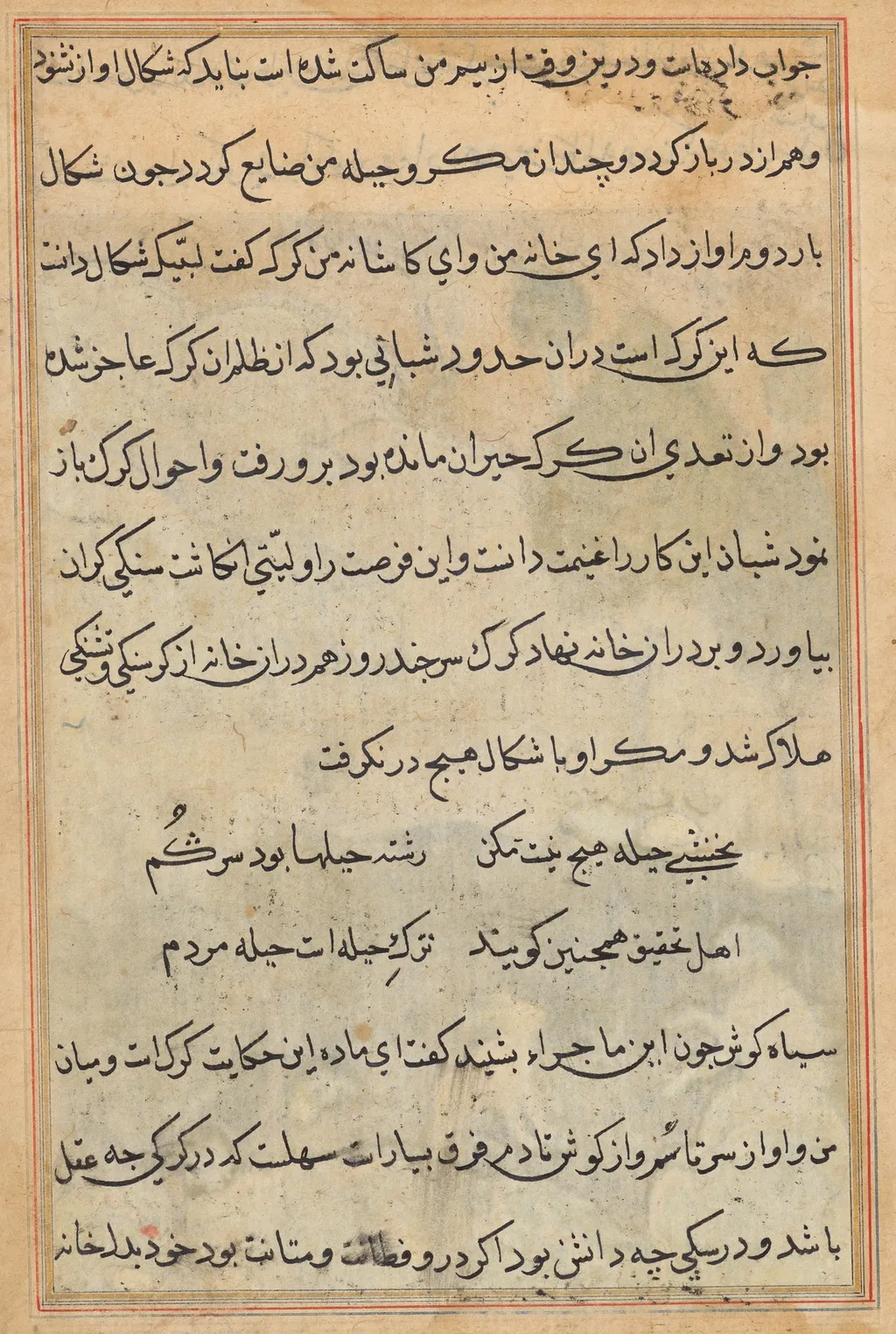
Tuti-Nama (Tales of a Parrot) is an unspecified painting. It dates from 1560 and is held in the collection of the Cleveland Museum of Art.
About this work
History & Provenance
The museum acquired this specific painting in 1962, marking a documented point in its modern ownership history.
The Tuti-Nama (Tales of a Parrot) manuscript was created in 1560 within the Mughal Empire. While the specific individual who commissioned the work is not identified in the available records, the production is attributed to an unknown artist or group of artists operating under imperial patronage.
A portion of this extensive illustrated series, specifically folio 194a (accession number 1962.279.194.a), is currently held in the collection of the Cleveland Museum of Art. The museum acquired this specific painting in 1962, marking a documented point in its modern ownership history.
The Tuti‑Nama (Tales of a Parrot) is a Mughal‑era painting dated to 1560 and held by the Cleveland Museum of Art, where it is registered under accession number 1962.279.194.a. The work originates from the Mughal Empire and is classified as a painting. The sources consulted do not mention any exhibitions, loans, or public displays of this manuscript page, so its exhibition history remains undocumented in the available records to date.
Overview
Tuti‑Nama, translated as “Tales of a Parrot,” is a painted page that presents a dense block of black Arabic calligraphy against a light, slightly yellowed surface. The script is framed by a narrow red border, giving the composition a defined edge while the paper’s aged tone suggests antiquity.
Subject & Meaning
The calligraphic text appears to be a narrative, likely a story involving a parrot, rendered in a decorative yet legible hand. The flowing, curved letters indicate a literary genre that blends entertainment with moral or didactic content, a common feature in medieval Arabic storytelling.
Technique & Style
The work employs ink on paper, with the black pigment applied in tightly packed lines that vary in size and thickness, creating visual rhythm. The red border is painted with a thin, uniform line, contrasting with the dense script and emphasizing the page’s margins. The overall effect balances precision with ornamental fluidity.
Context
Arabic manuscript culture often featured richly calligraphed texts accompanied by modest decorative elements, such as colored borders. Tuti‑Nama fits within this tradition, illustrating how literary works were visually enhanced to engage readers and preserve cultural narratives.
Artist & collection

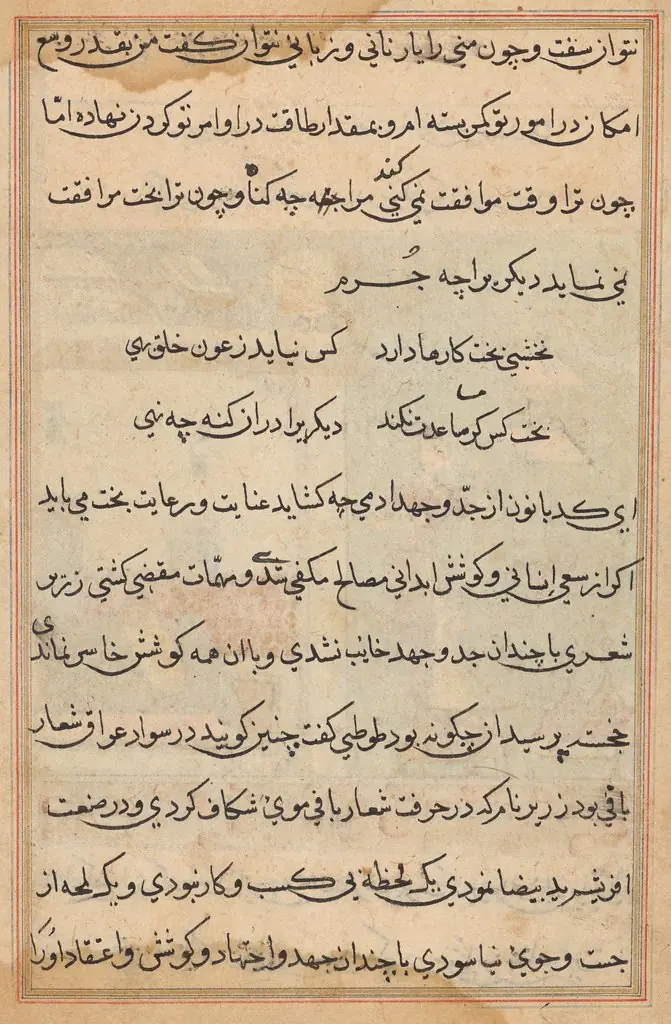
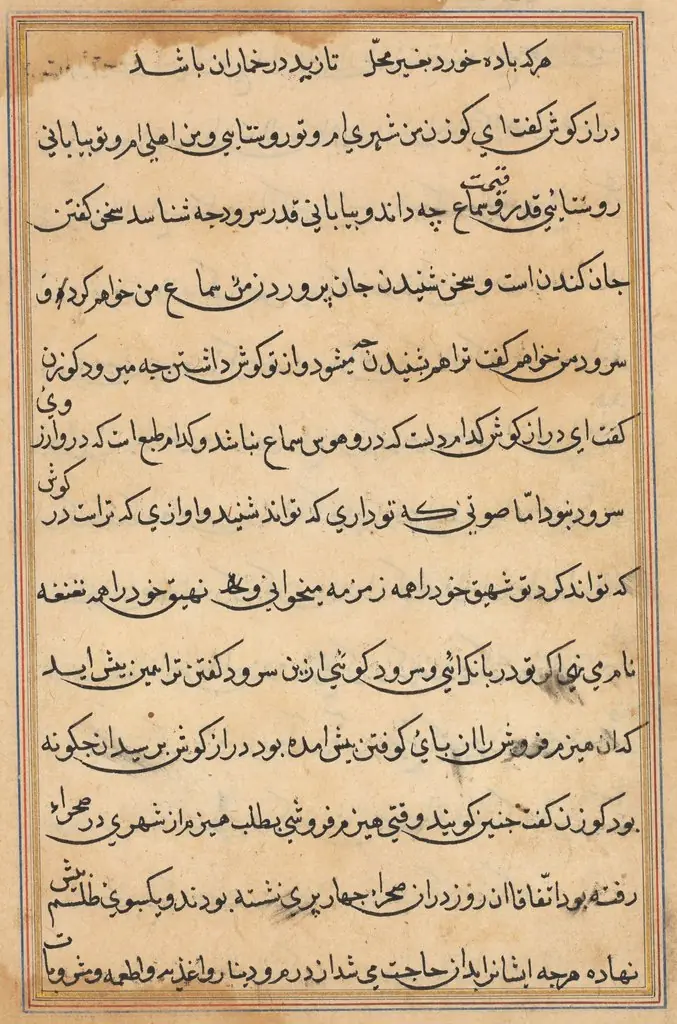 Page from Tales of a Parrot (Tuti-nama): text page
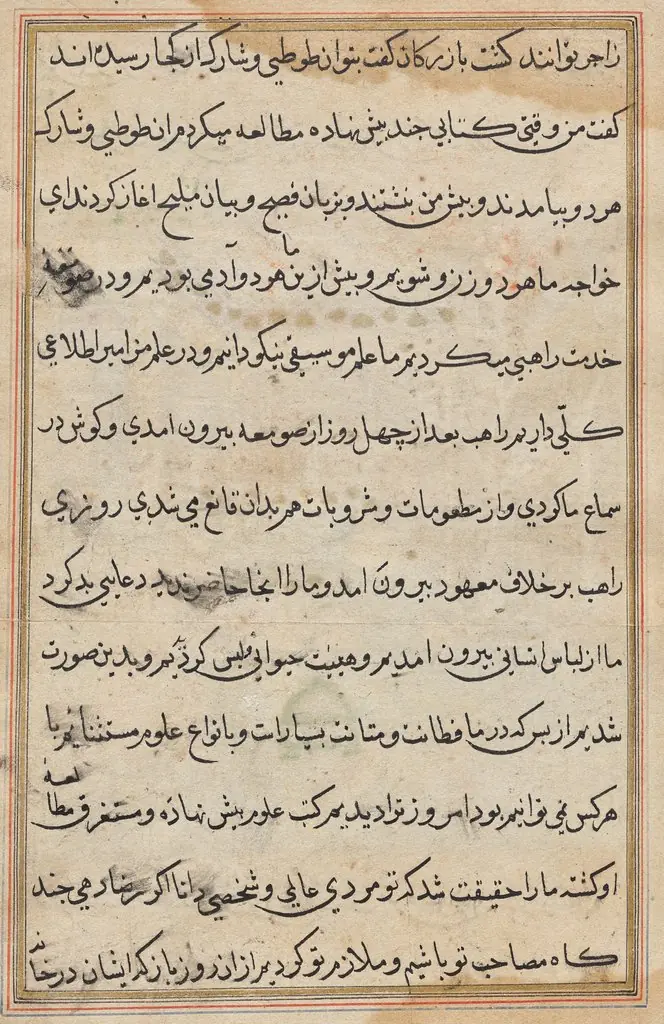 Page from Tales of a Parrot (Tuti-nama): text page
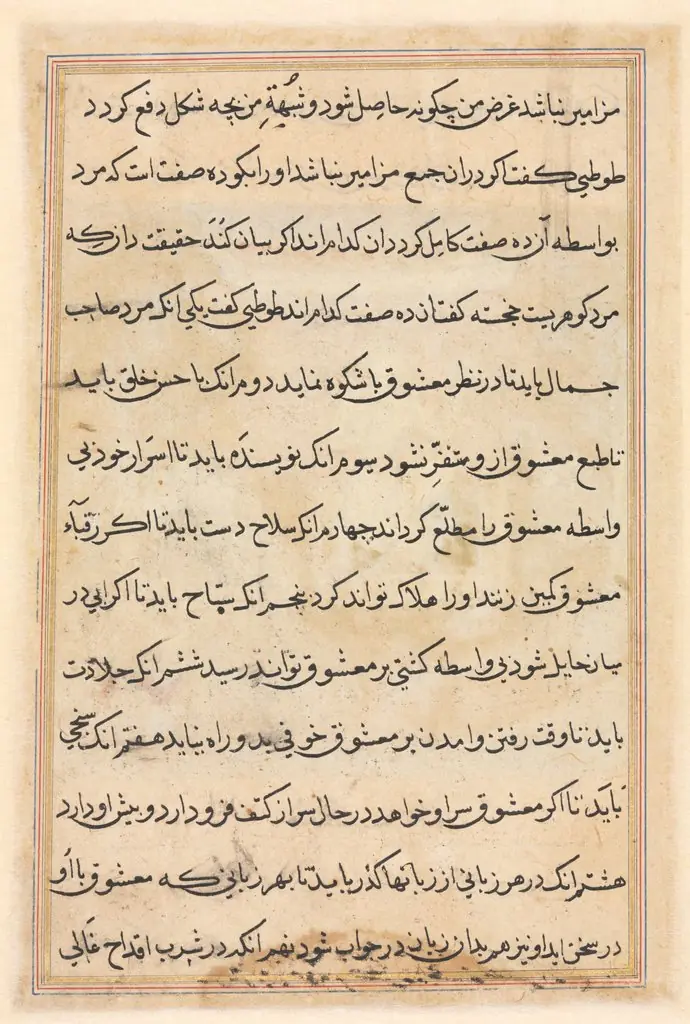 Page from Tales of a Parrot (Tuti-nama): text page
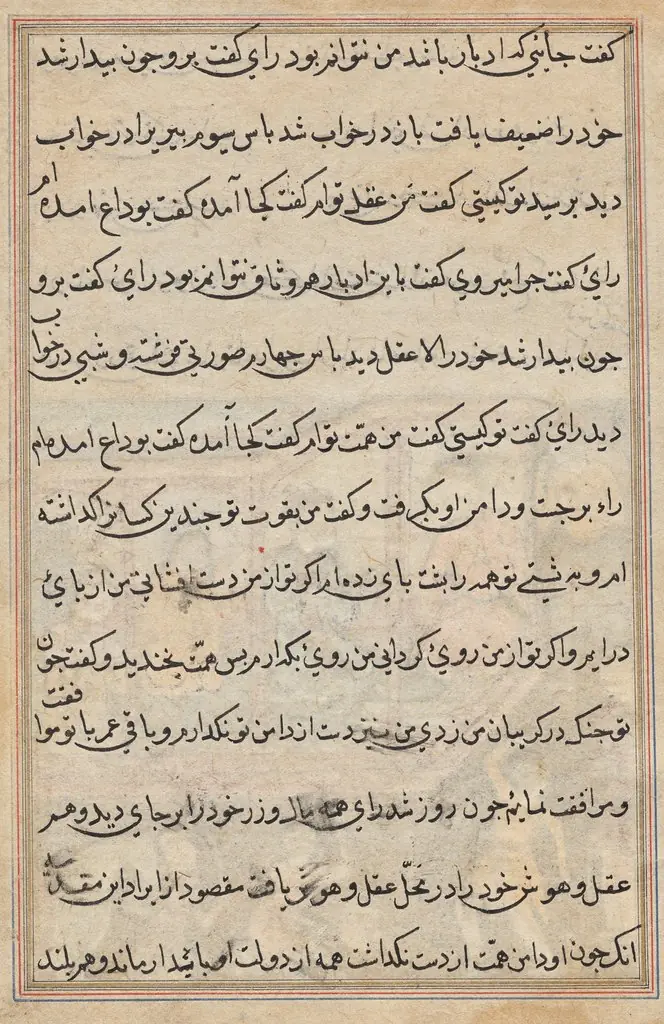 Page from Tales of a Parrot (Tuti-nama): text page
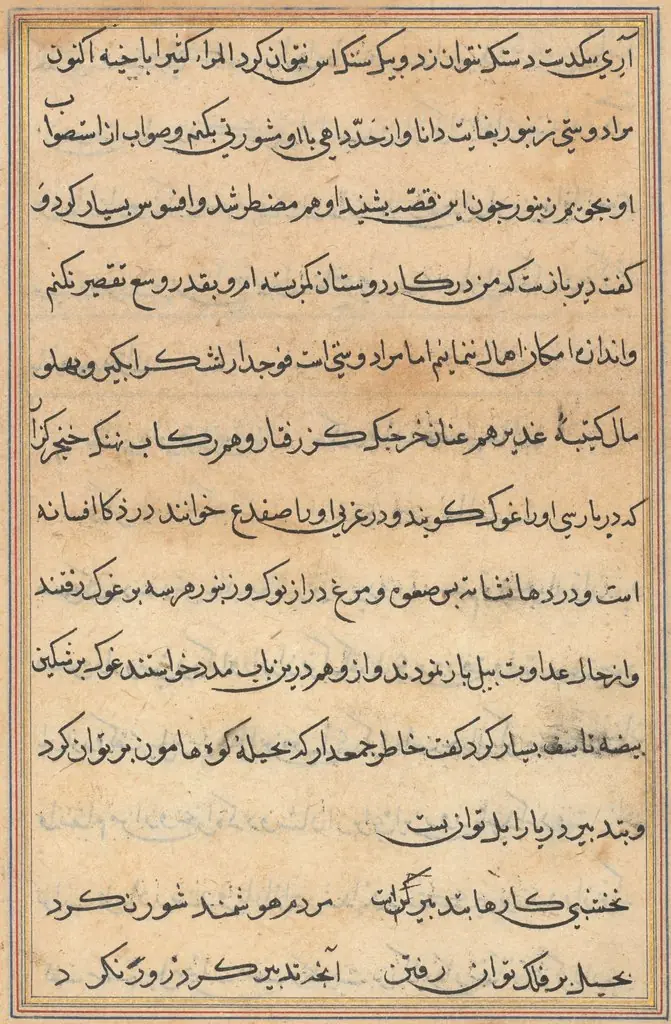 Page from Tales of a Parrot (Tuti-nama): text page
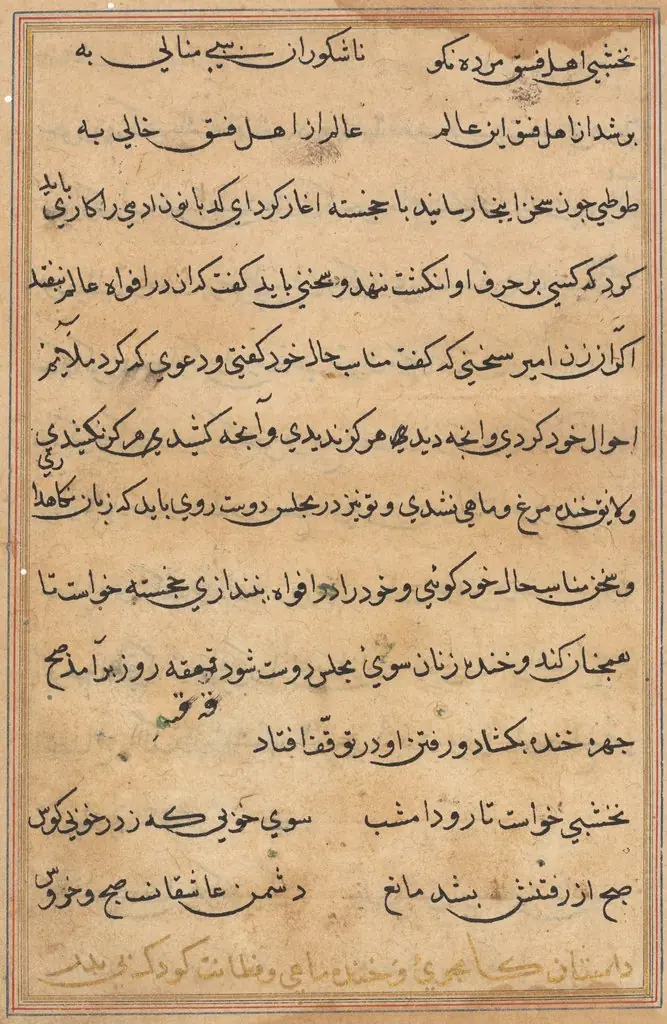 Page from Tales of a Parrot (Tuti-nama): text page
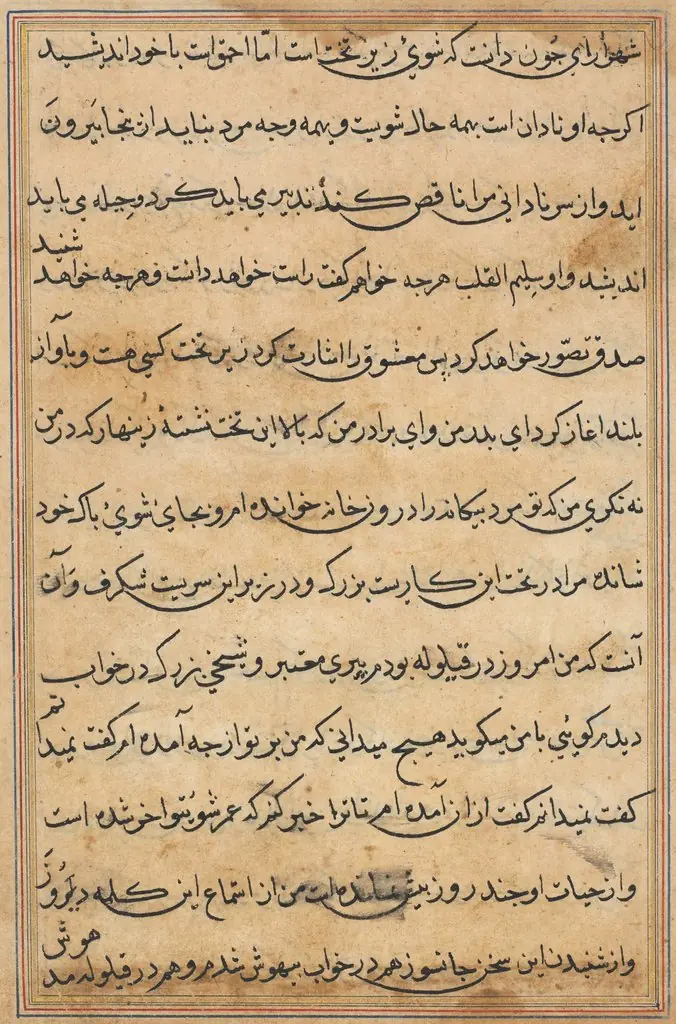 Page from Tales of a Parrot (Tuti-nama): text page
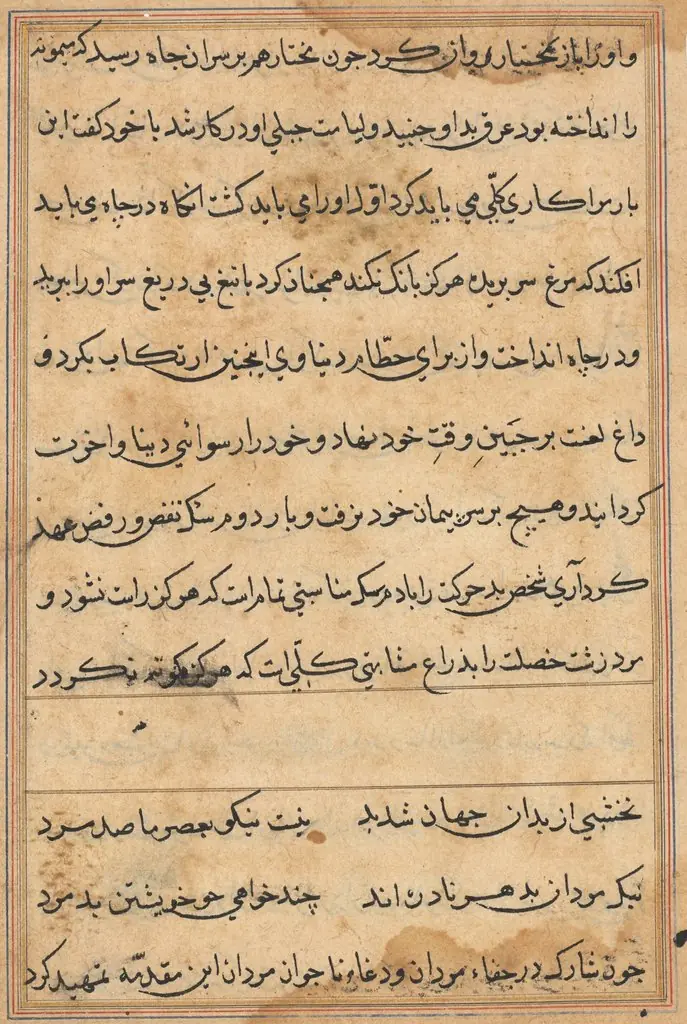 Page from Tales of a Parrot (Tuti-nama): text page
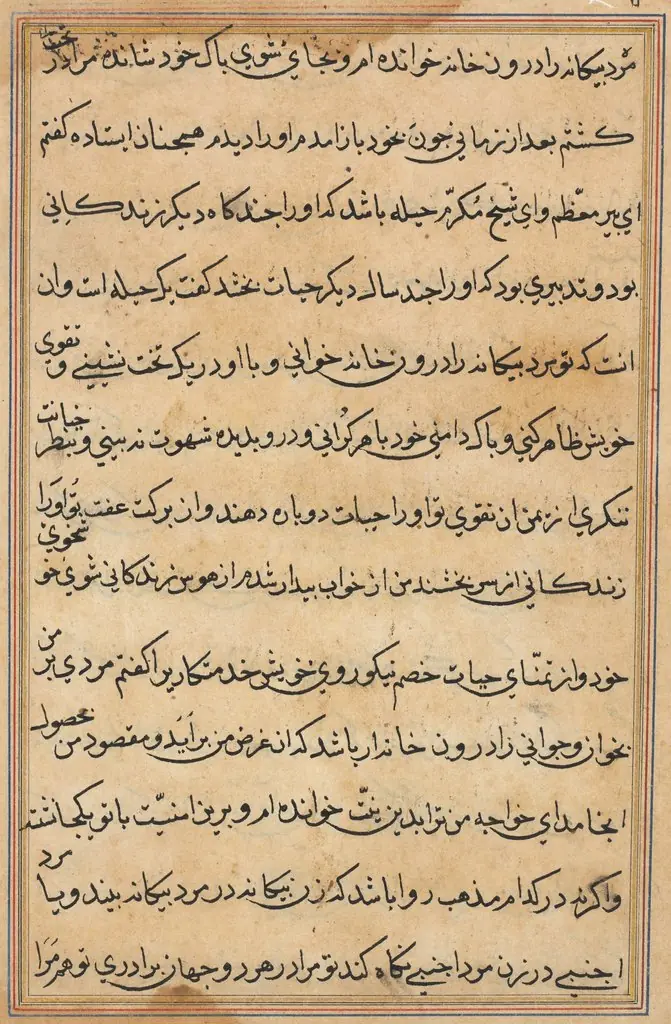 Page from Tales of a Parrot (Tuti-nama): text page
 Page from Tales of a Parrot (Tuti-nama): text page
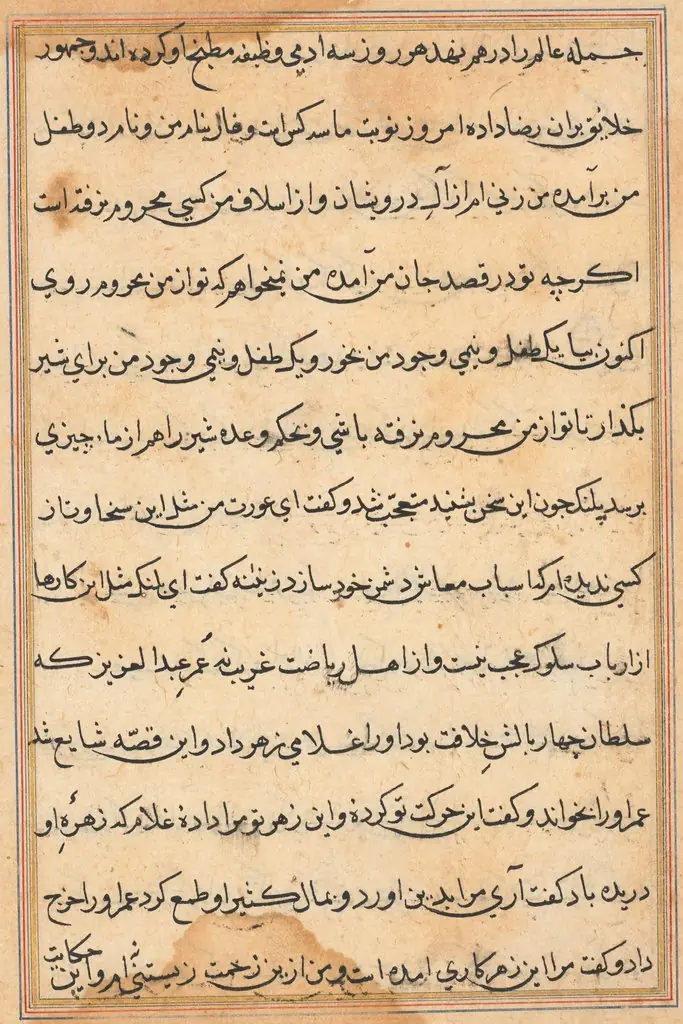 Page from Tales of a Parrot (Tuti-nama): text page
- Tuti-Nama (Tales of a Parrot)