Artwork
Philipp Melanchthon (1497-1560)
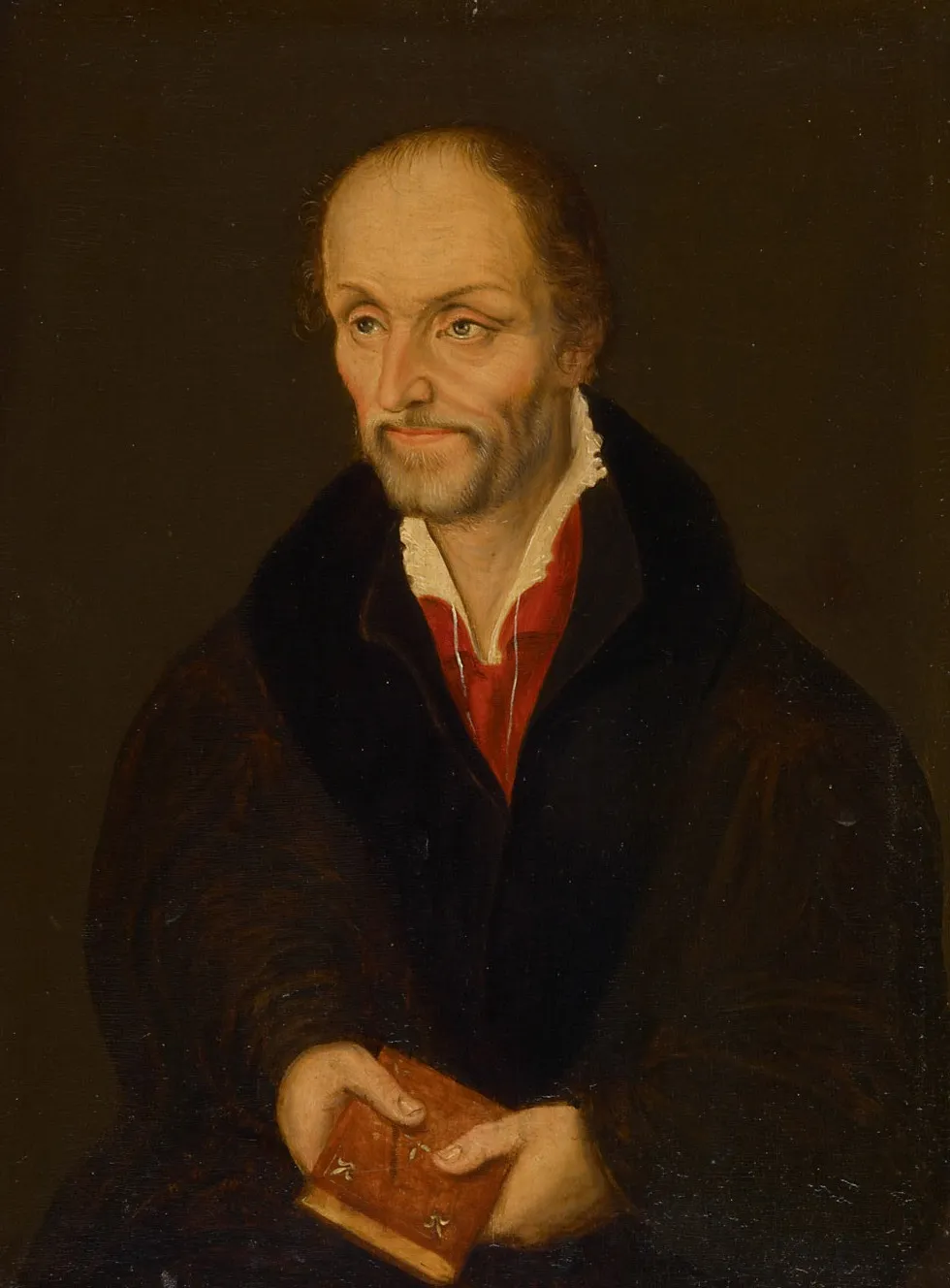
Philipp Melanchthon (1497-1560) is an unspecified painting by the Northern Renaissance artist Unknown. It dates from 1575 and is held in the collection of the Kunsthistorisches Museum. The work is a portrait of Philipp Melanchthon (1497–1560), a leading German reformer and scholar.
About this work
Subject & Meaning
The work functions as both a likeness and a symbol of Lutheran identity, preserving the memory of a foundational intellectual figure for the Protestant church.
The painting depicts Philipp Melanchthon (1497–1560), the German reformer and theologian who was a leading figure in the Protestant Reformation and a close associate of Martin Luther. Created in 1575, this portrait belongs to the posthumous commemorative tradition of Reformation-era imagery. As a portrait after Lucas Cranach the Younger, it draws upon an established visual tradition for representing Protestant leadership.
The work functions as both a likeness and a symbol of Lutheran identity, preserving the memory of a foundational intellectual figure for the Protestant church. Melanchthon's depiction in this period typically emphasized his scholarly role rather than sainthood, reflecting Reformation values of individual faith and intellectual engagement.
Context
The portrait of Philipp Melanchthon, painted in 1575, exemplifies the transition from Renaissance humanist ideals to the refined elegance of late 16th-century portraiture, reflecting the enduring influence of Lucas Cranach the Younger's workshop within the Wittenberg artistic circle. Its creation shortly after Melanchthon's death in 1560 situates it within the broader context of Reformation-era commemoration, where visual representations solidified the legacy of key intellectual figures. The work's presence in the Kunsthistorisches Museum collection underscores its recognized historical and artistic significance within institutional art historical narratives.
Legacy
Melanchthon's likeness was widely reproduced and circulated as an emblem of humanist scholarship, shaping scholarly self‑portraiture in the late Renaissance and informing later historiographical depictions of the Reformation era. The 1575 portrait, recorded in the Kunsthistorisches Museum collection, established a visual archetype that was emulated by contemporaries and subsequently referenced in 17th‑century biographical works, cementing his image as a paradigmatic intellectual figure.
Overview
The work is a portrait of Philipp Melanchthon (1497–1560), a leading German reformer and scholar. He is depicted seated, his beard and thinning hair rendered in muted tones, wearing a dark cloak over a red shirt with a white collar. The composition isolates him against a plain, dark backdrop, drawing the viewer’s focus to his face and the open book he holds.
Technique & Style
The painter employs chiaroscuro, using a strong light source to illuminate the figure while the surrounding space recedes into shadow. This contrast heightens the three‑dimensionality of the face and hands, and the crisp rendering of the printed page underscores the modernity of the subject’s scholarly pursuits.
History & Provenance
The portrait dates from the mid‑16th century, a time when printed material was becoming increasingly common in Europe. While the artist’s identity remains uncertain, the painting has been held in several private and institutional collections, reflecting Melanchthon’s enduring significance in the history of education and religious reform.
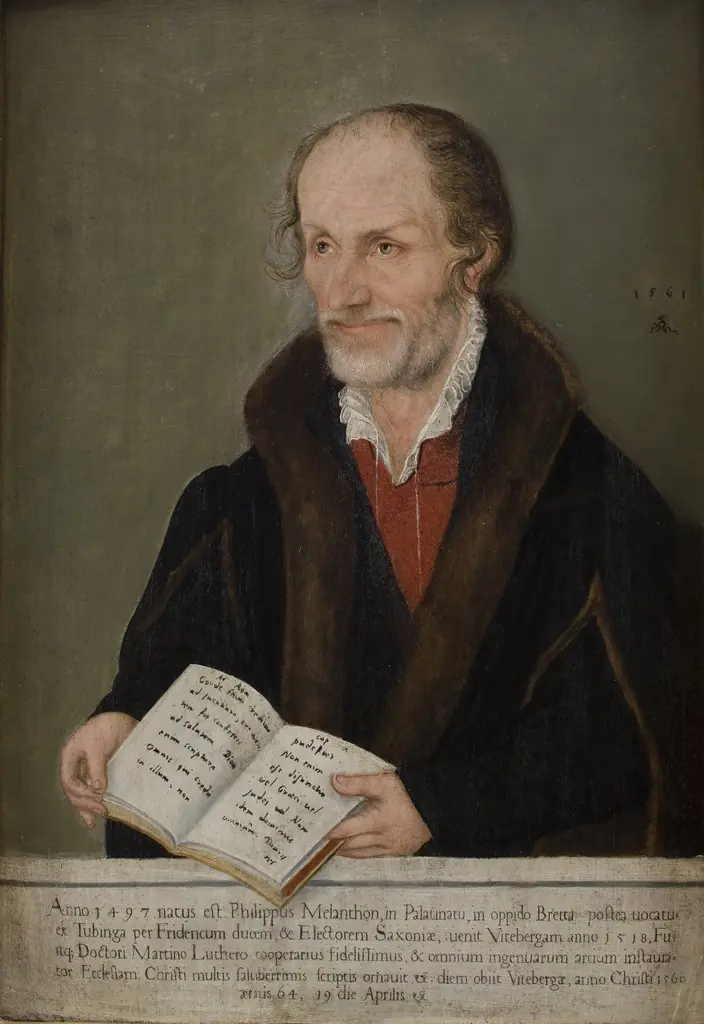
Artist & collection









- Portrait of Philipp Melanchthon (1497–1560)
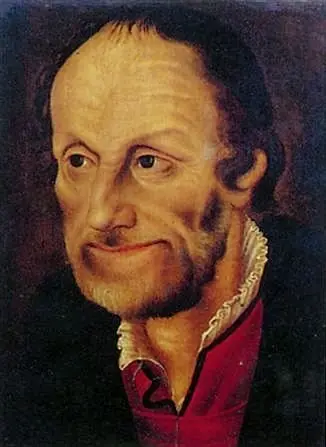 Portrait of Philipp Melanchton
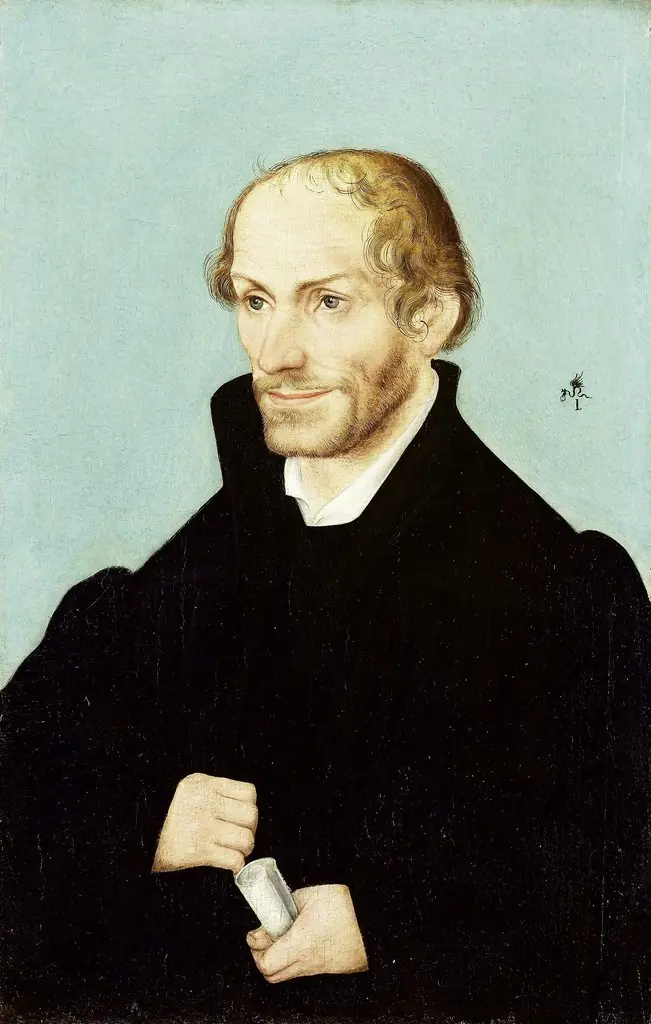 Portrait of Philipp Melanchthon, Church Reformer
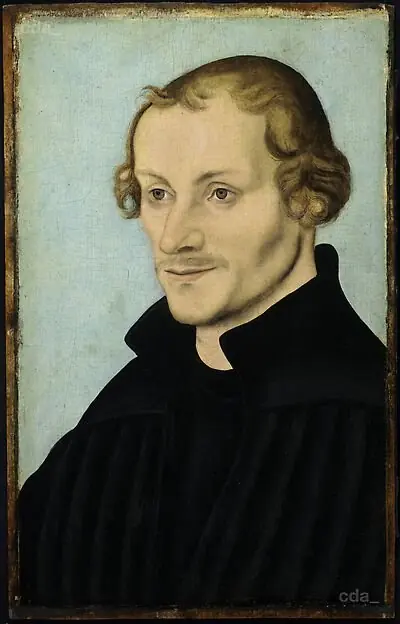 Portrait of Philipp Melanchthon (1497-1560)
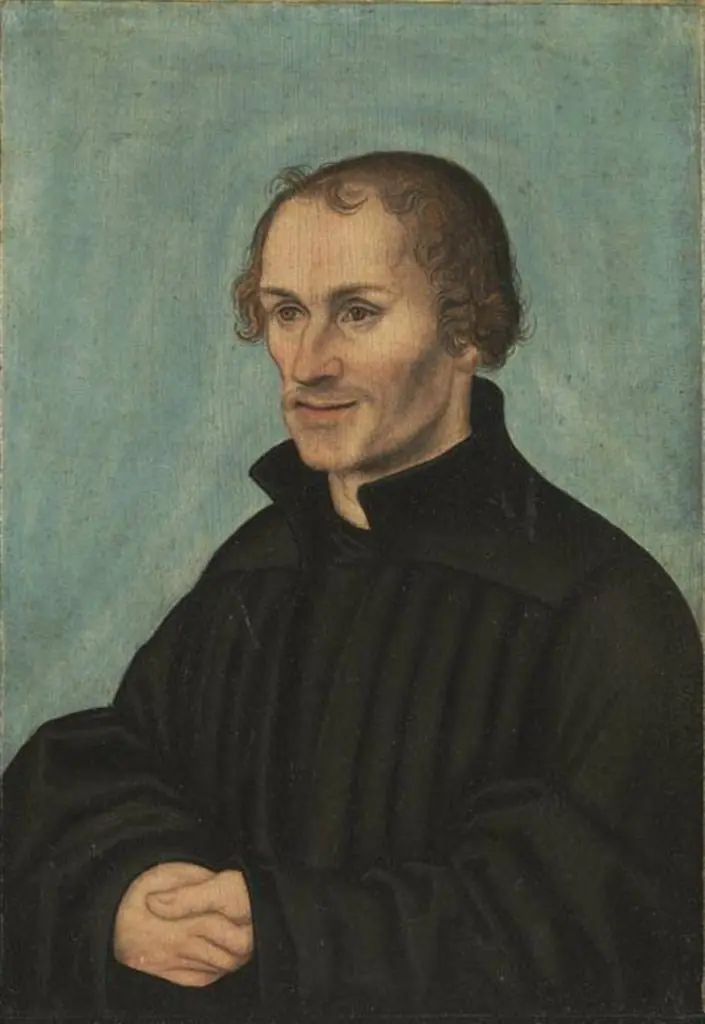 Portrait of Philipp Melanchthon
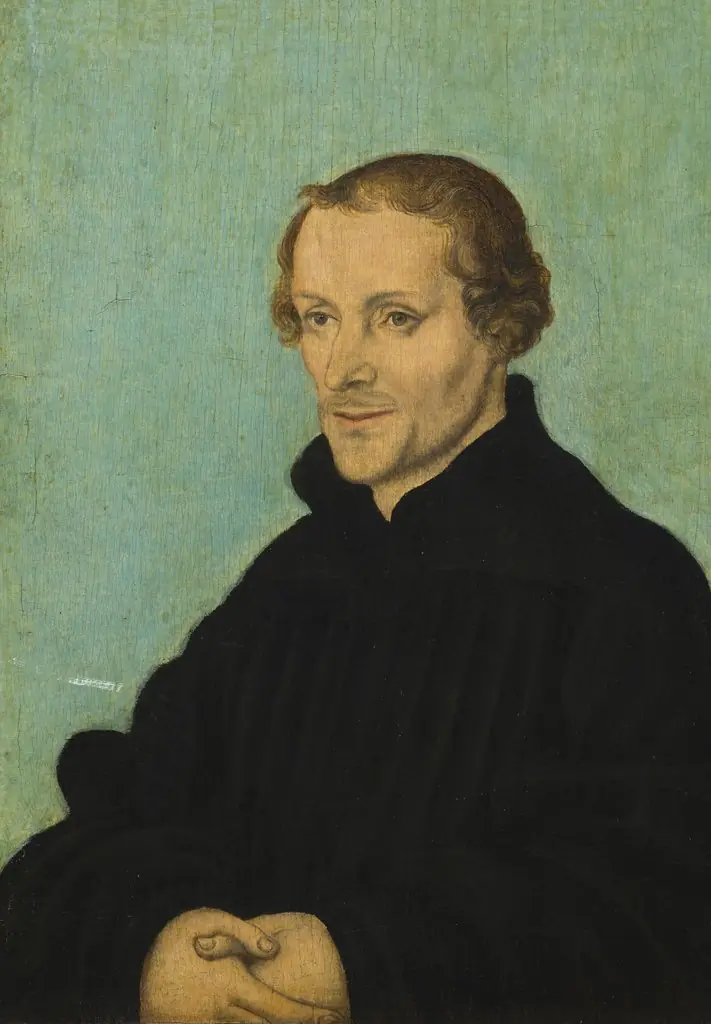 Portrait of Philipp Melanchton
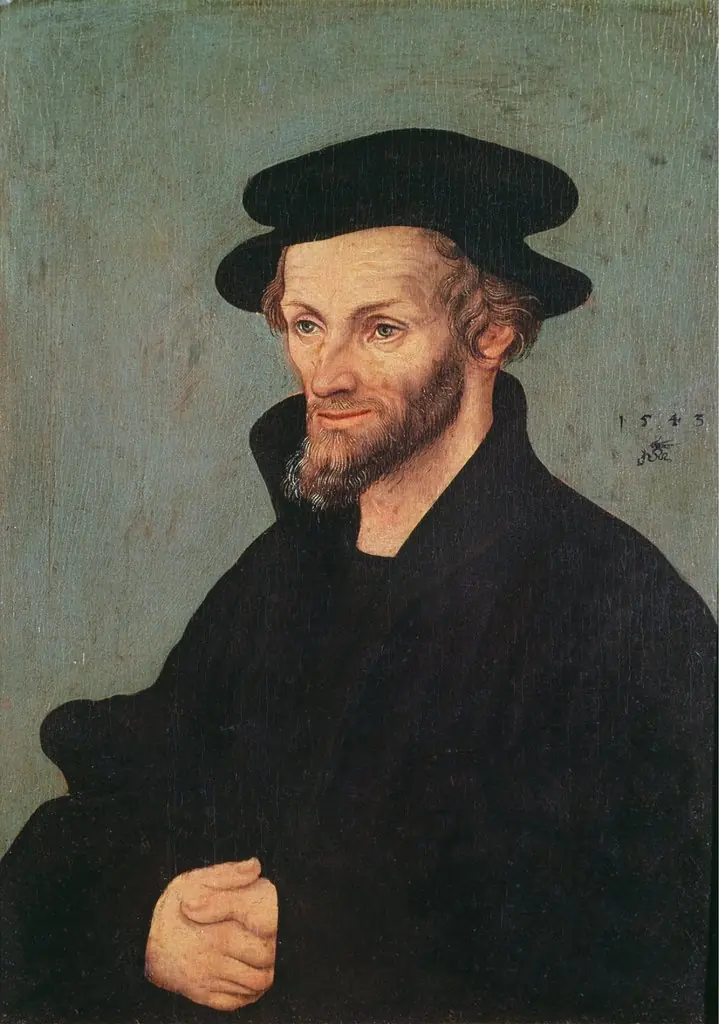 Portrait of Philipp Melanchton
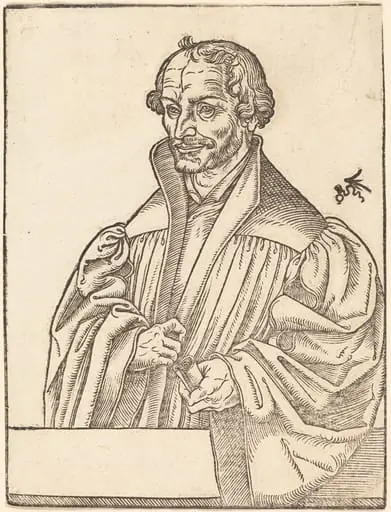 Philip Melanchton, Half-Length to the Left, Standing Behind a Breastwork