Artwork
Portrait of Philipp Melanchton
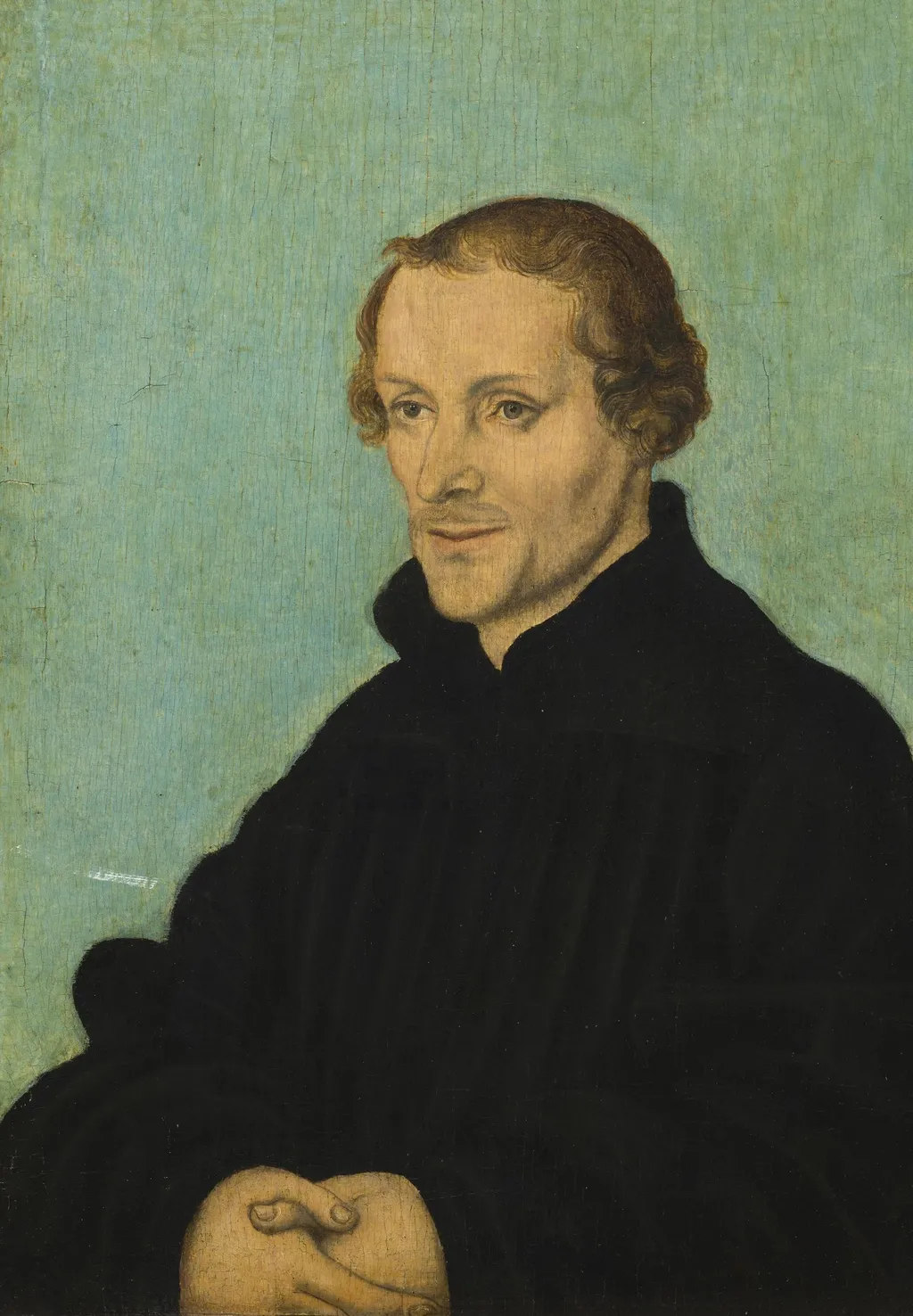
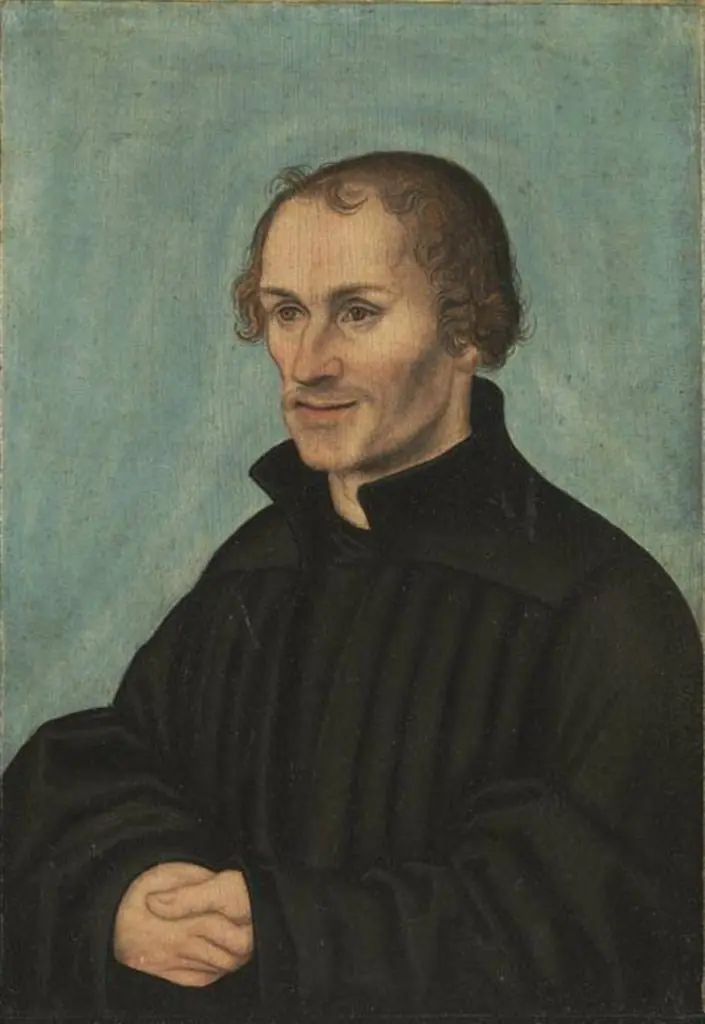
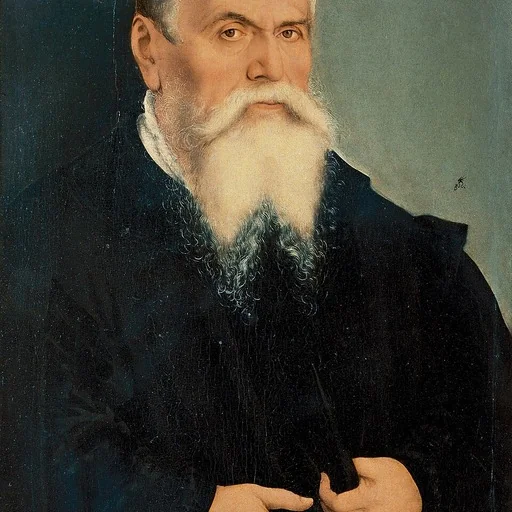
Portrait of Philipp Melanchton is an oil painting by the Northern Renaissance artist Lucas Cranach the Elder. It dates from 1532 and is held in the collection of the Hermitage Museum.
About this work
Overview
5 by 14 centimeters, this small-scale panel is held in the collection of the Hermitage Museum in Saint Petersburg.
The Portrait of Philipp Melanchthon is an oil painting on oak panel by Lucas Cranach the Elder, dated 1532, depicting the German humanist scholar and Protestant reformer. Measuring 19.5 by 14 centimeters, this small-scale panel is held in the collection of the Hermitage Museum in Saint Petersburg. The work exemplifies Cranach's role as the principal portraitist of the Lutheran Reformation, capturing one of its most influential theological minds in a format that emphasizes intellectual presence over material grandeur. As part of a broader corpus of reformer portraits produced by Cranach and his workshop, this painting contributed to the visual dissemination of Protestant identity across sixteenth-century Europe.
Subject & Meaning
The subject, Philipp Melanchthon (1497-1560), was a central figure of the Protestant Reformation, colleague and ally of Martin Luther, and a renowned humanist scholar at the University of Wittenberg. The portrait presents him in a half-length format, positioned slightly off-center and facing three-quarters toward the viewer with his head turned to his right. His hands are clasped together at the lower edge of the composition, a gesture that may suggest prayer, scholarly contemplation, or rhetorical composure. The absence of objects, jewelry, or environmental details focuses attention entirely on the sitter's intellectual character. The plain, unadorned background and dark, heavy garment with a high collar frame the face as the locus of meaning, underscoring the Protestant emphasis on inner faith and scholarly vocation over external display. The calm, direct gaze and closed lips project a demeanor of measured authority befitting a leading theologian.
Technique & Style
The painting is executed in oil on oak panel, a support typical of Northern European practice. The surface exhibits extensive fine vertical cracking consistent with its age. Cranach's brushwork is smooth and controlled, particularly in the facial rendering, where careful blending produces subtle modeling of flesh tones. Light falls evenly across the figure with minimal dramatic shadow, creating a flattened, contemplative atmosphere rather than the volumetric depth found in Italian Renaissance portraiture. The restrained palette juxtaposes the dark tone of the clothing against a flat, pale turquoise background, with subtle variations in the skin achieved through layered glazes. The composition's simplicity, the absence of atmospheric perspective, and the emphasis on linear precision and surface pattern are characteristic of Cranach's mature style and the broader aesthetic of German Renaissance portraiture.
History & Provenance
The painting was created in 1532 in Germany, during Cranach's tenure as court painter to the Electors of Saxony in Wittenberg, where Melanchthon was based. The panel's provenance prior to its acquisition by the Hermitage Museum is not fully documented in the available sources, though the Hermitage's collection of Northern European paintings expanded considerably through imperial purchases and confiscations in the eighteenth and nineteenth centuries. The work is currently located in the Hermitage Museum, having been accessioned into that collection. Exhibition history specific to this panel is not recorded in the provided sources.
Context
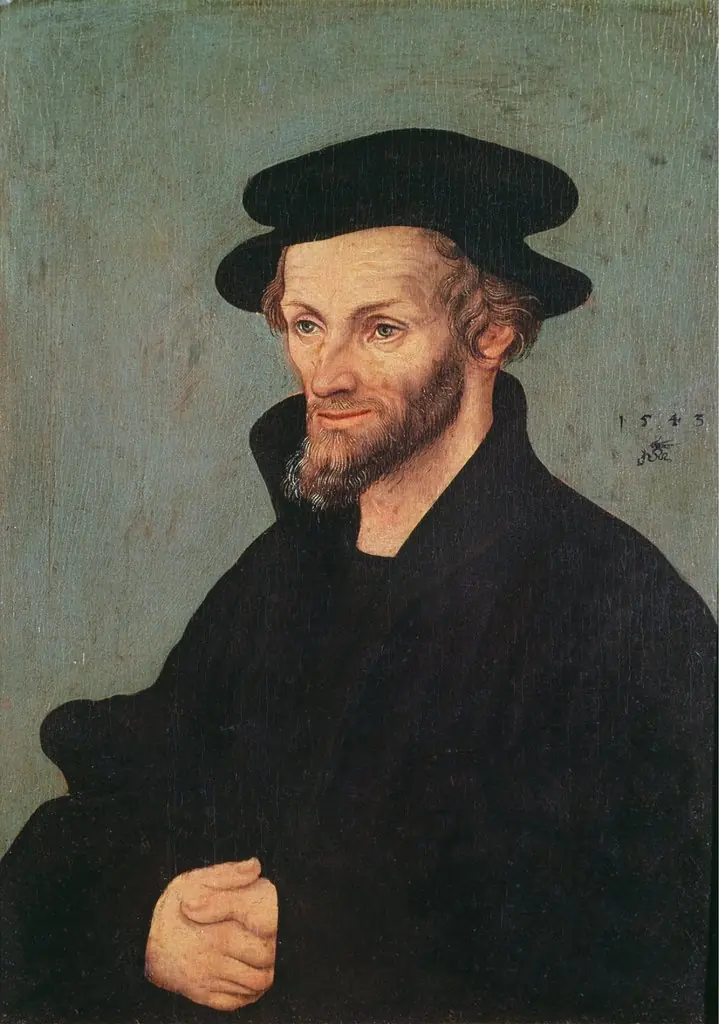
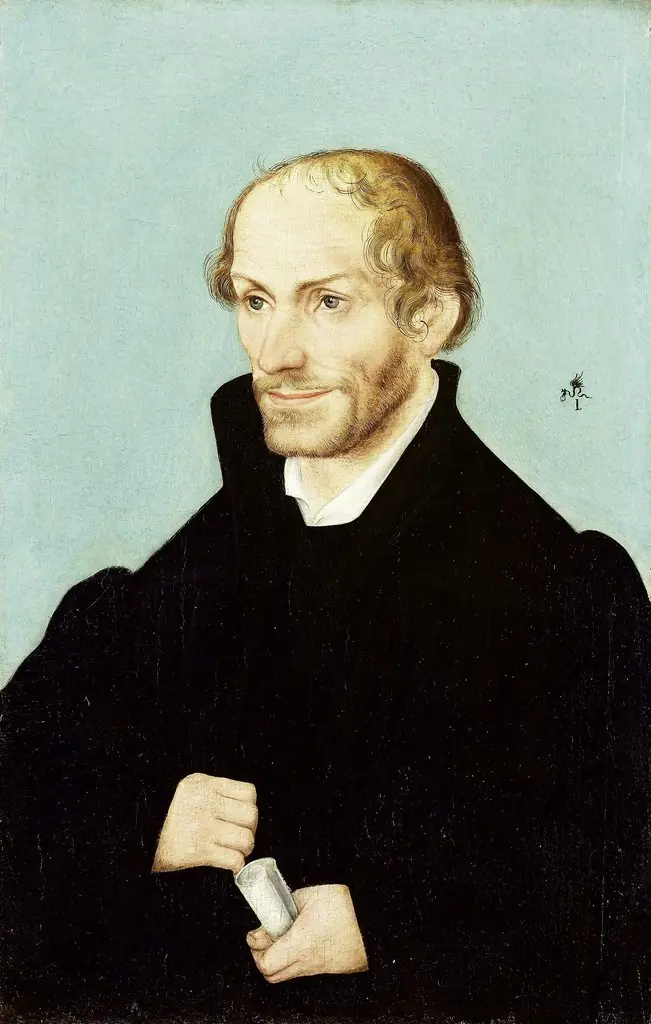
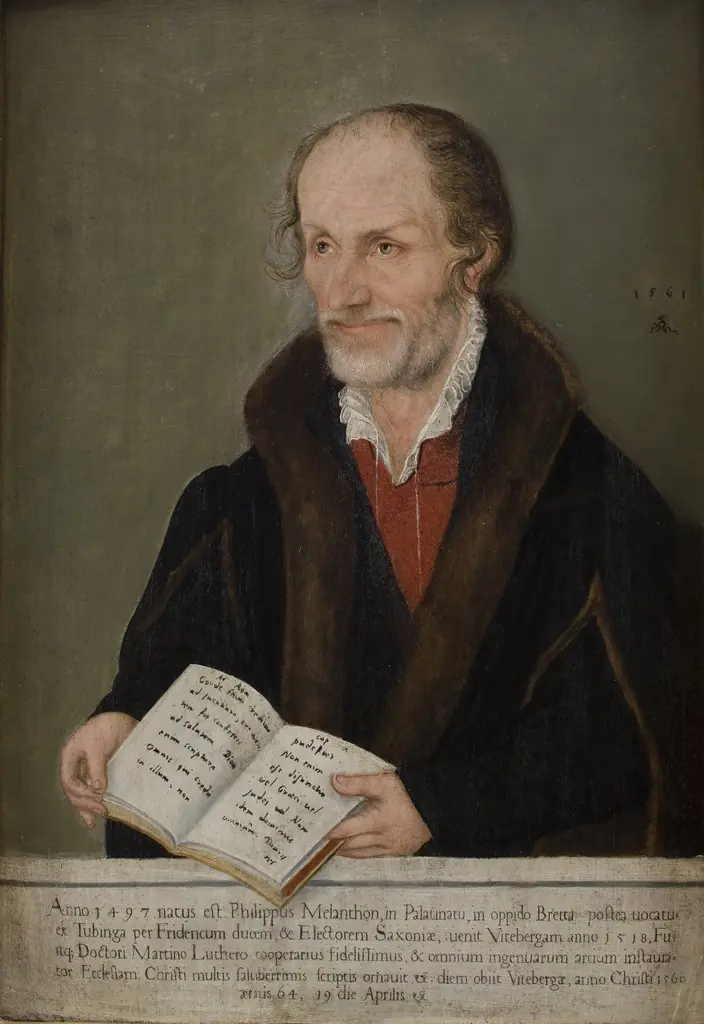
Lucas Cranach the Elder became a close friend of Martin Luther in Wittenberg and emerged as the preeminent visual chronicler of the Reformation. Luther met Melanchthon circa 1518, and the two reformers were frequently depicted together by Cranach and his workshop, reflecting their public stature as the movement's leading intellectuals. The demand for portraits of Luther and Melanchthon intensified after the founding of the Protestant Schmalkaldic League in 1531, as these images functioned as devotional objects, political statements, and instruments of confessional identity. Cranach's portraits of the reformers were produced in numerous versions and variants by both the master and his workshop, creating a reproducible visual language for Protestantism. The Hermitage panel belongs to an earlier phase of this production, showing Melanchthon with brown hair and a shorter beard, in contrast to later variants from the 1550s that depict him with grey hair and markedly aged features. The scholarly attribution and dating of Cranach's reformer portraits remain complex, given the extensive workshop participation and the commercial imperative to satisfy demand through replication.
Legacy
The portrait participates in one of the most significant programs of political and religious portraiture in European art history. Cranach's images of Melanchthon, produced across decades and in multiple versions, established a durable visual type for the reformer that influenced subsequent generations of Protestant iconography. The workshop practice of replication, while complicating modern attribution, ensured the wide circulation of these images and their integration into diverse devotional and civic contexts. The Hermitage panel, as an early and autograph work, holds particular significance for understanding the evolution of Cranach's approach to the subject. The broader corpus of Melanchthon portraits, including later panels attributed to the workshop and to Lucas Cranach the Younger, demonstrates the enduring demand for images of the reformer and the family's sustained monopoly on this aspect of Protestant visual culture. These portraits collectively shaped how subsequent centuries would visualize the intellectual and spiritual foundations of the Reformation.
Own this work as a print
Artist & collection
Artist
Lucas Cranach the Elder was a German Renaissance painter and printmaker in woodcut and engraving.