Artwork
Pleurants
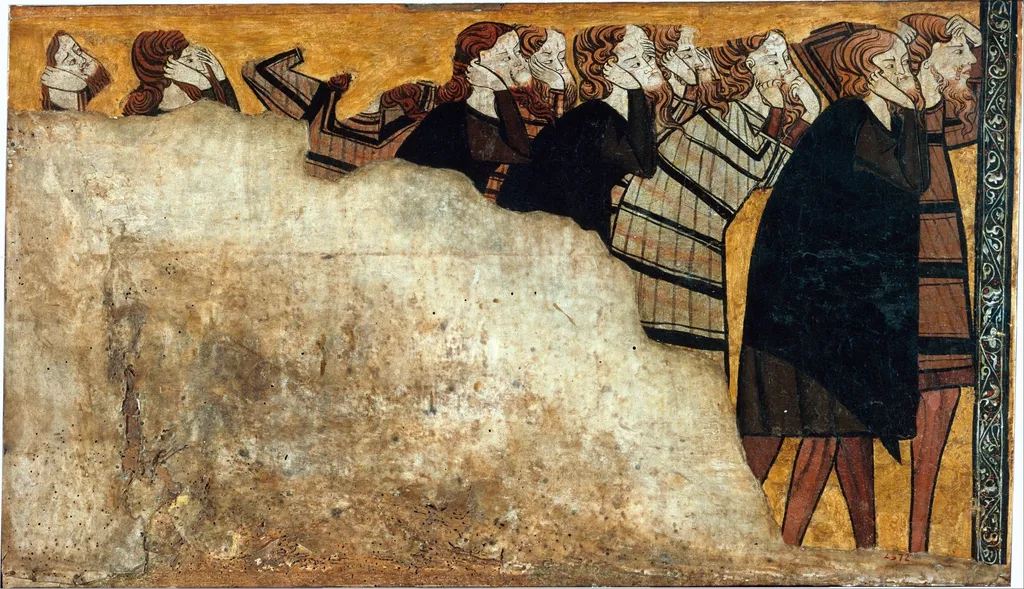
Pleurants is an unspecified painting by the Gothic painting artist Unknown. It dates from 1298 and is held in the collection of the Museu Nacional d'Art de Catalunya.
About this work
Overview
Dressed in dark, uniform garments, they move in a slow, processional formation, overlapping slightly to suggest continuity and collective grief.
Pleurants is a painted composition depicting a line of figures in silent mourning, their faces obscured by hands. Dressed in dark, uniform garments, they move in a slow, processional formation, overlapping slightly to suggest continuity and collective grief. The muted background recedes softly, focusing attention on the figures and their somber gestures. Chiaroscuro modeling enhances their three-dimensionality, grounding the scene in quiet realism without theatricality.
Subject & Meaning
The figures in Pleurants represent mourners, their obscured faces implying universal sorrow rather than individual identity. The procession suggests a ritual of grief, possibly referencing funerary traditions or communal lamentation. By concealing expressions, the artist emphasizes the weight of loss itself, not personal biography. The absence of narrative detail invites contemplation of mourning as a shared human experience.
Technique & Style
The painting employs chiaroscuro to model the figures with subtle gradations of light and shadow, lending volume and presence without dramatic contrast. Brushwork is restrained, favoring smooth transitions over texture or detail. The figures are rendered with quiet precision, their forms aligned in a rhythmic, almost sculptural sequence. Color is limited to near-monochrome tones, reinforcing the emotional gravity of the scene.
History & Provenance
Pleurants was created in the early 20th century by an artist associated with symbolic or introspective painting traditions. It remained in private collections until the mid-century, when it entered a public institution’s holdings. Documentation is sparse, and no exhibition history from its early years survives. Its attribution and date are based on stylistic analysis and archival records of the artist’s known output.
Context
Emerging in a period marked by global upheaval and shifting artistic priorities, Pleurants reflects a turn toward psychological depth over narrative spectacle. While contemporaries explored abstraction or social realism, this work aligns with quieter, introspective movements that sought to express inner states through restrained form. Its focus on collective grief resonates with post-war cultural reckonings, though it predates direct political commentary.
Legacy
Pleurants has not achieved widespread recognition but is noted in scholarly discussions of early 20th-century mourning imagery. Its influence is indirect, seen in later artists who favored subdued emotion and compositional stillness. It remains a quiet reference point in museum collections for studies of grief in visual art, valued for its restraint and emotional resonance rather than its visibility.
Artist & collection









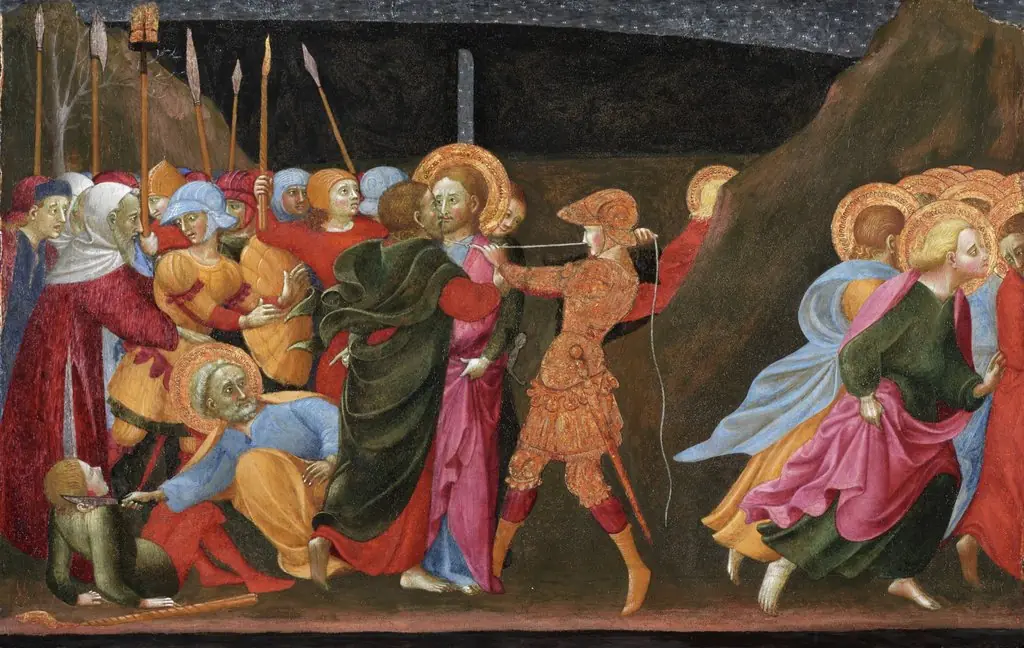 The Betrayal of Christ
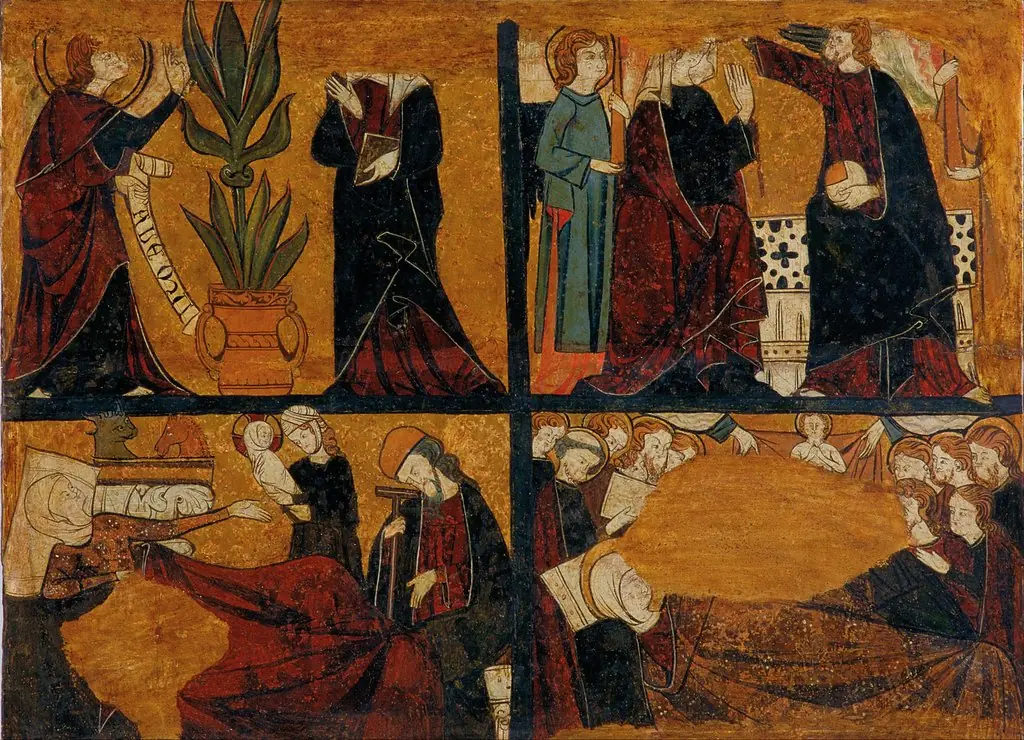 Annunciation, Nativity, Dormition and Coronation of the Virgin
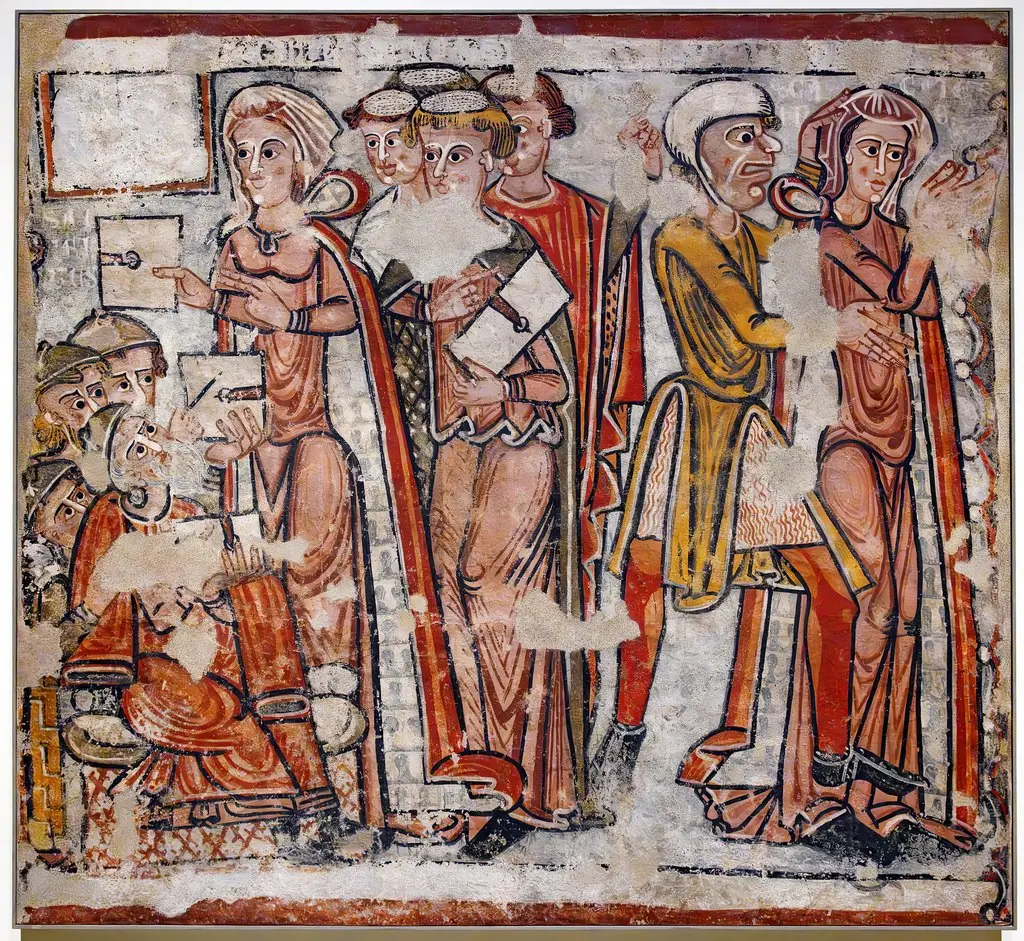 Dispute and Arrest of Saint Catherine, from the cathedral of La Seu d'Urgell
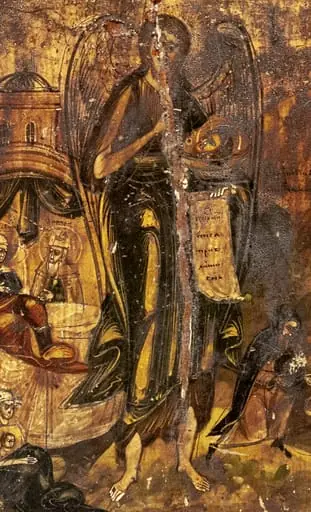 În centrul spațiului pictural, prim plan, Sfântul Ioan Îngerul Pustiului, cu aripi mari,având în mâna stângă un rotulus desfășurat, cu dreapta ținând capul său tăiat pe o tipsie. Este înveșmântat cu o mantie verde peste blana de cămilă, picioarele desculțe. În planul doi, dreapta, este redată scena aflării capului. Un călugăr îngenuncheat lângă capul aureolat al sfântului prooroc, un alt personaj în veșminte roșii(deși tot călugăr), prezentat în picioare, cu capul înclinat, indicând locul cu o săgeată (în alte icoane ambii călugări au lopeți). Este vorba de una dintre aflările capului sfântului, în zilele lui Constantin cel Mare. Aceasta s-a întâmplat în muntele Eleonului. În partea stângă a icoanei este redată nașterea sfântului Ioan. Pe un pat înalt, Elisabeta, în spatele patului, proorocul Zaharia, cu barbă lungă, albă, privind-o. În fața patului, o slujnică ținându-l în brațe pe pruncul Ioan, cu aureolă în jurul capului. Scena se petrece într-un iatac dintr-o clădire cu o turlă. În colțul din stânga sus, Iisus așa cum apare pe mahrama Veronicăi sau sfântul Keramion. Inscripții: pe chenar în partea superioară - Chipul Sfântului Ioan Înainte Mergătorul; în jurul nimburilor părinților proorocului -Elisaveta și Zaharia; în partea dreaptă a icoanei cu litere mici cursive: Aflarea capului Sfântului Ioan Botezătorul, pe rotulusul desfășurat inscripții indescifrabile.Fondul - foița aurie brunificată, (partea de sus), pe care se proiectează crestele muntoase. Cromatica specifică acestui tip de icoane, predomină culorile calde, tonurile de brun, încadrate de bordura roșiatică( galben, ocru, tonuri de verde, brun, roșu, negru.) Desenul trasat cu linie fină. Suportul prezintă o crăpătură longitudinală, lacune ale stratului pictural.
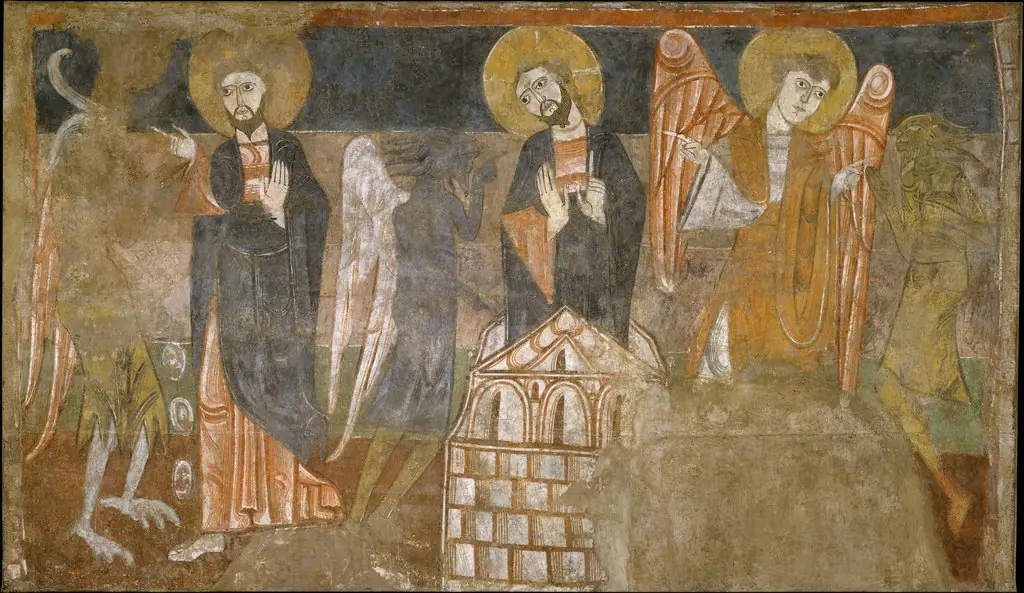 The Temptation of Christ by the Devil
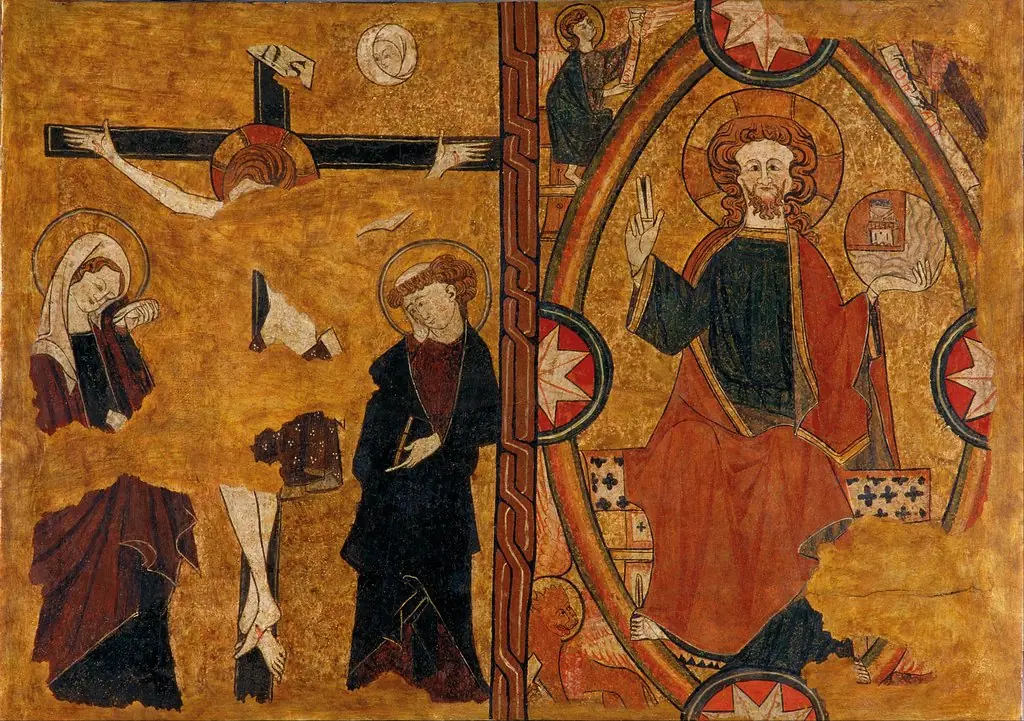 Calvary and Christ in Majesty
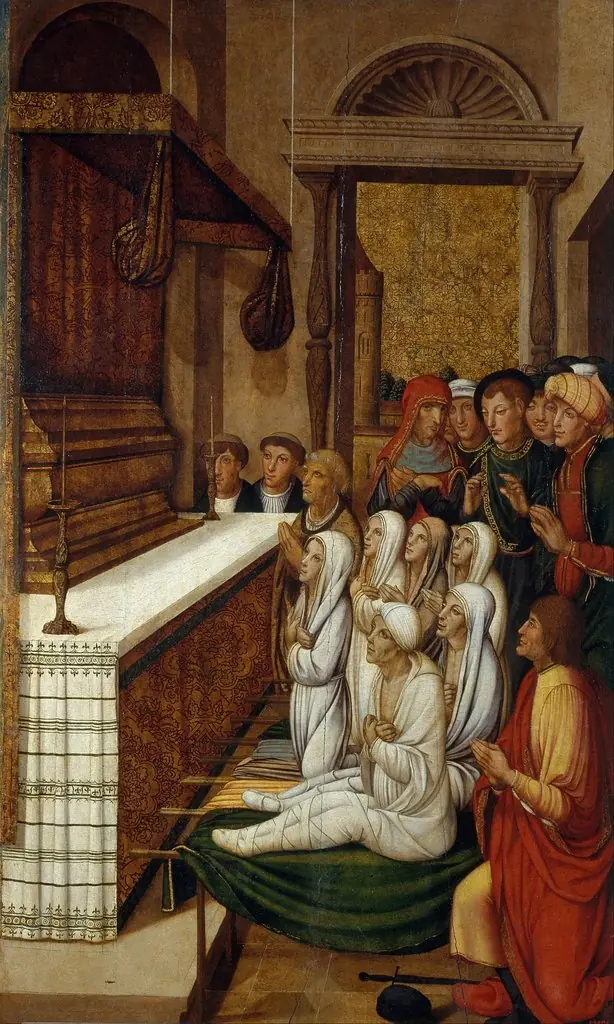 Six Resurrections before the Relics of Saint Stephen
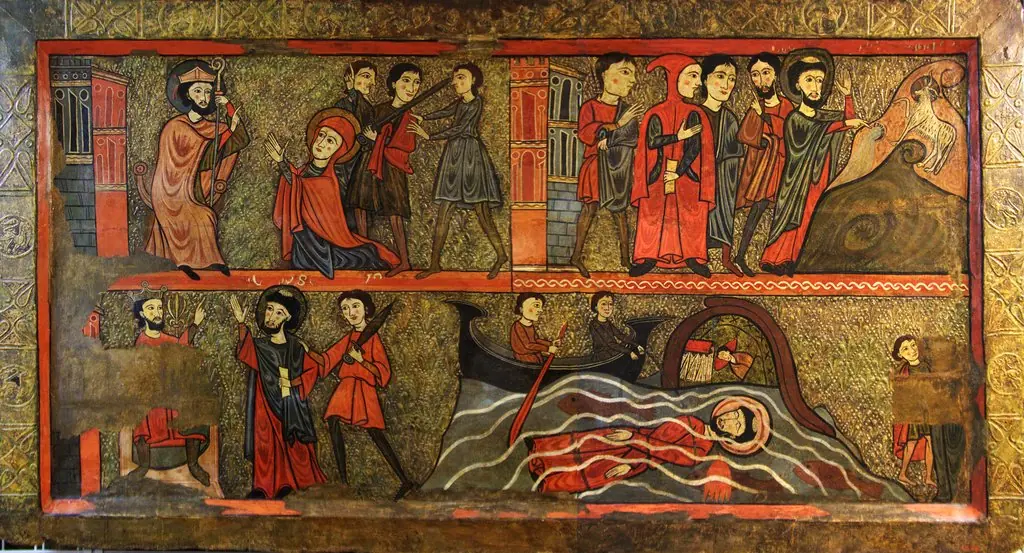 Altar frontal from Sant Climent de Taüll
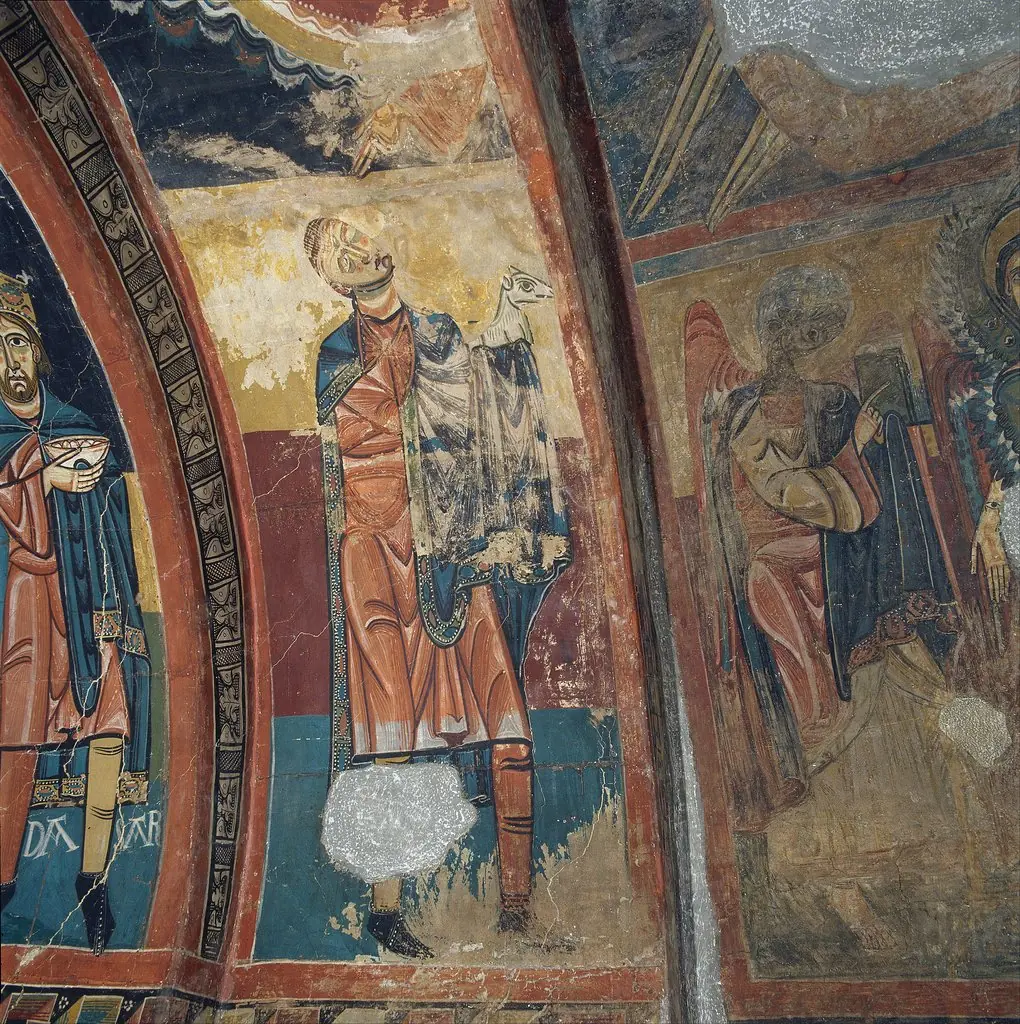 Arch of Abel's Offering from Santa Maria de Taüll